Flavor Description, Origin Region, and Variety Introduction of Panama Elida Geisha Coffee Beans
This guide looks at the flavor, origin, and variety behind one of Panama's most celebrated coffees, Elida Geisha.
Panama Elida Geisha Coffee Bean: Flavor Description, Origin, and Variety Introduction
Geisha varieties today are found mainly in Panama, Colombia, Guatemala, and Costa Rica, with the Panamanian and Colombian Geishas showing the most outstanding flavor performance.
Estate Introduction
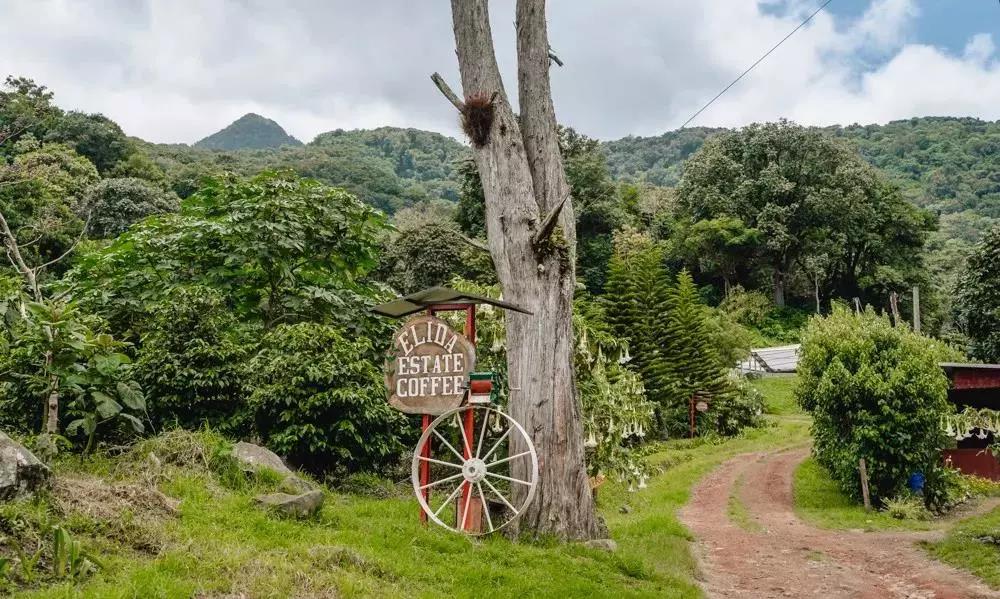
Panama's Elida Estate sits in the renowned specialty coffee region of Boquete. Its total area is 65 hectares, more than half of it within Baru Volcano National Park. Only 30 hectares are used for coffee cultivation; the rest remains pristine primary forest.
Coffee here is grown at 1,670 to 1,850 meters, making Elida one of the two highest-altitude coffee estates in Panama (the other estate at such altitude is Carmen Estate, in the Volcan Valley).
At such high altitude, low temperatures delay the ripening of the coffee cherries by about a month compared with normal maturity. The fertile volcanic soil supplies the coffee with abundant nutrients, and together with the excellent microclimate created by Baru Volcano, Elida Estate has repeatedly achieved outstanding results in cupping competitions.
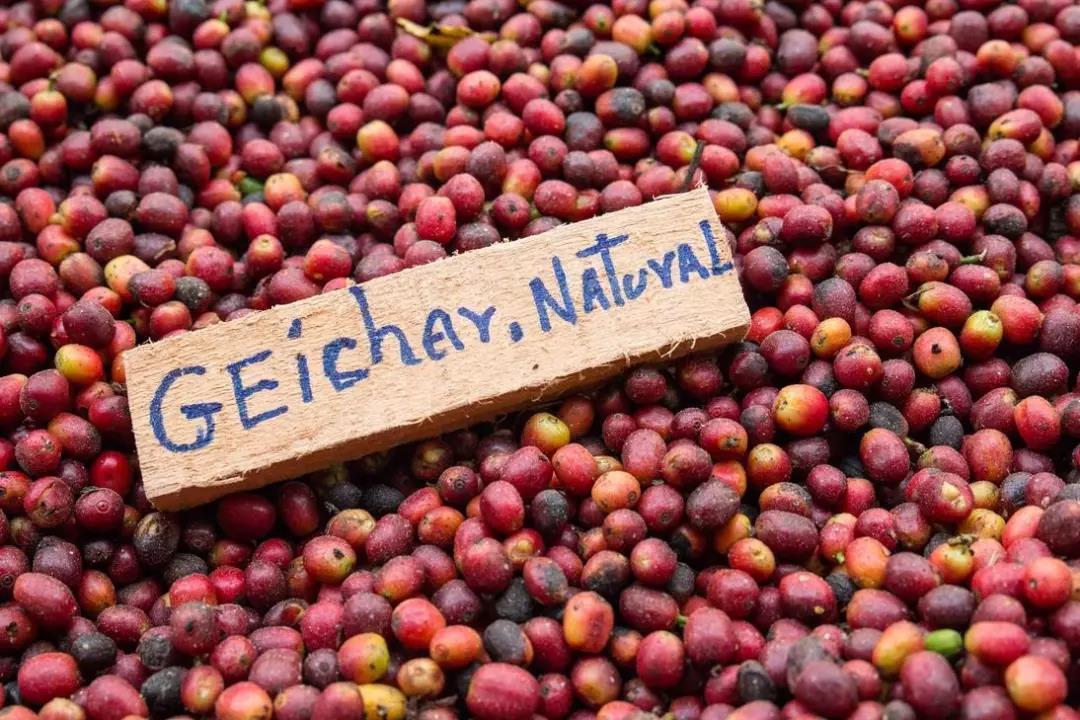
Elida Estate cultivates three main varieties: Catuai, Typica, and Geisha. Its processing plant sits halfway up the mountain, so coffee can be taken to the factory immediately after harvest and the quality of the cherries is not compromised. Elida's environment also suits other high-quality temperate crops, especially tree tomatoes and some uncommon high-altitude fruits. Interestingly, the flavors of those fruits often turn up in Elida's coffee.
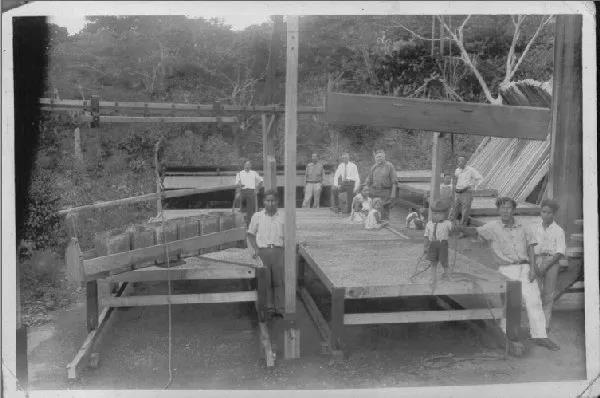
Elida Estate is the most famous estate of the Lamastus family, founded in 1918. From the time Robert Lamastus, founder of the Lamastus family's coffee estate, planted the first coffee tree, it has now passed through a century and witnessed the global rise of specialty coffee.
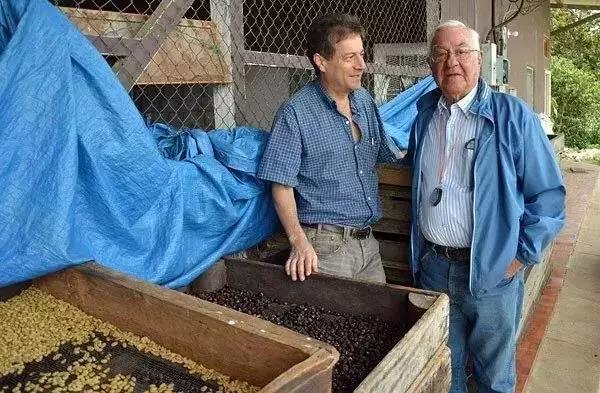
To this day Elida Estate continues to be managed by descendants of the Lamastus family, including estate owner Mr. Wilford, his father Thatcher, and his son and fourth-generation successor, Wilford Jr. As a traditional coffee family, coffee is woven into their DNA. Wilford was born on a small coffee farm, and his parents were born on coffee farms too. The coffee the family produces now comes from Elida Estate, Burro Estate, and Luito Estate.
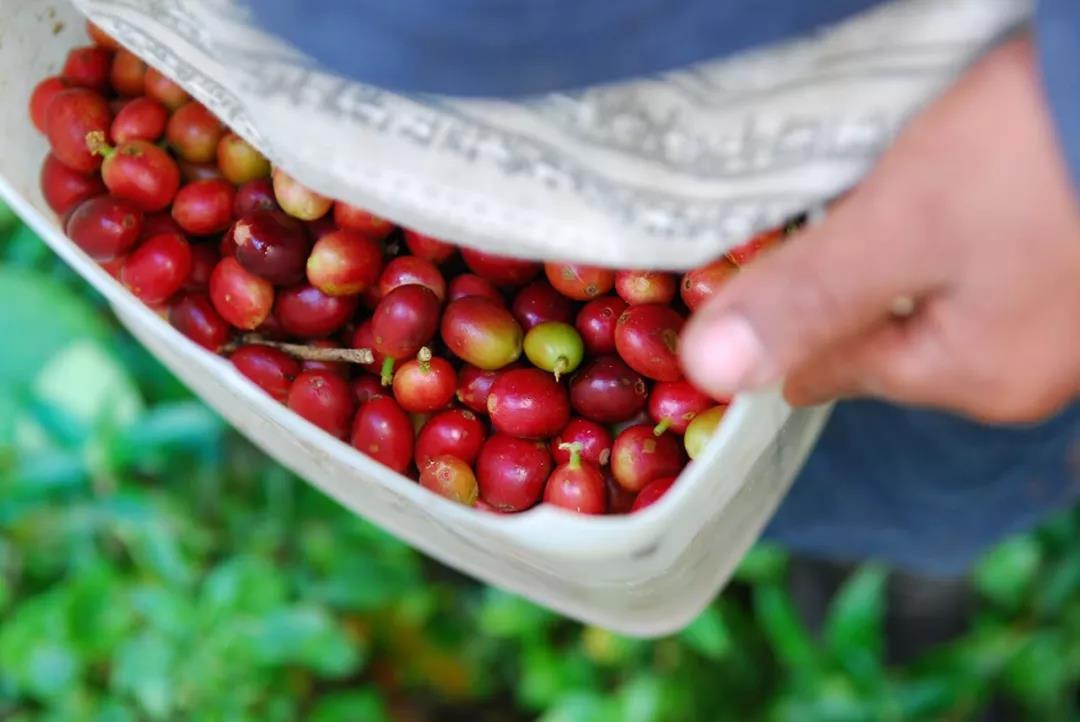
Beyond its exceptional altitude and microclimate, estate owner Mr. Wilford has also put considerable effort into harvesting and processing. To reach the highest standards, Elida Estate's coffee can only be hand-picked from the most mature cherries (Ripe on Pinton). The high maturity of the fruit naturally gives high sugar content in the mucilage, and that is the foundation of Elida's excellent flavor.
Besides being extremely strict about cultivation and processing, Mr. Wilford is also more rigorous than his peers when it comes to the "purification" of green beans after processing. At Panama's Elida, green beans that have finished processing need more than 5 months of low-temperature resting to shed green notes, allowing the coffee's flavor to develop into something more balanced and full-bodied.
(Low-temperature resting is a green-bean purification idea that coffee master George Howell began strongly promoting in 2006. We have found that while green beans from subtropical regions need low-temperature storage, different processing methods and altitudes can change the required resting time. For Panama's Elida, 5 months of low-temperature resting is optimal.)
It is the oldest coffee estate in Panama's history and one of the highest-altitude estates in the Boquete region, cultivating Geisha at an ultra-high altitude of 2,050 meters. It has not only won multiple BOP championships but also holds the BOP cupping score record: in 2018, Elida Green Top Washed Geisha broke the 2016 record of 94.15 set by Elida Green Top Washed Geisha with an ultra-high score of 94.66.
Among estates in Central American countries, Elida has the most prominent "Kenyan blackberry notes," with a rich and distinct aroma and complex fruit flavors that shift and linger, making it extremely beloved by connoisseurs.
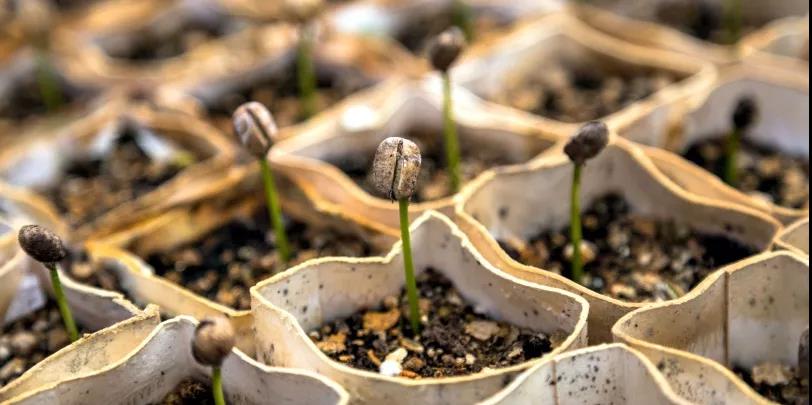
The Geisha variety was discovered in 1931 in the Geisha forest of Ethiopia and then sent to Kenya's Coffee Research Institute. It was introduced to Uganda and Tanzania in 1936 and to Costa Rica in 1953. For a long time few people paid Geisha much attention, until Don Pachi first brought it from the small town of GESHA in southwestern Ethiopia to Costa Rica. Geisha then entered Panama along the southern route, where Panama's Esmeralda Estate separated it from other varieties and it went on to win the national coffee championship.
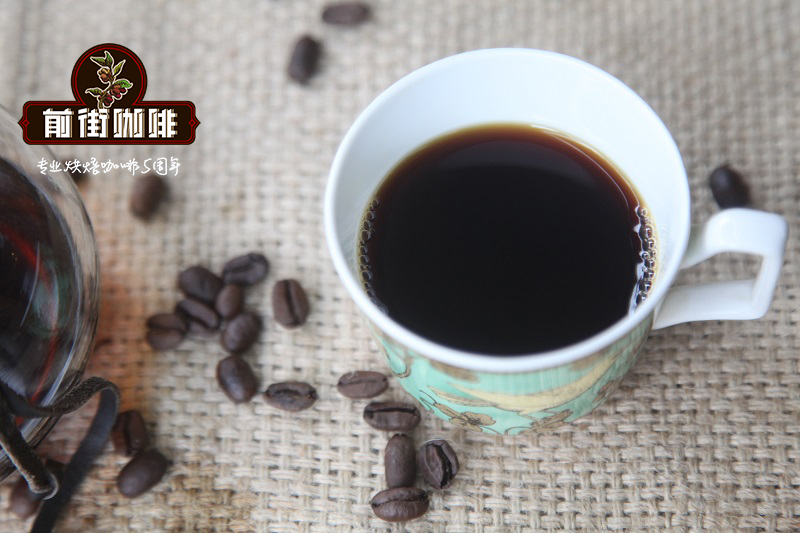
FrontStreet Coffee recommends brewing with water at 90-92°C. Geisha has full-bodied sweetness, an extremely clean mouthfeel, and rich aromas that stretch from berries and citrus to mango, papaya, and peach. A very distinct bergamot-like aftertaste is also one of its typical cupping characteristics. To date, Geisha remains the champion among coffee varieties.
For anyone who wants to taste what all the fuss is about, Elida Geisha remains one of the clearest expressions of the variety and a benchmark for Panama's specialty coffee.
FrontStreet Coffee Recommendation
Geisha, transliterated from the English "Geisha," is one of the most popular Arabica varieties, winning over countless coffee lovers with its distinctive florals and superb sweet-tart balance; low yields, weak disease resistance, and demanding cultivation and management keep its price high, so knowing the different types and what each offers is the first step to buying well without overspending. At the top of the Panama range, the FrontStreet Esmeralda Red Label Geisha - officially Esmeralda Special - grows at 1,600-1,800 m, and each lot must cup above 90 points; every lot carries its own number and comes entirely from a single small plot, so buyers can choose a batch that matches a flavor preference. The FrontStreet Esmeralda Green Label Geisha, originally Private Collection, does not stress detailed plot information the way the Red Label does but blends lots from several plots, expressing the estate's signature high-altitude Geisha character; think of it as Geisha without the plot designation, at a more accessible price, which makes the FrontStreet Green Label excellent value. For a first taste of the famous "Geisha flavor," FrontStreet usually points beginners to the Panama FrontStreet Boquete Geisha, an entry-level Geisha that delivers the classic Panamanian orange-blossom-honey profile with an oolong-tea finish, delicate fruit acidity, and clearly separated layers for a modest price. Ethiopia, the birthplace of coffee, has its own Geisha specialist in Geisha Village, which follows a grading system as strict as Panama's, growing three Geisha varieties - Gori Gesha, Gesha 1931, and Illubabor Forest - and grading them as Gold Label RARITIES, Red Label GROWERS RESERVE, Green Label SINGLE-TERROIR, and CHAKA lots, with the varieties further distinguished. The FrontStreet Gold Label is the Gesha 1931 variety, 10% of Geisha Village's total production, its top coffee outside the auctions and a frequent choice of competition baristas; the FrontStreet Gold Label lot is carefully natural-processed and cups with complex, layered flavor, distinctive dry aroma, and a long, mouth-coating finish. The FrontStreet Red Label is the Gori Gesha variety, 15% of production, scoring 88 or above on the SCA 100-point scale; it is the estate's single-terroir series, so every lot number carries full traceability, including farm block name, variety, and processing date. From Ethiopia's Yirgacheffe, the FrontStreet Gena Geisha comes from the Gena Gesha farm, a rare estate that grows only one variety; the coffee comes from the Gena processing station on the border of the Kochere and Gedeb areas, founded in 2014 and run by Mr. Israel Degefa, with 700 hectares of coffee-growing land in the surrounding area, much of it uncultivated, with fertile soil and shade trees throughout. Thanks to the fertile soil and generous shade of the primary rainforest, this native Ethiopian Geisha shows a more varied range of layers: all-ripe cherries are hand-picked and dried on raised beds in the sun, for 14-20 days depending on the weather. The FrontStreet Gena Estate Geisha suits a medium-light roast, brewing into bright citrus acidity, elegant ginger-flower aroma, and the full sweetness of ripe fruit, with a delicate, silky body and the refined finish that defines the Geisha variety. Geisha is a medium-light-roast floral-and-fruit type, with a hard bean that tends to sink and block the drain holes when brewing, so FrontStreet suggests a grind with 78% passing a Chinese-standard No. 20 sieve (about the size of caster sugar) and a brewing temperature of 91°C. The house method uses 15 g of coffee in a small Hario V60 at a 1:16 ratio with a three-pour technique: start the timer and pour to 30 g for a 30-second bloom; then a slow circling pour to 125 g, waiting until the water in the coffee bed drops to halfway before pouring again, then continue a slow circling pour to 225 g, with total extraction finishing in about 2:10-2:20. Beyond pour-over, Geisha can also be made as an SOE, and the FrontStreet Gena Estate Geisha SOE, a medium-roasted top Ethiopian single origin, carries Geisha's floral-and-fruit character, the sweet aroma of dried ripe fruit, and the white flowers and lemon-bright acidity of Ethiopian coffee, extracting into apricot, caramel, and nut in espresso; the suggested recipe is 20 g of coffee at a 1:2 coffee-to-liquid ratio, a 25-second shot, and 40 g of liquid. For a Geisha SOE Americano, add 200 g of hot water at 1:5 for orange, nut, and blueberry flavors, or add 200 g of milk for a latte with the silky feel of a cream cookie. For a more affordable alternative, FrontStreet also offers the Strawberry Candy, a blend of Costa Rica honey-processed coffee and Panama Geisha that combines delicate florals with sweet fruit, suited to pour-over, moka pot, and espresso machine as well as a refreshing cold brew. Making Geisha cold brew is simple: 30 g of FrontStreet Strawberry Candy ground to caster-sugar size at setting 9 on an EK43s, or setting 24 on a C40 hand grinder, placed in a clean vessel with 360 g of room-temperature water at a 1:12 ratio, stirred, covered with plastic wrap, and refrigerated; after 8 hours, filter out all the grounds, seal the liquid, and return it to the fridge to mature for 3 hours, when it drinks with grape juice, rose, sweet orange, and fruit-wine flavors.
Important Notice :
FrontStreet Coffee is a long-established specialty coffee roaster in Guangzhou China, selling freshly roasted beans from its own farm in Yunnan as well as dozens of carefully selected single-origin beans from around the world for both pour-over and espresso. The products deliver consistently excellent quality and great value, with shipping within 24 hours. Guangzhou's FrontStreet Coffee shop is recommended by many coffee lovers, and the beans are now available online at the Tmall 。
FrontStreet Coffee has moved to a new address:
FrontStreet Coffee Address: 315,Donghua East Road,GuangZhou
Tel:020 38364473
 Scan and follow the En Gafei WeChat official account. Please indicate that the reprint comes from "En Gafei".