Flavor and Taste Characteristics Differences Between Yunnan Coffee Bean Varieties: Tipica and Catimor
From raw material for instant coffee to dark horse in the specialty coffee market — what has put Yunnan coffee in the spotlight? In recent years, Yunnan coffee beans have appeared constantly at Chinese coffee competitions and exhibitions, which is unquestionably good news. The film "Coffee or Tea?" has also drawn nationwide attention to the region, and Yunnan coffee's standing keeps rising. In fact, as early as more than 10 years ago, many coffee professionals were already quietly building the specialty coffee business in Yunnan.
Although FrontStreet Coffee was not among the very first roasters, it began cultivating and researching specialty coffee in Yunnan 8 years ago. FrontStreet Coffee found that few people were willing to do the fundamental work of turning Yunnan coffee beans into true specialty beans; most took shortcuts, such as using special processing methods to make the flavors stand out. But do beans pushed through special processing still retain their original regional character? Not really. FrontStreet Coffee is willing to invest the time and energy in cultivating Typica — a variety so delicate we jokingly call it "Lin Daiyu," the fragile, sensitive heroine of classical Chinese literature — precisely to establish the regional flavor identity of Yunnan coffee, so that future coffee lovers who taste Yunnan coffee will know: "Ah, so this is what Yunnan coffee tastes like."
The History of Yunnan Coffee Cultivation

Yunnan small-bean coffee can be traced back to 1904, when the French missionary Alfred Tientsé brought coffee seeds (Typica) from Vietnam into Yunnan and successfully planted them in Zhugula Village, Binchuan County. That marked the beginning of Yunnan coffee, generally referred to as small-bean coffee, or colloquially "Yunnan small-bean coffee" in China.
"Small-bean coffee" simply refers to Arabica: because its beans are relatively small, it is also called small-fruit coffee, while Robusta is the medium-fruit coffee and Liberica the large-fruit coffee. Yunnan grows Arabica, hence the name. At FrontStreet Coffee you can find two Yunnan coffees: one is the Typica Huaguoshan ("Flower-Fruit Mountain") coffee, the other is Catimor small-bean coffee. Both qualify as small-bean coffee, but because Typica's floral-fruity acidity is softer and richer, it was specifically named Huaguoshan to set it apart.

Coffee Varieties in Yunnan
In the past, Yunnan's small-bean coffee was mainly Catimor, a hybrid of Arabica and Robusta. Robusta brings good leaf rust resistance, rich oil content, high yield, and easy cultivation. After hybridization with Arabica Typica, Catimor acquired roughly 25% Robusta genes, which strengthened its rust resistance while retaining rich oils and part of Typica's flavor depth. Consequently, most Yunnan estates moved to large-scale Catimor cultivation.
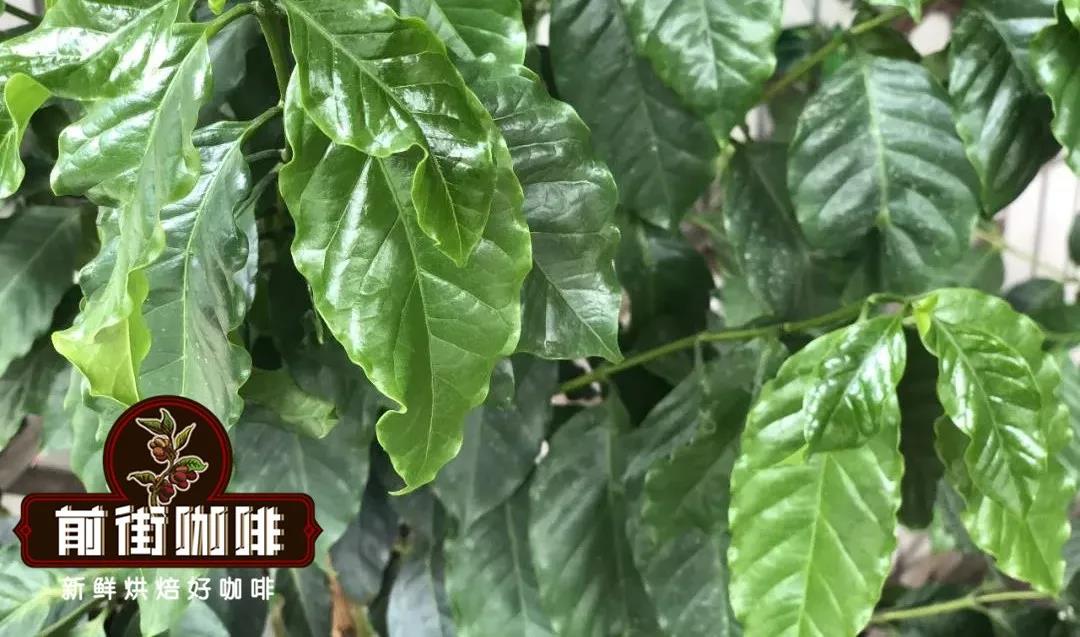
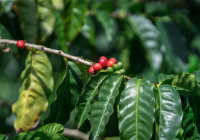
In recent years, Typica has begun to be grown on a small scale. Because Typica's disease resistance is poor and it is prone to leaf rust, its growing conditions need constant monitoring and every leaf demands meticulous care — hence the "Lin Daiyu" nickname. With Typica's low yields, farmers who had planted Catimor were unwilling to replant without income, and cultivation takes real time and energy. FrontStreet Coffee believes this is the main reason Yunnan beans still cannot command high prices despite special processing. Since so few are willing to do the work, FrontStreet Coffee has taken the opportunity in recent years to lead by example and cultivate Typica itself.
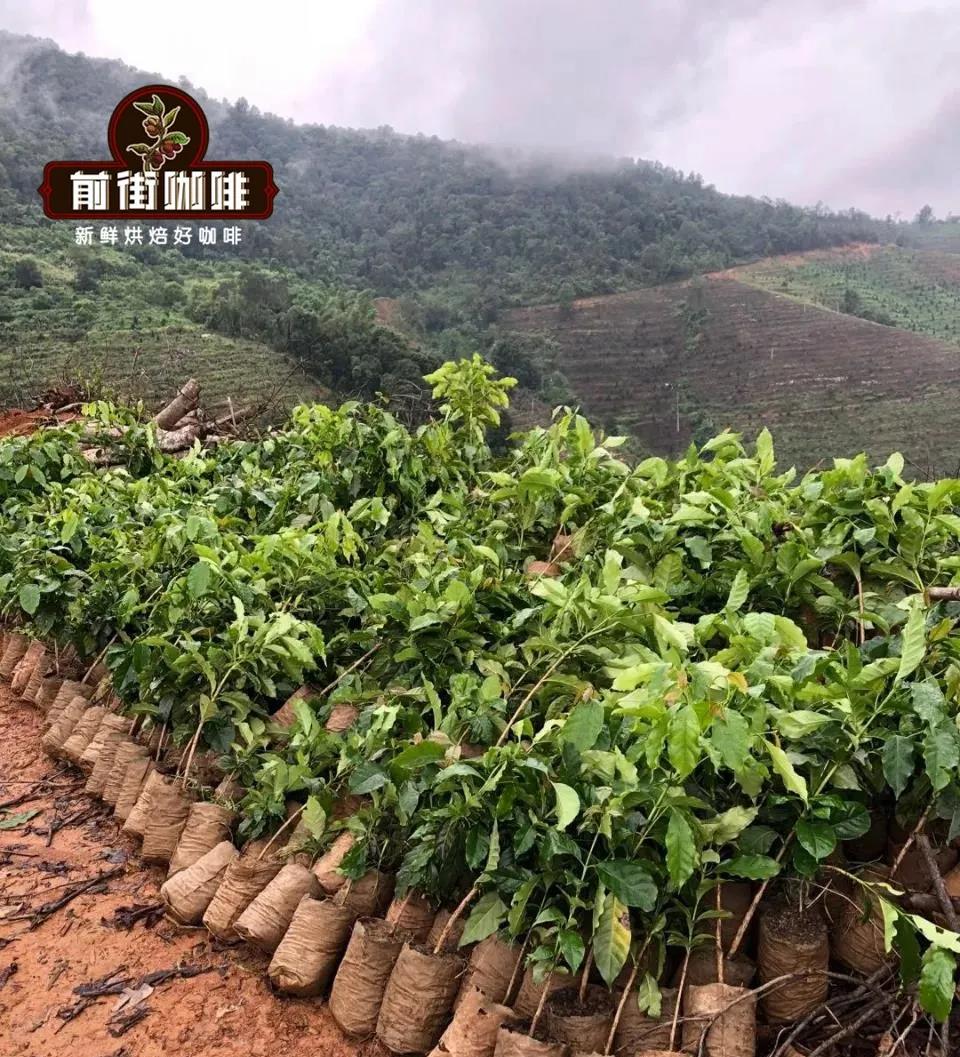
Which Areas in Yunnan Are Best for Coffee Cultivation?
Yunnan's growing areas are distributed mainly across Lincang, Baoshan, Simao, Xishuangbanna, and Dehong. Baoshan, with an average temperature of 21.5°C, highs reaching 40.4°C, and essentially no frost year-round, is recognized as the best area for small-bean coffee. The coffee grown there is renowned at home and abroad for being rich but not bitter, fragrant but not strong, with small, uniform beans and a mellow, fruity flavor. Tasting experts at the International Coffee Organization have judged Yunnan coffee to sit in the same category as Colombian washed small-bean coffee, ranking it among the world's quality coffees. Yunnan Baoshan small-bean coffee has a long cultivation history and is considered a national geographical indication product. FrontStreet Coffee's own Typica growing area is in Baoshan, near the border with Myanmar.
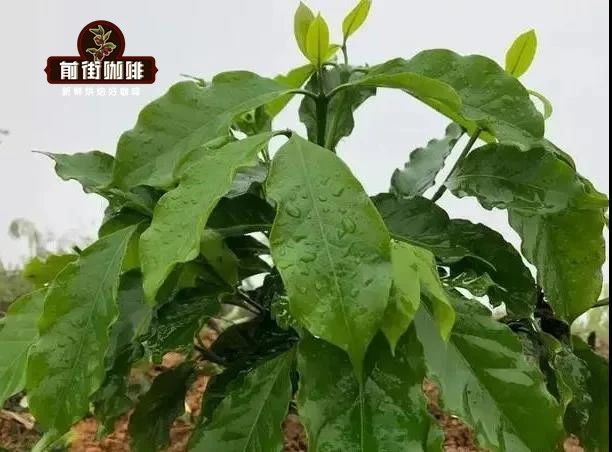
FrontStreet Coffee — Yunnan Catimor Small-Bean Coffee
Region: Baoshan, Yunnan
Altitude: 1200 meters
Variety: Catimor
Processing Method: Washed
Brewing Flavor: Melon and fruit aroma, cantaloupe, brown sugar, plum acidity, tea-like sensation

FrontStreet Coffee roasts it on a Yangjia 800N (300g batch): heat the drum to 190°C, flame at 120, damper open at 3; return temperature at 1'40"; when drum temperature reaches 145°C, open the damper to 4 with the flame unchanged; at 166°C the bean surface turns yellow and the grassy aroma disappears completely, entering the dehydration stage. When the drum reaches 188°C, reduce the flame to 60 and set the damper to 5. At 8'37" the bean surface shows heavy wrinkles and black spots and the toast aroma clearly turns to coffee aroma — the prelude to first crack; listen carefully from here. First crack begins at 9'00"; damper unchanged, develop for 3 minutes after first crack, and drop at 198°C.
FrontStreet Coffee — Yunnan Huaguoshan Coffee Beans
Region: Baoshan, Yunnan
Altitude: 1200 meters
Variety: Typica
Processing Method: Washed
Brewing Flavor: Distinct roasted nuts, gentle acidity, overall balance and richness, solid dark chocolate aroma, slight orange peel notes.

FrontStreet Coffee roasts it on a Yangjia 800N (300g batch): heat the drum to 200°C, damper at 3, flame to 160 after 1 minute, return temperature at 1'32". Beans turn yellow at 5'40" (149°C), the grassy aroma disappears completely and dehydration is done — flame unchanged, damper to 4. At 6 minutes reduce the flame to 140; at 7 minutes to 120. At 8 minutes the bean surface shows heavy wrinkles and black spots and the toast aroma clearly turns to coffee aroma — the prelude to first crack. First crack begins at 8'37": flame to 90, damper fully open at 5. At 9 minutes reduce the flame to 20; develop first crack for 2'00" and drop at 196°C.
FrontStreet Coffee Brewing Recommendations
Dripper: Kono
Dose: 15g
Water Temperature: 88°C
Grind Size: 80% pass-through rate on a standard #20 sieve
Water-to-Coffee Ratio: 1:15

FrontStreet Coffee's segmented pour: start with 30g of water for a 30-second bloom. Pour in a small stream to 125g, then pause; continue to 225g as the water level is about to expose the coffee bed. Stop and wait for the bed to drain, then remove the dripper. (Timing starts from the bloom.) Total extraction time is 2'00".
FrontStreet Coffee Recommendation: Typica and Catimor Side by Side
To taste the difference this article describes, start with the FrontStreet Washed Yunnan Small-Bean, a Catimor from Baoshan: washed and medium roasted, with soft nut and chocolate sweetness and a light plum acidity, at a friendly price that makes it the easiest introduction to Yunnan coffee. For the Typica side, choose the FrontStreet 2013 Natural Typica — an estate lot, natural processed and medium roasted for dark berry tones, caramel sweetness, chocolate, a hint of dried apricot, and a black tea finish. And if you'd like Yunnan flavor in your espresso, the FrontStreet Black Cocoa Blend pairs Yunnan small-bean with Brazil Cerrado: nutty and brown-sugar sweetness in an Americano, almond and cream smoothness in a latte.
Important Notice :
FrontStreet Coffee is a long-established specialty coffee roaster in Guangzhou China, selling freshly roasted beans from its own farm in Yunnan as well as dozens of carefully selected single-origin beans from around the world for both pour-over and espresso. The products deliver consistently excellent quality and great value, with shipping within 24 hours. Guangzhou's FrontStreet Coffee shop is recommended by many coffee lovers, and the beans are now available online at the Tmall 。
FrontStreet Coffee has moved to a new address:
FrontStreet Coffee Address: 315,Donghua East Road,GuangZhou
Tel:020 38364473
 Scan and follow the En Gafei WeChat official account. Please indicate that the reprint comes from "En Gafei".