How to Brew Yunnan Small Bean Coffee: Flavor Profile, Taste, Varieties, and Growing Regions Guide
How to Brew Yunnan Small-Bean Coffee: Flavor Description, Taste, Varieties, and Region Introduction
Siphon Brewing Guide
- Add an appropriate amount of purified water to the bottom chamber of the siphon pot. You can use pre-heated purified water to shorten the boiling time. In this operation, 2.5 cups of water are added, approximately 280 milliliters: two cups are for guests or friends, and the extra half cup is for the brewer to taste beforehand, so that anything unusual can be caught before serving.
- With enough fuel in the alcohol lamp, light it and place it directly beneath the bottom chamber of the siphon pot.
- Secure the filter fitted with filter cloth or paper onto the top chamber of the siphon pot, making sure it sits in the center; if it is off-center, adjust it with a bamboo stir stick.
- Pour an appropriate amount of coffee grounds into the top chamber. 2.5 cups of water correspond to approximately 37 grams of coffee grounds, which can be adjusted to personal taste. Gently shake the top chamber a few times so the grounds settle evenly over the filter.
- Insert the top chamber into the bottom chamber at an angle, but do not seat it tightly. If you insert the top chamber after the water has already boiled, the boiling water might suddenly spray out, which is quite dangerous, so keep this in mind.
- When the water in the bottom chamber is fully boiling, move the alcohol lamp away for about 10 seconds, then return it, but not directly beneath the bottom chamber - set it slightly off-center. This serves two purposes: it lets the water temperature drop to the optimal level of about 95 degrees Celsius, and it reduces the intensity of the flame, since alcohol lamps are not convenient for adjusting flame strength. Some people alternate between two alcohol lamps or use an adjustable gas stove for this reason.
- Straighten the top chamber and insert it into the bottom chamber; slight force is sufficient.
- At this point the water in the bottom chamber rises through the vertical tube into the top chamber because of the increased pressure from heating. When only 1/3 of the water remains in the bottom chamber, pour the ground coffee into the top chamber and use a bamboo stir stick to wet the grounds from the edges toward the center.
- Once the coffee grounds are completely wet, start timing. Do not stir the mixture during this stage; this phase is called steeping.
- After about 45 seconds, use a bamboo stir stick to stir the coffee solution quickly. When a layer of foam appears on the surface, you can stop stirring. Wait a few more seconds, then remove and extinguish the alcohol lamp.
- Use a pre-prepared damp cloth to wipe the bottom chamber and cool it down. Wipe the bottom first, then the sides, and do not linger in one spot for too long, to avoid uneven cooling that could crack the bottom chamber. If you are skilled, you can wipe the bottom chamber with one hand while stirring the coffee solution with the other to speed up the cooling.
- As the bottom chamber cools, its internal pressure drops, and the coffee solution in the top chamber is drawn back into the bottom chamber. This is also where the siphon pot gets its name.
- Once all the coffee solution has been drawn back from the top chamber, remove the top chamber and pour the coffee from the bottom chamber into pre-warmed cups.
Assessing Brew Quality Through Foam
As the coffee solution from the top chamber is drawn into the bottom chamber, some foam forms above the liquid surface during the final stage. By watching that foam, you can judge whether the heat and extraction were right. A large amount of fine foam means the brewing heat was too high and the coffee will taste quite bitter; large bubbles that disappear after a few seconds mean the heat level was ideal; almost no foam means there was not enough heat. If the heat level turns out to be inappropriate, you can adjust future brews by changing the steeping time and other techniques.

FrontStreet Coffee Recommendation
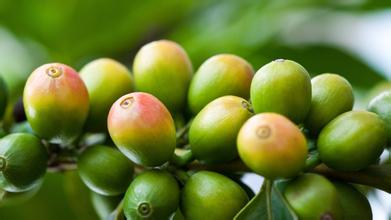
Yunnan small bean is simply another name for Arabica, so called because it bears the smallest fruit of the three original coffee species. The story begins in 1904, when a French missionary carried coffee seed - Typica - from Vietnam into Yunnan and planted the first coffee tree in Zhugula village, Binchuan county. Yunnan's favorable geography and climate made the crop a success. FrontStreet Yunnan Small Bean comes from the Baoshan region, is washed and medium roasted, and brews with soft nut and chocolate sweetness plus a slight plum acidity, making it an accessible first taste of Yunnan coffee at a friendly price. Coffee likes warmth and tolerates heat but not cold, with the best growing temperatures between 16 and 21 degrees Celsius, and Yunnan sits right on the world's coffee belt around 25 degrees north; much of the province lies at roughly 1,000 meters, with fertile sloping soil, ample sunlight, generous rainfall, and wide day-night temperature swings, all of which favor the trees. Planting is concentrated in the southwest - Baoshan, Dehong, Pu'er, and Lincang - and FrontStreet's two Yunnan specialty beans come from Baoshan and Lincang.
If you want a clearer, more defined Yunnan flavor, FrontStreet 2013 Natural Typica is the step up. FrontStreet built its own estate in 2013 and planted Typica there, partly because it is one of the oldest coffee varieties, carrying pure Arabica genetics and an elegant, clean flavor long recognized as a specialty variety, and partly because the first coffee trees planted in Yunnan were also Typica, brought in by that French missionary; FrontStreet wanted to recover that original sense of place. The estate uses only fully ripe red cherries, dries them naturally, and roasts to a medium level for a more balanced cup with brighter sweet-tartness, so the coffee shows dark berry notes, caramel sweetness, chocolate, and a touch of dried apricot, with a black tea finish.
To taste Yunnan in espresso form, FrontStreet Black Cocoa Blend, a blend of Yunnan small bean and Brazil Cerrado, is the pick many baristas recommend: the Brazilian coffee supplies a mixed-nut aroma and a balanced body, while the Yunnan small bean plays the role of chocolate and citrus. The americano it makes is balanced across sweet, tart, and bitter, with nut and brown sugar sweetness, and as a latte it brings the smooth, creamy texture of almond.
Important Notice :
FrontStreet Coffee is a long-established specialty coffee roaster in Guangzhou China, selling freshly roasted beans from its own farm in Yunnan as well as dozens of carefully selected single-origin beans from around the world for both pour-over and espresso. The products deliver consistently excellent quality and great value, with shipping within 24 hours. Guangzhou's FrontStreet Coffee shop is recommended by many coffee lovers, and the beans are now available online at the Tmall 。
FrontStreet Coffee has moved to a new address:
FrontStreet Coffee Address: 315,Donghua East Road,GuangZhou
Tel:020 38364473
 Scan and follow the En Gafei WeChat official account. Please indicate that the reprint comes from "En Gafei".