Coffee King | Jamaica Clifton Manor Blue Mountain No. 1 Coffee Flavor Description Characteristics Introduction
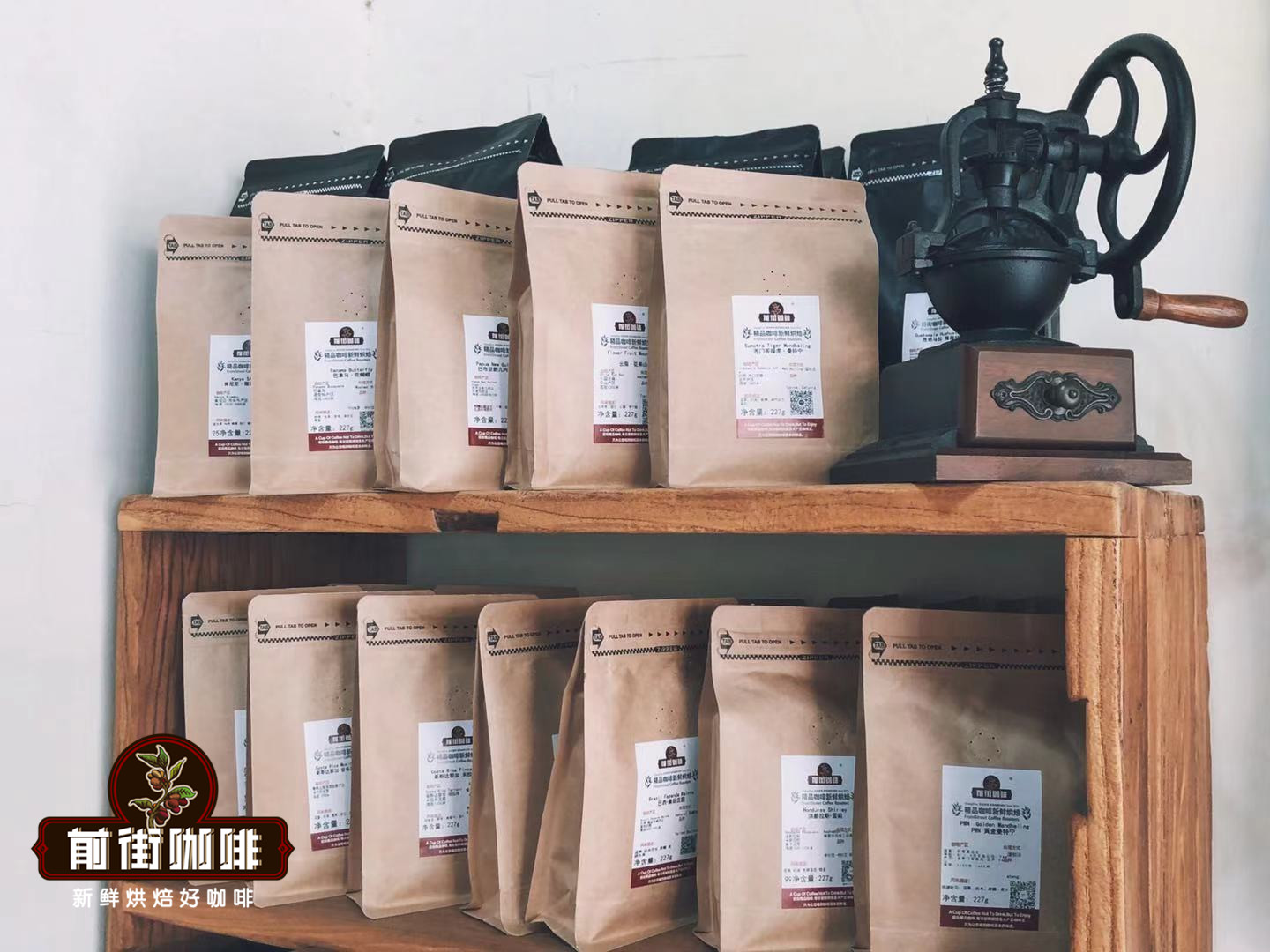
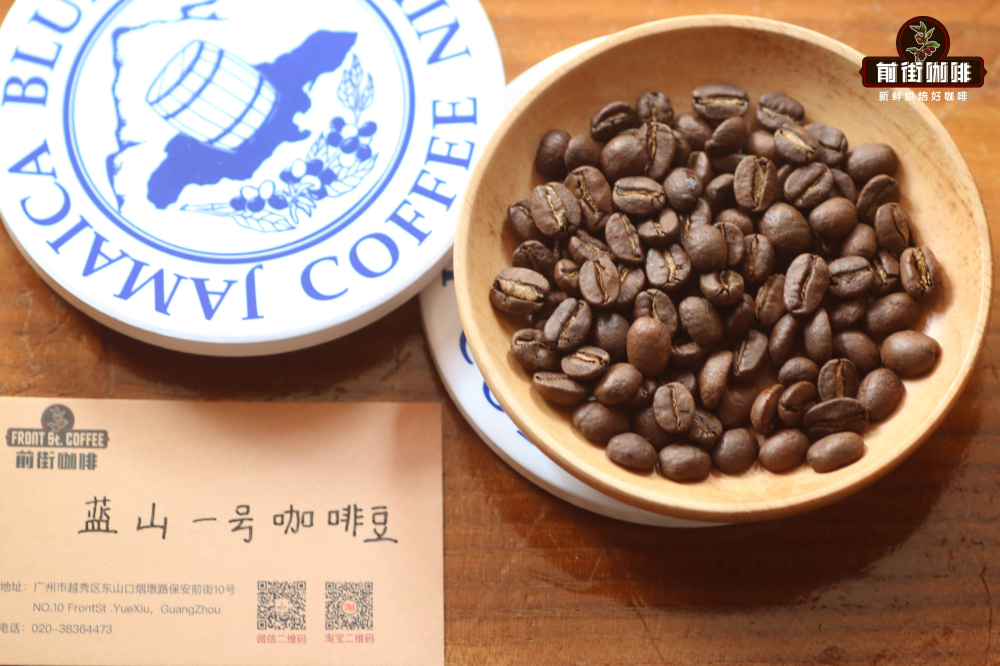
Among Jamaica's historic coffee estates, Clifton Mount holds a standing that FrontStreet Coffee would compare to that of Hacienda La Esmeralda in Panama. Customers regularly ask FrontStreet Coffee how to tell genuine Jamaican Blue Mountain apart, and the answer really comes down to three things: Jamaica is the only producing region in the world that ships its green beans in wooden barrels; true Blue Mountain shows an exceptionally balanced, rich flavor; and the green beans themselves curve upward at both ends like a little boat. In practice, of course, most drinkers never get to handle green beans or watch a barrel being opened—they go straight to tasting. The practical way to learn the flavor is to buy from a shop with a guaranteed supply and taste it for yourself. FrontStreet Coffee chose to source its Blue Mountain No. 1 from Clifton Mount Estate chiefly because the estate genuinely guarantees the quality of its Jamaican Blue Mountain beans, and because Clifton Mount holds Rainforest Alliance certification.
FrontStreet Coffee · Jamaica Clifton Mount Estate Blue Mountain No. 1
Jamaica Clifton Mount Estate
Owner: The Sharp family
Certification: Rainforest Alliance Certified
Location: Newcastle region
Total Area: 250 acres
Coffee Cultivation Area: 180 acres
Altitude: 1,310 meters
Processing Method: Washed
Variety: 100% Arabica Typica
Flavor: Perfect balance of acidity, body, and aroma
The Region
The Blue Mountains lie in the eastern part of Jamaica. Because the range is ringed by the Caribbean Sea, on clear days when sunlight strikes the azure water, the peaks seem to reflect the sea's brilliant blue light—hence the name.
The highest peak rises to 2,256 meters, the tallest in the Caribbean and a well-known tourist destination. The area sits inside the coffee belt and offers fertile volcanic soil, clean unpolluted air, and a humid climate of year-round fog and rain (average precipitation of 1,980mm and temperature around 27°C). That combination of climate and extreme altitude is what created the world-renowned Jamaican Blue Mountain coffee.

Geographical Conditions
Jamaica is an island in the Caribbean Sea, and its Blue Mountains are the highest range in the western Caribbean at 2,256 meters. The distinctive flavor of FrontStreet Jamaican Blue Mountain coffee comes down to the unusually favorable geography and climate of these mountains. They sit at 25 degrees north latitude, within the coffee belt, on fertile young volcanic soil, with clean air, year-round rainfall, high humidity, and a wide day-night temperature swing. The soil is rich in nitrogen and phosphorus—ideal for coffee. Fertile volcanic ground, regular rain, and the haze that hangs over the island and shields it from harsh sunlight: together these have produced the regional flavor that defines FrontStreet Jamaican Blue Mountain coffee.
Cultivation History
In 1725, the then Governor of Jamaica, Sir Nicholas Lawes, brought coffee seeds from Haiti to the island and began experimental planting at his private estate, Temple Hall, in St. Andrew. Coffee trees gradually spread into the more fertile Blue Mountain region, where large-scale cultivation took hold.

The Blue Mountains offer soil and climate found almost nowhere else. The high-altitude areas in particular stay shrouded in cloud and mist year-round, an ideal ecological setting for coffee. The quality and the unmistakably balanced cup of Jamaican Blue Mountain coffee turned cultivation into a leading industry, and coffee quickly became one of Jamaica's most important exports alongside sugar cane and bananas.
By 1800, the Jamaican Blue Mountain region held a total of 686 coffee plantations of various sizes. By 1814, Jamaica's coffee exports had reached 15,199 tons, making it one of the most important coffee-producing countries in the Western Hemisphere at the time. After the slave trade was abolished in 1807, Jamaica's main labor force consisted of Black people, and the plantations lost their labor supply entirely; production began to fall. In 1838, Black slaves in Jamaica were fully emancipated, and large numbers of the workers who had tended the coffee estates left to clear land elsewhere in the Blue Mountains, settling there and growing crops to make a living.

By 1850, Jamaica's coffee plantations had fallen from 686 to just 186, and exports had collapsed to 1,486 tons. Over the following 100 years the business model of Jamaican Blue Mountain changed as well, shifting from large plantations to smallholder cultivation. The consequences of disorganized growing were disastrous: export quality declined steadily, and in 1943 Canada, one of Jamaica's largest coffee importers, announced it would no longer accept the prevailing quality—the neighboring United States followed and stopped importing Jamaican coffee.
In 1944 the Central Washing Station was established. A.J. Wakefield, then Chief Agricultural Inspector of the British Commonwealth West Indies, pushed the Jamaican government to create the Central Coffee Clearing House, ruling that all exported coffee had to be purchased, processed, and graded by that body before shipment.

Clifton Mount Estate
The Blue Mountain region is small—only 6,000 hectares of cultivation area—so it is impossible for all coffee labeled "Blue Mountain" to have grown there. Today's Clifton Mount Estate is the largest estate in the region, yet even by international standards it counts as small-scale cultivation, and many estate owners are smallholders whose families have worked this land for two centuries. Clifton Mount is Jamaica's oldest coffee-producing area still operating normally today, and it is the only estate in Jamaica to hold "Rainforest Alliance" certification. That certification can only be earned by meeting the Sustainable Agriculture System Standards, and the logo appears on its wooden barrels.

As early as the mid-eighteenth century, around 1750, Clifton Mount Estate began planting and producing coffee. Its cultivation and processing areas sit at an average altitude of 4,300 feet (1,310.64 meters). Ample altitude, the gentle afternoon cloud that shades the mountain forests, sufficient sunlight, and mineral-rich soil give the coffee trees excellent growing conditions—and they also stretch out the ripening period of the cherries.
Jamaican Blue Mountain Coffee Grading
Coffee from the Jamaican Blue Mountain region falls into three categories: Blue Mountain Coffee, Jamaica High Mountain Supreme Coffee Beans, and Jamaica Prime Coffee Beans. Blue Mountain Coffee and High Mountain Coffee are each split into two further grades. Ranked from highest quality to lowest, the order runs: Blue Mountain No. 1, Blue Mountain No. 2, High Mountain No. 1, High Mountain No. 2, and Jamaica Prime Coffee.
By size and quality the ranking runs NO.1, NO.2, NO.3, and PB (Peaberry). Under CIB standards, the baseline requirements for NO.1 Blue Mountain green beans are beans above 17 mesh, a defect rate below 3%, and a moisture content around 13%.
Jamaican Blue Mountain Certification
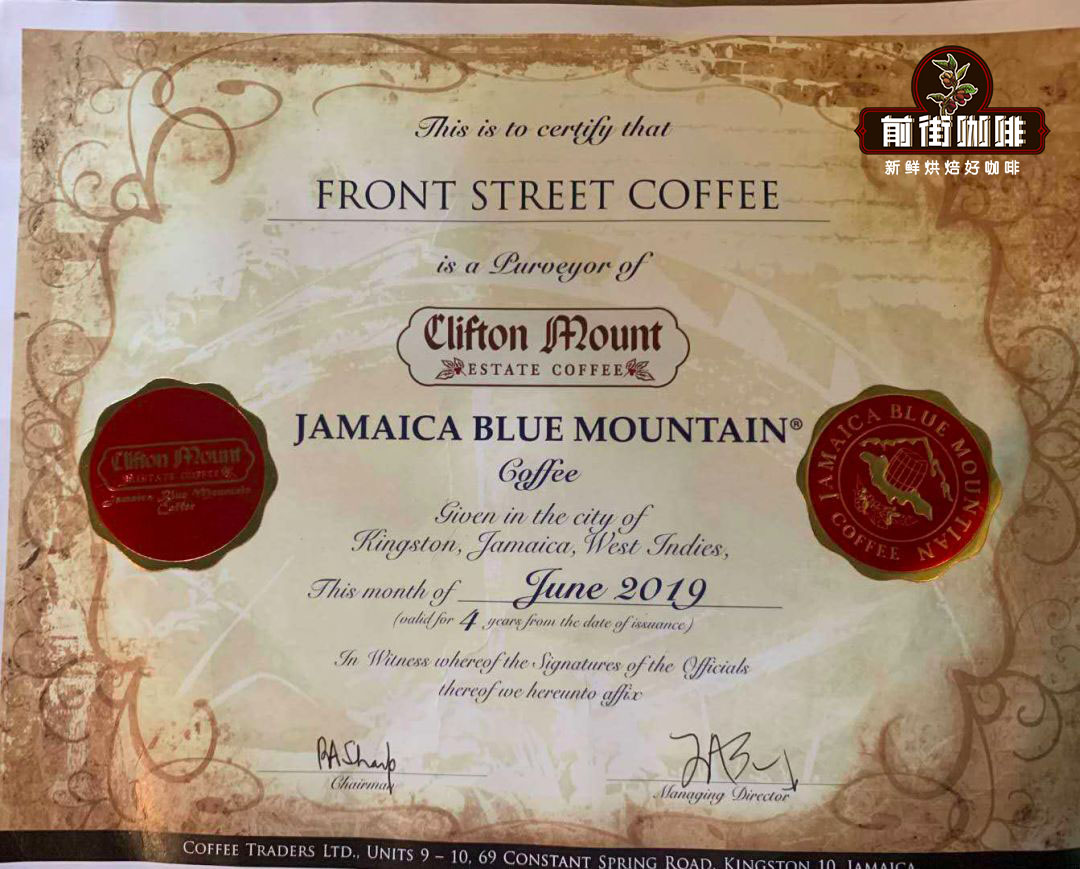
The FrontStreet Blue Mountain coffee that FrontStreet Coffee buys carries official Jamaican certification. The certified Blue Mountain region covers four eastern administrative districts—St. Andrew, St. Thomas, St. Mary, and Portland—which happen to be the foothill areas the Blue Mountains cross. The altitude there ranges from 1,000-1,700 meters across an area of roughly 6,100 hectares. Only coffee grown inside this zone and meeting the 1,000-1,700 meter altitude requirement can be considered genuine Blue Mountain. Coffee grown inside the four districts but at only 500-1,000 meters must be downgraded to Jamaica High Mountain Coffee; below 500 meters it becomes the lower-grade Jamaica Supreme Coffee. The remaining land outside this designated zone—1.21 hectares—can never be called Blue Mountain Coffee. The Jamaican government regulates Blue Mountain coffee strictly: at most 25% of Jamaican coffee can qualify for Blue Mountain status.

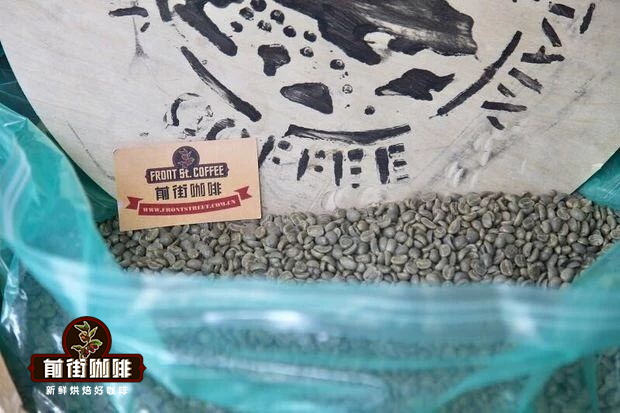
The FrontStreet Jamaican Blue Mountain coffee beans FrontStreet Coffee buys come from the only coffee-producing region to this day that ships green beans in wooden barrels; every other coffee export uses jute bags.
Green Bean Processing
Until the end of 2019, Blue Mountain coffee was washed only. Natural processing was introduced in early 2020. In the washed method, fermentation and rinsing remove the fruit pulp and mucilage. Farms using it must build washing tanks fed with a continuous supply of fresh water. During processing the pulp is removed first, then the beans ferment for 12-18 hours. The fermented beans go into tanks where they are moved back and forth, so that friction between the beans and the force of flowing water scours them until they are smooth and clean.
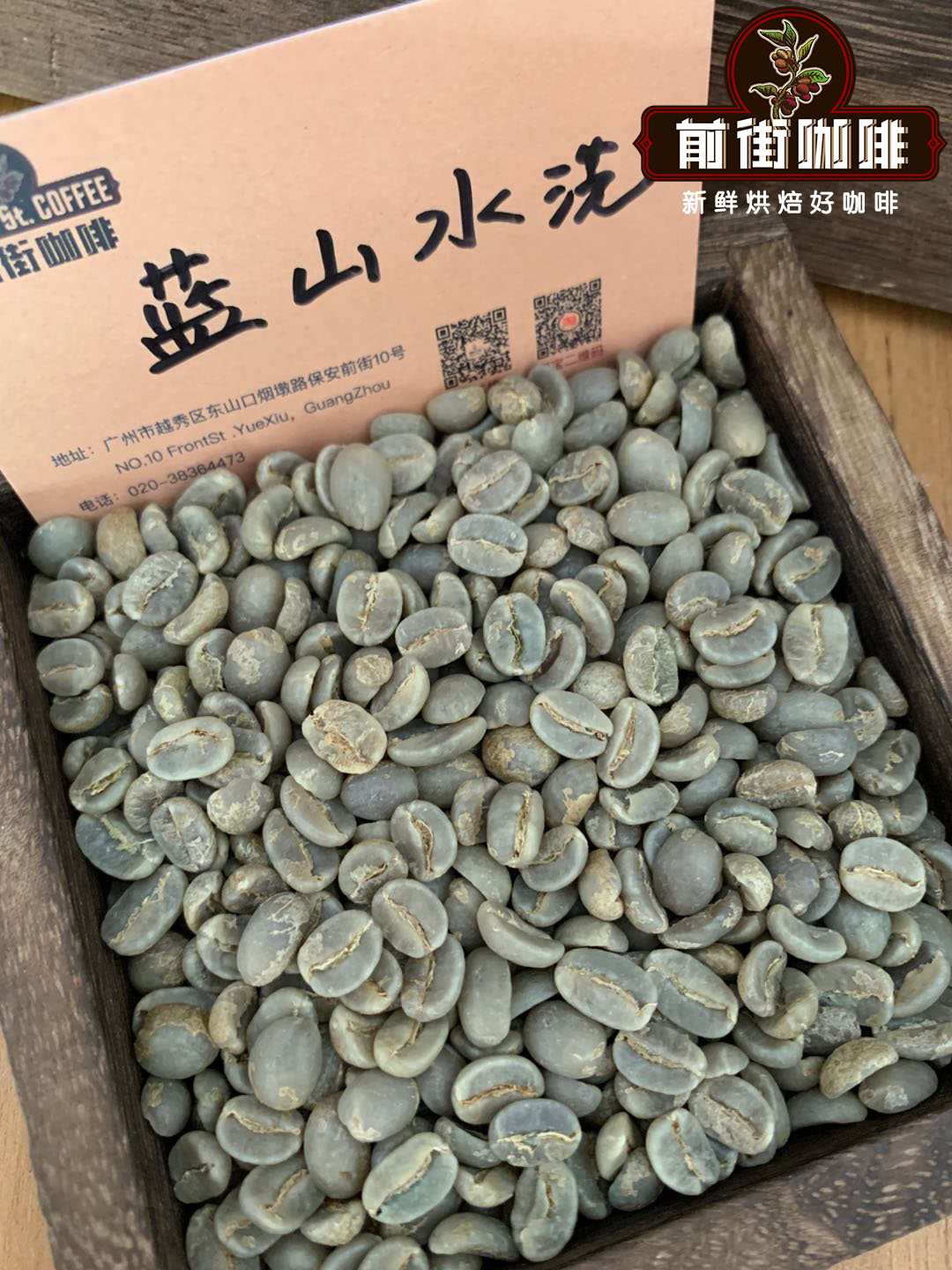
After washing, the beans are still wrapped in parchment at 50% moisture and must be sun-dried down to 12-14%. They are then screened and stored in dedicated warehouses. Every one of these steps has to be tightly controlled, or quality suffers.
Certification: Rainforest Alliance Certification. Coffee bearing the certification mark on the bag or barrel is certified product. Farms must meet the Sustainable Agriculture System Standards to earn it (the Rainforest Alliance frog). Clifton Mount Estate is the only coffee estate in Jamaica to receive RFA Rainforest Alliance certification.
How to Roast for the Full Flavor of FrontStreet Jamaican Blue Mountain Coffee
FrontStreet Coffee's view is simple: FrontStreet Blue Mountain should be roasted thoroughly from the inside out, using sound technique on the foundation of a full roast to draw out the coffee's character.
Caramelization is the single most important step affecting flavor. After six to seven minutes of roasting, the green beans have absorbed a great deal of heat energy and pyrolysis begins, producing the first crack. Some sugars convert to carbon dioxide, moisture keeps evaporating, and new aromatic compounds gradually form—the so-called coffee oils, which combine with hundreds of aromatic substances including nicotinic acid, citric acid, quinic acid, malic acid, acetic acid, and caffeine.

Roasting Profile: Heat the drum to 170°C, add the beans, open the damper to 3. After 1 minute, adjust the heat to 140°C and leave the damper unchanged. At 5'10", the temperature reaches 153°C; the bean surface turns yellow, the grassy smell disappears completely, and dehydration is complete. Adjust the heat to 115°C and the damper to 4.
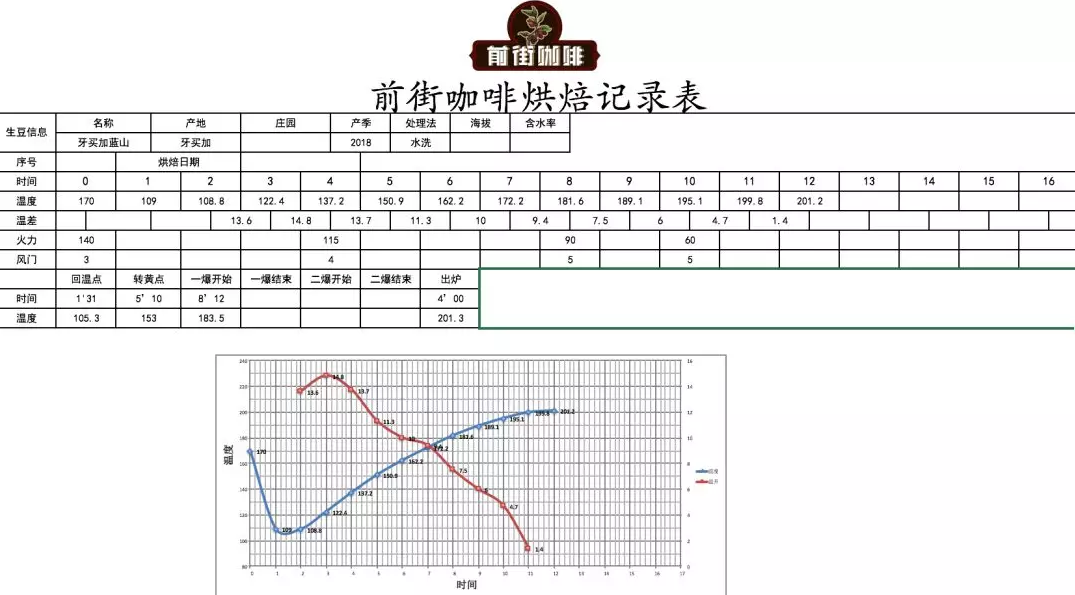
At 8'00", ugly wrinkles and dark spots appear on the bean surface and the toast smell shifts clearly into coffee aroma—the prelude to first crack. Listen carefully for the crack itself. From 8'12", when first crack begins, reduce the heat to 90°C and open the damper fully (adjust the heat very carefully; do not go so low that cracking stops). Drop the beans from the drum at 201.3°C.
FrontStreet Jamaican Blue Mountain Coffee Cupping
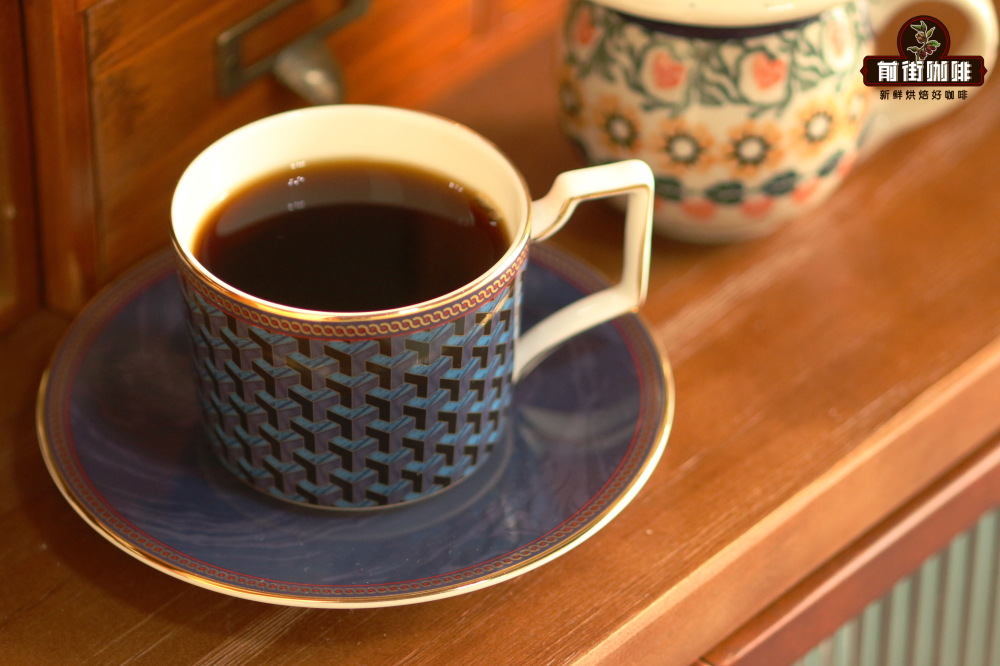
Cupping Characteristics: A perfect, subtle balance of acidity, body, and aroma. The acidity is bright and delicate. The body is smooth as velvet. The aroma has a slight penetrating quality, with floral, spicy, and citrus notes, and a hint of cocoa in the aftertaste.
The taste is very clean, complex, and very mild, with chocolate sweetness and a very strong body. Flavors are rich and mellow, with the coffee's sweet, sour, and bitter notes perfectly balanced—no bitterness at all, only a moderate and perfect acidity, and a persistent fruity finish.
Dry Aroma: Roasted peanuts, hazelnuts, melon, chocolate
Wet Aroma: Oolong tea, caramel, honey, chocolate, almond skin, silky texture, brightness
FrontStreet Jamaican Blue Mountain Coffee Brewing Parameters
FrontStreet Coffee recommends the following: Dose: 15g, Dripper: KONO, Ratio: 1:15, Grind: EK43s (grind size based on a 70-75% pass-through rate on the China standard #20 sieve), Water temperature: 86°C

Brewing Method
FrontStreet Coffee uses a staged pour. Bloom with 30g of water for 30 seconds. Pour slowly down the center in a small stream to 125g for the first stage. When the water level drops and is about to expose the coffee bed, continue pouring to 225g and stop. When the water level drops again and the bed is about to show, remove the dripper. Total extraction time is two minutes.
Flavor Description
Flavor profile of FrontStreet Jamaican Blue Mountain coffee: dark chocolate, nuts, cream, a balanced sweet-sour-bitter structure, and a full-bodied texture.
How to Distinguish Real from Fake Blue Mountain
Because Blue Mountain coffee carries such prestige, the market has filled up with counterfeit "Blue Mountain-style" coffees. You may have tasted something called Blue Mountain, but the genuine article is genuinely hard to identify.
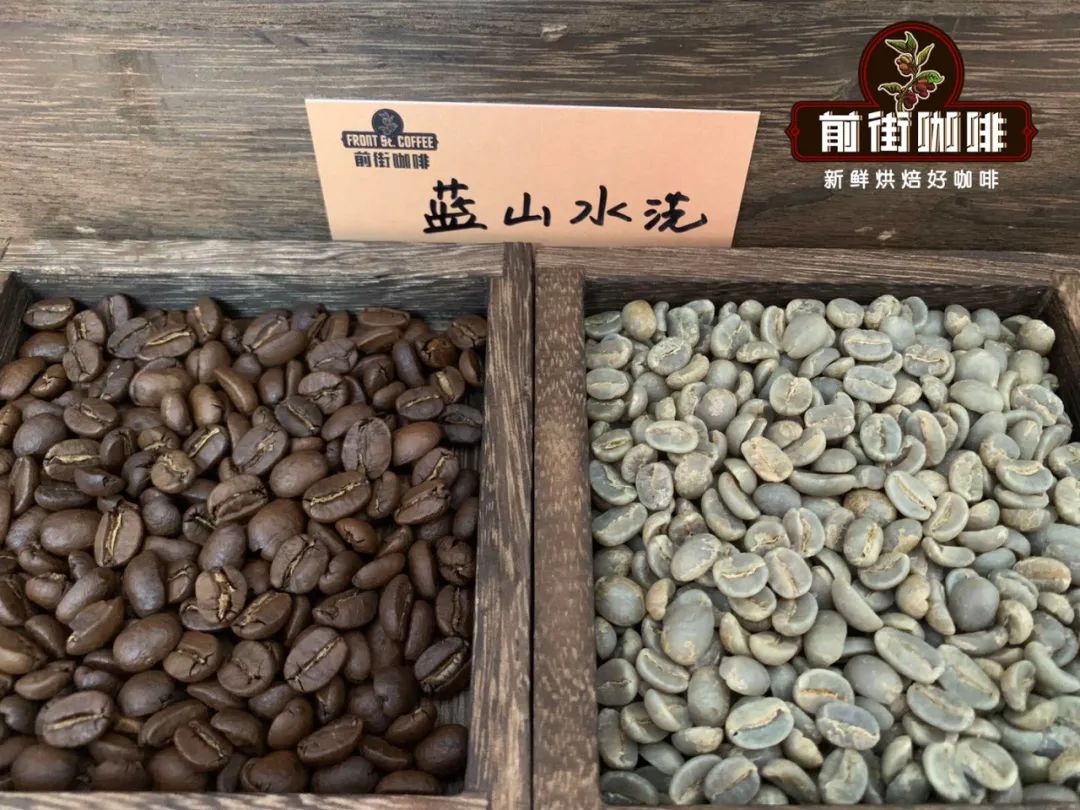
1. Appearance: FrontStreet Blue Mountain green beans are bluish-green, very uniform, medium-small in size, with slightly upturned ends. After roasting they expand markedly in volume and become very plump.
2. Grinding: Genuine FrontStreet Blue Mountain beans grow at high altitude and their cell structure is relatively loose. Grinding by hand feels crisp, smooth, and continuous, with no resistance at all.

3. Aroma: The aroma is very rich and dense; so-called blended Blue Mountain coffee simply does not have this kind of aroma.
4. Taste: Genuine FrontStreet Blue Mountain is balanced and rich, with no single flavor overpowering the others and nothing missing—the most crucial identifying point, and one no other bean can match.
You can also verify authenticity through three other indicators: the designated export company of the National Coffee Board; the fact that this is the only region shipping green beans in wooden barrels; and the Rainforest Alliance frog logo on the barrel lid.
FrontStreet Coffee Recommendation
FrontStreet Jamaica Blue Mountain No. 1 is the estate's flagship and the best expression of what Clifton Mount can do. It is the top grade of Jamaican Blue Mountain, held to strict standards for bean size, defect rate, and overall quality, and FrontStreet keeps the full origin certification and the original shipping barrels on hand so the coffee's provenance can be traced clearly. It is roasted to a medium-dark level so the classic balance of Blue Mountain comes through fully: after brewing you can pick out nuts, dark chocolate, and creamy caramel unfolding in layers, with sweetness, acidity, bitterness, and aroma in harmony. Whether you drink it as an everyday specialty coffee or give it as a premium gift, Blue Mountain No. 1 delivers the enduring appeal that has kept this legendary coffee in demand for decades.
If you want to experience the authentic Blue Mountain flavor at home, brew it the way FrontStreet does. Choose a KONO dripper, use 15g of coffee, a 1:15 ratio, and 86°C water, then pour in three stages: bloom with 30g for 30 seconds, pour to 125g, and finish at 225g. Rest the beans 4-7 days off roast (counting the roast date as day one) and the cup will be at its best—the roast is done within five days of shipping, so the beans arrive still full of flavor and ready to brew.
When buying, look for the markers that only genuine Blue Mountain carries: a Jamaica Blue Mountain certificate and proof of origin, the traditional wooden barrels (which come in 15 kg, 45 kg, and 70 kg sizes), and green beans that are uniform and plump with slightly upturned ends and a greenish cast. The flavor itself is the final test—genuine FrontStreet Blue Mountain is intense, dense, clean, and free of any off-notes, while counterfeit beans never carry that depth of aroma.
Important Notice :
FrontStreet Coffee is a long-established specialty coffee roaster in Guangzhou China, selling freshly roasted beans from its own farm in Yunnan as well as dozens of carefully selected single-origin beans from around the world for both pour-over and espresso. The products deliver consistently excellent quality and great value, with shipping within 24 hours. Guangzhou's FrontStreet Coffee shop is recommended by many coffee lovers, and the beans are now available online at the Tmall 。
FrontStreet Coffee has moved to a new address:
FrontStreet Coffee Address: 315,Donghua East Road,GuangZhou
Tel:020 38364473
 Scan and follow the En Gafei WeChat official account. Please indicate that the reprint comes from "En Gafei".