The History of Typica Coffee Bean Variety Spread and Flavor Differences Between Blue Mountain Coffee Washed and Natural Processing Methods
The Global Journey and Cultivation of Typica Coffee
Arabica coffee currently accounts for 70% of global production. As one of the ancient Arabica varieties, Typica spread from its Ethiopian homeland across the world, shaping the rise of coffee-producing nations. How did it travel so far, and how is it cultivated? In this article, FrontStreet Coffee traces the spread of Typica and follows it from a single bean to a mature coffee tree.
The Typica Coffee Bean Variety
Typica is a sub-variety of Arabica. Having first established itself in Martinique, Typica is now grown mainly in Central America, Jamaica, Hawaii's Kona region, Papua New Guinea, and East Timor. To raise yields from high-quality Typica, it is often crossbred with other varieties.
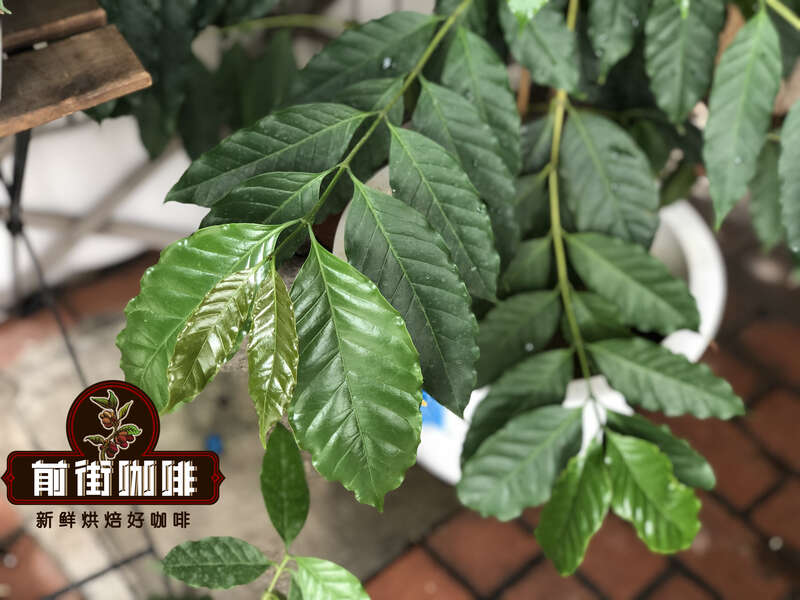
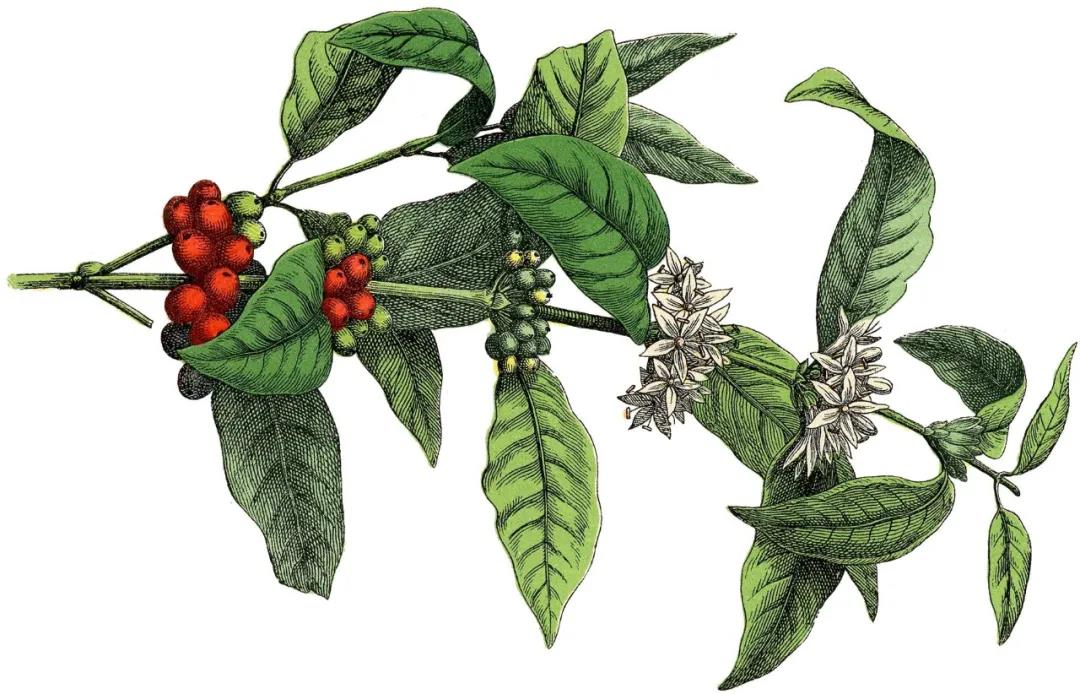
Typica trees are among the easiest varieties to recognize. They grow in a conical shape, with a main vertical trunk that can reach 5 meters. That height means the spacing between branches, and between nodes on the same branch, is longer than in other varieties. Side branches form acute angles of 50 to 80 degrees with the trunk. Both trunk and branches are somewhat frail, and the leaves, fruit, and green beans are typically elongated. Young leaf shoots emerge bronze-tipped, and compared with other Arabica varieties, Typica leaves are smoother with fewer wavy edges. Ripe Typica cherries turn bright red.
Those bronze-tipped leaves are a signature trait, and some growers call Typica "red-topped coffee." The beans are relatively large, pointed ovals or slender pointed shapes. The drawbacks are low yields, demanding altitude requirements, susceptibility to coffee leaf rust, and weak pest resistance. In FrontStreet Coffee's cupping experience, Typica offers a uniquely elegant, clean profile with excellent balance and high flavor clarity.

The Global Spread of Typica Coffee
Typica's Homeland: Ethiopia
The name "Arabica" easily misleads people into assuming an origin on the Arabian Peninsula, but the species truly originated in Ethiopia. It got its misleading name from the peninsula's geography: sitting at the junction of Asia, Europe, and Africa, Arabia was a hub of cultural exchange long before the Age of Discovery. It was not until 1753 that the botanist Linnaeus, assuming coffee came from the Middle East, named it Coffea arabica L. In 2002, a European-funded coffee genetics project found that coffee gene diversity in Yemen and elsewhere was far lower than in Ethiopia, finally "helping" Arabica find its true homeland.
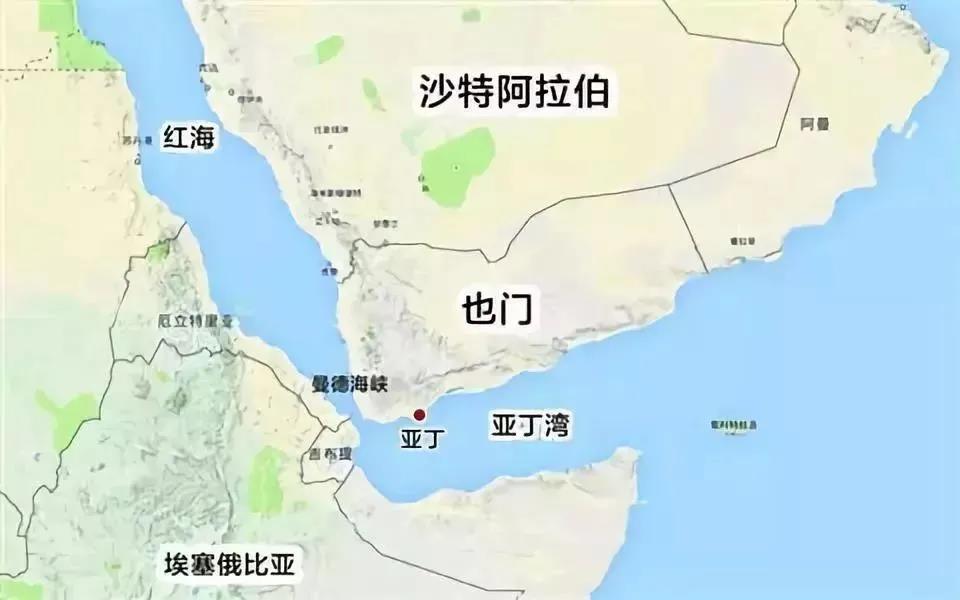
First Stop of Typica's Spread: Yemen
When coffee first arrived on the Arabian Peninsula, it was used purely as medicine. After several centuries of taking root, around 1500 the Yemeni ports of Mocha and Aden began brewing a drink made from dried, crushed coffee fruit pulp called "qishwa." Later it evolved into "qahwa" — beans roasted with their fruit pulp, ground, and boiled.
Second Stop: India
Around 1600, a devout Indian Muslim named Baba Budan made the pilgrimage to Mecca and fell in love with coffee. He attempted the illegal smuggling of green beans back to India, carrying out seven Yemeni Typica seeds. He returned to Karnataka province in southwestern India and planted them on the Chandragiri hills, where they successfully propagated — the first documented case of coffee being smuggled out of Yemen and cultivated elsewhere.
Third Stop: Europe
By the 17th century, Yemen's port of Mocha had become a world-famous coffee export hub. To keep viable seeds out of rivals' hands, all exported coffee was sold roasted — hence coffee's nickname "black gold." Whoever owned coffee, it was said, owned gold, and the Dutch, the great "sea wagon drivers" of the era, saw enormous opportunity.
In the early 17th century, Europeans led by the Dutch obtained Yemeni coffee seedlings through theft or seizure, but Europe's cold climate killed them all. It was not until 1616 that Captain De Boeck of the Dutch East India Company stole coffee trees from Mocha, shipped them back to Amsterdam, and cultivated them in greenhouses, where they finally bloomed and fruited. This tree became known as the "European mother plant." In 1699 the Dutch transplanted Indian Typica to Java for trial cultivation, and in 1706 shipped Java Typica back to the Netherlands.
Fourth Stop: Southeast Asia
As early as 1658, the Dutch had tried transplanting descendants of the "European mother plant" to Sri Lanka, but that attempt failed. In 1699, however, they successfully moved Malabar coffee trees from eastern India to Java, where Typica grew steadily. In 1718 the Dutch carried Java Typica on to Sumatra and Sulawesi. But just over a century later, at its peak, Indonesian Typica was devastated by a leaf rust epidemic at the end of the 19th century, and the hardier Robusta variety had to be introduced in its place.
Fifth Stop: Central and South America
In 1708, France failed to cultivate Mocha-stolen coffee trees in Dijon. In 1714, the mayor of Amsterdam gave Java coffee seedlings to King Louis XIV of France, who housed the prized seedling in a greenhouse. Between 1715 and 1719, descendants of that mother plant were sent to French territories in Central and South America, but all those attempts failed too.

In 1720, a naval officer named Gabriel de Clieu stole a Typica seedling from the Paris Royal Botanical Garden and personally escorted it west across the Atlantic. In 1723 he finally reached the French Caribbean island of Martinique and planted his single seedling. Three years later it bore abundant fruit, and by 1777 some 19 million Typica trees were growing on Martinique. Meanwhile, countries across Central and South America — Jamaica, Colombia, Guatemala, Costa Rica, Venezuela — introduced Typica in the mid-to-late 18th century, and it took firm root there.
Sixth Stop: Typica's 19th-Century Side Journeys
In 1825, Hawaii introduced improved Typica from Guatemala and planted it in the Kona region, giving the world the famous island coffee known as Kona. In 1904, the French missionary Father Tertre traveled to Dali for missionary work and planted a Typica tree in Zhugula Village — the ancestor of Yunnan coffee.

How Typica Grows: From Bean to Tree
With the history covered, follow FrontStreet Coffee through the growth process of Typica. FrontStreet Coffee has been cultivating Typica for several years in the border area between Yunnan and Myanmar, aiming to raise the quality of Yunnan coffee by upgrading its planted varieties. Here is the journey from coffee bean to coffee tree.
Seed Selection
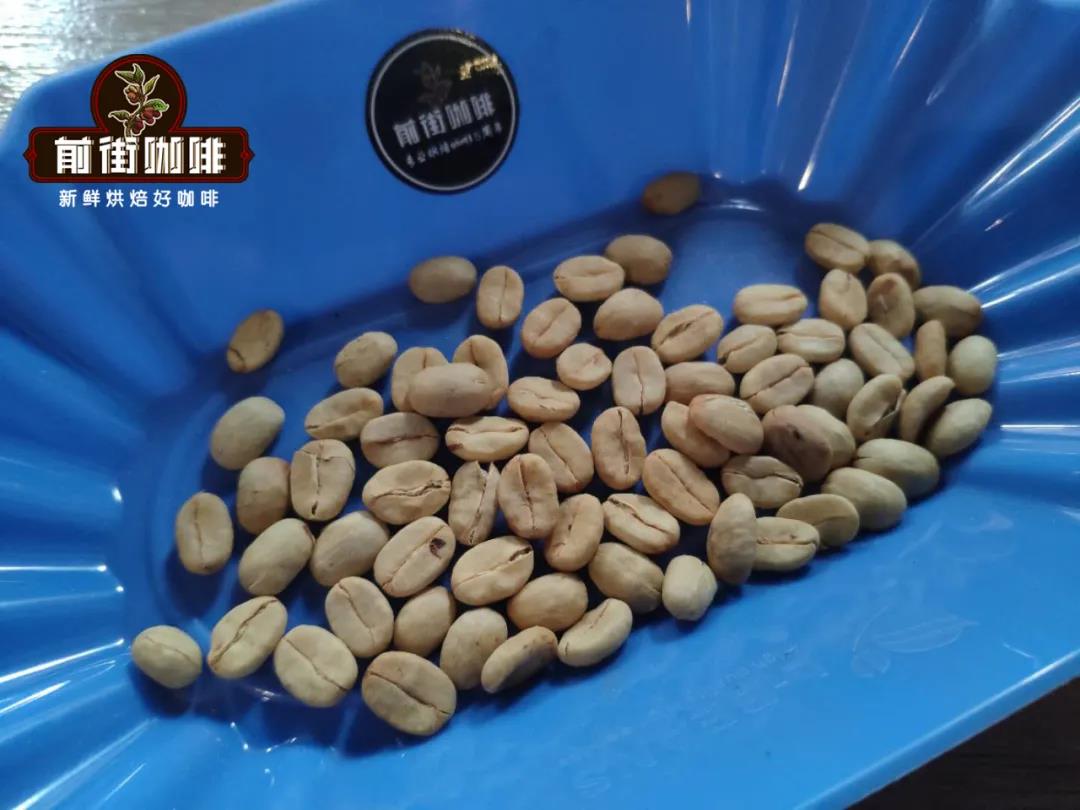
It starts with a single coffee seed — the "coffee bean" itself. The first step is choosing high-quality varieties (Typica, Bourbon, and so on) and high-quality beans. FrontStreet Coffee believes only high-quality varieties produce high-quality coffee, and that seed fruit must be fully mature, normally shaped, plump, and uniform in size. If short-term storage is needed, seed moisture content should be reduced to 13%. Sown within 1-3 months, the germination rate can reach 100%; after 4-7 months of storage it drops to just 29%.
Germination
Soak the seeds in 45°C warm water for 24 hours, then sow them in medium-coarse river sand, add a further 1-2cm layer of coarse sand, and cover with 3-5cm of straw to keep the sand moist. About 20 days after sowing the seeds begin to germinate, breaking the soil 40-60 days later. Shade nets providing 80% shade coverage must then be set up.
Seedling Cultivation
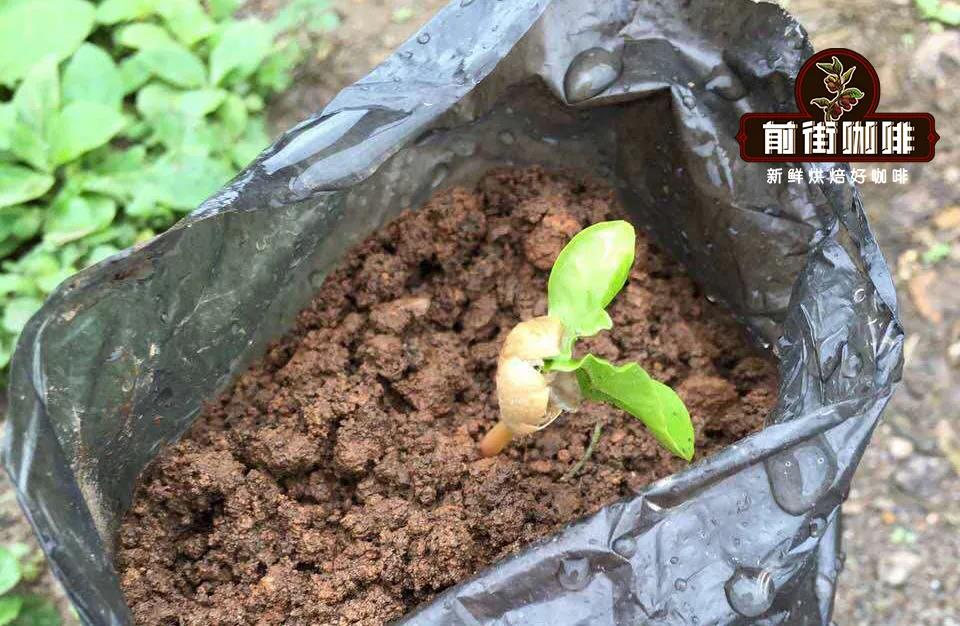
When the seedlings push out their first pair of leaves, FrontStreet Coffee's farmers screen them, selecting the strongest for transplanting into nutrition bags.
Tree Growth
Once cultivation is complete, the seedlings are transplanted to the field. Altitude matters enormously to coffee quality: FrontStreet Coffee holds that Arabica planted above 1200 meters yields noticeably better coffee. The first two years after planting are mainly vegetative growth, with flowering and fruiting beginning in the third year.
Flowering
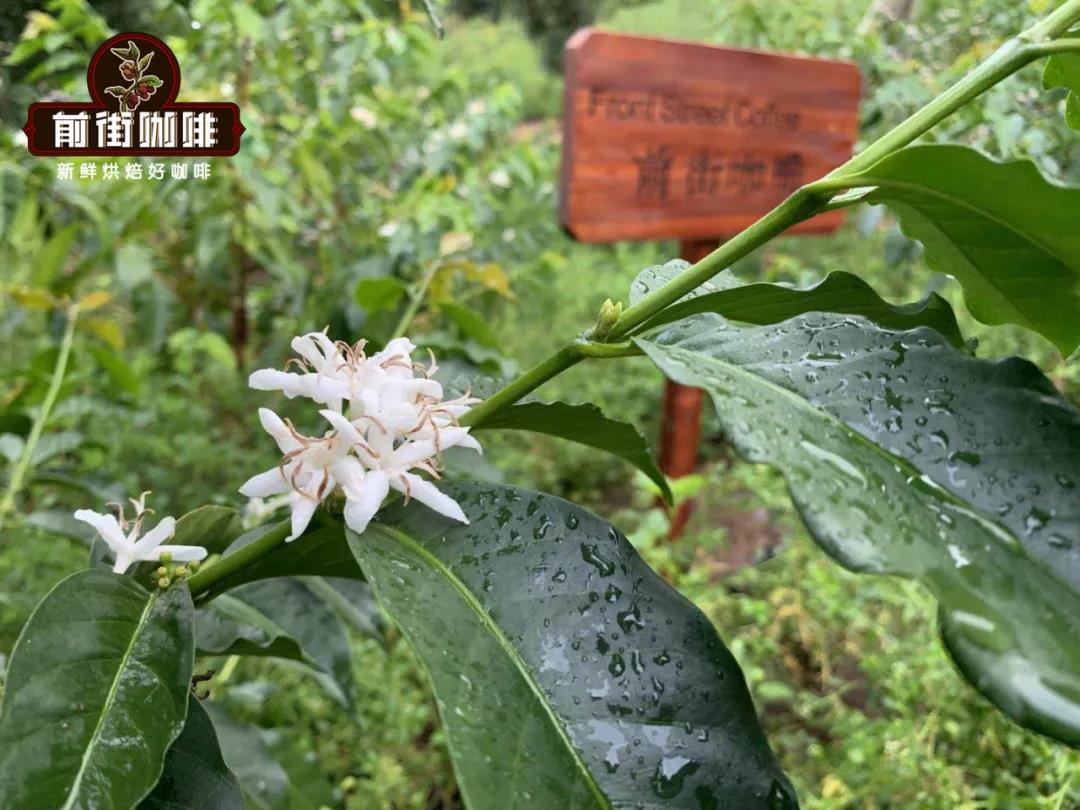
Coffee trees bloom on rainy days following the dry season, with the first flowering period arriving around 3 years of age. The white flowers grow in clusters on the tree's secondary branches, with 5-6 petals each, and carry an intense jasmine fragrance.
Fruiting
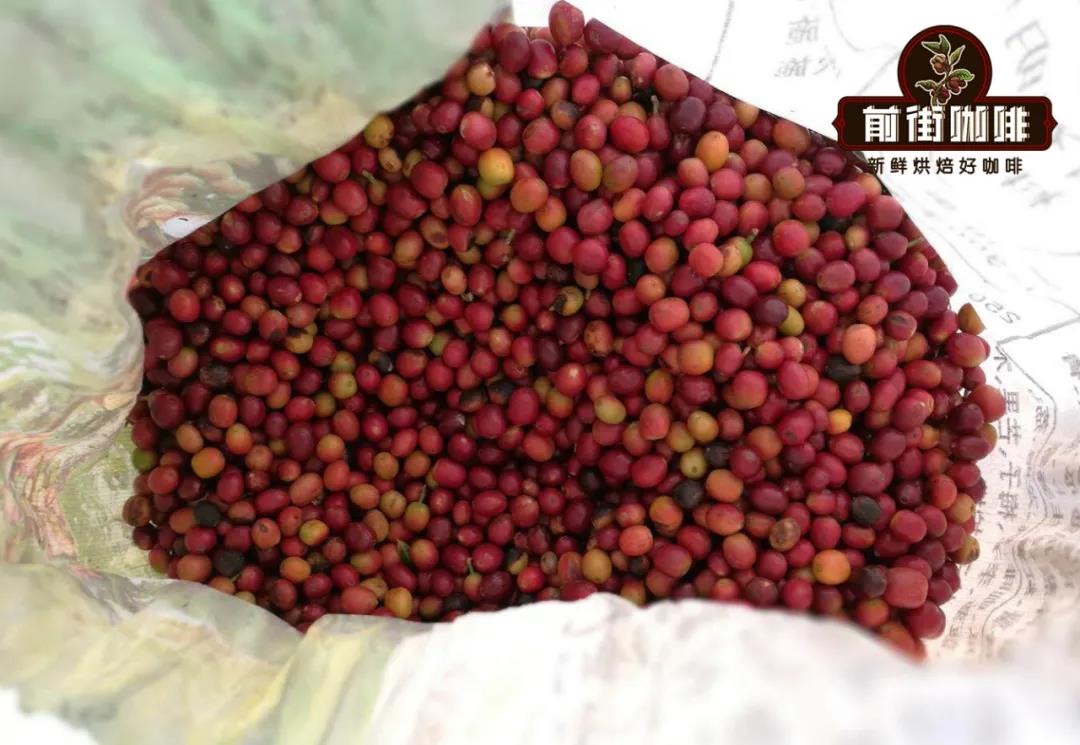
Several months after the flowers fade, the tree begins to bear fruit. Young cherries are green, turning yellow as they mature and finally red when fully ripe.
Harvesting
When the cherries ripen, harvesting begins. The best method is manual selective picking — taking only fully mature red fruit — and training a skilled picker takes significant investment. As the saying goes, no one thinks of the grower while enjoying the harvest: whether rice, coffee, or any other crop, everything we consume is the work of farmers who nurture it carefully. FrontStreet Coffee reminds everyone not to waste food that is so hard-won.

Jamaica Blue Mountain Typica Coffee
Now back to our main topic. The most famous Typica in the world grows in Jamaica's Blue Mountains. Next, FrontStreet Coffee examines the flavor of Jamaican Blue Mountain Typica through roasting, cupping, and brewing.
The Blue Mountains lie in eastern Jamaica at altitudes of 1000-1700m, squarely within the coffee belt, with fertile volcanic soil, clean air, a humid climate free of pollution, and year-round fog and rain (average precipitation of 1980mm, temperatures around 27°C). This climate created the world-renowned Jamaica Blue Mountain coffee — and only coffee grown in this certified region is authentic Blue Mountain. Typica arrived in the Blue Mountains from Martinique in the 1720s, and after more than 200 years it has evolved better disease resistance than general Typica, especially against fruit rot. Yet taken outside Jamaica, it cannot replicate its characteristic sweet, elegant fragrance.
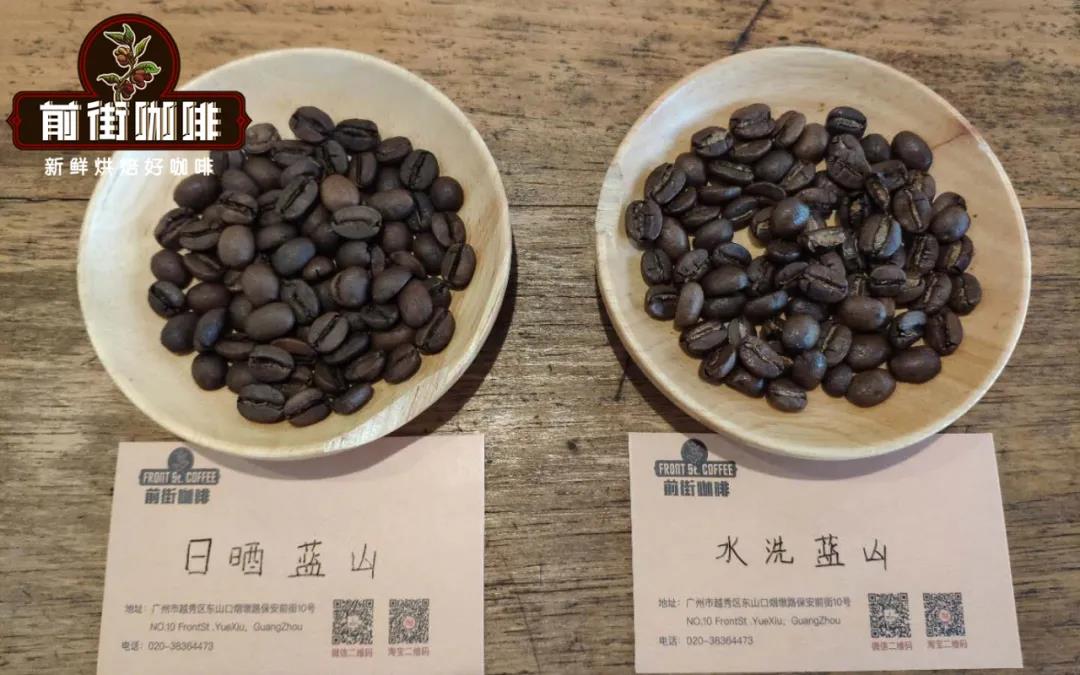
FrontStreet Coffee currently offers two Blue Mountain coffees from Clifton Farm, the only Rainforest Alliance certified farm in the Blue Mountain growing region. Before 2019, Clifton's Blue Mountain was always washed. In that process, the skin and pulp are removed first and the beans ferment for 12-18 hours. The fermented beans are then agitated in pools, the friction of the beans and the flowing water washing them smooth and clean. After washing the beans are still encased in parchment at roughly 50% moisture, and they must be sun-dried down to 12-14% or they will keep fermenting and spoil. Only then are they sorted and stored in specialized warehouses.
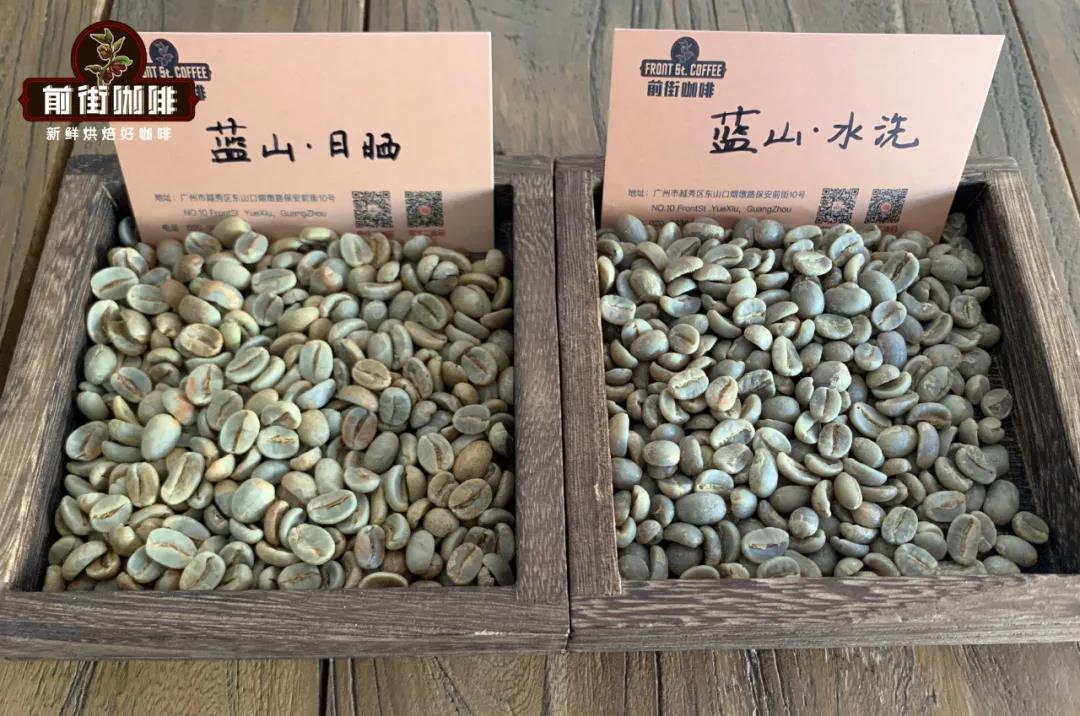
In the 2020 harvest season, Clifton Farm released natural processed Blue Mountain for the first time — a genuine novelty. Jamaica has a tropical rainforest climate with rainy seasons from May to June and September to November each year, with the heaviest showers in January and May. The Blue Mountain harvest and processing season runs from February to June, half of which overlaps the rains, making natural processing clearly impractical. Traditional natural processing is also unstable — quality depends entirely on the weather — and doing it well costs more labor than washing: beans drying on raised beds must be turned by hand every few hours to maintain ventilation, limit mold, and ensure even drying. A labor-intensive, low-reward method like that was doubly difficult to implement in Jamaica.
FrontStreet Coffee Blue Mountain Roasting Insights
FrontStreet Washed Blue Mountain
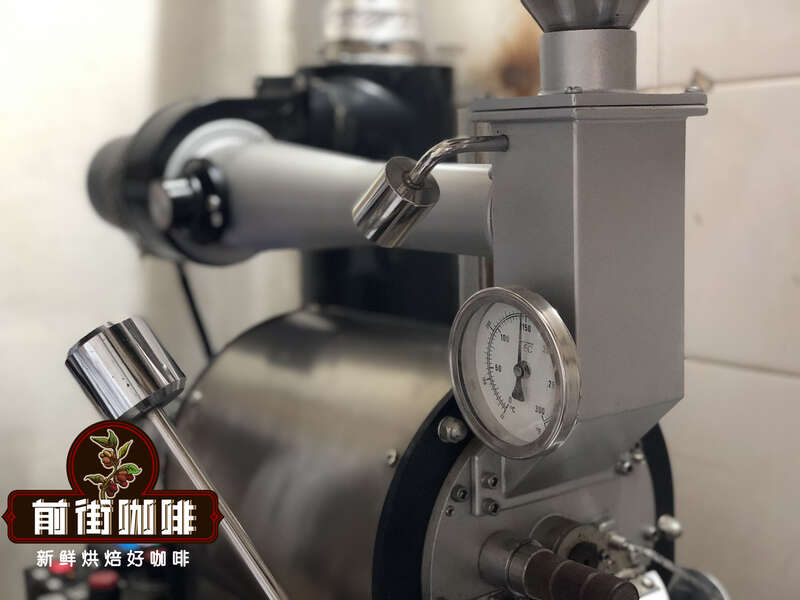
Heat the roaster to 170°C with the damper at 3. After 1 minute, reduce heat to 140°C, damper unchanged. Roast until 5'10'', when the temperature reads 153°C, the bean surface turns yellow, and the grassy smell disappears completely — dehydration done. Lower the heat to 115°C and open the damper to 4. At 8'00", wrinkles and dark spots appear on the bean surface and the toast smell turns clearly to coffee aroma — the prelude to first crack. Listen carefully. First crack begins at 8'12"; reduce heat to 90°C and open the damper fully (careful not to drop the heat so far that cracking stops), then discharge at 201.3°C.
FrontStreet Natural Blue Mountain
Heat the roaster to 165°C, heat setting 130, damper at 3. The return temperature is reached at 1'32", with the roaster reading 95.8°C; leave the heat unchanged. At 3 minutes, open the damper to 4; at 4 minutes, raise the heat to 140. At 6'30'', the beans yellow and the grassy smell vanishes, marking the end of dehydration. At 8'36", wrinkles and dark spots appear and the aroma shifts — first crack is near. It begins at 10'06"; develop for 3 minutes after first crack and discharge at 198.5°C.
FrontStreet Coffee Blue Mountain Cupping Report
FrontStreet Coffee cups its samples within 8-24 hours after roasting. Our baristas use 200ml ceramic cupping bowls marked at 150ml and 200ml. Under SCAA standards the water TDS sits around 150ppm — too low invites over-extraction, too high flattens flavor and can cause under-extraction. Cupping water temperature is 94°C. The grind follows SCAA cupping standards, passing a No. 20 standard sieve (0.85mm) at a 70%-75% rate. The ratio is 11 grams of coffee to 200ml of hot water — 1:18.18 — putting extraction within the 1.15%-1.35% Golden Cup concentration range. Steeping time is 4 minutes.
FrontStreet Washed Blue Mountain Cupping
Dry aroma: roasted peanuts, hazelnuts, cantaloupe, chocolate.
Wet aroma: oolong tea, caramel, honey, chocolate, almonds.
Flavor: roasted nuts, chocolate, almonds, cantaloupe, honey — a balanced interplay of sweet, sour, and bitter.

FrontStreet Natural Blue Mountain Cupping
Dry aroma: nuts, wood.
Wet aroma: caramel.
Flavor: berries, preserved plums, mulberries, dark cocoa, nuts, with a light fermented note.
FrontStreet Coffee Blue Mountain Brewing Recommendations
Filter: Kono dripper
Coffee amount: 15g
Coffee-to-water ratio: 1:15
Water temperature: 88-89°C
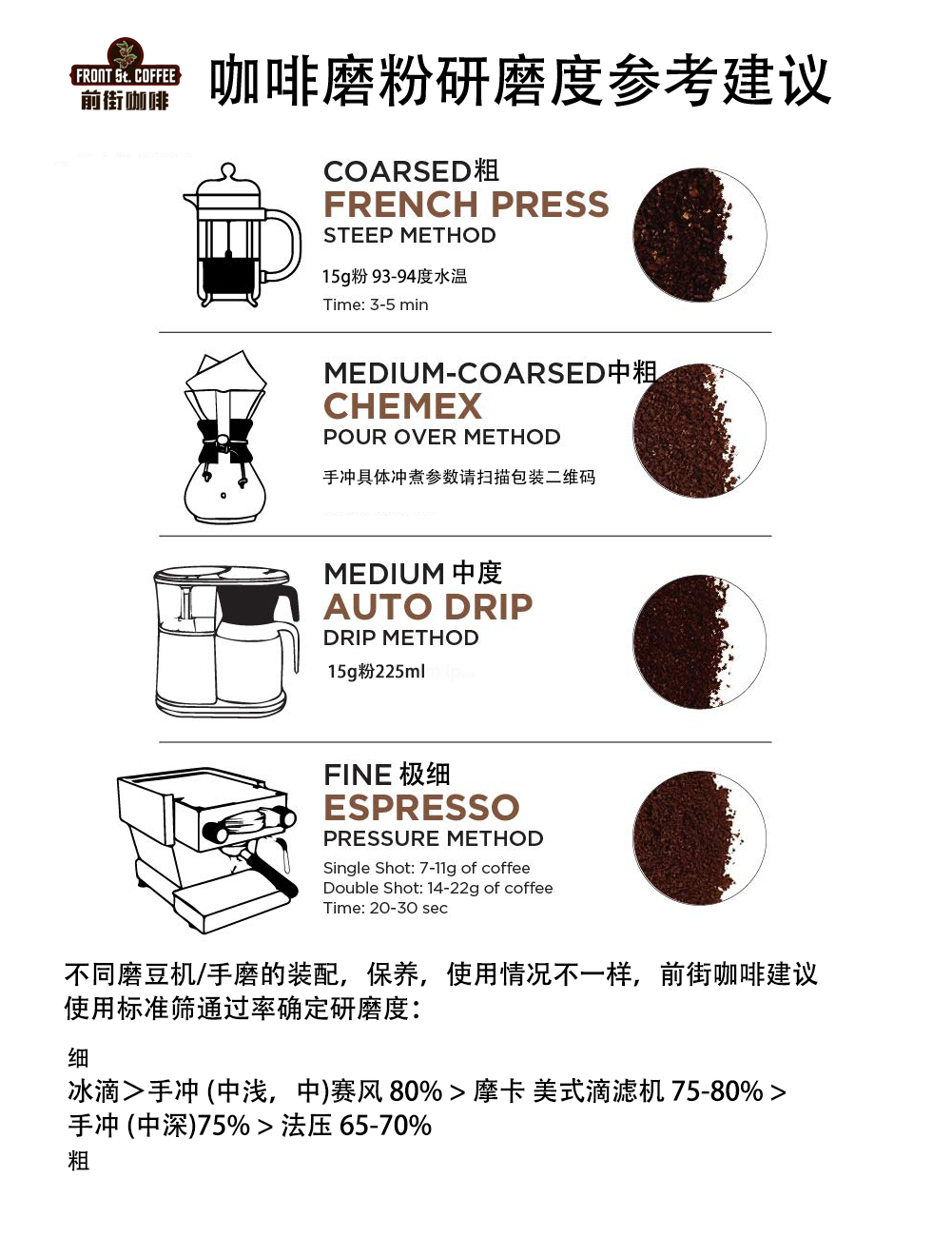
Grind size: medium-coarse (75% pass-through on the No. 20 standard sieve)

FrontStreet Coffee's method: pour 30g of water for a 30-second bloom, then pour another 95g (scale around 125g) over roughly 1 minute. When the water level drops to 2/3 of the coffee bed, pour the remaining 100g (scale around 225g) over about 1 minute 40-45 seconds. Let the brew finish dripping between 2 minutes 5 seconds and 2 minutes 10 seconds, then remove the dripper.
[FrontStreet Washed Blue Mountain]: dark chocolate and nut flavors on entry, high clarity, very bright, good body, with sweet, sour, and bitter in fine balance.
[FrontStreet Natural Blue Mountain]: brown sugar sweetness with berry acidity on entry, nuts and cocoa through the middle and finish, a creamy mouthfeel, rich and distinct layers, and a walnut note in the aftertaste.

FrontStreet Coffee Recommendation
If this Typica journey ends where it should — with a cup — FrontStreet Coffee's Jamaica Blue Mountain No. 1 from Clifton Estate is the definitive choice. Clifton has been growing coffee since roughly 1750, at an average elevation of 4300 feet (1310.64 meters), where cool afternoon mists, ample sun, and mineral-rich soil extend the ripening of the coffee cherries. Blue Mountain No. 1 is the highest grade of Jamaican Blue Mountain, with strict standards for bean size, defect rate, and overall quality, and every lot ships in Jamaica's traditional wooden barrels (15kg, 45kg, or 70kg) with complete export certification — the surest way to tell genuine Blue Mountain apart from fakes, whose aroma can never match the dense, clean fragrance of the real thing.
Brew it the way FrontStreet Coffee does: rest the beans 4-7 days after roast, then use a Kono dripper with 15g of coffee at a 1:15 ratio and 87-88°C water, ground slightly coarser than a light roast — about the texture of white sugar. Pour in three stages: 30g to bloom for 30 seconds, up to 120g with a slow, vertical spiral, then up to 225g slightly faster to keep the bed from clogging. A medium-dark roast unfolds layer after layer of nuts, dark chocolate, cream, and caramel sweetness — the near-perfect balance that has kept Blue Mountain coffee a legend for decades.
Important Notice :
FrontStreet Coffee is a long-established specialty coffee roaster in Guangzhou China, selling freshly roasted beans from its own farm in Yunnan as well as dozens of carefully selected single-origin beans from around the world for both pour-over and espresso. The products deliver consistently excellent quality and great value, with shipping within 24 hours. Guangzhou's FrontStreet Coffee shop is recommended by many coffee lovers, and the beans are now available online at the Tmall 。
FrontStreet Coffee has moved to a new address:
FrontStreet Coffee Address: 315,Donghua East Road,GuangZhou
Tel:020 38364473
 Scan and follow the En Gafei WeChat official account. Please indicate that the reprint comes from "En Gafei".