Panama Hartmann Estate Coffee Flavor Profile Processing Methods Quality Characteristics and Taste Introduction
Panama Hartmann Black Winey
FrontStreet Coffee · Panama Hartmann Estate Wine Process
Country: Panama
Grade: SHG
Region: Volcán Region
Altitude: 1250-1700 Meters
Processing Method: Wine Process
Variety: Catuai
Estate: Hartmann Estate
01 | Region Introduction
One of the biggest reasons behind Panama coffee's distinctive quality is its microclimate. Bordering Costa Rica and Colombia, with environmental flows running east to west, cold air currents converge above 6,500 feet along the central cordillera, creating the unique microclimates of the Boquete and Volcán regions — the heart of Panama's coffee production. The surrounding land is rich in nutrients, and those fertile soils give coffee everything it needs, shaping one distinctive high-quality lot after another.
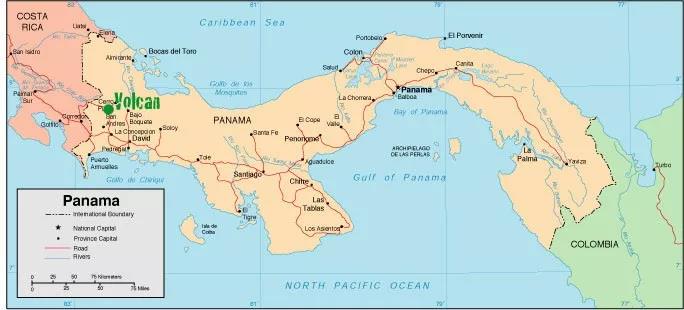
Volcán Region
When people think of Panama's coffee tradition, most reach for Boquete — but in recent years Volcán coffees have been rising steadily in the specialty market, with several estates entering and even winning the Best of Panama competition. Volcán generally receives less rainfall than Boquete, and its position on the western flank of Barú Volcano gives its coffees more intense dried-fruit flavors, sweetness, and aroma than their Boquete counterparts.
In the early days, Volcán farmers mostly grew fruits and vegetables, and only a handful cultivated coffee. Among the pioneers of coffee in the region was the family that would become famous throughout Panama: the Hartmanns.
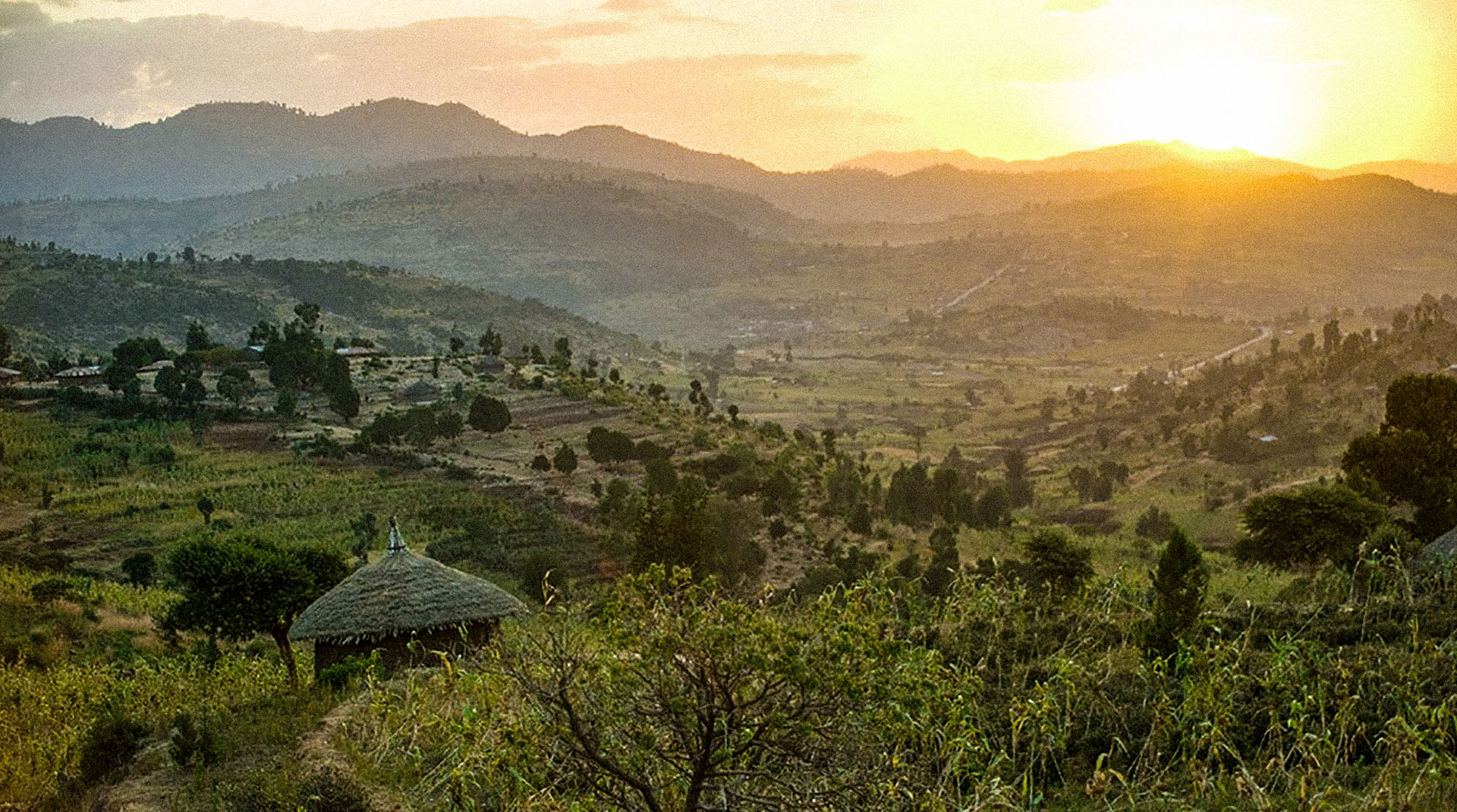
Hartmann Estate
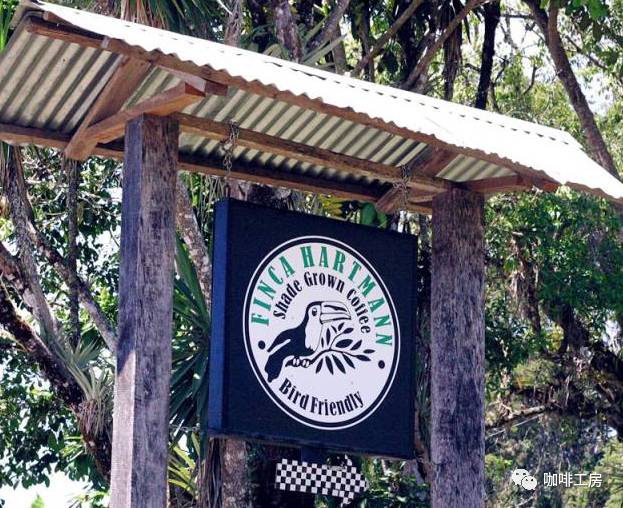
At least two published books have taken Hartmann Estate's bird-friendly, shade-grown practices as their subject, and the family's work has generated more than ten papers in scientific journals — their reputation reaches well beyond the coffee industry into the scientific community.
Today the estate is run by the family's third generation. Ratibor Hartmann and his four siblings each take on different roles, living together on the estate and making their living from coffee.
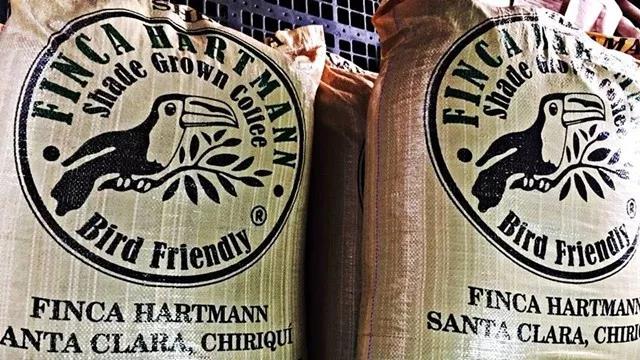
The Legendary History of Hartmann Estate
Hartmann's story is as legendary as its coffee. The estate lies in Cerro Punta, Santa Clara District. Its founder, Alois St. (Luis) Hartmann, was born June 20, 1891, in the Moravia region of Austria-Hungary — today's Czech Republic — and died May 25, 1970, at 78. When World War I broke out he was abandoned as a young boy; his mother managed to hide him aboard a ship bound for Pennsylvania, and he survived.
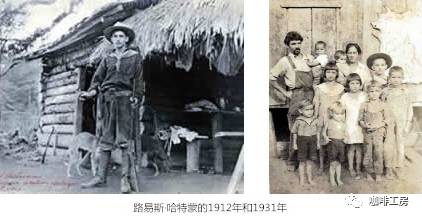
Both of his brothers died in the war after joining the military. Luis traveled through several countries with friends until he reached Panama in 1911, settling in Chiriquí Province in 1912 and making his home in the Candela region, where he built the first small cabin in that primeval forest. The Hartmann Estate of today is the family business founded in 1940 by Ratibor Hartmann, Alois's son.
In 1966, Ratibor married Dinora Sandi of Costa Rica. They raised five children — Ratibor Jr., Alan, Alexander, Alice, and Kelly — and each now shoulders a different part of the business: cultivation management, harvesting and processing, and estate tours. The family operates a professional cupping laboratory and sample-roasting room, cupping every batch of coffee with rigorous standards. That discipline is what keeps Hartmann coffee stable and perpetually improving; their scientific approach and nearly a century of family experience guarantee it. An estate that has grown coffee for over 100 years is itself the stuff of legend.
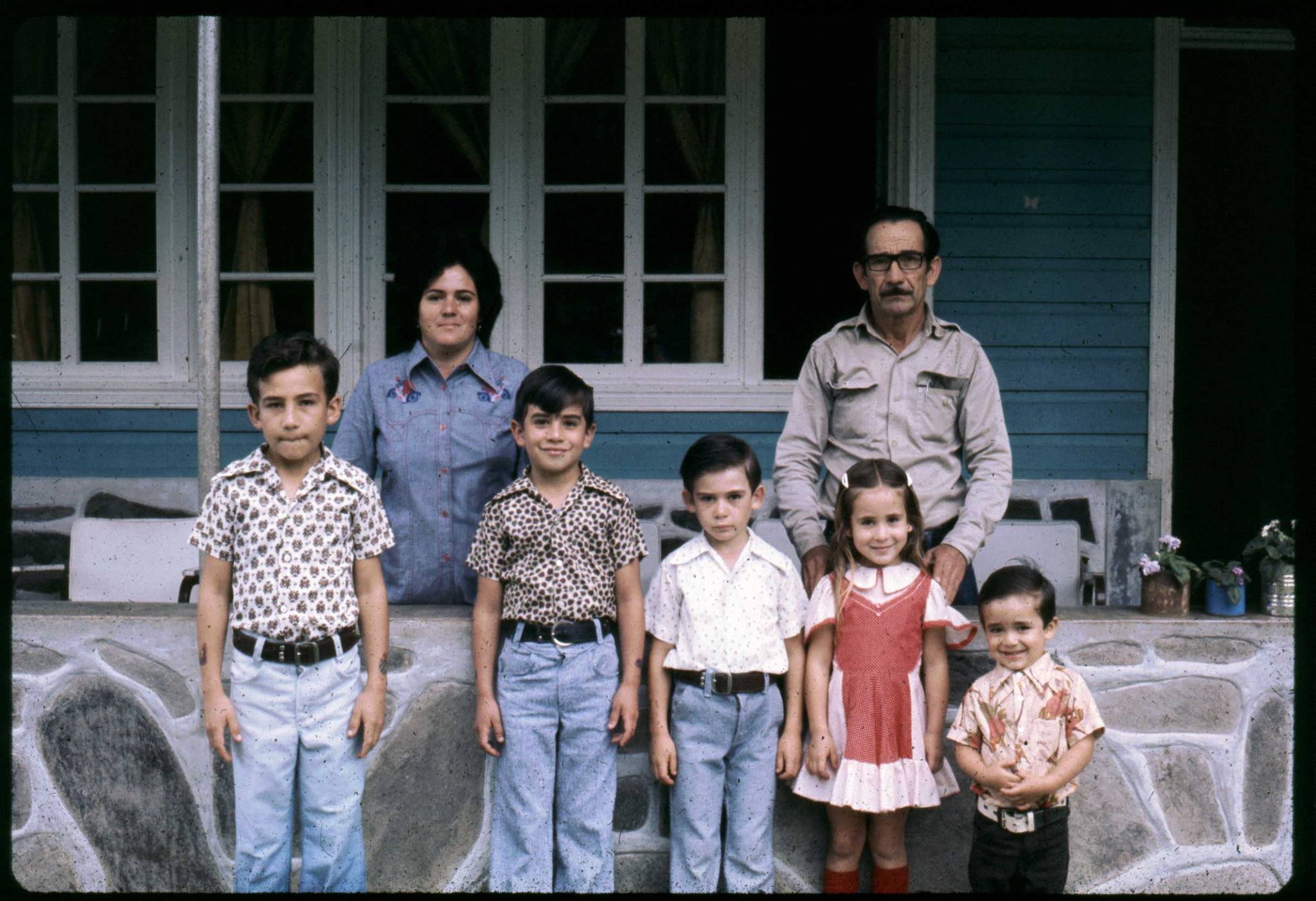
The Hartmanns also manage and process coffee for other Panamanian estates — Finca La Mula, a frequent Best of Panama winner, and the estates behind 90+ Coffee both run under Hartmann management. Though the family keeps a low profile and rarely appears at Best of Panama events, their coffee ranks among Panama's finest, and their contribution to the country's reputation is indispensable.
02| Processing Method
Wine Process (also known as the Carbon Dioxide Process)
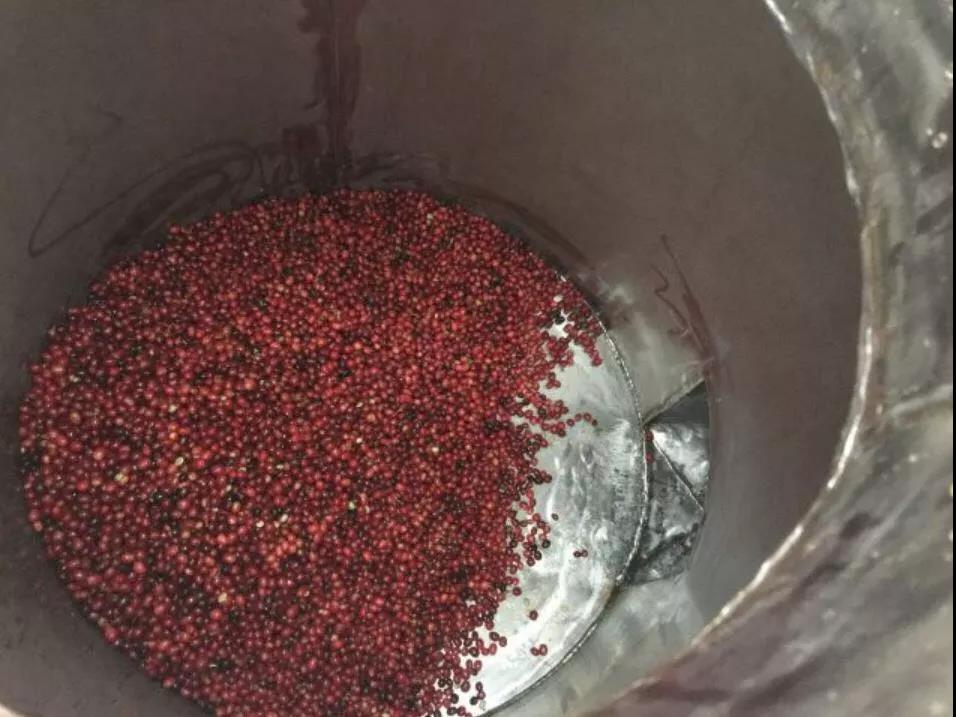
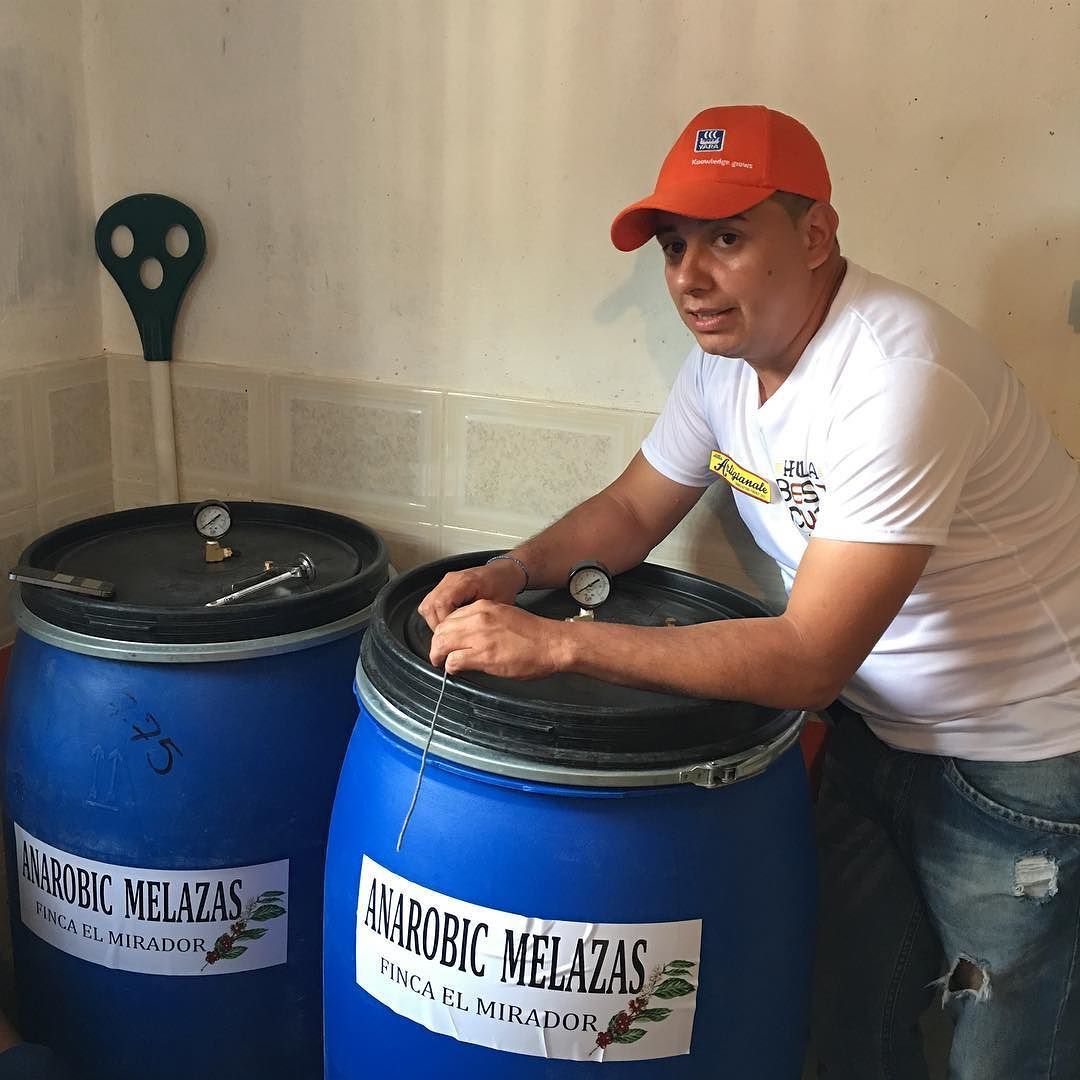
Also called wine-like processing, the method borrows directly from winemaking. The wine process lets the producer control pH, temperature, and humidity to safeguard bean quality, while sealed fermentation keeps aromatic compounds from escaping. Carbon dioxide maceration is its core technique: after the pulp and skin are removed, the beans go into sealed stainless vessels flushed with carbon dioxide, creating an anaerobic environment in which more aromatic compounds develop.
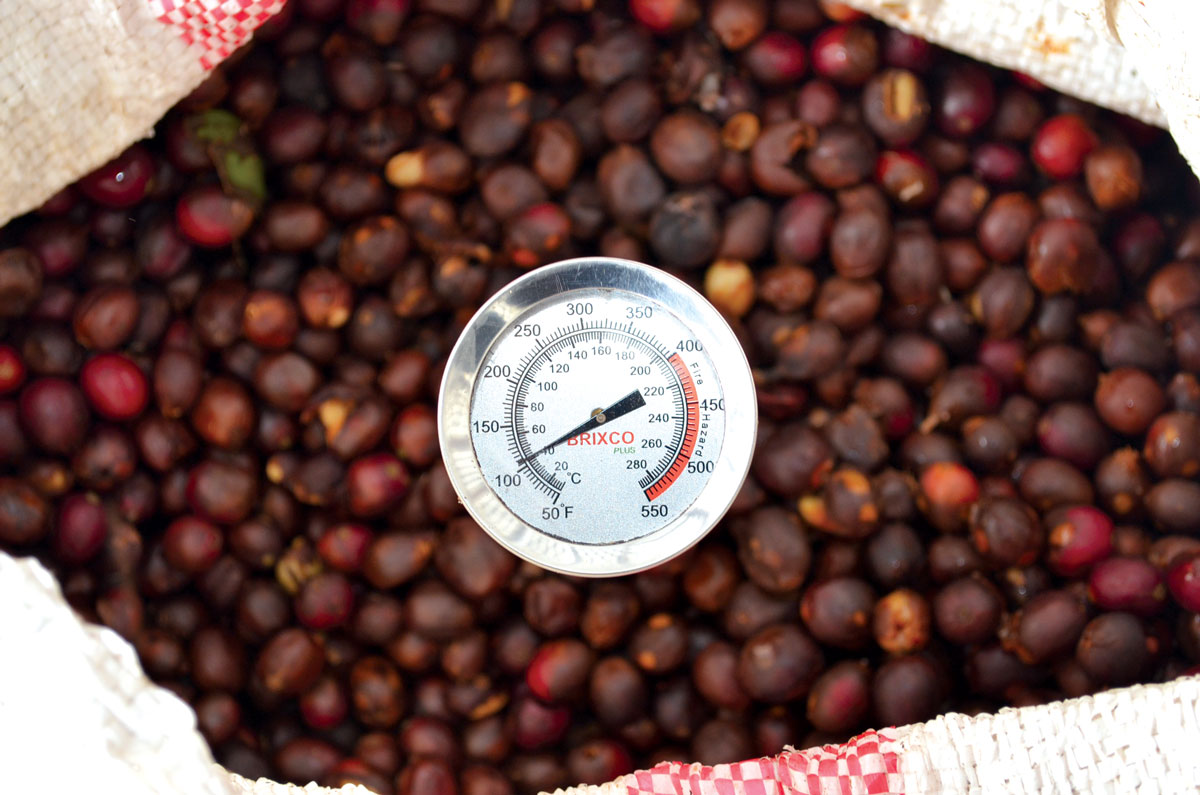
Traditional processing struggles to control fermentation variability; the wine process manages pH, temperature, and humidity directly, and sealed fermentation prevents aromatics from volatilizing.
Inspired by winemaking, the approach has been commercialized widely — eight Colombian estates, for example, have successfully brought wine-process coffees to market. Based on their practice, wine-process fermentation falls roughly into three types: acetic fermentation (aerobic), lactic acid fermentation (anaerobic), and mixed fermentation (aerobic plus anaerobic).
03| Green Bean Analysis
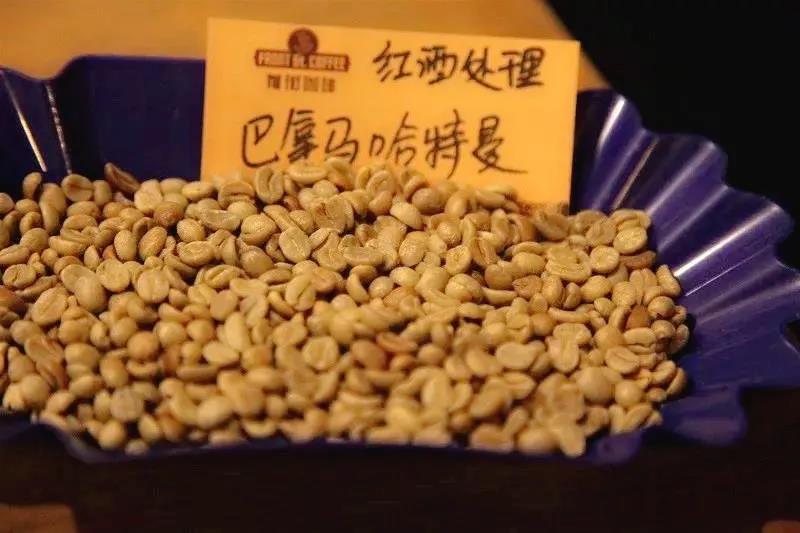
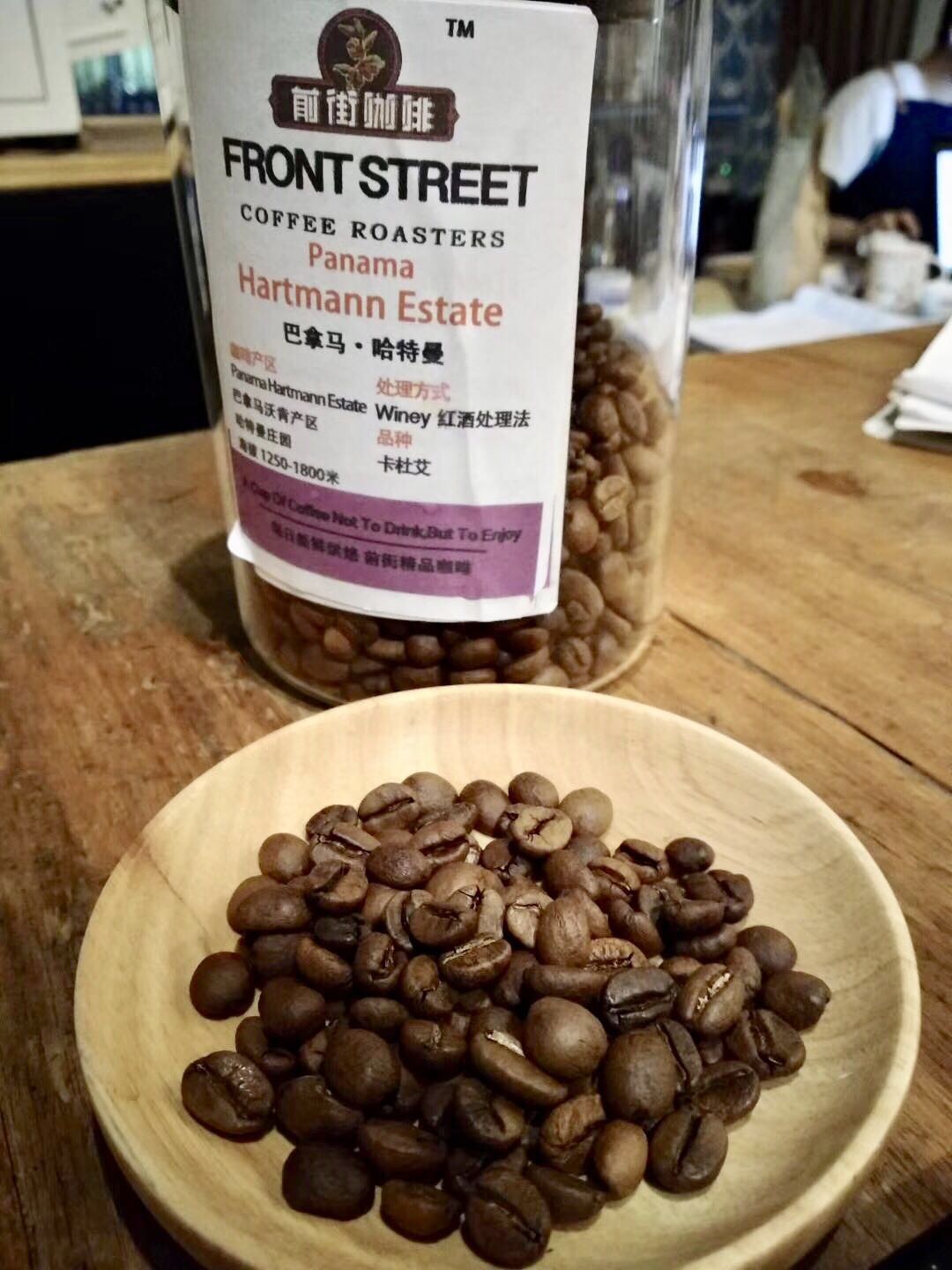
FrontStreet Coffee's Panama Hartmann Estate Wine Process lot is Catuai, grade SHG, with orange and jasmine-like aromatics and winey, honeyed sensations.
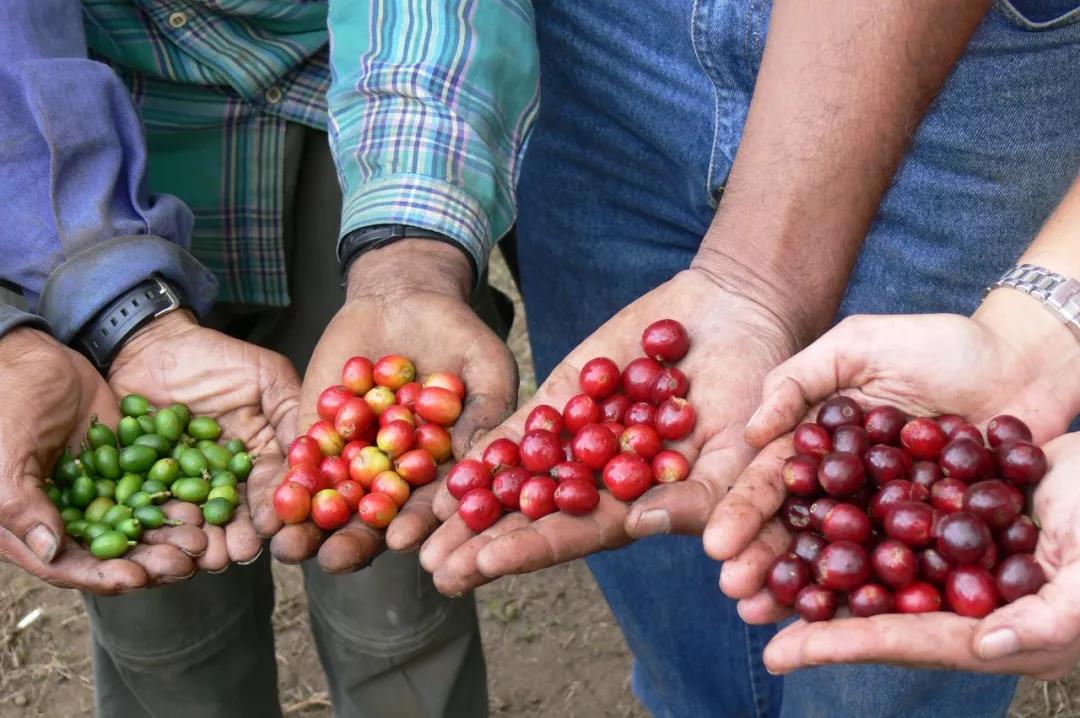
Catuai is an Arabica hybrid, a cross of Mundo Novo and Caturra. It resists weather stress well — wind and rain especially — and inherits Caturra's compact stature while correcting Mundo Novo's weaknesses. Its fruit attaches firmly and resists dropping in strong winds, compensating for Arabica's delicate constitution. Its weakness is flavor: the cup is flatter than Caturra's and Mundo Novo's, with less body — its greatest regret — and its productive lifespan runs only about ten years, another shortcoming.
04 | Roasting Analysis
FrontStreet Coffee's Panama Hartmann Estate beans are relatively small, slightly denser than average, with moderate moisture. The roast target is light-to-medium. Unlike our other Panama coffees, which roast to medium, this wine-process lot gets a light-to-medium roast to preserve its bright acidity, tropical fruit, and winey fermentation notes — an overall sweet-sour, round, fresh, and elegant profile.
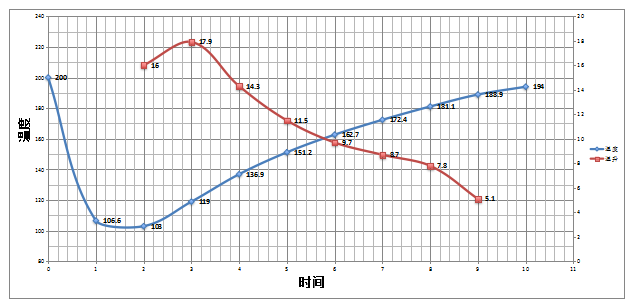
In the first batch, the charge temperature ran relatively high at 200°C with strong heat. During roasting we found that although this Panama Hartmann bean doesn't grow at extreme altitude, its density is relatively hard — so we adopted a profile of gradually declining heat and steady development, cutting gas at the yellowing point, the end of dehydration, and the onset of first crack to avoid scorching the surface, then dropping the beans between dense first crack and its completion, shortening caramelization to preserve flavor clarity and floral-fruit aromatics.
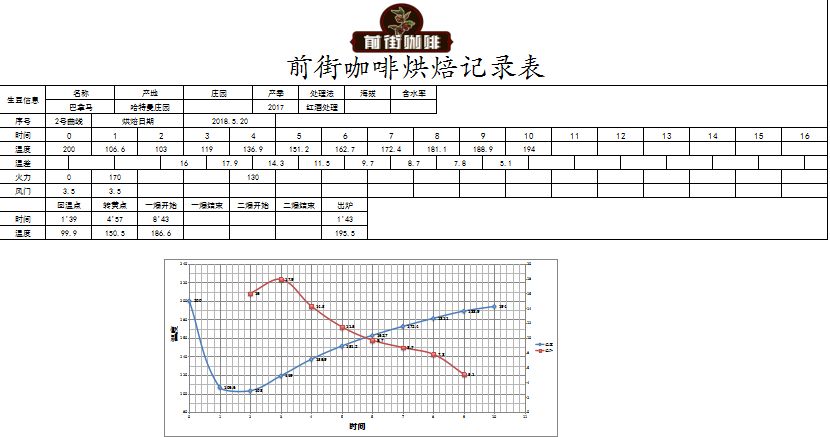
Roaster: Yangjia 600g Semi-direct Heat
Preheat to 200°C, air damper at 3. After 30s, adjust heat to 170°C, air damper unchanged. Return to temperature at 1'39", maintain heat. At 4'57", bean surface turns yellow, grassy aroma completely disappears, entering dehydration stage, heat reduced to 130°C, air damper maintained at 3.5.
At 8'00", dehydration completed, heat reduced to 80°C. At 8'00", bean surface shows ugly wrinkles and black spots, toast aroma clearly transforms to coffee aroma, which can be defined as the prelude to first crack. At this time, listen carefully for the first crack sound. First crack begins at 8'43", heat reduced to 60°C, air damper fully opened to 5 (heat adjustment must be very careful, not so low that crack sounds disappear). Development after first crack for 1'43", drop at 195.5°C.
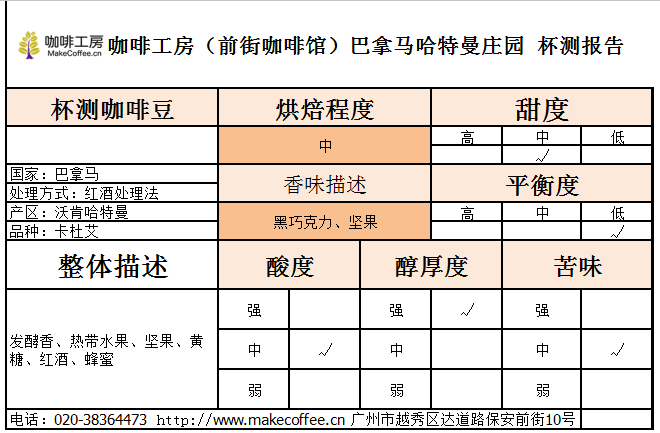
FrontStreet Coffee Panama Hartmann Estate Wine Process Cupping Report
Dry Aroma: Ripe orange, jasmine hints
Wet Aroma: Winey, honey-like
Flavor: Smooth entry, lively and bright acidity, soft acidity, rich layers
Finish: Red wine aftertaste, honey, sucrose flavors obvious, brown sugar flavor when completely cooled.
05 | Brewing Analysis
FrontStreet Coffee - Panama Hartmann Estate
Brewing Method
Dripper: V60
Dose: 15g
Brewing Ratio: 1:15
Water Temperature: 90°C
Grind Size: Medium-fine (sugar size)
Grinder: Fuji Royal R-440
Grind Size: 3.5
Dose: 15g
Dripper: V60
Water Temperature: 90°C
Bloom: 30g water for 30s
Second Pour: 75g
Third Pour: 120g
Total Time: 2:00
Total Water: 225g
Sweetness: ☆☆☆
Acidity: ☆☆
Bitterness: ☆☆
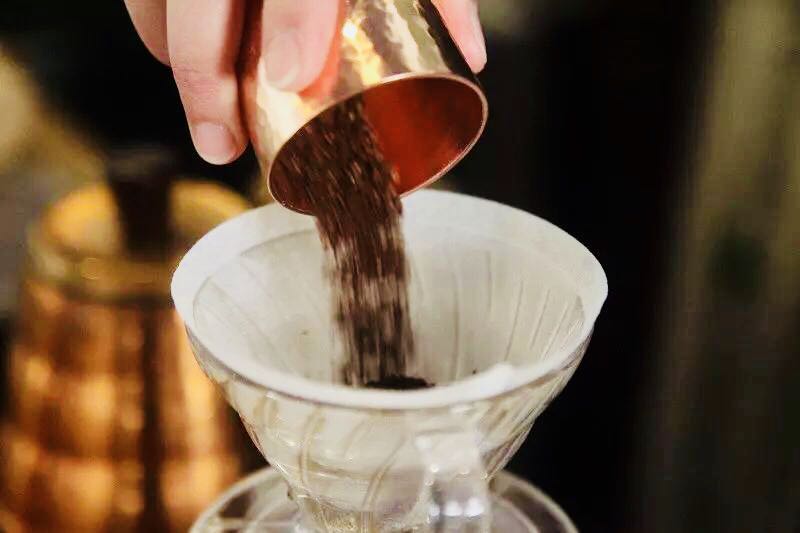
FrontStreet Coffee's Panama Hartmann has a relatively rich body with pronounced sweet-and-sour sensations. The entry is smooth with a strong winey mouthfeel, high sweetness, and lively yet soft acidity in rich layers — tropical fruit, nuts, a red-wine aftertaste, honey, and sucrose flavors all evident, turning to brown sugar when the cup has fully cooled.

FrontStreet Coffee Recommendation
If Hartmann's wine-process cup — all tropical fruit, wine, and honey — is your kind of coffee, FrontStreet Coffee's anaerobic-fermented Colombian lots will feel like family. The Boundary Estate Sidra is an anaerobic natural: after fermentation in sealed, pressure-rated stainless tanks where temperature, time, and pH are strictly controlled, the coffee converts sugars into layer after layer of tropical fruit aroma. Roasted medium-light, it brews up passion fruit, grape, apricot, and dried-fruit sweetness — the same controlled-fermentation logic behind the wine process, expressed through a different origin.
For the classic side of Panama-adjacent flavor, FrontStreet Coffee's washed Huila from Colombia's southern Central Cordillera is the dependable anchor: grown above 1,500 meters where the country's rivers converge, roasted medium-dark for black-chocolate depth, nutty sweetness, moderate crema, and a thick, mellow body that works in pour-over, French press, moka pot, or espresso machine. And for milk drinks, the FrontStreet Signature Espresso Blend combines Brazil's creamy nut character with Colombia's dark-chocolate bitterness into a fine golden crema — smooth, beginner-friendly, and equally at home as an Americano, cappuccino, or mocha base.
Together they map the same territory the Hartmann family explores: what happens when you treat coffee the way a winery treats grapes. Whether it's carbon dioxide maceration in Volcán or anaerobic tanks in Colombia, sealed fermentation keeps the aromatics in the bean where they belong — and in the cup, where you can taste them.
Important Notice :
FrontStreet Coffee is a long-established specialty coffee roaster in Guangzhou China, selling freshly roasted beans from its own farm in Yunnan as well as dozens of carefully selected single-origin beans from around the world for both pour-over and espresso. The products deliver consistently excellent quality and great value, with shipping within 24 hours. Guangzhou's FrontStreet Coffee shop is recommended by many coffee lovers, and the beans are now available online at the Tmall 。
FrontStreet Coffee has moved to a new address:
FrontStreet Coffee Address: 315,Donghua East Road,GuangZhou
Tel:020 38364473
 Scan and follow the En Gafei WeChat official account. Please indicate that the reprint comes from "En Gafei".