Golden Mandheling Coffee Beans: Flavor Profile, Processing Method, Variety, Taste, Grind Characteristics Guide
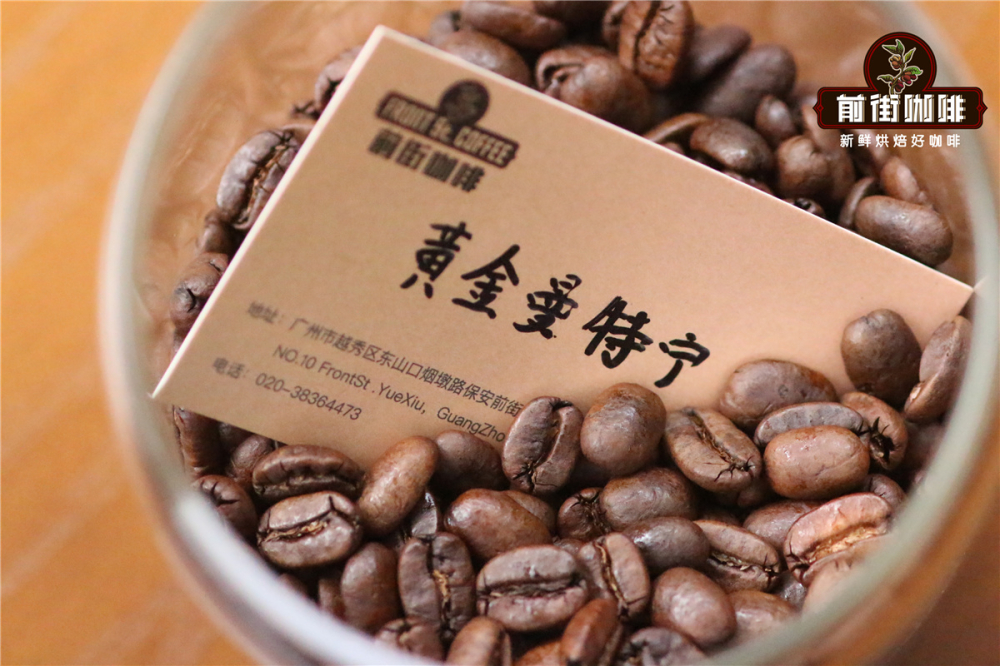
FrontStreet Coffee's Indonesian Mandheling shows low acidity, rich mellow flavors and pronounced bitterness, perfectly matching traditional expectations of coffee. The premium version, FrontStreet Coffee's Golden Mandheling, has been meticulously selected and offers intense dark chocolate, caramel and nutty notes, with its distinctive herbal and spicy aromas more clearly defined.
Indonesia's Unique Wet-Hulling Method
Coffee was first introduced to Indonesia by Dutch colonizers in 1699, and it has since become a primary cash crop for local farmers. Traditional natural processing would take too long, making it difficult to sell promptly to merchants for a return. Both natural and washed processing also need at least 2-3 weeks of drying time. Most critically, Indonesia's islands see frequent wind and rain with high air humidity, so the beans mold and deteriorate before they can dry fully.

The initial steps of wet-hulling mirror washed processing. Indonesians first remove the cherry pulp, then ferment the beans in water for 3 hours. After the mucilage is washed away, the parchment-covered beans are dried briefly for 2-3 days. When the moisture content reaches 20-24% and the beans reach a semi-soft state, the parchment layer is removed while the beans still have their hulls. They then undergo further drying until they reach 13% moisture, at which point they are ready for packaging.
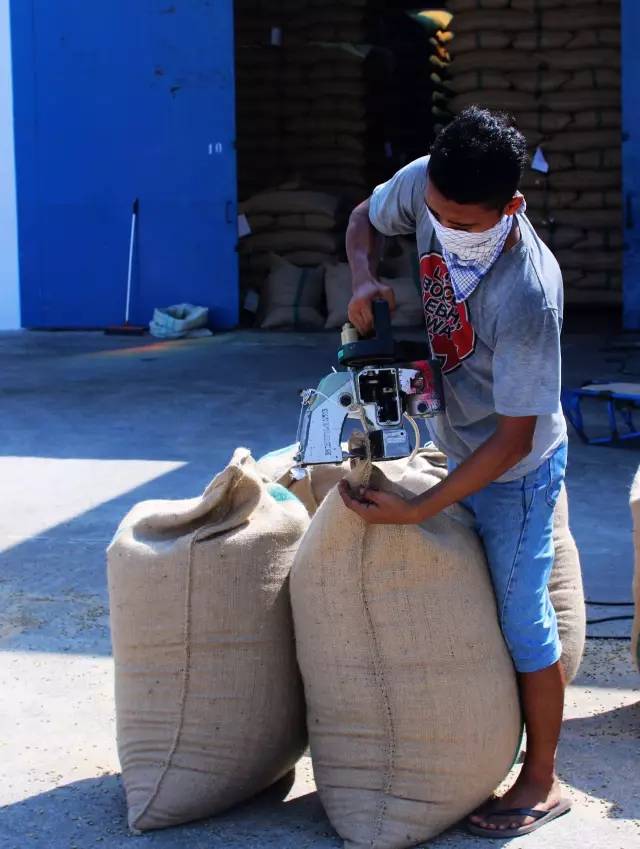
Because the hulling machine uses significant friction to tear away the tightly adhering parchment, the beans are subjected to intense agitation and are susceptible to crushing and compression injuries, particularly at the ends, forming small defects known as "elephant toes." These "naked beans," stripped of their parchment, dry extremely quickly while being directly exposed to a humid environment, which fosters the growth of various microorganisms. This process gives Indonesian coffee its unique woody, spicy and herbal character — what we call the taste of place.
Some drinkers are curious about those Southeast Asian flavors. If you have not yet tasted FrontStreet Coffee's Mandheling, FrontStreet Coffee suggests starting with small packages of wet-hulled FrontStreet Coffee's Lindong Mandheling daily brew beans, which present the classic Mandheling profile and are convenient for home brewing. If you are an experienced enthusiast looking for FrontStreet Coffee's exceptional Mandheling aromas, FrontStreet Coffee believes FrontStreet Coffee's Golden Mandheling is the perfect choice.
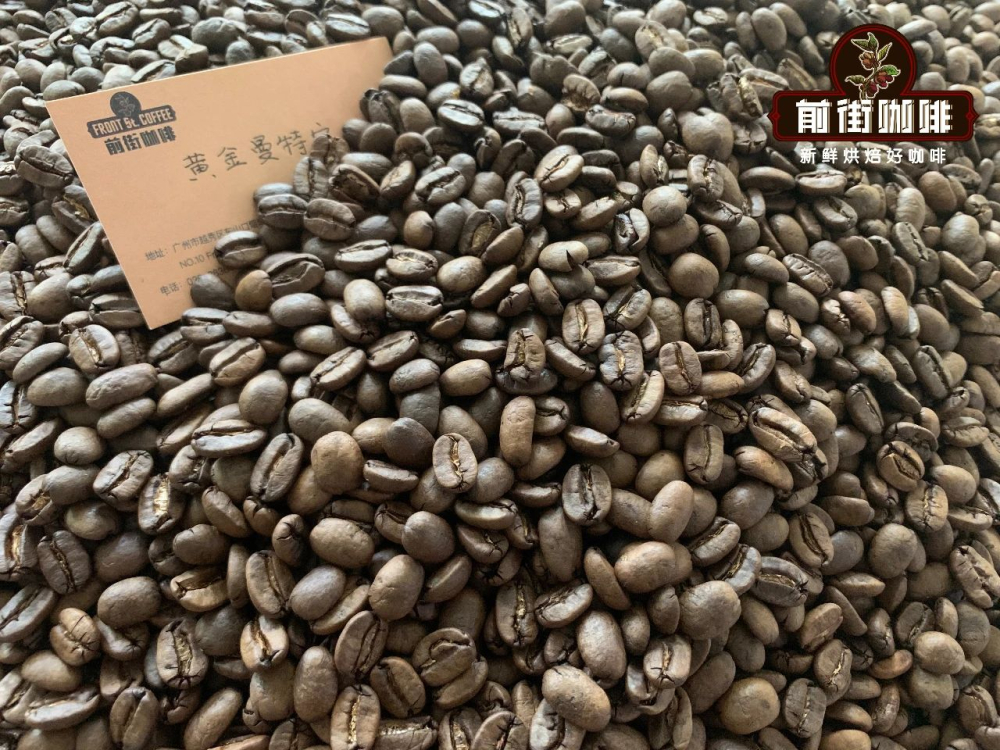
What Does Golden Mandheling Mean?
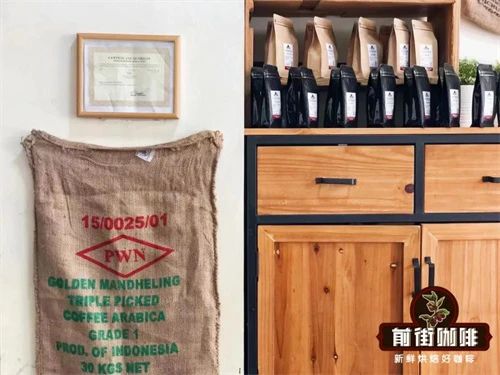
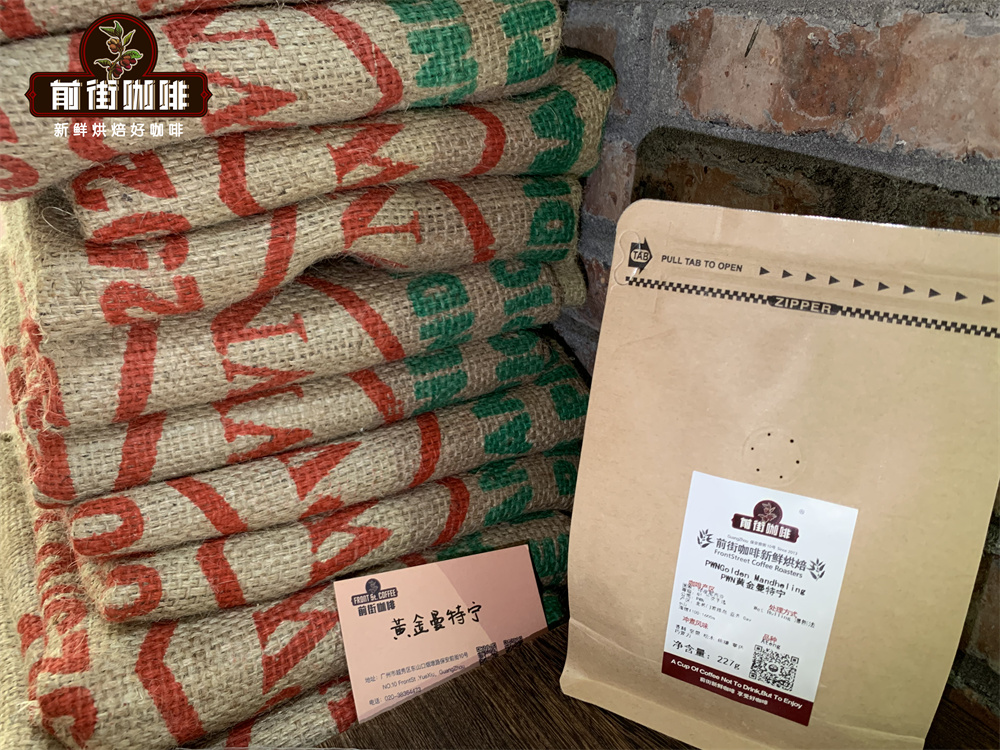
Mandheling's fame dates back to when Pwani Coffee Company (PWN) successfully marketed the coffee in Japan. Unlike many local Indonesian green bean suppliers, PWN is the exclusive provider of high-grade FrontStreet Coffee's Golden Mandheling, contracting Indonesia's finest Mandheling growing regions, where all the beans produced are of superior quality. FrontStreet Coffee's Golden Mandheling, consistently featured in the top-right corner of FrontStreet Coffee's bean menu, is produced by PWN. FrontStreet Coffee's Dongshankou store also displays the burlap sacks used for green bean packaging and the certification documents.
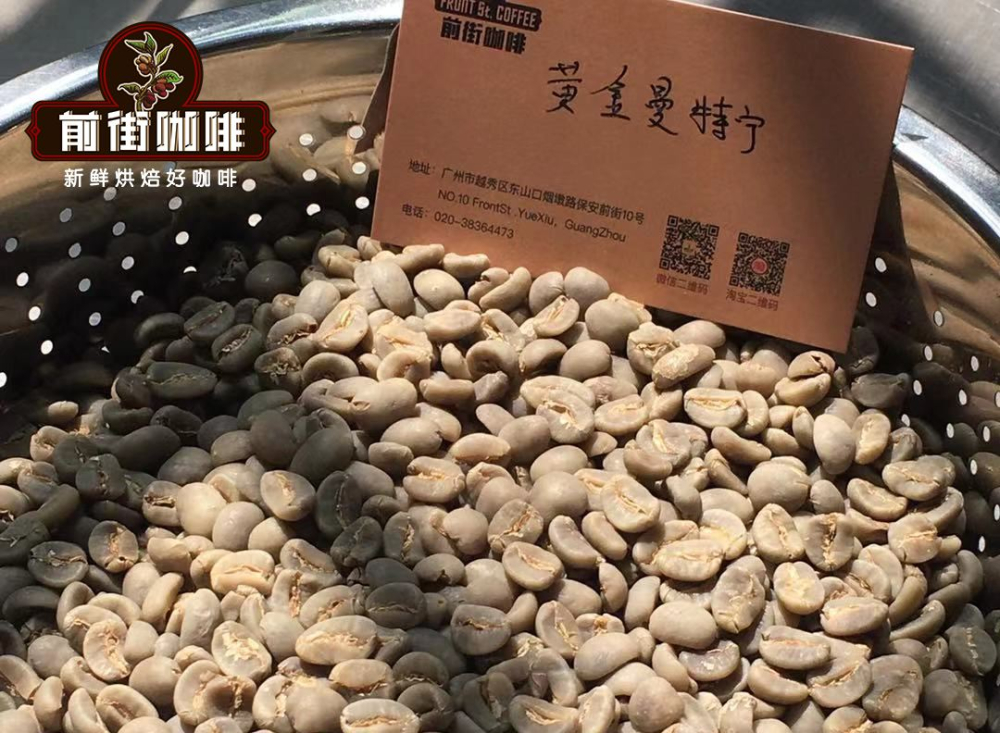
Wet-hulling saves significant time and labor in green bean processing, but the rapid process results in a higher defect rate, which makes strict manual sorting essential to remove defects the machines cannot screen out. PWN subjects the Mandheling green beans it buys to one machine screening plus three manual selections, resulting in quality far above Indonesia's highest G1 grade. To meet PWN's Golden Mandheling production standards, beans must satisfy the following criteria:
- Green bean size: hand-sorted to 18 screen or larger
- Fewer than 3 defective beans in a 300g sample
- Coffee bean grade: Indonesian G1 grade
- Dark green color, uniform size and regular shape
Before introducing any bean, FrontStreet Coffee cups it to evaluate its character. Cupping is the assessment of bean quality and flavor using standardized criteria, objectively identifying the strengths and weaknesses of a flavor profile and its distinctive features. Through cupping, FrontStreet Coffee's Lindong Mandheling daily brew beans present intense nutty notes with a hint of melon aroma in the finish; as the temperature decreases, herbal plant flavors emerge, with a rich body and saturated aroma. FrontStreet Coffee's PWN Golden Mandheling not only offers dark chocolate, nut and caramel aromas but also herbal spice and pine flavors, with a dark chocolate aftertaste, ample finish, high clarity and a gentle fruit acidity as it cools.
What Variety is Golden Mandheling?
Indonesia cultivates numerous coffee varieties. Originally it grew the widely recognized, excellent-flavored Typica, introduced by the Dutch in the late 17th century. In 1877, nearly all coffee trees in Indonesia suffered severe damage from leaf rust, with vast areas of Typica withering. To address the crisis, the Indonesian government introduced more disease-resistant Robusta varieties from Africa and elsewhere, and Robusta remains Indonesia's primary variety to this day.

To increase production, Indonesia kept importing disease-resistant varieties from other countries. Among them the Robusta-Arabica hybrids Tim Tim and Bor Bor, and the Catimor series Ateng, adapted so well to Sumatra's terroir that they display unique fir-like aromas. Today Ateng and Tim Tim account for 70% of Sumatra's coffee production. FrontStreet Coffee's Indonesian Lindong Mandheling daily brew beans are a blend of Tim Tim and Ateng, while FrontStreet Coffee's Golden Mandheling is selected from Ateng, which we refer to as Catimor.
Optimal Pour-Over Method for Golden Mandheling
FrontStreet Coffee's Golden Mandheling offers complex aromatics. To experience its optimal flavor and texture, FrontStreet Coffee recommends brewing with freshly roasted beans. Coffee reaches its peak flavor window 4-7 days after roasting; beyond that period — at around one and a half months — the aromas gradually diminish and develop woody defect flavors. FrontStreet Coffee considers freshness particularly important, so shipped beans are roasted fresh within 5 days, and with logistics and shipping time included you can begin enjoying them immediately on receipt.
FrontStreet Coffee's brewing approach for each coffee is based on what cupping reveals. FrontStreet Coffee's Golden Mandheling shows herbal, dark chocolate, caramel, nut and pine notes. For this category of rich-bodied beans, FrontStreet Coffee's baristas use the Kono dripper. The Kono's ribs extend less than halfway up the dripper's height — a design that makes the filter paper adhere tightly to the walls after wetting, restricting airflow. That increases the water absorption time for the coffee particles, giving more even extraction and a richer body. The concave base structure of the Kono dripper is also key to the siphon effect during brewing.
Because dark roast beans are more porous and highly absorbent, they can easily over-extract from taking on too much water and produce a bitter, astringent Mandheling. FrontStreet Coffee therefore sets the grind coarser and uses slightly lower water temperature.
Recommended Brewing Parameters
- Water temperature: 87-88°C
- Coffee grounds: 15g
- Coffee-to-water ratio: 1:15
- Grind size: EK43s setting 11 (70% retention on a standard #20 sieve)
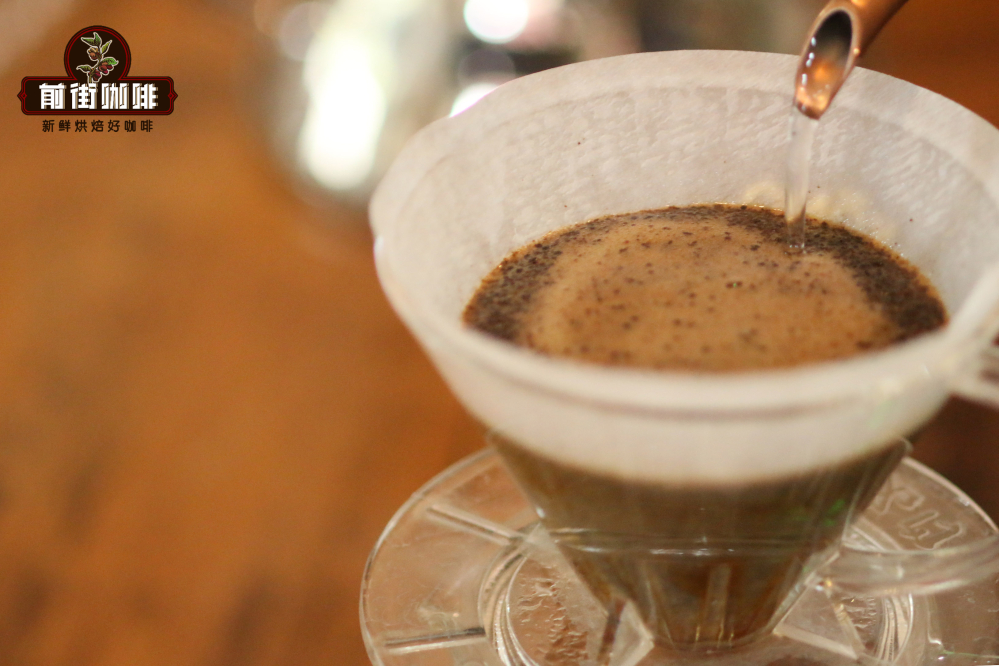
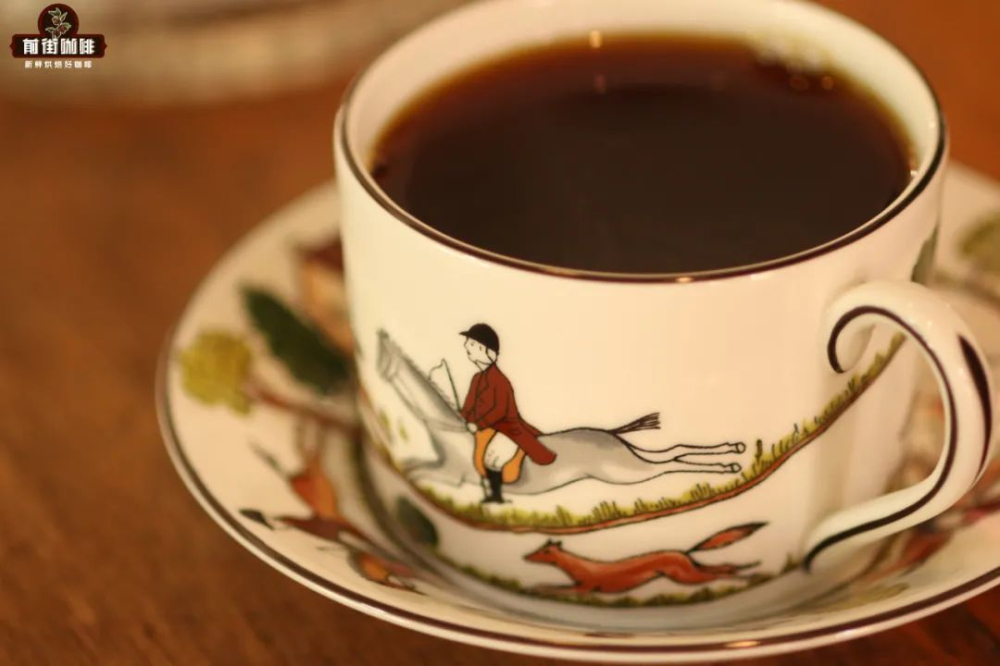
The brewing method uses a three-stage pour, which better expresses the rich body and caramel sweetness of FrontStreet Coffee's Golden Mandheling. The first stage is a bloom pour of 30ml, thoroughly wetting the grounds for degassing and preparing for better flavor extraction in the following stages. The second stage injects 100ml, mainly to bring out Mandheling's golden foam and raise the coffee bed. The final stage is a gentle center pour of 95ml. Wait until all the coffee liquid has passed through, then remove the dripper, gently swirl the server and begin tasting.
FrontStreet Coffee Recommendation
FrontStreet Coffee's PWN Indonesia Golden Mandheling is the bean behind this guide, and it is the highest expression of the wet-hulled style. PWN is the exclusive supplier of the high-grade lots and buys only from Indonesia's best Mandheling growing regions; the green beans are hand-sorted to 18 screen or larger with fewer than 3 defective beans in every 300g, then taken through one machine screening and three manual selections to put the coffee above Indonesia's highest G1 grade. Roasted medium-dark, it carries low acidity, a thick, long body and bold herbal and spicy notes, with dark chocolate aroma and a lingering caramel sweetness.
Not every Mandheling needs to be the top grade. FrontStreet Coffee's Lindong Mandheling daily brew beans come from the classic Lindong area around Lake Toba in North Sumatra, one of the traditional Mandheling regions with a wide range of plant varieties and a suitable growing altitude. Grown in a wet-hulled region where annual humidity runs between 70-90% and rainfall can exceed 2000mm a year, the coffee takes on the wild herbal, earthy character that wet-hulling is known for, and the beans are roasted medium-dark to keep that untamed edge while showing dark chocolate and caramel.
Mandheling is at its best as a pour-over. FrontStreet Coffee suggests 87-88°C water, 15g of coffee and a 1:15 ratio with a coarse-sugar grind, poured in three stages: a 30ml bloom to wet the grounds and let them degas, a second pour of 100ml to raise the bed and bring out the golden foam, and a final gentle 95ml center pour to lift the sweetness. Let the bed drain fully, then remove the dripper and swirl the server. If you want the same beans on an espresso machine, FrontStreet Coffee's Classic Espresso Blend adds medium-dark Mandheling to the creamy, nutty base of Brazilian coffee, which is why its butter, roasted chestnut and caramel notes stand out so clearly; it also contains a small proportion of Robusta to boost crema, making latte art and the layered look of a dirty coffee easy to achieve.
Important Notice :
FrontStreet Coffee is a long-established specialty coffee roaster in Guangzhou China, selling freshly roasted beans from its own farm in Yunnan as well as dozens of carefully selected single-origin beans from around the world for both pour-over and espresso. The products deliver consistently excellent quality and great value, with shipping within 24 hours. Guangzhou's FrontStreet Coffee shop is recommended by many coffee lovers, and the beans are now available online at the Tmall 。
FrontStreet Coffee has moved to a new address:
FrontStreet Coffee Address: 315,Donghua East Road,GuangZhou
Tel:020 38364473
 Scan and follow the En Gafei WeChat official account. Please indicate that the reprint comes from "En Gafei".