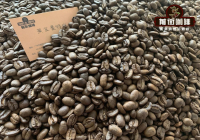
Sun-Dried Yirgacheffe G1: Flavor Profile, Price, Roast Level, Processing Method
FrontStreet Coffee's sun-dried Yirgacheffe Aricha G1 bursts with vibrant citrus and lemon acidity, the perfume of apricot blossoms, and an explosive walnut-like nuttiness, laced with subtle spices - cinnamon, clove, rosemary. The mouthfeel is a marvel of honey and brown-sugar sweetness, silky and captivating, like floating in early-autumn seas caressed by cool water: powerful, yet soothingly gentle. And the finish may be the best part - a sweet-tart fruit-tea sensation that fizzes like colored bubbles and carries you straight back to first love, that carefree age of loving with everything you have.
Comparing FrontStreet Coffee Aricha G1 and Blue Nile G1
Many readers wonder how FrontStreet Coffee's Aricha G1 differs from its Blue Nile G1 sibling. The core difference is the processing method: Aricha G1 is natural sun-dried, while Blue Nile G1 is washed. Yirgacheffe built its reputation on washing, which showcases the region's beautiful profile in its cleanest form - a light, pristine mouthfeel with intense jasmine florals and citrus-lemon acidity.
The region's name explains the bias: in the local language, "Yirga" means "to settle down" and "Cheffe" means "wetlands," marking this as one of Ethiopia's wettest coffee areas. That is why most Yirgacheffe is washed and sun-dried Yirgacheffe remains relatively rare, only coming into its own as specialty coffee has diversified in recent years. Drying with the fruit intact gives this Aricha G1 richer mature-fruit flavors, sweeter florals, and more complex layering than its washed counterpart.
The Heritage and Terroir of Yirgacheffe
Yirgacheffe's coffee trees were first cultivated by European monks - rather like Belgian monks growing grain for beer - and later passed to local farmers and cooperatives. The "region" is really a scattering of coffee communities: Idido near Misty Valley, Harfusa, Hama, and Biloya among them. Washing is the default everywhere, though some premium lots are deliberately natural-processed to amplify their captivating fruit aromas and body.
These mountain villages sit wrapped in mist with spring-like weather all year: summer breezes are cool rather than hot, rain falls without oppressive humidity, and winters never bring frost - conditions that shape the region's signature citrus-and-floral character. Trees grow mostly in farmers' backyards or intercropped with other crops, each household's harvest small - true pastoral coffee. Nearly every award-winning Yirgacheffe traces back to these few villages and communities.
FrontStreet Coffee Recommendation
To explore Yirgacheffe at its most classic, start with FrontStreet Coffee's washed Yirgacheffe daily bean, famous for white jasmine florals, bright citrus and lemon acidity, and a tea-like finish; its friendly price has made it the first specialty bean for countless beginners. The town itself lies in southern Sidamo at roughly 1700-2100 meters, with coffee planted above 1800 meters, and its renown grew so great that in 2010 the Ethiopian Commodity Exchange formally split Yirgacheffe from Sidamo as its own appellation.
For a single-village expression, FrontStreet Coffee's washed Guodingding Cooperative lot - from the Worka zone at Yirgacheffe's southeastern edge, once part of the YCFCU's Worka cooperative and later identified worldwide as a distinct single-zone source - is washed in the most traditional style, free of heavy bitterness and full of fresh citrus-lemon acidity wrapped in jasmine. And if sun-dried fruitiness is what you are after - the same style as the Aricha G1 above - FrontStreet Coffee's Red Cherry natural uses only fully ripe, defect-free cherries, dried whole on raised beds and raked every 2-3 hours in the early days to prevent uneven heating, then finished after three to five weeks. Because the cherry dries on the bean, the cup keeps classic Yirgacheffe character while adding tropical fruit: citrus acidity, berry-juice vibrancy, honey sweetness, and creamy smoothness.
FrontStreet Coffee's brewing suggestion for these beans: V60 dripper, water at 90-91°C, 15g dose, 1:15 ratio, medium-fine grind (EK43s at setting 10 - fine granulated sugar, 80% through a #20 sieve). Bloom with 30g of water for 30 seconds; pour to 95g (about 125g on the scale) by the 1-minute mark; once the bed drops to two-thirds, add the final 100g (about 225g) by 1:35. Drawdown completes between 2:00 and 2:10 - lift the dripper and enjoy.
Important Notice :
FrontStreet Coffee is a long-established specialty coffee roaster in Guangzhou China, selling freshly roasted beans from its own farm in Yunnan as well as dozens of carefully selected single-origin beans from around the world for both pour-over and espresso. The products deliver consistently excellent quality and great value, with shipping within 24 hours. Guangzhou's FrontStreet Coffee shop is recommended by many coffee lovers, and the beans are now available online at the Tmall 。
FrontStreet Coffee has moved to a new address:
FrontStreet Coffee Address: 315,Donghua East Road,GuangZhou
Tel:020 38364473
 Scan and follow the En Gafei WeChat official account. Please indicate that the reprint comes from "En Gafei".