Flavor Characteristics of Ethiopia Sidamo Lion King Coffee: Variety, Region, Taste, Grind Setting, and Processing Method

Ethiopian Sidamo Lion King
[FrontStreet Coffee Sidamo Lion King]
Origin: Sidamo, Guji Zone, Ethiopia
Altitude: 1800-2000 meters
Processing: Natural Process
Harvest Time: 2017
Variety: Local Indigenous Varieties
01|Region Introduction
Sidamo Region

Sidamo's coffee flavors are extremely diverse. Different soil types, microclimates, and countless indigenous varieties create a varied landscape of towering mountains, highlands, plateaus, valleys, and plains across the region. The geology consists of nutrient-rich, well-drained volcanic soil reaching depths of nearly two meters, with surface soil in dark brown or brown.
Sidamo grows at elevations between 4,600-7,200 feet on the southern Ethiopian plateau. It is a renowned specialty coffee region in the south of the country, bordering Kenya to the southeast and lying directly south of the capital. It typically shows distinct sweetness, which is why many drinkers prefer it. Annual production is approximately 225,000 bags of 60kg each. The region's greatest advantage is that soil fertility is maintained by recycling organic material, using fallen leaves from surrounding trees and plant residues as fertilizer, and that is what creates the distinct differences between the coffees of individual towns.

From 2010-2012, the region consistently received scores of 92-94 from Coffee Review, the American coffee evaluation publication, which shows the exceptional quality of the green beans grown there.

Guji Zone Introduction
The Guji Zone lies southeast of the renowned Yirgacheffe region.
Administratively it belongs to the Oromia Region's Guji Zone and represents a regional green coffee designation. Just as Yirgacheffe became widely known after it made its name, Guji became an independent sub-region within the broader Sidamo area. This batch of FrontStreet Coffee's Sidamo is produced by smallholders from the Shilcho Cooperative near Dara Woreda town in Sidamo province. The cooperative was established in 1976 and is now a member of the Sidama Coffee Farmer Cooperative Union (SCFCU). SCFCU is a major coffee cooperative union in Ethiopia, currently comprising approximately 46 member cooperatives, which makes it the second-largest coffee cooperative in the country.
02|Processing Method
The natural process is the oldest and most traditional way to process coffee beans. Compared with the washed process, coffee dried this way is also known as "natural coffee" or "sun-dried coffee." Harvested cherries are spread directly in sunlight for about two to four weeks, a method typically used in countries with distinct dry and wet seasons.

1. Harvest ripe coffee cherries.
2. Sort out impurities and defective beans.
3. Screen floating beans: pour the cherries into water tanks, where mature, full cherries sink to the bottom and immature or damaged ones float to the surface.
4. Natural drying: remove the mature cherries that sank, spread them in the drying area, and sun-dry until moisture content falls from 70% to about 10-12%. They must be turned several times a day for even drying and covered at night to prevent moisture absorption.
5. Remove the outer shell: after about two to four weeks of sun, the outer layer of the seed is dry and hard, and a hulling machine is used to remove it, completing the process.
03|Green Bean Analysis
[FrontStreet Coffee Sidamo Lion King - Natural Process]
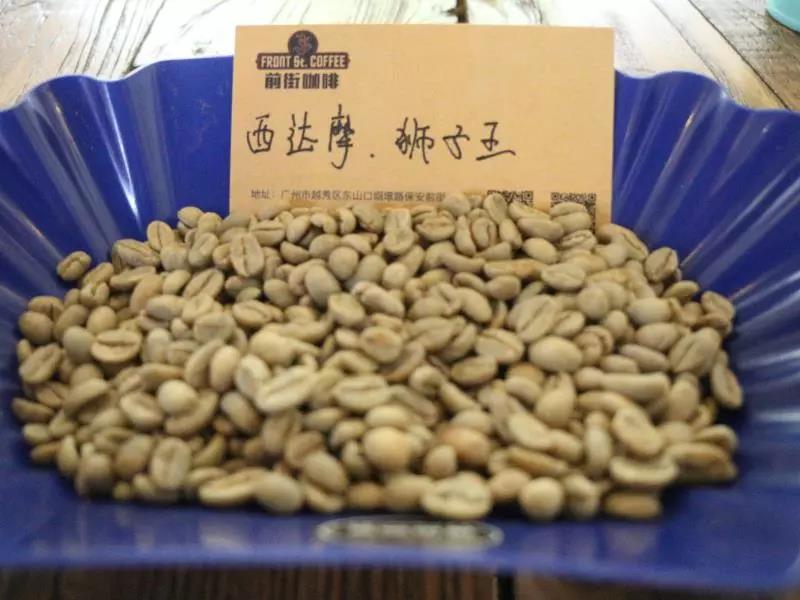
Ethiopia has nearly 2,000 recorded coffee varieties. They form a grand garden with everything imaginable, long, short, thin, and fat beans, which makes identification difficult, and so they are simply called local indigenous varieties. The beans are medium-sized but include dwarf small-grain types. Disease resistance is relatively weak; the trees are tall and robust with a moderate form.
04|Roasting Analysis
These green beans are relatively small, greenish-yellow with poor uniformity, and moderate in moisture content. The roasting target is a light to medium roast, aiming to preserve bright acidity while showcasing multi-layered tropical fruit flavors and aromas.

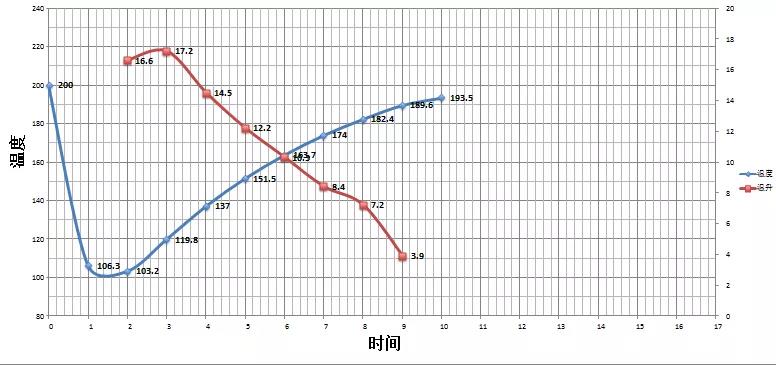
In the first batch, the drop temperature was relatively high, with an entry temperature of 200 degrees Celsius and comparatively high heat. During roasting it became clear that these beans come from extremely high altitude and are very hard. To avoid uneven roasting caused by inconsistent green bean size, the approach was extended dehydration with a gradual heat reduction and a steady temperature rise. Heat was adjusted at the yellowing point, at the completion of dehydration, and when first crack signs appeared, avoiding surface scorching. The beans were dropped between dense first crack and the end of first crack, shortening the caramelization reaction to preserve flavor clarity and floral-fruity aromas.

Yangjia 600g semi-direct flame roaster
Heat the roaster to 200 degrees Celsius and set the damper to 3. After 30 seconds, adjust heat to 160 degrees Celsius with the damper unchanged. Temperature return at 1'35". Maintain heat. At 4'50", the bean surface turns yellow and the grassy aroma disappears completely, entering the dehydration stage. Reduce heat to 120 degrees Celsius and adjust the damper to 4.
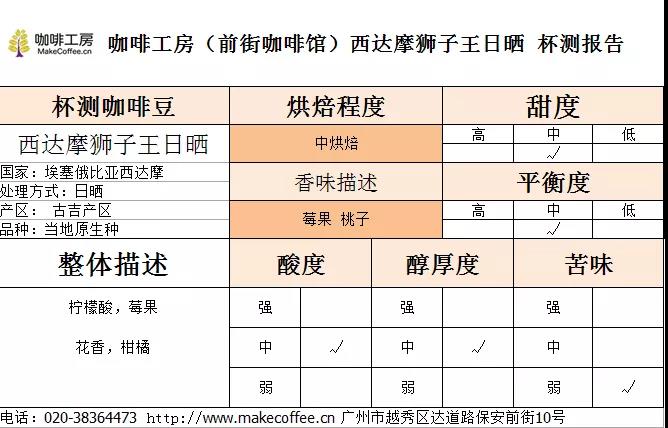
FrontStreet Coffee Sidamo Lion King Natural shows floral aromas with prominent fruit flavors. It is smooth and balanced, with lively and diverse layered complexity.
05|Brewing Analysis
Recommended brewing method: pour-over.
Grind size: fine sugar, with an 80% pass-through rate on the China #20 standard sieve.

V60 dripper, 15g coffee, water temperature 91-92 degrees Celsius, water-to-coffee ratio 1:15.
30g of hot water for a 30-second bloom, then pause. Pour in a circular motion to 125g, then pause. Pour slowly to 225g. Total time: 2 minutes 3 seconds.
FrontStreet Coffee Recommendation
Natural-processed Sidamo is where Ethiopia's fruit-forward side shows most clearly, and FrontStreet Ethiopia Huakui is the best-known example. It comes from the Hambella area of Guji, just next door to the Lion King's home zone, where the farm covers 200 hectares and uses traditional natural processing. Ripe cherries are spread on raised beds for 21 days and turned constantly for even drying, with defective and moldy beans removed by hand every three to five days; once the skin has dried hard, a huller removes it and the green beans are sorted a final time. Because fruit and skin stay on throughout drying, a medium-light roast yields a light fermented wine aroma with florals, citrus, and mango, honey sweetness, cocoa, a hint of spice, a thick body, and a long finish.
FrontStreet Hamashu 74158 comes from a different part of Sidamo. The Hamashu processing station has become a regular on Ethiopian green bean competition lists for its quality and distinctive flavor. Its coffee is mainly built on the 74-series disease-resistant varieties released by the JARC agricultural research center, and 74158 is on the small side with a pronounced floral-fruit profile. The aroma recalls perfumed lemon, strawberry, and starfruit, and the entry brings clear strawberry, starfruit, and green grape sweetness, with delicate florals gradually emerging behind them.
For the same natural style in a Yirgacheffe context, FrontStreet Sun-dried Red Cherry is the one to try. It uses an all-red-cherry natural process, taking only fully ripe, sound fruit. After a first sorting at the processing station the cherries go straight onto raised beds, turned every 2-3 hours in the first days so uneven heat does not drive over-fermentation. After three to five weeks of sun the outer pulp is removed by machine and the beans go to storage. Drying with the fruit still attached preserves the classic Yirgacheffe profile while adding tropical fruit, so the cup shows citrus acidity, berry juice, honey sweetness, and a creamy smoothness, with peach, cocoa, honey, and lemon in the flavor notes.
Important Notice :
FrontStreet Coffee is a long-established specialty coffee roaster in Guangzhou China, selling freshly roasted beans from its own farm in Yunnan as well as dozens of carefully selected single-origin beans from around the world for both pour-over and espresso. The products deliver consistently excellent quality and great value, with shipping within 24 hours. Guangzhou's FrontStreet Coffee shop is recommended by many coffee lovers, and the beans are now available online at the Tmall 。
FrontStreet Coffee has moved to a new address:
FrontStreet Coffee Address: 315,Donghua East Road,GuangZhou
Tel:020 38364473
 Scan and follow the En Gafei WeChat official account. Please indicate that the reprint comes from "En Gafei".