Panama Hacienda La Esmeralda Geisha Coffee Beans Origin Story Red Green Blue Label Grade Flavor Comparison

Geisha coffee beans became famous when Panama's La Esmeralda farm identified them, cultivated them, and won first place in the Best of Panama green bean competition. Over the following decade or two, La Esmeralda has consistently ranked among the top entries year after year. The Esmeralda Geisha Red, Green, and Blue Labels are everyday beans at FrontStreet Coffee. The English name for Geisha is "Geisha," which Japanese speakers transliterated as "Geisha" (meaning "geisha"). Later, Mr. Yuan introduced it to the Chinese market and translated it as "Guixia."
FrontStreet Coffee previously detailed the complete story of Panama La Esmeralda's Geisha in an earlier article, which you can refer to. We will not elaborate further here—this article explains only the grade differences between the Red, Green, and Blue Label Geisha.

Daniel Peterson, the owner of Panama La Esmeralda, accidentally discovered coffee trees with a special morphology growing at lower elevations on the newly acquired Jaramillo farm. Through coffee consultant Don Pachi, he learned that these trees were Geisha, originally introduced from Costa Rica to improve Panama's coffee disease resistance. Because of low yields, many farmers had already cut them down. But Daniel decided to plant these trees at higher elevations, and they surprisingly produced the characteristic citrus and floral notes of African beans. After separating these beans and entering them in the 2004 Panama Cupping Competition, they became famous instantly. Since then, Geisha beans have been unstoppable, winning the Panama Coffee Cupping Competition championship for consecutive years. In the eyes of specialty coffee enthusiasts worldwide today, Geisha coffee beans are undoubtedly the supreme treasure.
La Esmeralda Geisha Farm Division
High-quality Geisha is mainly produced from two farm estates: Jaramillo and Canas Verdess.
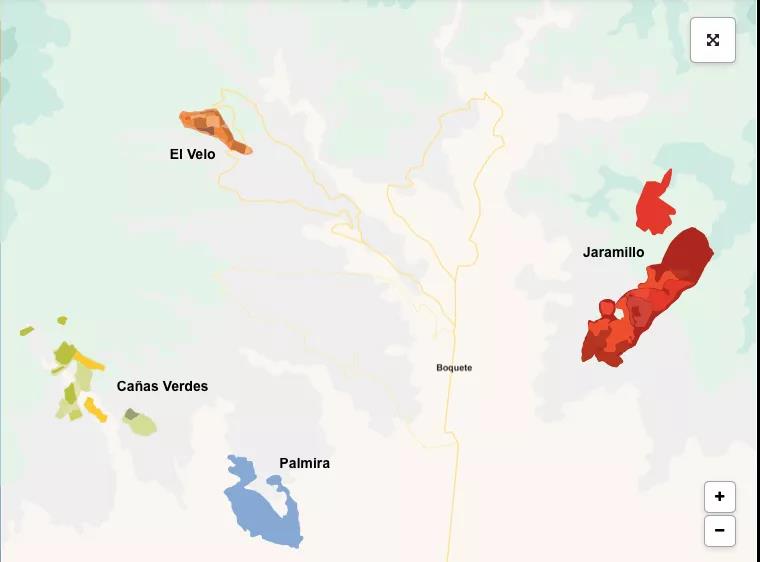
Jaramillo: Annual rainfall of 4000ml, average daytime temperature of 19-25°C, average nighttime temperature of 11-15°C, average elevation of 1600-1700m. The Jaramillo farm is subdivided into 5 small plots: Mario, Noria, Reina, Bosque, and Buenos Aires.

Canas Verdess: Annual rainfall of 3500ml, average daytime temperature of 16-23°C, average nighttime temperature of 10-15°C, average elevation of 1600-1800m. Canas includes 9 small plots: Lino, Coronado, Fundador, León, Montaña, Trapiche, Chinta, Cabaña, and Tumaco.
El Velo: This is the newest farm purchased by La Esmeralda, with an average elevation of 1700-1900m. Besides planting Geisha and Catuai, this farm also has small quantities of other exotic varieties such as Laurina, Pacamara, Moka, and SL28. El Velo is divided into 7 small plots: Guabo, Portón, Durazno, Mural, Higo, Buena Vista, and Guila.
After years of experimentation, Panama La Esmeralda discovered that only Panama Geisha beans harvested from trees growing above 1,400 meters elevation can display the special flavors that Geisha should have. The main grading is therefore based primarily on planting altitude, supplemented by actual cupping results, dividing Geisha beans into "Red, Green, Blue Label" grades. FrontStreet Coffee believes that La Esmeralda's marketing strategy differs most from other farms in that it divides products into five major brands based on cupping performance, planted varieties, and farm locations. The Geisha varieties have three brands: Esmeralda Special, Private Collection, and Geisha 1500. The Catuai varieties have two brands: Diamond Mountain and Palmyra.

Panama Geisha Coffee Characteristics
Panama Geisha coffee beans are a very rare variety that has continuously created sensations among coffee connoisseurs worldwide over the past 5+ years. Geisha are considered the brightest, most complex, and most highly aromatic coffee variety.

Geisha trees grow in very high altitude areas and have beautiful, slender leaves. Geisha cherries and green beans are also slightly more slender compared with other top-quality high-altitude coffees. Geisha has rich sweetness, an extremely clean mouthfeel, and complex aromas ranging from berries and citrus to mango, papaya, and peach. A very distinct bergamot-like aftertaste is also one of its typical cupping characteristics. Geisha beans are often champions among coffee varieties and cup with moderate body.
Esmeralda Special - Commonly Known as Red Label
The Geisha produced by Esmeralda Special is what we commonly hear as the Red Label. It selects Geisha beans planted at elevations of 1600-1800 meters, with cupping scores above 90 points, from the two production areas of Jaramillo and Canas Verdes. The independent auctions held by La Esmeralda feature only the Geisha batches from designated plots that are put up for auction, and these are the auction Red Labels. Customers often ask whether auction Red Labels or regular Red Labels taste better. In fact, non-auction Red Labels and auction Red Labels come from the same plots—the difference is whether they participated in the auction. FrontStreet Coffee believes you do not necessarily need to drink auction-level beans: first, the price is indeed quite high, and second, if you just want to try them, regular Red Labels are also a good choice.

FrontStreet Coffee's La Esmeralda Red Label Geisha comes from the Mario plot, because this plot is exactly where Geisha won the BOP championship back in the day. Using slow natural drying, the Esmeralda roasted flavor has special, bright floral aromas, citrus notes, and honey-like sweetness.
Private Collection - Commonly Known as Green Label
Private Collection, commonly known as Green Label, consists of non-auction competition batches, selecting Geisha varieties from different plots including Jaramillo and Canas Verdess that do not participate in auctions but still have excellent quality. It selects Geisha beans planted at elevations of 1600-1800 meters, from micro-batches mixed from different plots including Jaramillo, Canas Verdess, and others. People often ask about the difference between Red Label and Green Label. FrontStreet Coffee gives the most straightforward answer: Red Label can be traced back to a specific plot, while Green Label is a blended bean that cannot be traced. Because of the blending model, there is no detailed plot specification, so sometimes Green Label and Red Label may have very similar flavor profiles, but the next batch might be different. FrontStreet Coffee feels that drinking Green Label is like buying a lottery ticket—perhaps this batch you are drinking tastes like Red Label. Green Label Geisha will be processed using natural or washed methods.
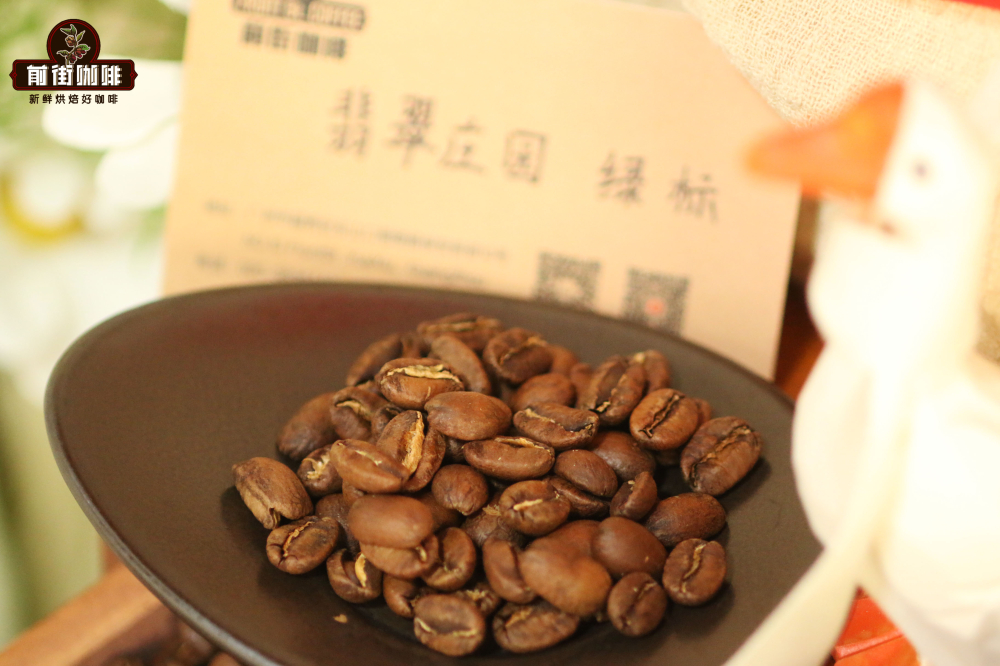
FrontStreet Coffee's La Esmeralda Green Label Geisha uses washed processing. The washed Green Label Geisha has fresh jasmine and ginger flower aromas, citrus-like bright acidity, and a thick, juicy mouthfeel.
Geisha 1500 - Commonly Known as Blue Label
The Geisha 1500 brand is what we commonly see as Blue Label Geisha. It selects blended beans from three different plots—Jaramillo, Canas Verdess, and El Velo—at elevations of 1400-1500 meters. The flavor has subtle floral notes, fruit acidity, and sweetness, with a less full body. Blue Label Geisha is only washed processed. In 2022, however, the Blue Label was changed to the "Los Rocas" (Volcanic Rock) brand. FrontStreet has also tasted this new Blue Label, and the flavor profile remains.
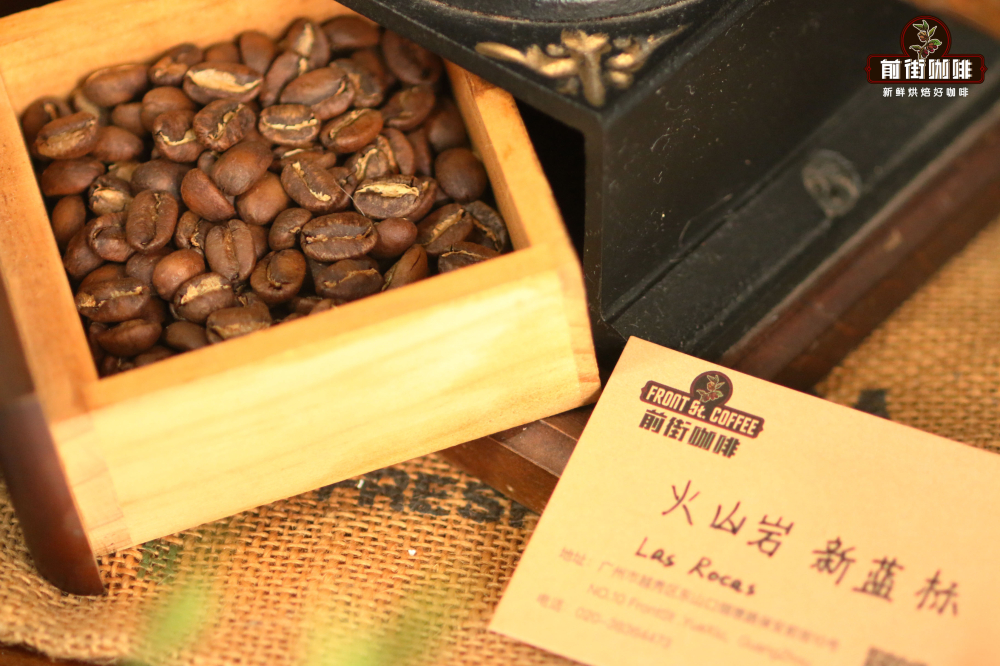
FrontStreet Coffee's washed Blue Label Geisha has slight floral notes, fruit acidity, and sweetness, with a less full body, while the natural-processed Blue Label has subtle floral notes, obvious fermentation notes, and a berry juice-like mouthfeel with high sweetness.
FrontStreet Roasting Recommendations for 4 La Esmeralda Geisha Coffee Beans
[Red Label Geisha]
Heat to 150°C, fire power 120, damper open to 3; return temperature point at 1'36", when temperature reaches 140°C, open damper to 4, fire power unchanged; when temperature reaches 147.6°C, the bean surface turns yellow, the grassy aroma completely disappears, enter dehydration stage; when temperature reaches 150°C, adjust fire power to 100, damper unchanged; at 7'38", the bean surface shows ugly wrinkles and black spots, the toast aroma clearly changes to coffee aroma, which can be defined as the prelude to first crack—listen carefully for the first crack sound; at 8'10" first crack begins, open damper to 4, develop for 1'28 after first crack, discharge at 189.5°C.
[Green Label Geisha]
Heat to 190°C, fire power 150, damper open to 3; return temperature point at 1'36", when temperature reaches 140°C, open damper to 4, fire power reduced to 130; when temperature reaches 150.8°C, the bean surface turns yellow, the grassy aroma completely disappears, enter dehydration stage; when temperature reaches 161°C, adjust fire power to 90, damper unchanged; at 7'55", the bean surface shows ugly wrinkles and black spots, the toast aroma clearly changes to coffee aroma, which can be defined as the prelude to first crack—listen carefully for the first crack sound; at 8'30" first crack begins, open damper to 5, develop for 1'30 after first crack, discharge at 193.5°C.

[Washed Blue Label Geisha]
Heat to 180°C, fire power 130, damper open to 3; return temperature point at 1'32", when temperature reaches 104°C, open damper to 4, fire power unchanged; when temperature reaches 151.6°C, the bean surface turns yellow, the grassy aroma completely disappears, enter dehydration stage; at 7'56", the bean surface shows ugly wrinkles and black spots, the toast aroma clearly changes to coffee aroma, which can be defined as the prelude to first crack—listen carefully for the first crack sound; at 8'30" first crack begins, open damper to 5, develop for 1'28 after first crack, discharge at 190°C.
[Natural Blue Label Geisha]
Heat to 180°C, fire power 130, damper open to 3; return temperature point at 1'32", when temperature reaches 104°C, open damper to 4, fire power unchanged; when temperature reaches 151.6°C, the bean surface turns yellow, the grassy aroma completely disappears, enter dehydration stage; at 7'56", the bean surface shows ugly wrinkles and black spots, the toast aroma clearly changes to coffee aroma, which can be defined as the prelude to first crack—listen carefully for the first crack sound; at 8'30" first crack begins, open damper to 5, develop for 1'28 after first crack, discharge at 190°C.

FrontStreet Cupping Report for 4 La Esmeralda Geisha Coffee Beans
[Red Label Geisha]
Dry Aroma: Jasmine, citrus
Wet Aroma: Citrus, lemon, honey
Tasting: Lemon, honey, berries, orange peel, mango, cream, citrus, tea notes
[Green Label Geisha]
Dry Aroma: Jasmine, ginger flower
Wet Aroma: Lemon, sweet orange
Tasting: Lemon, sweet orange, honey, cream, almond, tea notes

[Washed Blue Label Geisha]
Dry Aroma: Floral, citrus
Wet Aroma: Citrus, lemon
Tasting: Citrus, lemon, honey, nuts, tea notes
[Natural Blue Label Geisha]
Dry Aroma: Fermentation, caramel
Wet Aroma: Floral, fermentation aroma
Tasting: Lemon, honey, melon, berries, fermentation notes
FrontStreet Brewing Recommendations for 4 La Esmeralda Geisha Coffee Beans
Brewing Parameters:
Dripper: V60 #01
Coffee amount: 15g
Coffee-to-water ratio: 1:16
Grind size: (80% pass-through through #20 sieve)
Water temperature: 90-91°C
FrontStreet recommends using freshly roasted beans for brewing to maximize the rich flavors of the coffee. Beans shipped by FrontStreet Coffee are roasted within 5 days, because FrontStreet deeply understands that freshness greatly affects flavor. FrontStreet's roasting philosophy is "Freshly roasted good coffee," ensuring every customer receives the freshest coffee when their order arrives. The coffee resting period is about 4-7 days, so when customers receive it, it is at peak flavor.

FrontStreet considers that these Geisha beans are all light roasted. Light-roasted beans have lower extraction rates than dark-roasted ones, so to ensure full extraction of Geisha flavors, higher water temperatures are used for brewing, along with a finer grind size. Fans have noticed that FrontStreet has always recommended a 1:15 coffee-to-water ratio, but for La Esmeralda Geisha it is 1:16. This is because slightly increasing the water ratio helps you better experience Geisha's layers and flavor complexity.
FrontStreet Coffee uses segmented extraction, also called three-stage brewing. Use 30g of water for a 30-second bloom, then pour with a small circular motion to 125g for the segmentation. When the water level drops and is about to expose the coffee bed, continue pouring to 225g and stop. When the water level drops and is about to expose the coffee bed again, remove the dripper. (Timing starts from the bloom.) Extraction time: 2'00".

[Red Label] Bright rose and citrus aromas, brown rice, berries, apricot, complex fruits, honey, with a thick juice-like mouthfeel, rich flavor layers, and obvious sweetness.
[Green Label] Rich jasmine floral aroma, high sweetness, citrus, berries, juice-like texture, cream, green tea, orange peel, cantaloupe, overall rich flavor layers, with a persistent floral and citrus aftertaste.
[Washed Blue Label] Floral aroma, with gentle lemon and grapefruit acidity on entry, honey sweetness in the middle, oolong tea notes and brown sugar sweetness in the finish, with a relatively clean and bright mouthfeel.
[Natural Blue Label] Fermentation aroma and fruity sweetness on the nose, with melon and tropical fruit sweetness when tasting, a juice-like mouthfeel, and overall very high sweetness.
FrontStreet Coffee Recommendation
Understanding La Esmeralda's Red, Green, and Blue Labels makes it much easier to choose the Geisha that fits you. For the finest expression, FrontStreet Coffee's Esmeralda Special—the Red Label—comes from the Mario plot, where Geisha famously won the BOP championship, selecting beans grown at 1,600-1,800 meters with cupping scores above 90 points; slow natural drying gives it special, bright florals, citrus, and honey sweetness, with a thick, juicy body and obvious sweetness. For the same Esmeralda character at a more accessible price, FrontStreet Coffee's Green Label Geisha blends micro-batches from several plots rather than one, selecting beans at 1,600-1,800 meters and using washed processing for fresh jasmine and ginger flower aromas, citrus-bright acidity, and a thick, juicy mouthfeel. And for newcomers curious about the "Geisha flavor," FrontStreet Coffee's Boquete Geisha is an entry-level Geisha that delivers the classic Panamanian orange-blossom-honey note, oolong-tea body, and delicate fruit sweet-sour balance at a friendly price. Because these are all light-roasted Geisha, FrontStreet Coffee recommends brewing with a V60 #01, 15g of grounds, a 1:16 ratio, a grind of about 80% through a #20 sieve, and water at 90-91°C, poured in three stages—30g for a 30-second bloom, then a small circular stream to 125g, then to 225g once the bed drops—for a total time of about 2 minutes. If you would like an affordable everyday alternative with the same perfumed fruit character, FrontStreet Coffee's Strawberry Candy blend combines a Costa Rican honey-processed coffee with a Panamanian Geisha and works in a pour-over, moka pot, espresso machine, or cold brew.
Important Notice :
FrontStreet Coffee is a long-established specialty coffee roaster in Guangzhou China, selling freshly roasted beans from its own farm in Yunnan as well as dozens of carefully selected single-origin beans from around the world for both pour-over and espresso. The products deliver consistently excellent quality and great value, with shipping within 24 hours. Guangzhou's FrontStreet Coffee shop is recommended by many coffee lovers, and the beans are now available online at the Tmall 。
FrontStreet Coffee has moved to a new address:
FrontStreet Coffee Address: 315,Donghua East Road,GuangZhou
Tel:020 38364473
 Scan and follow the En Gafei WeChat official account. Please indicate that the reprint comes from "En Gafei".