Panama Coffee: Flavor Profiles, Processing Methods, Characteristics, Varieties, Growing Regions, and Taste - A Guide to Specialty Coffee
FrontStreet Coffee · Panama Coffee: Flavor, Processing Methods, Characteristics, Varieties, Growing Regions and Taste
Panama Geisha is a rare wild variety that has repeatedly taken first place in international cupping competitions. The green beans are slender, while the roasted beans carry an unexpected citrus aroma with a floral, fruity sweetness in the finish. It is unmistakably a coffee in a class of its own.
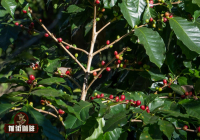
Geisha comes from an extremely rare wild variety discovered in Ethiopia, and the name most likely comes from the small village of Gesha, near where these coffee trees were found. The trees grow tall with slender leaves, resist coffee leaf rust, and are known for widely spaced branches along the trunk. The green beans are slender, while the roasted beans show a strong, intense fruit aroma. Because the variety yields so little, it cannot be obtained for ordinary commercial trade.
Coffee was first cultivated in the Americas around the 1720s. Today coffee cultivation holds an extremely important economic position in Panama. The Republic of Panama was established on November 3, 1903. A coffee processing plant with nearly a century of history sits within a charming, densely forested tropical rainforest valley.
Panama Coffee Growing Regions:
Premium Panama coffee is grown in the western part of the country, near Costa Rica and close to the Pacific coast. Coffee from the Boquete district of Chiriqui province is the most famous, with Vocan and Santa Clara also well known. Other regions include the David district, the Remacimeinto district, the Bugaba district and the Tole district. Only coffee grown at altitudes between 1,300 and 1,500 meters is considered specialty coffee.
Panama Coffee Flavor Characteristics:
Panama coffee is very smooth, light-bodied and balanced in acidity. Its premium beans have a pure and highly distinctive flavor.
Flavor: Full-bodied beans of excellent quality
Recommended Roasting Method: Medium roast
★★: Good
Panama Coffee Market:
Panama's first annual coffee export shipment departs in November, and nearly all premium beans are shipped to France and Finland. Panama coffee generally falls into the medium-to-low price range, yet its performance in the cup often rivals that of world-renowned origins. Panama specialty coffee commands among the highest prices on the international market.

FrontStreet Coffee Recommendation
If you want to understand why Panama is the spiritual home of Geisha, FrontStreet Coffee's line begins with the Esmeralda estate. The Red Label, formally Esmeralda Special, is grown at 1,600-1,800 meters and every lot must cup above 90 points; each carries its own lot number, and an entire lot comes from a single small plot, so buyers can choose the exact flavor profile they prefer. The Green Label, originally Private Collection, blends lots from several plots rather than emphasizing a single terroir, expressing the estate's signature high-altitude Geisha character at a more accessible price and offering excellent value.
For a first encounter with Geisha, FrontStreet Coffee recommends the Boquete Geisha, an entry-level Panama Geisha that delivers the classic orange-blossom honey character, an oolong-tea-like body and delicate fruit acidity with clear layers at a reasonable price. From Ethiopia, the birthplace of the variety, FrontStreet Coffee's Gesha Village Gold Label belongs to the Gesha 1931 variety and accounts for about 10% of the village's production, with a refined natural process and a complex, layered cup. The Gesha Village Red Label is the Gori Gesha variety, about 15% of production, scoring 88 or above on the SCA 100-point scale, and each lot is fully traceable back to its farm block, variety and processing date. FrontStreet Coffee's Grana Gesha, from the Genlana farm on the border of the Kochere and Grana Abaya areas, is an Ethiopian heirloom Geisha dried on raised beds for 14-20 days and shows bright citrus, elegant ginger flower, ripe fruit sweetness and a fine, silky body.
Geisha is a floral, fruity variety with a denser bean that tends to sink and block the dripper, so FrontStreet Coffee suggests grinding to a medium level, about 78% passing through a Chinese No. 20 standard sieve, or roughly the size of fine sugar, and brewing at 91°C. Use 15g of coffee in a small Hario V60 with a 1:16 ratio and a three-pour method: start the timer, pour to 30g for a 30-second bloom, then pour in a slow circular stream to 125g, wait until the water in the bed falls halfway, then continue in a slow circle to 225g, with a total extraction time of about 2:10 to 2:20. Geisha also makes an excellent SOE; FrontStreet Coffee's Grana Gesha SOE, roasted medium, is extracted at 20g of coffee, a 1:2 brew ratio, 25 seconds and 40g of espresso, and served as an Americano with 200g of hot water or as a latte with 200g of milk. For cold brew, FrontStreet Coffee's Strawberry Candy Geisha blend is a fine choice: grind 30g to fine sugar, setting 9 on an EK43s or 24 on a C40 hand grinder, add 360g of room-temperature water at a 1:12 ratio, stir, cover and refrigerate for 8 hours, then filter out the grounds and let the liquid mature in the fridge for another 3 hours.
Important Notice :
FrontStreet Coffee is a long-established specialty coffee roaster in Guangzhou China, selling freshly roasted beans from its own farm in Yunnan as well as dozens of carefully selected single-origin beans from around the world for both pour-over and espresso. The products deliver consistently excellent quality and great value, with shipping within 24 hours. Guangzhou's FrontStreet Coffee shop is recommended by many coffee lovers, and the beans are now available online at the Tmall 。
FrontStreet Coffee has moved to a new address:
FrontStreet Coffee Address: 315,Donghua East Road,GuangZhou
Tel:020 38364473
 Scan and follow the En Gafei WeChat official account. Please indicate that the reprint comes from "En Gafei".