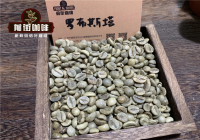
Yunnan Typica Coffee Flavor Profile Processing Methods Characteristics Variety Origin Taste Introduction
Yunnan Catimor 1557

Most Yunnan coffee on the market is Catimor, but Yunnan still grows a small amount of Typica. FrontStreet Coffee, for example, runs its own plantation in Lincang, Yunnan, growing Typica — the FrontStreet Coffee 2013 Natural Typica. Of course, FrontStreet Coffee also has Catimor coffees, such as the FrontStreet Coffee Washed Yunnan Arabica and FrontStreet Coffee Natural Catimor on its bean list.
Yunnan Coffee
Yunnan is China's largest coffee-growing region. Its unique geography and climate — low latitude, high altitude, ample rainfall, and suitable sunlight — make the belt between the 15°N parallel and the Tropic of Cancer an ideal growing zone, a golden coffee belt that produces a distinctive profile: rich but not bitter, fragrant but not intense, with a hint of fruitiness.

Yunnan coffee is also known as Yunnan Xiaoli ("small bean"), with uniform, full beans and a moderate, mellow taste. FrontStreet Coffee loves Yunnan coffee because it is China's own coffee. FrontStreet Coffee carries two Yunnan Xiaoli coffees — one Catimor and one Typica. "Xiaoli" simply means Arabica: its beans are relatively small, hence "small-fruit coffee," while Robusta is medium-fruit coffee and Liberica large-fruit coffee.
Morphological Characteristics
Small trees or large shrubs, 5-8 meters tall, usually with many branches at the base, the old branches grayish-white. Nodes are swollen and young branches hairless. Leaves are thin and leathery, ovate-lanceolate or lanceolate, with long, tapering tips and wedge-shaped or slightly blunt bases, entire or shallowly wavy margins, hairless on both surfaces. Several cymes cluster in the leaf axils, bearing white, fragrant corollas. Berries are broadly elliptical when ripe, red, 1.2-1.6 cm long, with seeds 0.8-1.0 cm long. Flowering runs from March to April.

Yunnan Arabica Coffee
Although China is known as the land of tea, coffee has a long history there. Yunnan Arabica arrived in mainland China in 1892, and this foreign species has thrived on that magical Eastern land for over a century since.
Coffee in China has come a long way — from merely satisfying old missionaries' appetites to becoming a regional economic crop — and the journey involved far more than simple adoption and imitation. Through continuous exploration, cultivation, and improvement, varieties suited to China's geography have emerged, along with roasting styles that suit Chinese tastes. Compared with imported beans, Yunnan beans are remarkably fresh: imports must cross oceans and clear lengthy customs procedures, so by the time they reach domestic distributors more than half a year has passed, and freshness is impossible. Domestic coffee can be roasted within days — a decisive advantage. And as the quality of Yunnan beans keeps improving, almost every coffee shop now features a Yunnan coffee.
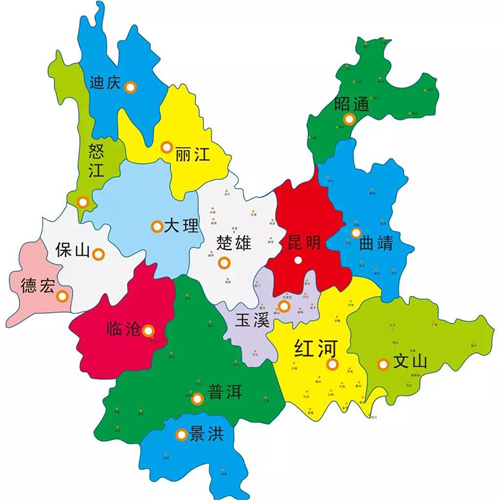
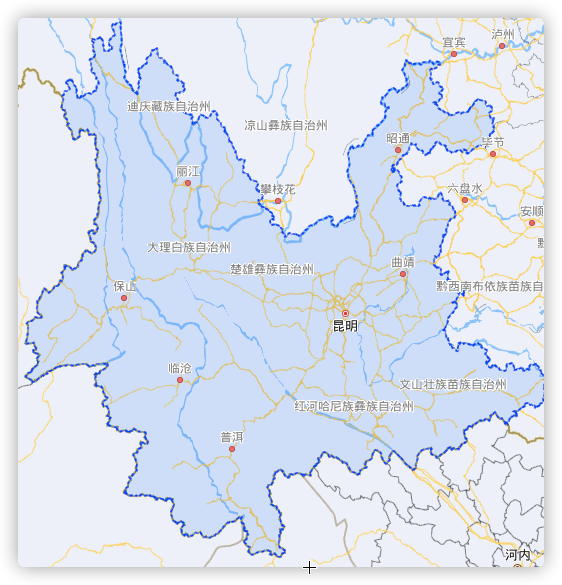
Yunnan Coffee Growing Regions
Yunnan's coffee areas are distributed mainly across Lincang, Baoshan, Simao, Xishuangbanna, Dehong, and other regions.
Baoshan
Baoshan's average temperature is 21.5°C, with a maximum of 40.4°C, and it is essentially frost-free all year — recognized as the best Arabica growing area. The coffee cultivated here is famous at home and abroad for being rich but not bitter, fragrant but not intense, with small, uniform beans, a mellow rich fragrance, and fruity notes. Tasting experts at international coffee organizations have rated Yunnan coffee in the same category as Colombian washed Arabica, making it one of the world's quality coffees. FrontStreet Coffee's Yunnan Arabica comes from Baoshan.
Lincang
A unique location and climate have made Lincang a magnet for coffee companies, which have successively established 200-mu and 100-mu high-quality coffee seedling bases in Mengding Town of Gengma Autonomous County and at Xingfu Farm in Lincang, and have carried out cultivation in Gengma, Zhenkang, Yun County, Cangyuan, and Yongde.
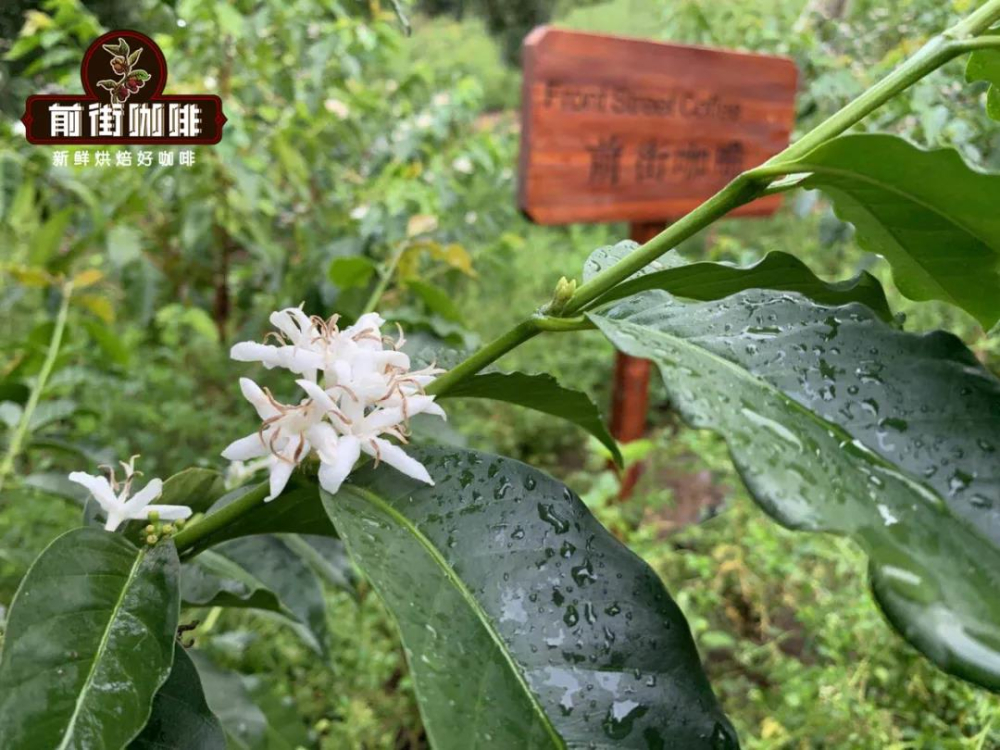
FrontStreet Coffee has established its own estate in the Lincang growing region and selected Typica — a pure Arabica variety with superior flavor compared with the Catimor currently grown across Yunnan. From seedling to first fruiting takes at least 4-5 years, which is why Yunnan farmers, despite knowing Catimor's flavor is inferior, are unwilling to replant. FrontStreet Coffee's first batch of self-produced Yunnan beans, from 2020-21, was named "FrontStreet Coffee 2013" and met with unanimous praise.
Yunnan Coffee Varieties
Today most coffee grown in Yunnan is Catimor, but Baoshan still grows a small amount of Typica.
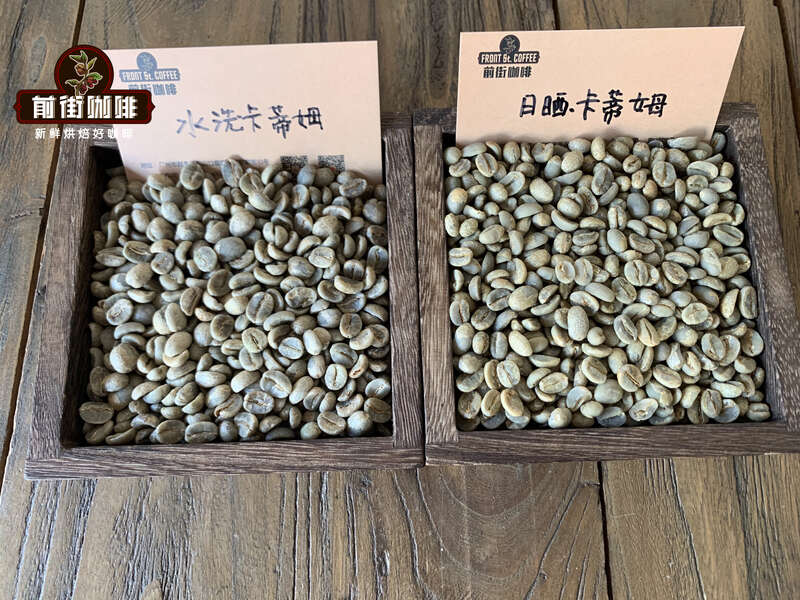
Catimor
A cross of Arabica and Robusta. Robusta brings good leaf rust resistance, rich oils, high yield, and easy cultivation. After hybridizing with Arabica's Typica, Catimor carries 25% Robusta genes: its rust resistance improved and its oils were retained, while keeping some of Typica's rich flavor — so most Yunnan estates moved to large-scale Catimor cultivation.
Typica
The most classic high-quality Arabica variety, from which many commercial improved varieties descend. It has excellent flavor expression and is recognized as a specialty coffee variety, but its yield is extremely low and it is susceptible to rust, demanding more human attention. Typica originates from Ethiopia and southeastern Sudan and is the most widely cultivated variety in the Western Hemisphere. The plant is relatively vigorous but intolerant of direct sunlight, with higher yields in Hawaii. Typica's top leaves are copper-colored, giving rise to the name "red-topped coffee."

Because of this, most Yunnan coffee was once destined for instant coffee or commercial-grade use. But quality keeps improving, the name of Yunnan coffee is becoming known worldwide, and Yunnan beans now appear even in specialty coffee.
Coffee Bean Processing Methods
Yunnan coffee uses washed processing, though some coffees are natural processed — for example: FrontStreet Coffee Washed Yunnan Arabica, FrontStreet Coffee Natural Catimor, and FrontStreet Coffee 2013 Natural Typica. Each method has its own flavor character.

Washed Processing
Farmers first pour harvested cherries into large water tanks: underdeveloped inferior beans float to the surface while mature, full fruits sink, and the floaters are scooped off. A pulping machine then removes the skin and pulp, though a slippery layer of mucilage still clings to the beans. The beans go into fermentation tanks for 16-36 hours, during which microorganisms break down the mucilage. After fermentation, large amounts of clean water wash away the residue, and the cleaned beans are finally sun-dried. Washing achieves a balance of bright yet gentle acidity, appropriate body, and sweetness with aromatic spice.
FrontStreet Coffee Brewing Recommendations for Yunnan Arabica
FrontStreet Coffee recommends the V60 conical dripper. Its large opening and unique spiral-rib design let air escape more easily, improving extraction quality. The body may not be thick enough, but the fruit acidity and distinct aroma that high concentration brings out in FrontStreet Coffee's Yunnan coffee are its defining traits.

Filter: Hario V60, Water Temperature: 88°C, Coffee Amount: 15g, Coffee-to-Water Ratio: 1:15, Grind Size: Medium-fine (75% pass rate on the Chinese standard #20 sieve)
FrontStreet Coffee 2013 Natural Typica Flavor: Heavy body, prominent sweet-and-sour notes, citrus and berry tones, a hint of fermented wine aroma, caramel sweetness, a creamy aftertaste, and a black-tea mouthfeel.
FrontStreet Coffee Washed Yunnan Arabica Flavor: Herbal, nutty aroma, chocolate, caramel.
FrontStreet Coffee Natural Yunnan Catimor Flavor: Nuts, chocolate, spice, caramel, plum.

FrontStreet Coffee Brewing Suggestions
A good cup depends not only on variety but also on bean freshness, which FrontStreet Coffee considers a vital part of brewing. Beans are shipped only within 5 days of roasting, because freshness deeply affects flavor. FrontStreet Coffee's roasting philosophy is "Freshly Roasted Good Coffee," ensuring every order arrives fresh; the degassing period is about 4-7 days, so coffee reaches customers at peak flavor.
Of course, some customers need their beans pre-ground, which is fine too. A reminder, though: pre-ground coffee needs no degassing — during transport, the pressure of carbon dioxide in the packaging helps round out the flavor, so you can brew immediately upon receipt. But ground coffee must be brewed promptly: it oxidizes quickly in air, the flavor fades fast, and the cup won't be as good. FrontStreet Coffee therefore suggests buying whole beans and grinding fresh before each brew.
For professional coffee knowledge exchange and more coffee bean information, please follow Coffee Workshop (WeChat official account: cafe_style).
For more specialty coffee beans, please add the personal WeChat of FrontStreet Coffee, WeChat ID: qjcoffeex
FrontStreet Coffee Recommendation: Our 2013 Lincang Natural Typica
For the Typica side of this guide, FrontStreet Coffee's own answer is the 2013 Natural Typica, grown on the estate FrontStreet planted in Lincang in 2013 in search of Yunnan's original regional flavor. Typica is one of the oldest and purest Arabica varieties — naturally elegant and clean — and the natural process adds weight: medium roasted, it brings dark berries, caramel sweetness, chocolate, a touch of dried apricot, and a black tea finish. If you prefer Catimor, the FrontStreet Washed Yunnan Arabica from Baoshan is washed and medium roasted, with soft nutty, chocolate, and light plum notes — the easiest entry point to Yunnan coffee.
Important Notice :
FrontStreet Coffee is a long-established specialty coffee roaster in Guangzhou China, selling freshly roasted beans from its own farm in Yunnan as well as dozens of carefully selected single-origin beans from around the world for both pour-over and espresso. The products deliver consistently excellent quality and great value, with shipping within 24 hours. Guangzhou's FrontStreet Coffee shop is recommended by many coffee lovers, and the beans are now available online at the Tmall 。
FrontStreet Coffee has moved to a new address:
FrontStreet Coffee Address: 315,Donghua East Road,GuangZhou
Tel:020 38364473
 Scan and follow the En Gafei WeChat official account. Please indicate that the reprint comes from "En Gafei".