Robusta Specialty Coffee Beans: Flavor Profile, Estate Characteristics, and Regional Origins
It's well known that arabica varieties taste better than robusta, which is why specialty coffee is overwhelmingly arabica while robusta turns up most often in blended espresso beans.
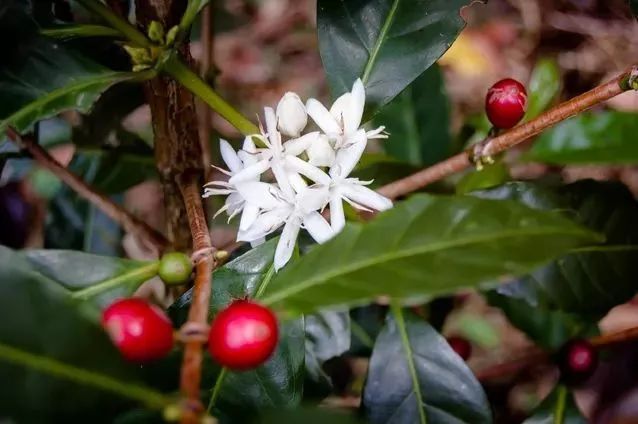
If robusta's overall flavor lags behind arabica's, why do so many growing regions still cultivate it? Robusta does have real advantages. Arabica is particular about its environment, needing shade trees and high altitudes, yet it resists disease poorly and yields relatively little. Robusta, by contrast, has lower environmental demands, strong disease resistance, and high yields. We know that high-altitude beans naturally taste better — Geisha from Panama's Hacienda La Esmeralda versus Ethiopian Geisha, for instance, differ noticeably in flavor. Robusta grows at low altitudes, so its flavor naturally doesn't measure up to arabica's. That's why robusta most often shows up in commercial espresso blends or instant coffee.
Arabica trees have elliptical green leaves and can grow naturally to 5-6 meters. An arabica tree lives 20-30 years, but each tree yields relatively little; arabica accounts for about 75% of the world's coffee beans. Robusta is a sturdier shrub form, suited to tropical or subtropical regions at altitudes of 200-800 meters. It grows vigorously, isn't fussy about conditions, adapts easily, costs little to cultivate, and yields heavily.
Robusta
Small-seeded coffee is called arabica, while medium-seeded coffee is called robusta — though strictly speaking it should be called Canephora. Robusta originated in the Congo region of West Africa. It is a widely cultivated subspecies of the Canephora species, and the name robusta has almost completely replaced Canephora as the term for the species. Because it grows at low altitude, yields heavily, and is easy to cultivate, it is grown widely, and its coffee accounts for 20%-30% of global production.
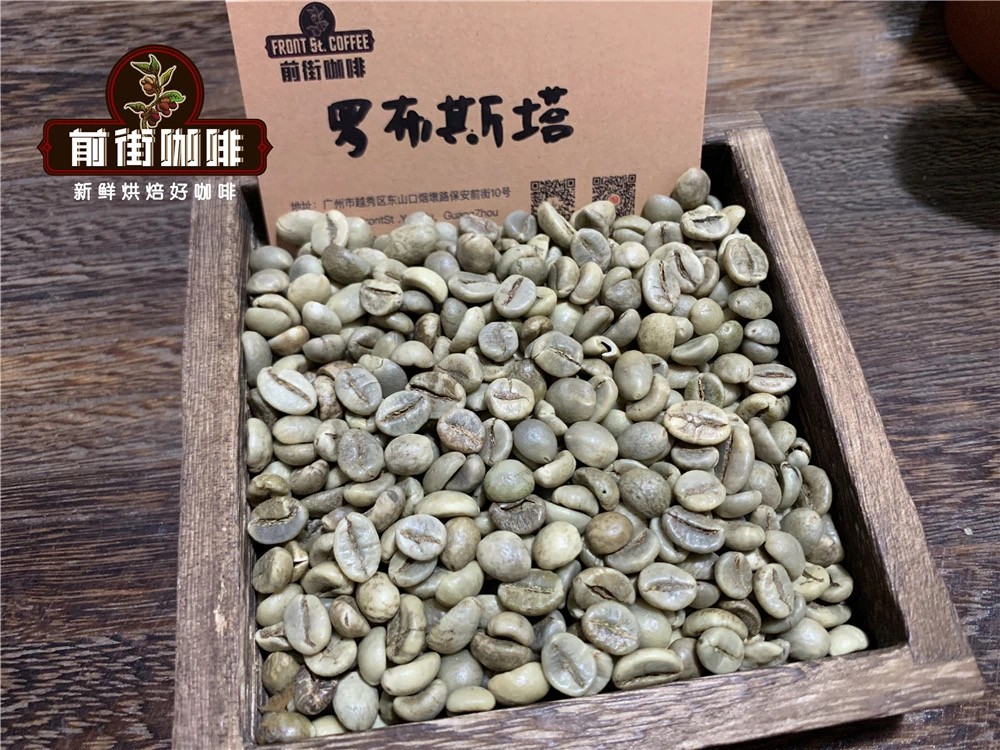
Appearance of Robusta Coffee Beans
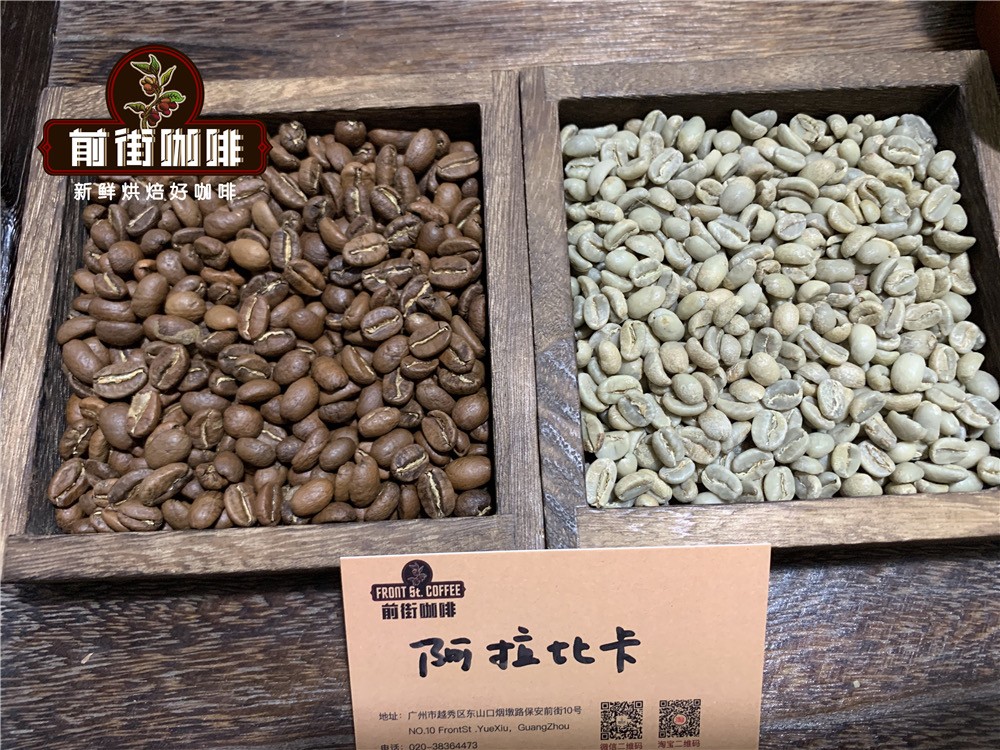
Robusta coffee fruit usually holds one bean. The beans are rounder in shape and take on a C shape, while the center line forms a "1" shape, and the raw beans have a yellow-brown color.
Is Robusta Coffee a Specialty Coffee?
Because robusta is high in caffeine and rich in oils, when espresso became popular worldwide it was often included in espresso blends. A big part of why people drank coffee then was to get caffeine, and robusta's caffeine content is far higher than arabica's — approximately 3.2%.
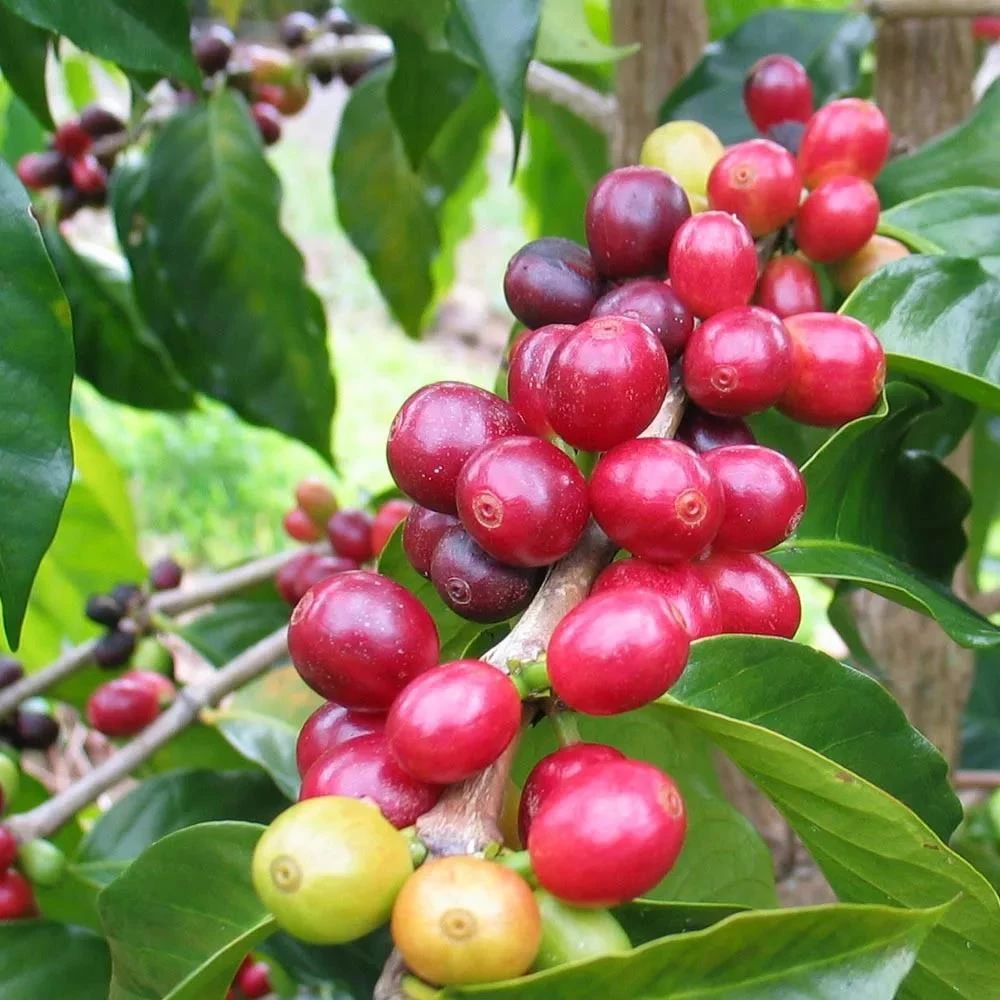
With the arrival of the specialty coffee concept, however, drinkers began to focus on origin flavors. Robusta itself carries bitterness along with walnut, peanut, hazelnut, and smoky notes — flavors considered undesirable in coffee. Most importantly, arabica, once organized around origin, offers flavor profiles that far surpass robusta's. This is essentially an inherent limitation: robusta's flavor is far less appealing than arabica's, which is why people gravitate to arabica.
The main producing countries for robusta are Indonesia, Vietnam, and West African countries centered on Algeria and Angola.
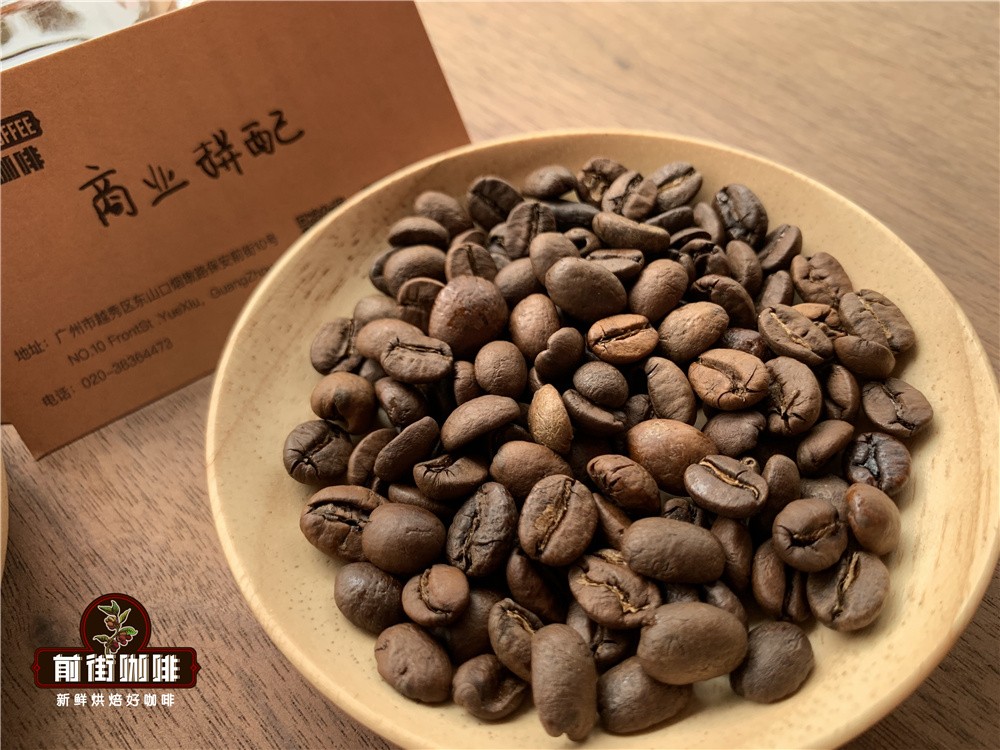
Robusta is generally used for industrial coffee — instant coffee, canned coffee, and liquid coffee. Its extracted coffee liquid is roughly twice that of arabica, and its caffeine content is also much higher.
Vietnamese coffee is primarily robusta, with perhaps a little arabica, and it is an essential component in many commercial blends. FrontStreet Coffee carries one Vietnamese variety — the robusta used in FrontStreet Coffee's commercial blends.
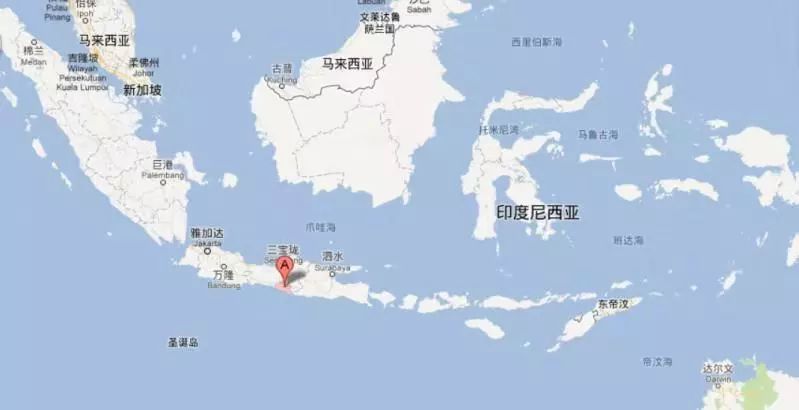
The islands of Indonesia all produce coffee. In the mid-17th century, coffee trees were introduced to Indonesia by the Dutch, and in 1712 the first batch of Java coffee was sold to Amsterdam. In 1877, coffee rust destroyed every tree on the plantations, and robusta had to be brought in from Africa to replace the original varieties. Indonesia is now one of the world's main robusta producers.
India's main coffee-growing regions lie between the Western Ghats and the Arabian Sea in the south. Its better-known coffees are sold under names such as Mysore and Malabar.
Monsooned Malabar is a distinctive Indian coffee. It began with beans shipped from the Malabar Coast to Europe: during the long voyage, the raw beans were exposed to sea winds, changing both their appearance and their taste, and Europeans gradually grew accustomed to — and fond of — that flavor.
This later became a special processing method: after harvest, the beans are deliberately exposed to humid monsoon winds for several months, turning them yellowish-white and reducing their acidity — the Monsooned Malabar (also called Monsoon Coffee) we buy today.
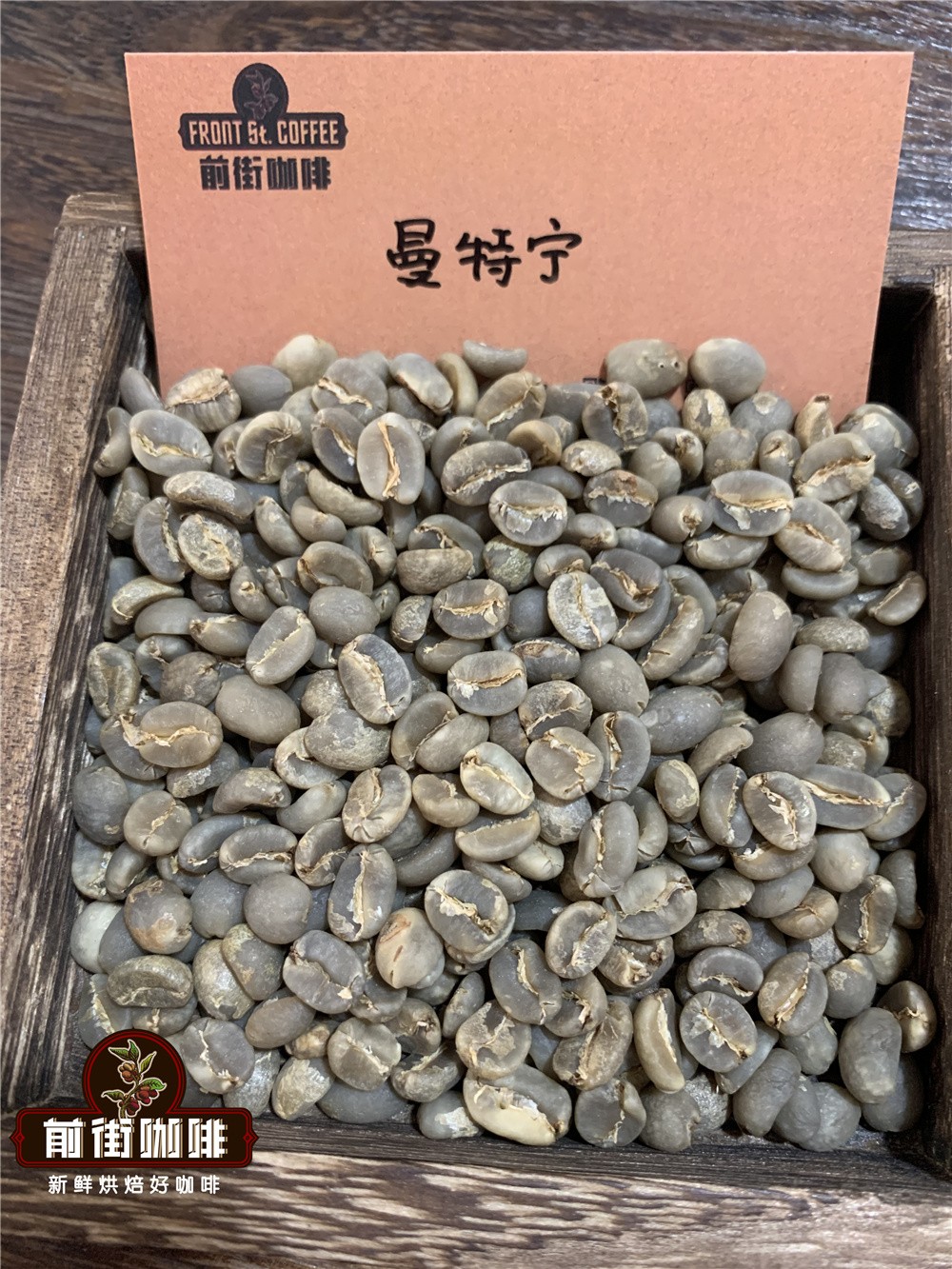
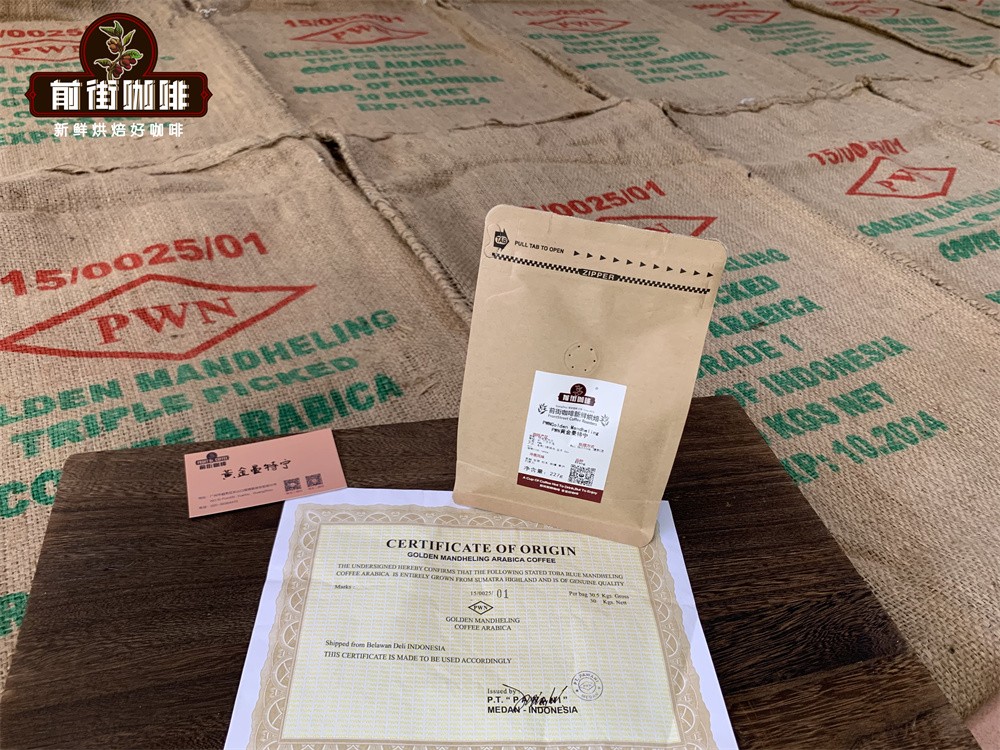
Asia's most famous coffee region is the Malay Archipelago: Sumatra, Java, and Kalimantan. Among these, Sumatran Mandheling from the Indonesian island of Sumatra is the most renowned, with two famous varieties — Sumatran Mandheling DP First Class and Aged Sumatran Mandheling. Sumatran Mandheling DP First Class has a long aftertaste with a wild fragrance, the distinctive earthy smell of primeval forest. Mandheling's richness, in fact, has a very masculine character.
Mandheling coffee is produced in Sumatra, Indonesia, and is also known as "Sumatran Coffee." Indonesia's main producing areas are Java, Sulawesi, and Sumatra, and about 90% of the country's coffee is robusta; among these, "Mandheling" from Sumatra is the most famous.

Indonesia's most famous Mandheling coffee is the Timtim variety, which refers to arabica beans grown on the island of Sumatra, mostly of the Timtim or Ateng varieties. Timtim is Timor — an arabica variety with robusta heritage — while Ateng is Catimor, a hybrid of Caturra and Timor.
Both varieties contain arabica and robusta genes. The arabica genes bring better coffee flavor, while the robusta genes provide better pest and disease resistance, suiting Indonesia's hot, humid climate.
One downside of robusta genes is their inherently rough, less pleasant flavor. Even though Mandheling varieties are primarily arabica-based, they cannot completely eliminate robusta's dull characteristics — especially combined with Indonesia's uniquely "hardcore" processing methods.
So whatever the Mandheling variety, they all show rich herbal, spice, and cocoa notes with low acidity and high body — the signature Sumatra regional flavor.
Indonesian Mandheling Coffee Bean Processing Method

The local weather is mainly rainy, with continuous typhoons, little long-lasting sunlight, and year-round heat and humidity that regularly reaches 70-90%. Sun-drying alone is therefore impossible, and the limited local economy can't afford the more expensive washed method. Out of that came the uniquely local wet-hulled method. Even though Mandheling carries robusta varieties, the local processing ultimately turns it into the most full-bodied coffee in the world. Who says coffee with robusta varieties can't taste good?
FrontStreet Coffee's Mandheling Brewing Parameters:
FrontStreet Coffee brews Mandheling in a KONO dripper. The KONO's ribs stop below half the height of the cone, a design that keeps the filter pressed tightly to the wall after wetting and restricts airflow. That lengthens the time the grounds absorb water, giving more uniform extraction and a fuller mouthfeel.
KONO dripper, 88°C water temperature, 1:15 coffee-to-water ratio, 15g of coffee, grind size at a 75% pass-through rate on a #20 standard sieve, three-stage extraction.
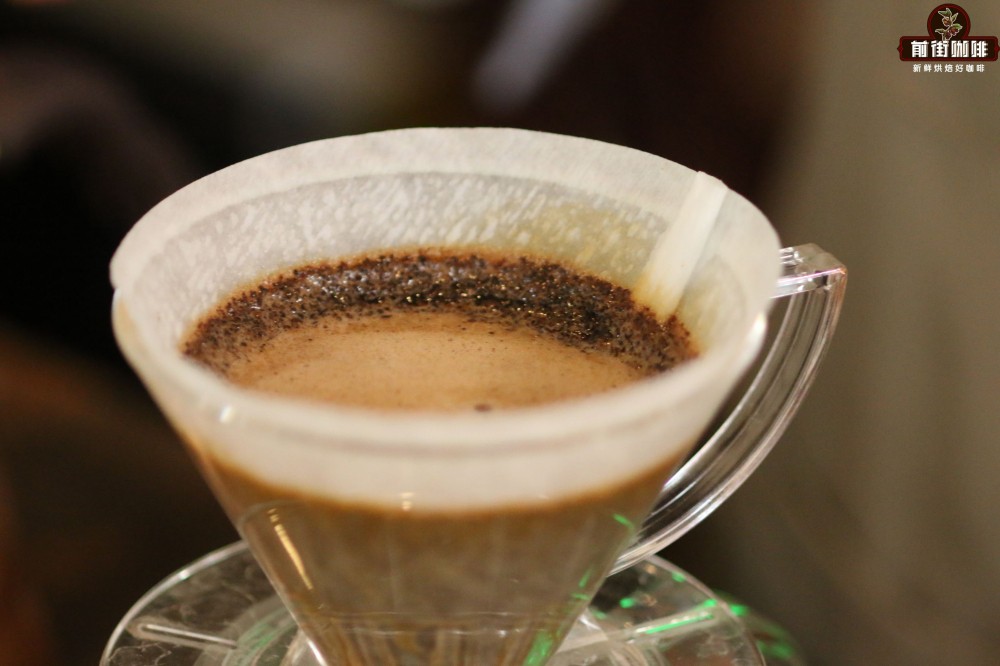
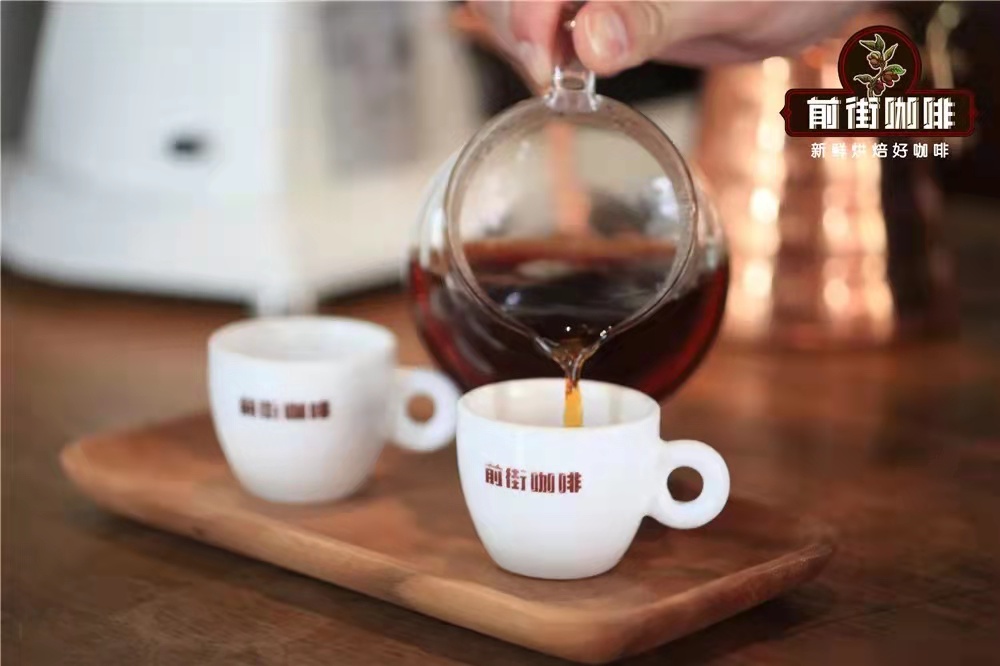
Using segmented extraction, bloom with twice the water weight of the grounds — that is, 30g of water for 30 seconds. Blooming is necessary so the grounds release trapped carbon dioxide, ensuring more stable extraction afterward. Use a small stream in circular motions to 125g, then continue to 225g and stop. Remove the dripper once the water has finished dripping. Timing from the start of pouring, extraction takes 2'00". Then pick up the whole cup, shake it well, and pour into cups for tasting.
[Lintong Mandheling Coffee Flavor Characteristics] Herbal, chocolate, caramel, overall well balanced.
[Golden Mandheling Coffee Flavor Characteristics] Nuts, spices, herbal plants, licorice, chocolate, caramel.
FrontStreet Coffee Brewing Suggestions:
The variety of the beans matters, but freshness matters just as much. To brew a delicious cup, FrontStreet Coffee believes any method requires fresh beans. The company has always held that freshness greatly affects flavor, so it ships beans roasted within 5 days. Its roasting philosophy — "Freshly Roasted Good Coffee" — ensures every customer receives the freshest coffee. The resting period is about 4-7 days, so by the time it arrives it's at peak flavor.
For those who need ground coffee, FrontStreet Coffee kindly reminds: once beans are ground in advance, no further resting is needed, because during shipping the pressure of carbon dioxide in the packaging helps round out the flavor, so you can brew a cup immediately upon receiving it. Ground coffee should be brewed promptly, however, since it oxidizes quickly in air, so the flavor fades faster and the cup won't taste as good. FrontStreet Coffee therefore recommends buying whole beans and grinding fresh for each brew to better appreciate the coffee's flavor.
For professional coffee knowledge exchange and more coffee bean information, follow Coffee Workshop (WeChat public account: cafe_style).
For more specialty coffee beans, please add FrontStreet Coffee on private WeChat, ID: qjcoffeex
FrontStreet Coffee Recommendation
If robusta's heavy, low-altitude power has you curious about the opposite end of the spectrum, FrontStreet's Geisha lineup is a great way to taste what high altitude can do. For newcomers, the Panama Boquete Geisha is an entry-level Geisha that delivers the classic Panama profile — citrus-honey sweetness, oolong-tea character, delicate fruit acidity, and clearly defined layers — at a friendly price.
For the top of the range, FrontStreet's Hacienda La Esmeralda Red Label Geisha (officially "Esmeralda Special") grows at 1,600-1,800 meters, with every lot cupped above 90 points, given its own number, and drawn from a single plot — FrontStreet's Red Label comes from the Harimiyo plot. The Green Label ("Private Collection") blends several plots to express La Esmeralda's signature high-altitude Geisha flavor at a more accessible price, making it excellent value. Geisha is a medium-light, floral-and-fruity, dense bean that tends to sink and clog the drain holes, so FrontStreet suggests a grind around 78% pass-through a China-standard #20 sieve (about fine table sugar) and 91°C water, brewing 15g in a small Hario V60 at a 1:16 ratio with a three-stage pour: 30g for a 30-second bloom, then a slow circular pour to 125g, wait for the bed to drop halfway, then continue circling to 225g, finishing in about 2:10-2:20.
Important Notice :
FrontStreet Coffee is a long-established specialty coffee roaster in Guangzhou China, selling freshly roasted beans from its own farm in Yunnan as well as dozens of carefully selected single-origin beans from around the world for both pour-over and espresso. The products deliver consistently excellent quality and great value, with shipping within 24 hours. Guangzhou's FrontStreet Coffee shop is recommended by many coffee lovers, and the beans are now available online at the Tmall 。
FrontStreet Coffee has moved to a new address:
FrontStreet Coffee Address: 315,Donghua East Road,GuangZhou
Tel:020 38364473
 Scan and follow the En Gafei WeChat official account. Please indicate that the reprint comes from "En Gafei".