Introduction to El Salvador Coffee Regions - Flavor Characteristics and Taste of Estate Coffee Beans
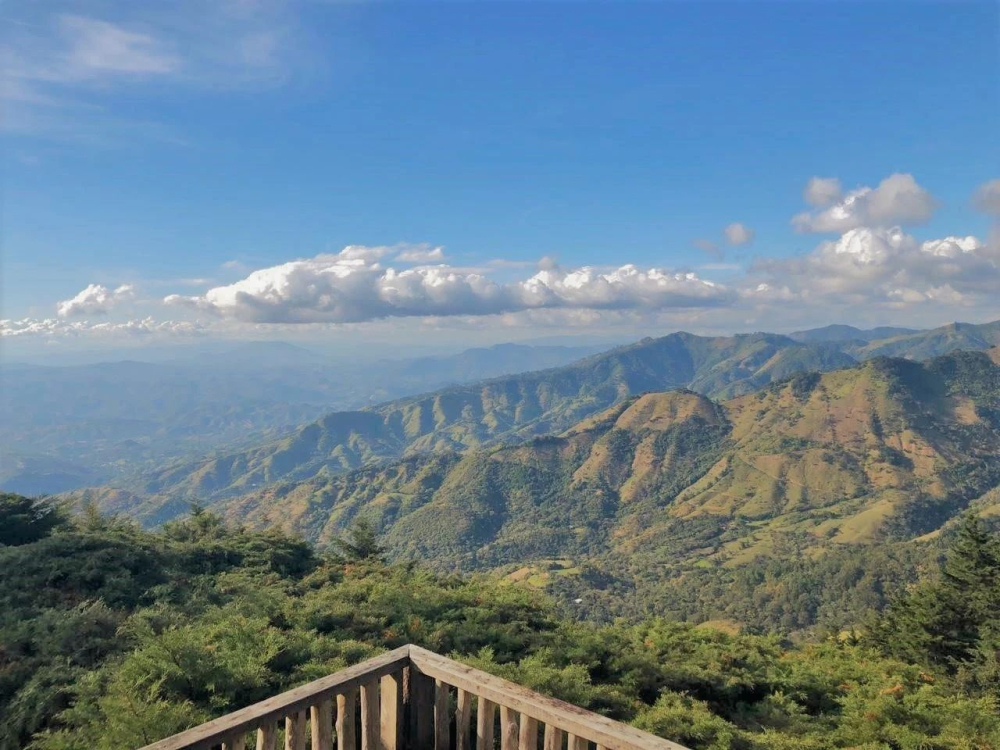
Although it is the smallest country in Central America, El Salvador has a remarkable number of coffee-producing regions. In recent years several high-quality specialty coffees from El Salvador have reached the market and left a deep impression. Join FrontStreet Coffee as we explore the coffee world of El Salvador.
The Coffee Story of El Salvador
FrontStreet Coffee's research shows that coffee cultivation in El Salvador dates back to the mid-18th century, and the country's coffee industry is intricately tied to its development.
During the colonial period, indigo was the first agricultural export in El Salvador's history, generally obtained by processing the leaves of a plant called "Jiquilite." Indigo production dominated most of El Salvador's 18th century, but when the European Industrial Revolution spurred the synthetic dye industry, this traditional process quickly fell out of favor.
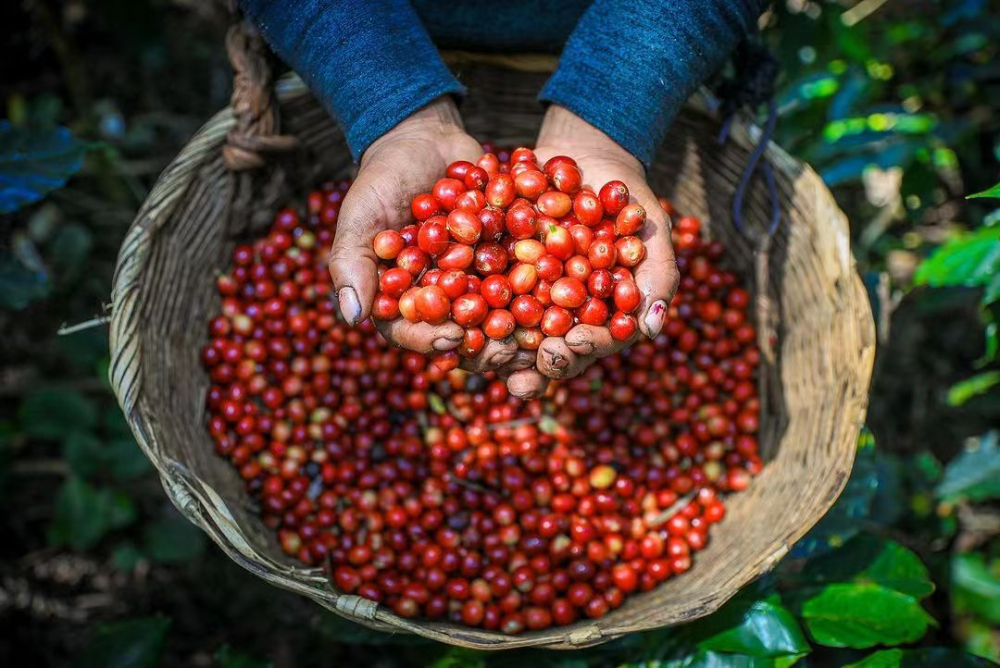
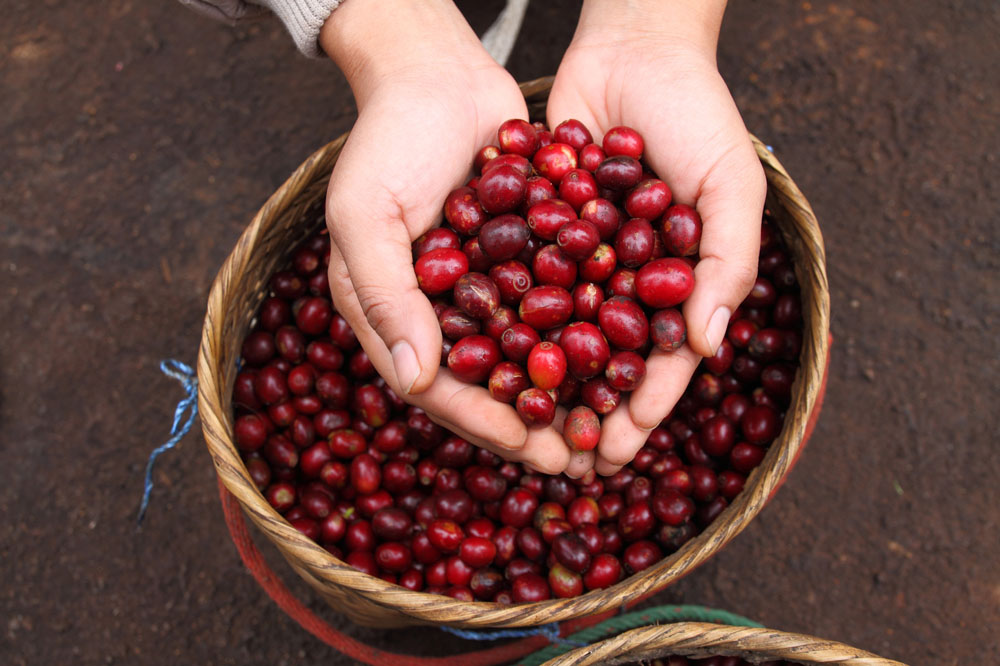
According to surviving records, coffee was introduced to El Salvador between 1779 and 1796, with the first coffee trees planted on the land of two farmers from Ahuachapán. Although coffee arrived in the 18th century, it was not until the mid-19th century that the government decided to take measures supporting and promoting coffee cultivation. From the 1930s to the 1940s, credit policies favorable to coffee growers drove strong growth across the industry, and coffee came to account for over 90% of El Salvador's agricultural exports.
Starting in 1857, coffee cultivation gradually expanded across El Salvador's territory, beginning in Ahuachapán, then spreading to Santa Ana and Sonsonate, and later extending to western San Vicente, the Berlin mountainous area and the slopes near Volcán Chaparrastique in San Miguel. Today large areas of coffee are found throughout the country, and the crop has become the main agricultural product for many local farmers.
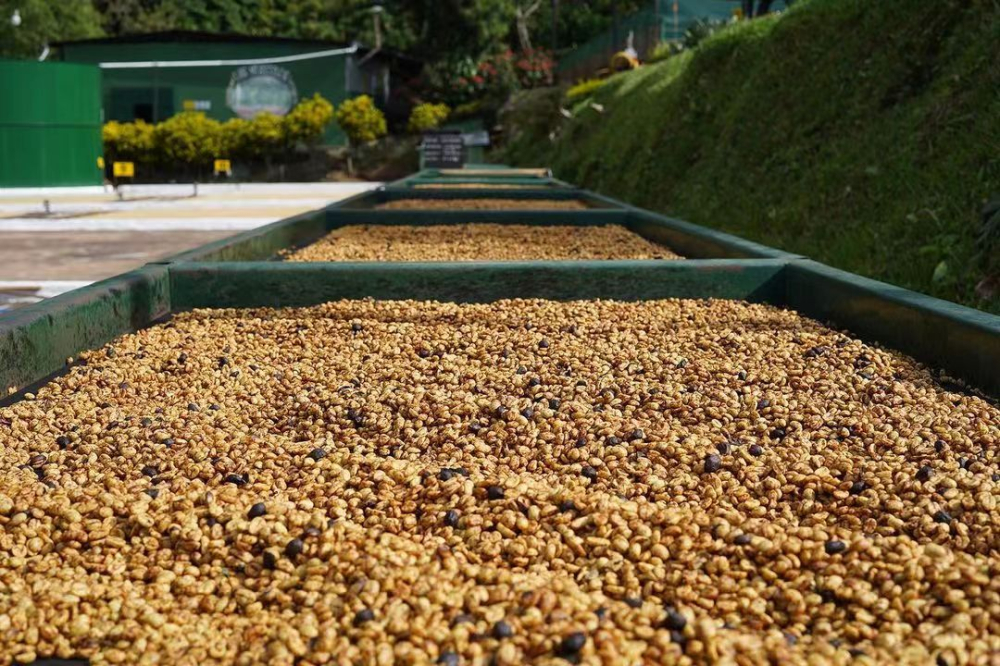
The modernization of El Salvador's coffee cultivation began in the 1950s, stimulated by high prices. Farmers first interplanted coffee trees with other crops for shade cultivation, and also began using fertilizers and increasing planting density to raise productivity. As a result, El Salvador became the world's fifth-largest coffee producer and fourth-largest coffee exporter by the mid-1970s, with harvests reaching up to 5 million quintals.
From the 1980s to the 1990s, however, El Salvador suffered a civil war. Many individual farmers were pressured by guerrillas and the military, coffee sales and exports were nationalized, and farmers stopped investing in their farms. Coffee production and prices fell sharply between 1997 and 2001; according to ICO data, national production dropped by more than 34% during that period. In 2013, coffee leaf rust began spreading nationwide. Only 3% of the coffee trees planted in El Salvador were rust-resistant varieties, so production in the 2014 harvest season fell by nearly 60%.
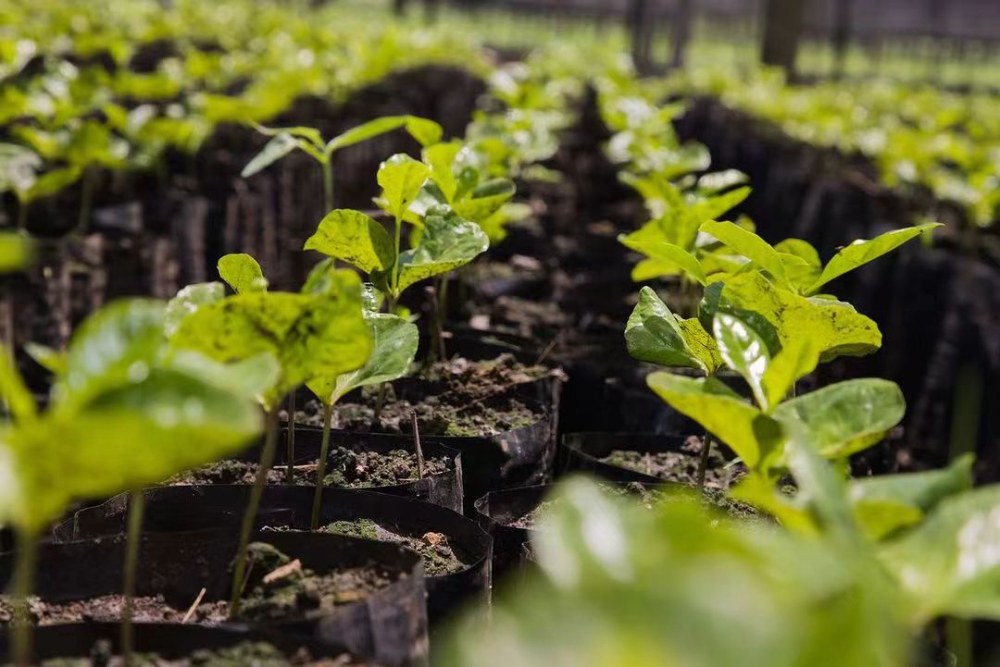
It was not until 2014 that the agricultural management department, led by Minister of Agriculture and Livestock Lic. Orestes Ortéz, decided to reactivate coffee cultivation, creating a dedicated CENTA coffee department to strengthen scientific and technological support. The department has a team of 80 technical staff, guided by El Salvador coffee cultivation expert Dr. Adán Hernández, and it not only supplies fungicides to control coffee tree rust but also breeds new varieties with strong rust resistance for farmers, allowing growers to renovate their plantations and improve quality and yield.
El Salvador Coffee Regions and Varieties
According to statistics, El Salvador currently has over 130,000 hectares of coffee area, about half of it low-altitude plantations, 33% medium-to-high altitude and the remaining 16% high altitude. Of the growers, 85% are small farmers with less than 7 hectares, and only a small portion farm more than 7 hectares.
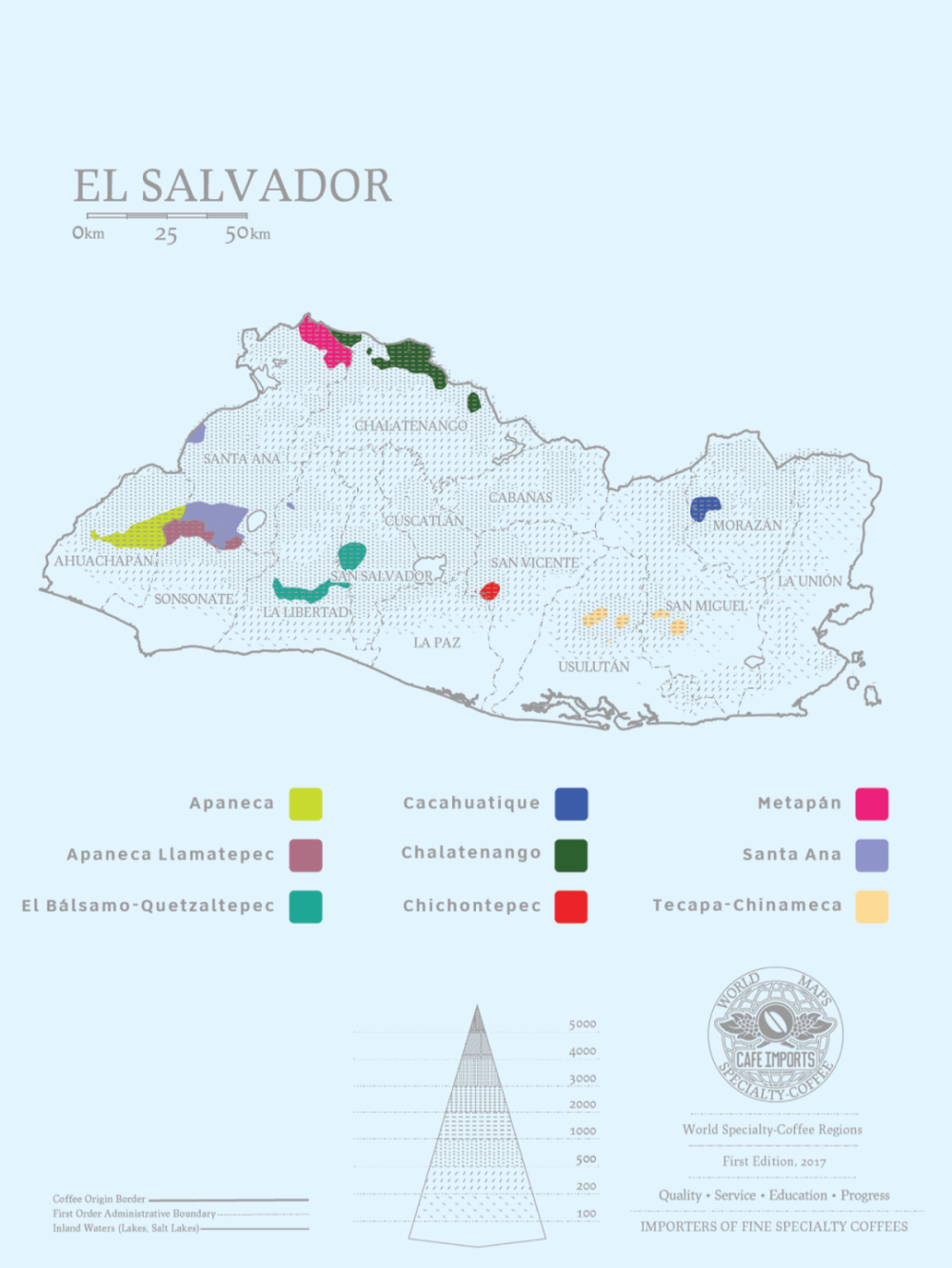
El Salvador has nine major coffee-producing regions: Apaneca, Apaneca Llamatepec, El Balsamo-Quetzaltepec, Cacahuatique and Santa Ana in the southwest; Chalatenango, Chichontepec and Metapan in the north-central area; and Tecapa-Chinameca, scattered along river valleys.
Although Typica was the first Arabica variety widely planted in El Salvador, the impact of leaf rust pushed most farms to switch to Bourbon during the 19th century. By the mid-20th century, Bourbon mutated to produce Pacas, which was lineage-tracked by ISIC and heavily promoted for cultivation. Today Bourbon and its variant Pacas are the main varieties in El Salvador's coffee plantations: Bourbon accounts for over 60%, while Pacas accounts for nearly a quarter of national production.
Compared with these two common varieties, however, the one that has qualified for El Salvador's COE on the strength of its flavor is the increasingly renowned Pacamara. A large-sized bean, it was hybridized and released by the Salvadoran Coffee Research Institute (ISIC) from Pacas within El Salvador and the Typica mutant Maragogype from Brazil. It combines the excellent taste of Pacas with the large bean size of Maragogype. In the cup it has lively, bright acidity, sometimes with biscuit notes, sometimes a juicy texture, along with excellent body and mouthfeel.
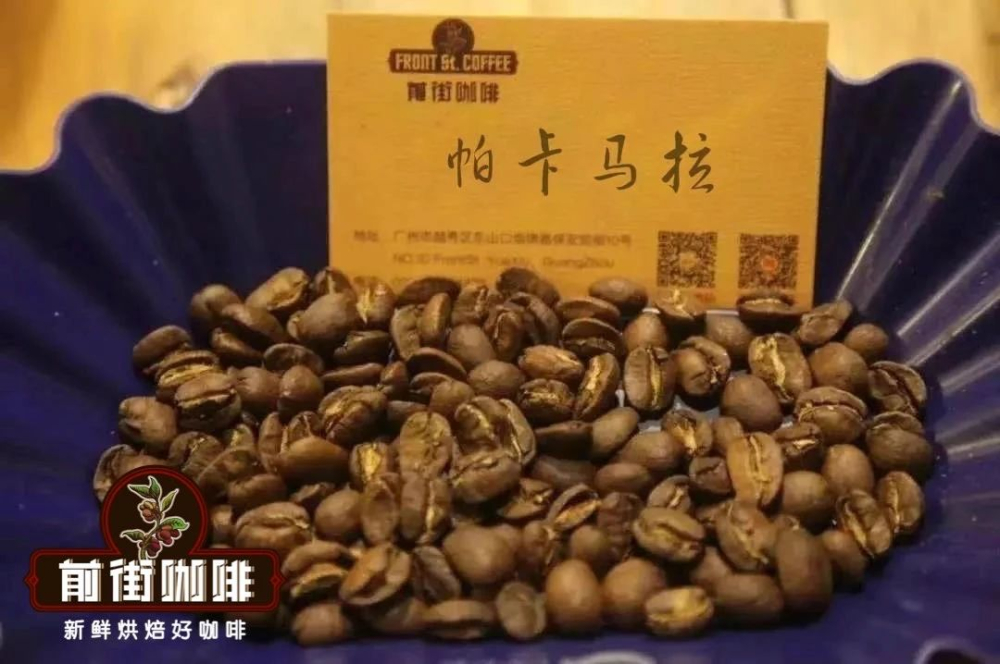
FrontStreet Coffee: El Salvador Pacamara Coffee Beans
Region: Sonsonate Izalco region
Estate: Finca Ataisi Estate
Grade: SHG
Altitude: 1800 meters
Variety: Pacamara
Processing: Washed
Flavor: Nuts, chocolate, cream, strawberry jam, passion fruit
El Salvador Coffee Flavor Characteristics
FrontStreet Coffee Brewing Recommendations
Dripper: V60
Water Temperature: 90°C
Coffee-to-Water Ratio: 1:15
Grind Size: Fine sugar granularity (80% pass-through rate on China No. 20 standard sieve)
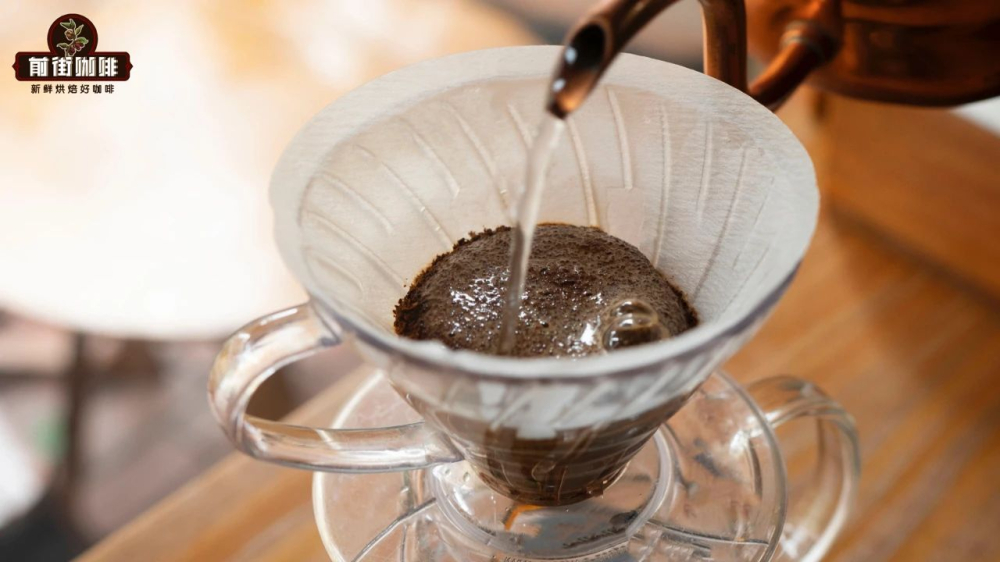
Pour the coffee grounds into a V60 dripper, use water equal to twice the weight of the grounds to wet the coffee bed into a dome, and let it bloom for 30 seconds. Then use a small stream to pour in circles from the inside out until you reach 125g, then pause. Wait until the coffee bed drops to half the height of the dripper, continue with the same fine stream for a third pour up to 225g, and once all the liquid has filtered through, remove the dripper. Total time should be about 2 minutes.
FrontStreet Coffee tasted this Pacamara through pour-over extraction: the entry is very delicate and silky, with clear, gentle fruit acidity sliding across the tongue. Like all Pacamara, it is quiet and soft. The mid-section brings fresh wild berry acidity and a hazelnut-like nutty aroma, with prominent caramel sweetness in the finish. The aftertaste is long, delicate and sweet, with a lingering sweet glow.
FrontStreet Coffee Recommendation
Exploring a new origin like El Salvador is easier when you start with approachable single-origin lots, and FrontStreet Coffee's entry-level line is built for exactly that. If you like the softer end of the spectrum, the Brazil Cerrado daily bean comes from the country's best-known region and offers the classic cream, peanut and cocoa flavors at a friendly price, while the Brazil Queen's Estate grows at a higher altitude and, as a rare Yellow Bourbon, adds butter, sunflower seed, macadamia and almond aromas on top of a sugarcane-like sweetness, with a thick, smooth texture whether drunk black or with milk.
For something brighter and more floral, the Ethiopia Yirgacheffe Gudingding Cooperative is a textbook washed Yirgacheffe with jasmine, lemon acidity and berry notes, while the Sidamo Huakui uses a traditional natural process for a more overt tropical fruit and fermented aroma of berries, florals, jackfruit, melon and honey. And if you want to see how far the same journey can go, the Panama Boquete Gesha is an entry-level Gesha from Panama's most representative specialty region, washed to bring out the orange-blossom honey character at a price that makes it easy to try several different brewing methods.
Important Notice :
FrontStreet Coffee is a long-established specialty coffee roaster in Guangzhou China, selling freshly roasted beans from its own farm in Yunnan as well as dozens of carefully selected single-origin beans from around the world for both pour-over and espresso. The products deliver consistently excellent quality and great value, with shipping within 24 hours. Guangzhou's FrontStreet Coffee shop is recommended by many coffee lovers, and the beans are now available online at the Tmall 。
FrontStreet Coffee has moved to a new address:
FrontStreet Coffee Address: 315,Donghua East Road,GuangZhou
Tel:020 38364473
 Scan and follow the En Gafei WeChat official account. Please indicate that the reprint comes from "En Gafei".