Indonesian Kopi Luwak Coffee Flavor Profile & Taste Characteristics | Luwak Coffee Plantation Origins | Bali Coffee
An Objective Look at Kopi Luwak Coffee
The term "Kopi Luwak" evokes both curiosity and hesitation in coffee lovers. Many wonder whether this coffee is special or simply unpleasant. FrontStreet Coffee can tell you confidently: it is not unpleasant at all. In fact, the whole cup is remarkably mellow and smooth. In this article, FrontStreet Coffee will look at Kopi Luwak from an objective angle.
Is Kopi Luwak Really Made from Animal Droppings?
First, let's answer the most frequently asked question: is Kopi Luwak really made from cat droppings?
Theoretically, yes. However, the civet consumes entire coffee cherries, not just the beans. FrontStreet Coffee's earlier articles have detailed the structure of a coffee cherry, from skin, pulp, and pectin to parchment (endocarp), silver skin, and finally the coffee bean.
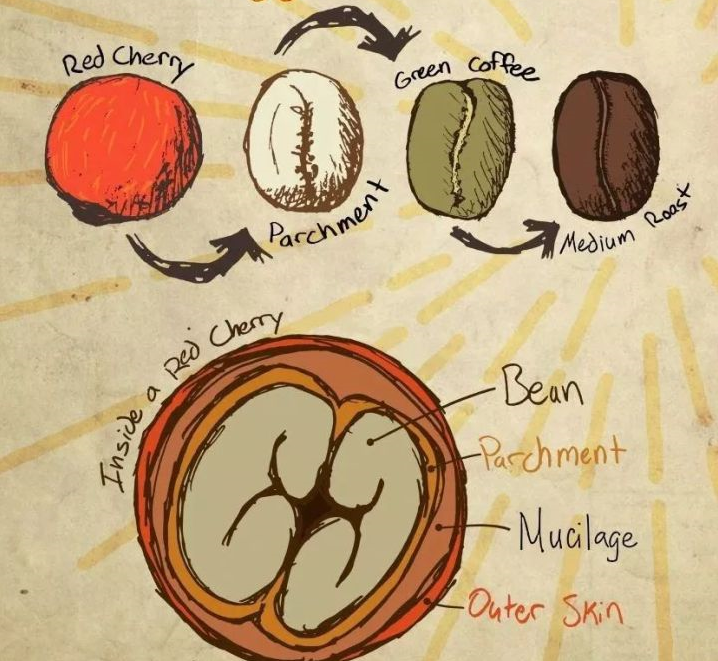
When coffee cherries enter the civet's digestive tract, they undergo fermentation through the digestive system. At this point, the sugars and acidic substances from the fruit pulp and pectin transfer into the coffee beans. This fermentation process leaves the hard beans and parchment intact. When the civet excretes the beans, people collect them, wash them clean, and dry them, and the parchment is finally removed. FrontStreet Coffee can tell you that the beans have almost no contact with the feces, and after proper processing, Kopi Luwak beans are much cleaner than most people imagine.
Why is Kopi Luwak So Expensive?
Things are valued because they are rare. Kopi Luwak must pass through the civet's digestive system before the beans can be collected. In addition, wild civets are omnivores whose diet consists mostly of meat and insects, with coffee cherries amounting to dessert.
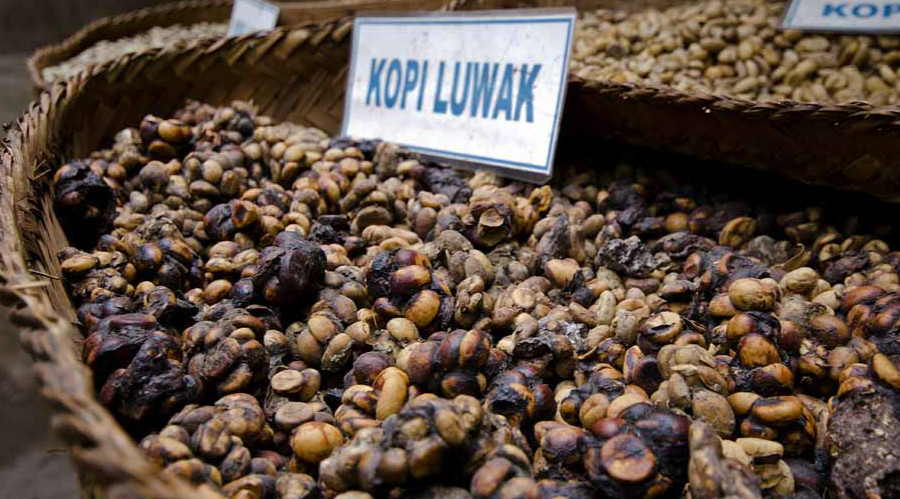
Once Kopi Luwak inexplicably became a favorite among the wealthy, unscrupulous merchants began breeding and raising civets in captivity, forcing them to eat only coffee cherries every day without other meat-based food. Because the acidity of the cherries accelerates the civet's gastrointestinal motility, speeding up excretion and thus boosting Kopi Luwak production. However, because feeding, screening, and careful processing require significant manpower, the cost can actually be higher than that of wild-collected beans.
Can the Digestive System Really Change the Coffee's Original Flavor?
The answer is probably not, especially for Kopi Luwak from captive civets. FrontStreet Coffee often says that whether coffee tastes good depends on the coffee variety itself. Civets naturally inhabit the edges of tropical rainforests and subtropical evergreen broadleaf forests in the low-altitude hills and mountains of Indonesia. These low-altitude areas cannot meet the growing conditions required for high-quality Arabica. In other words, the cherries a civet eats are either Robusta or low-quality Arabica, with Robusta the majority.
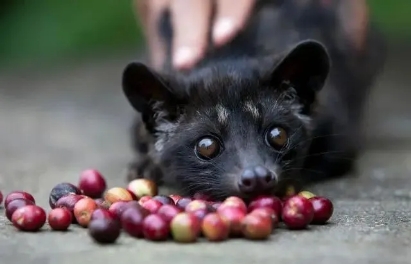
As FrontStreet Coffee mentioned above, because civets eat coffee cherries long-term, the fruit's acidity promotes accelerated gastrointestinal motility. In most cases, therefore, civets excrete the beans within 2 hours of eating. Just think about it—what meaningful fermentation can occur in 2 hours? Put another way, the cherries do not have enough time to fully ferment in the digestive tract before being excreted. The beans produced this way therefore only retain the flavor of their originally poor quality.
Indonesia's low-altitude Robusta naturally carries earthy and medicinal flavors with high body. This type of civet coffee has the earthy taste of aged beans and a thickness approaching syrup, with a very distinctive aroma.
Is Kopi Luwak Worth Buying or Trying?
If you ask FrontStreet Coffee whether Kopi Luwak is worth buying or trying, FrontStreet Coffee believes that its original emergence was a natural physiological phenomenon. If you can buy naturally collected Kopi Luwak beans, there is no problem. FrontStreet Coffee also offers naturally produced Kopi Luwak. As long as civets choose fully ripe cherries under normal feeding conditions, the resulting cup is completely fine. The problem lies with the merchants who carry out these practices purely for profit.
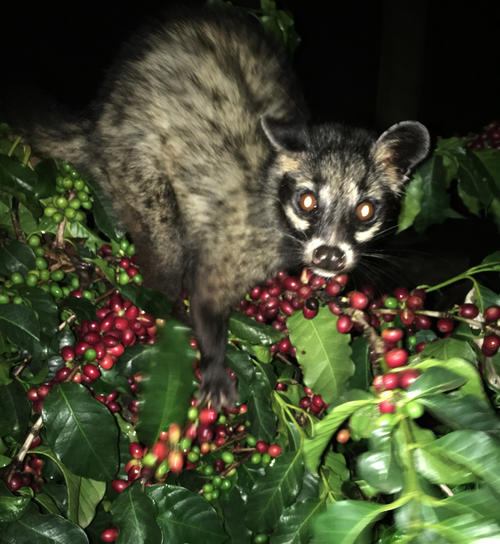
What is In-Body Fermentation?
Although coffee beans are not digested in the civet's digestive tract, the highly corrosive digestive fluids have affected their surface. These fluids contain a special protease that can break down the beans' original protein chains, decomposing long-chain structured proteins into small particles, forming short-chain peptides and amino acids. Short-chain peptides are defined as peptides composed of 3-9 amino acid residues, sometimes also called oligopeptides.
Next, FrontStreet Coffee will share how Kopi Luwak is roasted and some insights on brewing it.
FrontStreet Coffee's Indonesian Kopi Luwak

Origin: Aceh, Indonesia
Altitude: 1200m
Variety: Tim Tim
Processing Method: In-body fermentation processing
FrontStreet Coffee's Roasting Records
FrontStreet Coffee's roaster uses a Yangjia 800N: preheat the roaster to 200°C, then reduce to 160°C before loading. Set the damper to 3 and adjust heat to 130. Return temperature at 1'28''. Maintain heat; color changes to yellow at 5'40'', the grassy aroma disappears, and the beans enter the dehydration stage. Increase heat to 140 and open the damper to 4. Surface wrinkles appear and the toast aroma turns to coffee aroma, signaling pre-first crack. Reduce heat to 100, open the damper to 5, and listen carefully for first crack. First crack begins at 9'15'', with the damper fully open at 5. Post-first-crack development time is 4'25", unloading at 203°C.

How Does FrontStreet Coffee Brew Kopi Luwak?
Brewing Parameters: Using a Kono dripper
Water Temperature: 86°C
Coffee Amount: 15 grams
Coffee-to-Water Ratio: 1:15
Grind Size: Medium-fine grind (70% pass-through rate on China standard #20 sieve)

FrontStreet Coffee uses staged extraction, also called three-stage brewing: use 30 g of water for a 30-second bloom, then pour in a small stream in circles to 125 g for the first segment. When the water level drops and is about to expose the coffee bed, continue pouring to 225 g and stop. When the water level drops and is about to expose the coffee bed again, remove the dripper. (Timing starts from the bloom.) Total extraction time is 2'01".
Kopi Luwak Flavor Description: Herbal, nutty, dark chocolate, and fermented notes, with high body and a viscous, smooth mouthfeel.
FrontStreet Coffee Recommendation
Kopi Luwak aside, the heart of Indonesian coffee is Sumatra, and if you want to taste what that origin does at its best, FrontStreet Coffee's Indonesian wet-hulled Mandheling is the first place to look. Mandheling is the name for Arabica from Sumatra, processed with the local wet-hulling (Giling Basah) method: the parchment is stripped while the beans are still half-dry, leaving them exposed to the air during drying, which is where the region's characteristic herbal and spice notes come from. FrontStreet Coffee's Mandheling is from the Lake Toba area of the Lintong region and is medium-dark roasted for a low-acid, full-bodied cup with caramel, dark chocolate, and toast aromas and a long, sweet finish—ideal for anyone who likes strong coffee. For the top of the range, FrontStreet Coffee's PWN Golden Mandheling is the benchmark: PWN only buys specialty-grade Mandheling, and Golden Mandheling is screened by density, size, shape, and color, then machine-sorted and hand-sorted to remove defects, leaving plump, uniform, translucent beans with reduced earthy and grassy notes. Freshly roasted, it shows sandalwood, herbs, spice, roasted hazelnut, caramel, and dark chocolate, with a clean, sweet, full body. And if you want an espresso built on that Mandheling character, FrontStreet Coffee's Classic blend adds a medium-dark-roasted Mandheling to Brazilian beans and a little Robusta, pushing dark chocolate, nut, and caramel aromas to the fore and boosting the crema for easy latte art or a layered Dirty.
Important Notice :
FrontStreet Coffee is a long-established specialty coffee roaster in Guangzhou China, selling freshly roasted beans from its own farm in Yunnan as well as dozens of carefully selected single-origin beans from around the world for both pour-over and espresso. The products deliver consistently excellent quality and great value, with shipping within 24 hours. Guangzhou's FrontStreet Coffee shop is recommended by many coffee lovers, and the beans are now available online at the Tmall 。
FrontStreet Coffee has moved to a new address:
FrontStreet Coffee Address: 315,Donghua East Road,GuangZhou
Tel:020 38364473
 Scan and follow the En Gafei WeChat official account. Please indicate that the reprint comes from "En Gafei".