Flavor Profile of Yunnan Small-Bean Coffee: Introduction to Typica Coffee Characteristics, Estates, and Growing Regions
Introduction to Yunnan Coffee
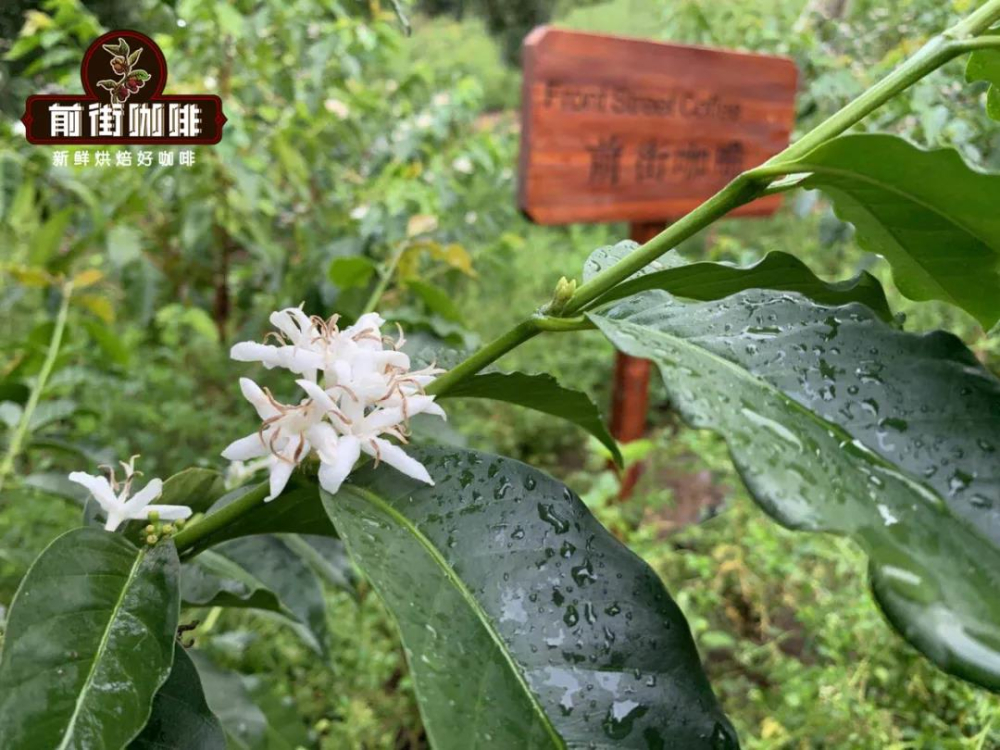
Yunnan coffee from China now shows up in cafes almost everywhere, yet many people still have no idea what it tastes like. As an Asian bean, Yunnan coffee naturally carries herbal and pine notes, but it also takes on the signature flavors of its growing regions, such as brown sugar, tea-like qualities, and plum acidity. FrontStreet Coffee loves Yunnan coffee for another reason too: it represents China's own coffee heritage.
The Influence of Coffee Varieties
Coffee flavor is inseparable from variety. Variety is fundamental; it essentially determines a coffee's general flavor profile. Arabica varieties, for instance, mostly appear as specialty coffee, while Robusta varieties often show up in Italian-style blends. That means Arabica varieties generally taste better than Robusta — though not every Arabica tastes better than every Robusta. Yunnan small-grain coffee was previously Arabica, which is also why it is called Yunnan small-grain coffee. In taste it falls into a fairly neutral category: neither too acidic nor too bitter. It is a coffee that is fragrant without being bitter, rich without being intense, with a comfortable, light acidity — well suited to popular tastes. Currently, however, most Yunnan small-grain coffee is of the Catimor variety.
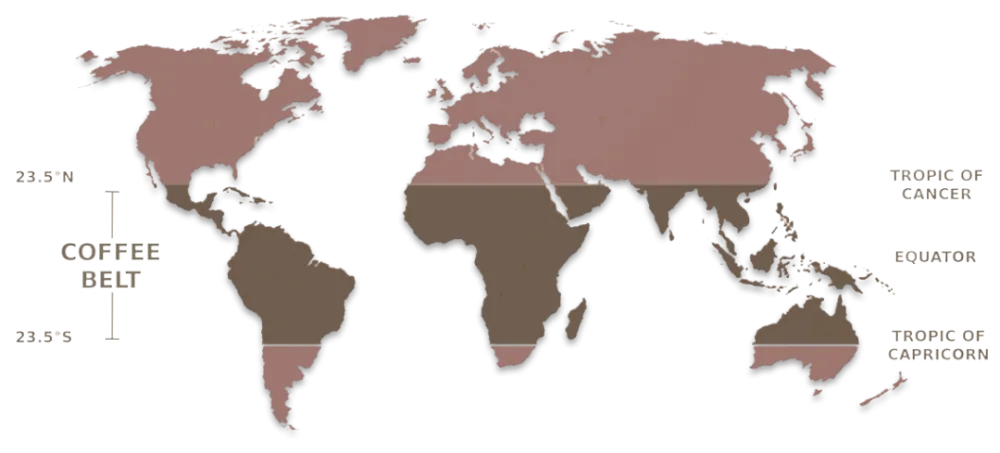
The western and southern parts of Yunnan Province lie between 15°N and the Tropic of Cancer. Most areas sit at elevations of 1000-2000 meters, with predominantly mountainous, sloped terrain and dramatic elevation changes. The soil is fertile, with abundant sunshine, plentiful rainfall, and large day-night temperature differences. Yunnan's geography and climate are excellent, providing ideal conditions for coffee cultivation.
Origin of Yunnan Small-Grain Coffee
In 1892, French missionary Father Tian Deneng was preaching in Binchuan, Dali. So that he could drink coffee, he planted coffee trees near the church in Zhukula Village, Binchuan County, and taught the villagers how to grow and drink coffee. To this day, 24 coffee trees more than 90 years old still grow in Zhukula Township, and welcoming guests with coffee remains a local custom. Zhukula Village belongs to the Zhukula Village Committee, Pingchuan Town, Binchuan County, Dali Bai Autonomous Prefecture, Yunnan Province. It sits on the bank of the Yupao River, a tributary of the Jinsha River, at the junction of Dali Prefecture, Chuxiong Prefecture, and Lijiang City.
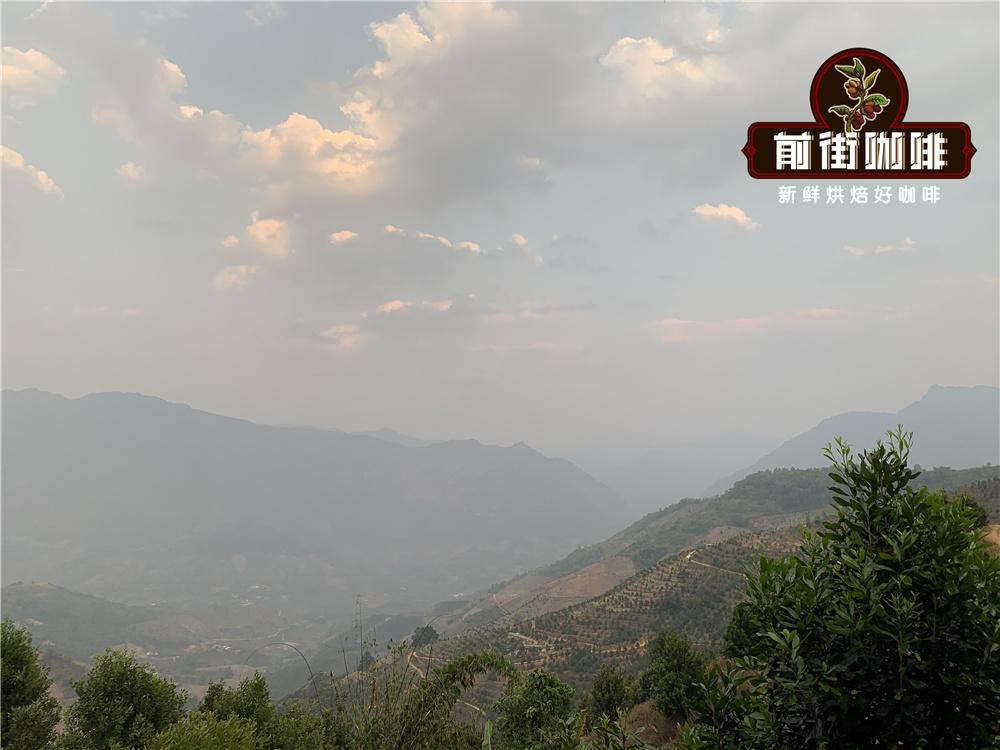
In the 19th century, Zhukula was called "Ruo Ke Lai" in the Yi language, meaning winding mountain roads. In 1892, with the arrival of French missionary Father Tian, the essence of the Yi language met French romance, giving rise to the name Zhukula. Later generations translated Zhukula to mean "paradise on earth." The earliest Zhukula coffee on the Chinese mainland thus became famous.

Yunnan Coffee Varieties
Yunnan coffee used to be called "Yunnan small-grain coffee." In fact, "small-grain variety" is simply an alias for Arabica coffee.
Arabica coffee, also known as small-grain coffee, descends from wild coffee that grew in Africa. It was later brought to Europe through Arabia and became widely known, hence the name. It reached Zhukula in Binchuan County, Dali, China in the 1890s and has since taken root and grown across the Chinese mainland. Yunnan has become the representative of Chinese coffee, which is why Yunnan coffee is also called "Yunnan small-grain coffee."
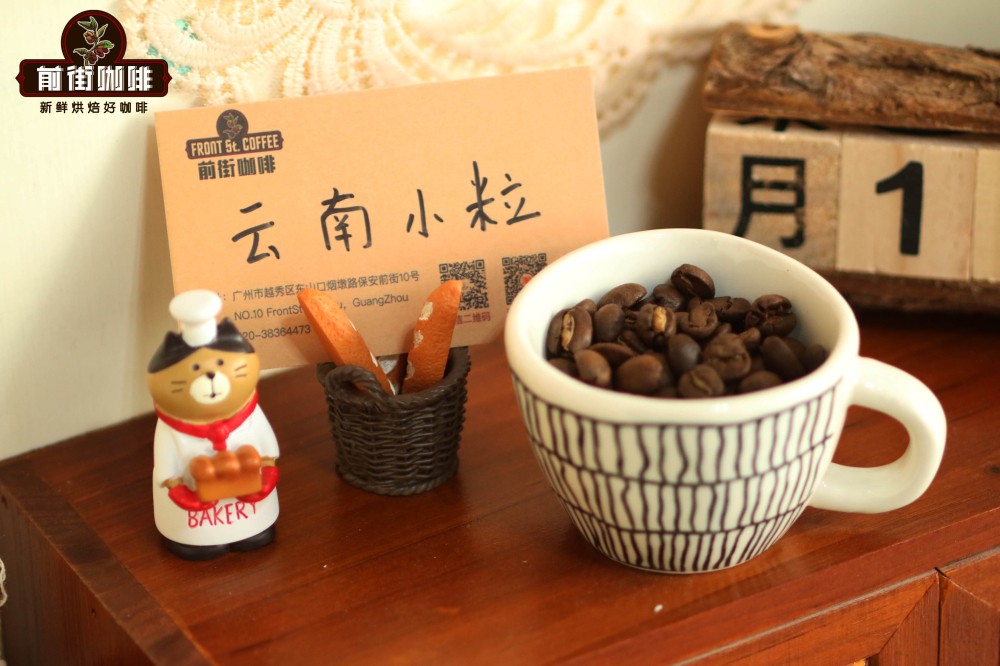
Arabica coffee has very demanding growing requirements and is generally better suited to mountainous areas with abundant rainfall and large day-night temperature differences. Some specialty coffees, beyond bean variety, estate, and processing method, even print the growing altitude on the packaging. Arabica also has many varieties, such as the common Typica, Bourbon, and Caturra — much like the many varieties of citrus. These are all names of coffee tree varieties.
The most classic high-quality Arabica variety is Typica. This coffee tree is highly adaptable, and many well-known coffee varieties are its variants: Blue Mountain coffee, for example, is a Typica variant grown in Jamaica, Kona coffee is a Typica variant grown in Hawaii, and Mandheling is a Typica variant grown in Sumatra.

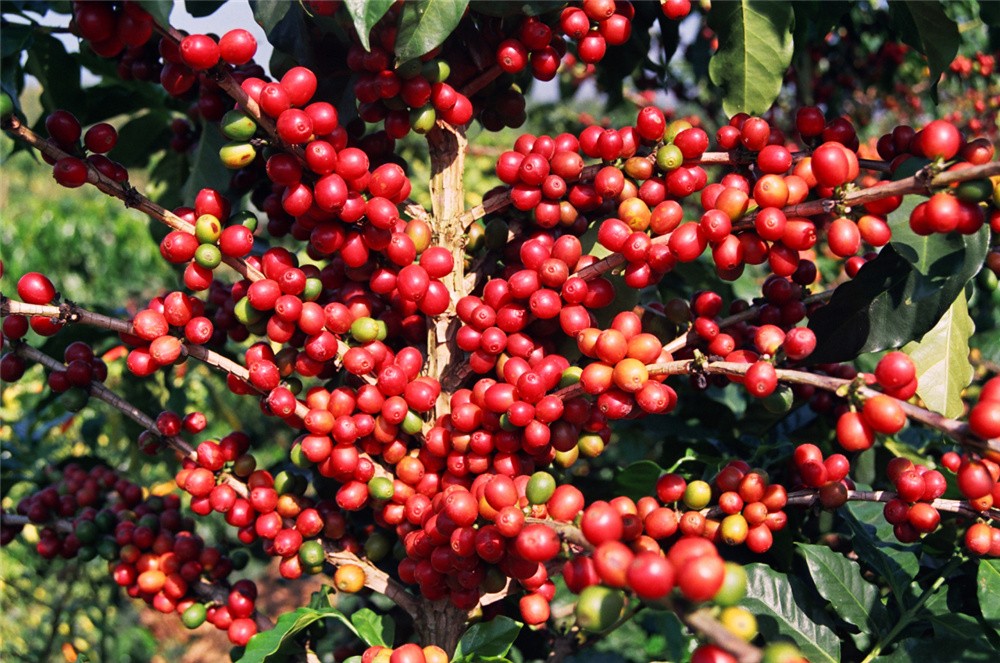
Typica coffee beans originate from Ethiopia and southeastern Sudan and are one of the oldest coffee varieties among the many Arabica species, also known as old-variety small-grain coffee. Typica trees are quite tall with conical branches. The mother branches tilt at approximately 60 degrees, and the leaves are usually a deep bronze color, with the terminal leaves copper-colored — earning it the name red-topped coffee. Typica trees are very tall and yield less than other varieties, which makes them difficult to cultivate. Obtaining this high-quality coffee is therefore often a challenge. Despite the low bean yield, cupping scores are extremely high, and the coffee flavor shows diverse fruity aromas.

Today the most widely planted variety in Yunnan is actually Catimor. This variety is a hybrid between Caturra, from Arabica, and Timor, from Robusta. Catimor trees carry Robusta's strong disease resistance but fall slightly behind Typica in aroma and flavor richness. Some Yunnan growers now also plant other specialty varieties in small quantities, such as Bourbon, Caturra, and Catuai. In espresso, Catimor beans can be a workhorse, but as a pour-over single-origin they can sometimes fall short. Catimor became the main Yunnan coffee variety, and Yunnan small-grain coffee thus transformed into the Catimor variety.
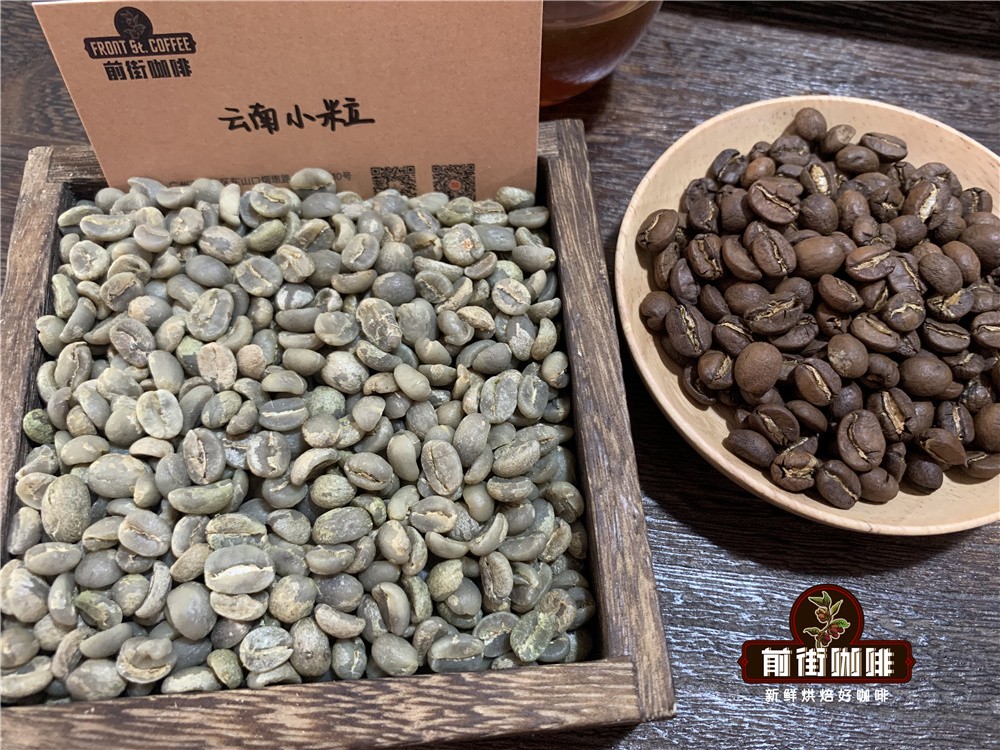
Because Catimor carries Robusta genes, inheriting Robusta's strong disease resistance also means inheriting the flavor Robusta is criticized for. Han Huaizong once described Catimor as having a "devilish aftertaste." As cultivation techniques and variety improvement have advanced, Catimor's flavor has gradually become more elegant.
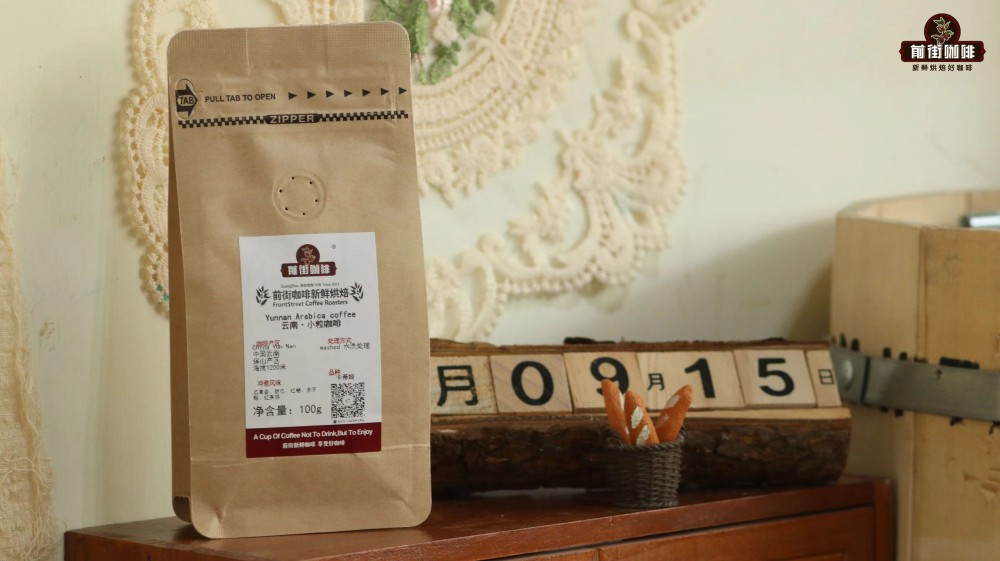
FrontStreet Coffee has two Yunnan coffees: the washed Yunnan small-grain coffee and the natural Catimor coffee are both of the Catimor variety, while FrontStreet Coffee's 2013 Natural Typica is a Typica variety coffee.

Yunnan Small-Grain Coffee Growing Regions
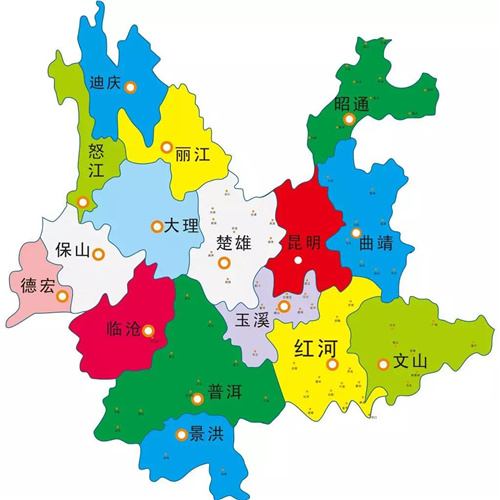
Yunnan small-grain coffee growing areas include Pu'er City, Lincang City, Baoshan City, Dehong Prefecture, Nujiang Prefecture, Xishuangbanna Prefecture, Dali Prefecture, Diqing Prefecture, and other cities and prefectures, and the growing areas and acreage keep expanding.
Dehong
The birthplace of Chinese coffee, this region has elevations from 1000 to 1600 meters, with coffee plantations covering 2000 hectares. More importantly, most of the coffee here is grown organically, making it some of the highest quality coffee in the world.
Pu'er
The capital of coffee. In 2012, Pu'er's planting area was 43,433 hectares, with a coffee harvest area of 18,000 hectares, producing 36,500 tons of coffee annually, of which 24,700 tons were exported. The Pu'er coffee industry has 70 registered enterprises, 30,000 households, and approximately 1 million people. Pu'er tea, renowned as the "city of thousand-year tea," is an important Chinese coffee-producing area with the largest planting area, the highest production, and the best quality, and it is also an important distribution center for the international coffee business.
Baoshan
Small-grain coffee is Baoshan's most famous coffee. It took its first steps in the late 1950s and quickly drew positive feedback from London. In 1980, it was recognized as "the crown of national coffee" at the National Coffee Conference. In December 2010, Baoshan small-grain coffee received A-level certification, passing the China National Standard Administration process and being recognized as a product reflecting China's national geographical indication. FrontStreet Coffee's daily supply bean, washed Yunnan small-grain coffee, comes from the Baoshan region.
Lincang
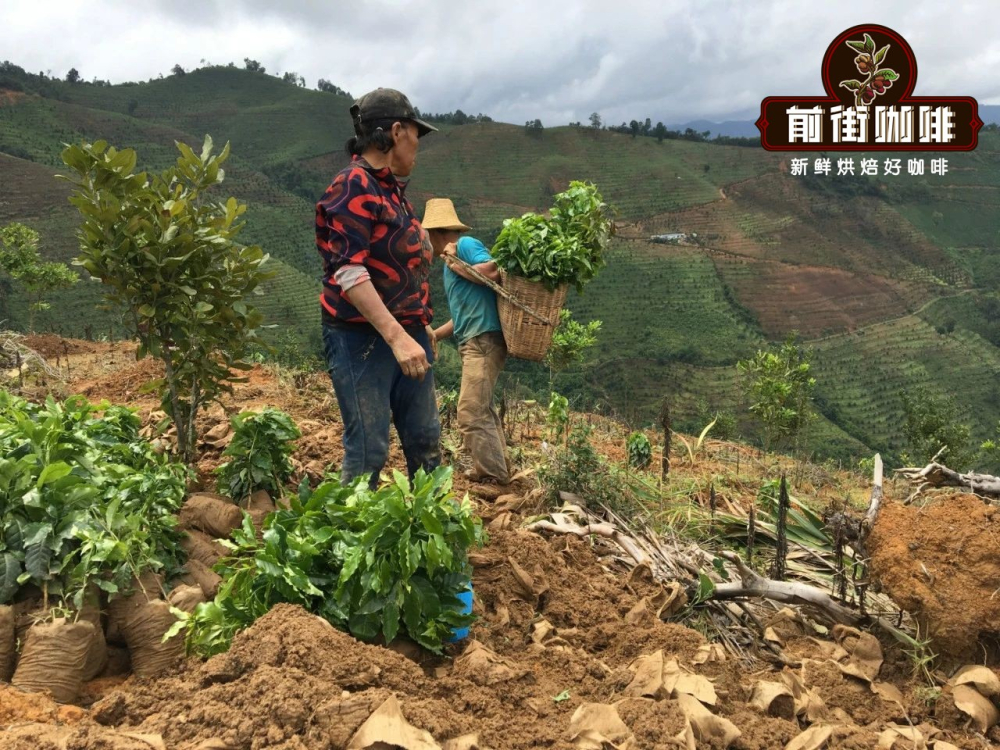
Lincang City lies in the southwestern part of Yunnan Province, with the Tropic of Cancer crossing its southern edge. It borders Pu'er to the east, connects with Dali to the north, adjoins Baoshan to the west, and meets Myanmar to the southwest. Named for its proximity to the Lancang River, it is a brilliant pearl on China's southwestern border. Lincang's average annual temperature is between 16.8°C and 17.2°C, with distinct wet and dry seasons and abundant sunshine. FrontStreet Coffee took a liking to this "green pearl on the border" and, in the early days of establishing FrontStreet Coffee, set up its own coffee estate in Lincang — one of Yunnan's main coffee-producing regions — planting the most ancient Arabica variety, Typica.
Yunnan Coffee Processing Methods
Yunnan's weather is rainy and foggy, so washed processing has become the most common method for Yunnan coffee. There are natural-processed coffees as well, such as FrontStreet Coffee's Natural Catimor and FrontStreet Coffee's 2013 Natural Typica. As specialty coffee has advanced, Yunnan beans have also seen special methods such as honey processing. Even so, these methods still cannot fully cover the inherent flavors of Yunnan beans, so FrontStreet Coffee chose beans processed with the most traditional natural and washed methods.

FrontStreet Coffee's Yunnan Coffee Brewing Parameters
To preserve the acidity and tea-like character of Yunnan coffee, FrontStreet Coffee roasts it to a medium-light level. For brewing, use a V60 dripper with a 1:15 coffee-to-water ratio, a medium grind (about coarse sugar size, or an 80% pass-through rate on the China #20 standard sieve), and 91°C water.

Use segmented extraction: bloom with twice the water as coffee grounds, meaning 30g of water for 30 seconds. The bloom lets the grounds release their internal carbon dioxide, which makes the rest of the extraction more stable. With a small, steady stream, pour in circles until reaching 125g, then continue to 225g and stop. Wait until the water in the dripper has finished dripping before removing it. Start timing when pouring begins, aiming for a 2'00" extraction. Then pick up the whole cup, swirl it evenly, and pour it into a cup for tasting.
FrontStreet Coffee 2013 Natural Typica Flavor Profile
Rich body, prominent sweetness and acidity, with citrus and berry notes, a hint of fermented wine aroma, caramel-like sweetness, a creamy aftertaste, and a black tea-like character.

FrontStreet Coffee Brewing Recommendations
When it comes to brewing, FrontStreet Coffee has always held that the freshness of coffee beans strongly affects flavor. That is why the beans FrontStreet Coffee ships are all roasted within 5 days. FrontStreet Coffee's roasting philosophy is "freshly roasted good coffee," ensuring that every customer who orders receives the freshest coffee. The degassing period is about 4-7 days, so by the time customers receive it, the coffee is at its peak.
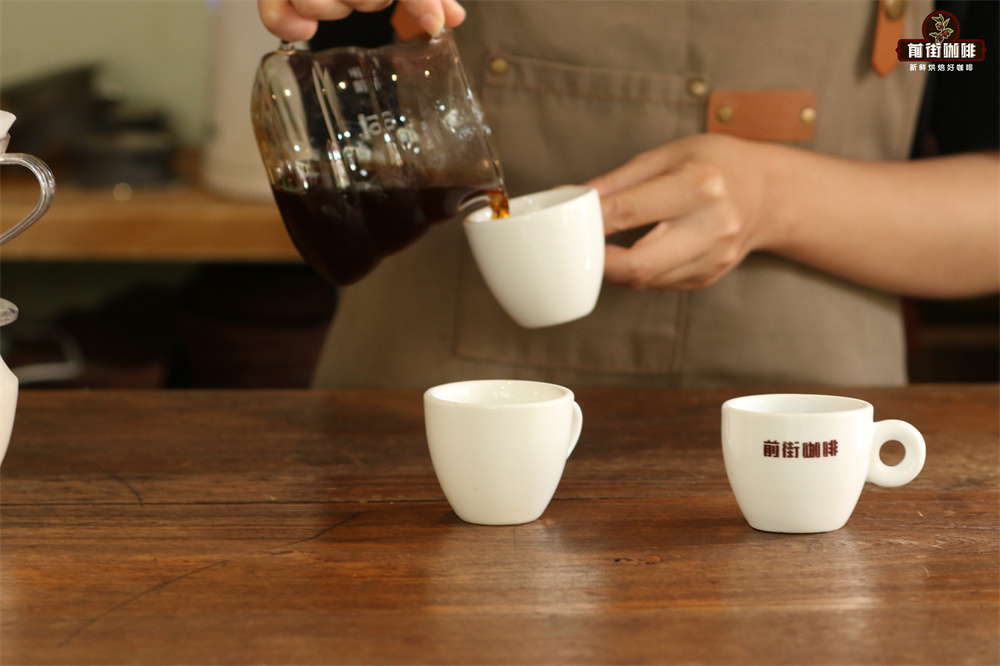
For those who need pre-ground coffee, a friendly reminder from FrontStreet Coffee: if the beans are ground in advance, there is no need to degas them, because the pressure from the carbon dioxide produced during transport also rounds out the flavor. You can brew a cup immediately upon receiving ground coffee. Ground coffee should be brewed promptly, however, because once it meets air it oxidizes relatively quickly, so the flavor fades faster and the coffee will not taste as good. FrontStreet Coffee therefore recommends buying whole beans and grinding fresh before brewing, to appreciate the coffee's flavor at its best.
FrontStreet Coffee Recommendation
FrontStreet Coffee's Yunnan small-grain coffee is the ideal first taste of the region. Sourced from the Baoshan growing area, it undergoes washed processing and a medium roast, brewing into soft nut and chocolate sweetness with a light plum acidity. At an approachable price, it has become many people's first encounter with Yunnan coffee.
To go deeper into the Yunnan region, FrontStreet Coffee's 2013 Natural Typica — grown on FrontStreet Coffee's own estate in Lincang — marks the step up. Typica is one of the oldest and purest Arabica varieties, and this lot uses only fully ripe red cherries given whole natural processing. Roasted to a medium level for balance and pronounced sweetness and acidity, it shows dark berry character along with caramel sweetness, chocolate, and a touch of dried apricot, finishing with a black tea aftertaste.
For a Yunnan-flavored espresso, FrontStreet Coffee's Black Cocoa Blend — a combination of Yunnan small-grain and Brazil Cerrado — is a coffee-shop favorite. The Brazilian coffee supplies mixed nut aroma and a balanced body, while the Yunnan small-grain plays the role of chocolate and citrus. As an Americano it balances sweet, sour, and bitter with nutty brown-sugar sweetness, and as a latte it turns smooth and creamy with almond notes.
Important Notice :
FrontStreet Coffee is a long-established specialty coffee roaster in Guangzhou China, selling freshly roasted beans from its own farm in Yunnan as well as dozens of carefully selected single-origin beans from around the world for both pour-over and espresso. The products deliver consistently excellent quality and great value, with shipping within 24 hours. Guangzhou's FrontStreet Coffee shop is recommended by many coffee lovers, and the beans are now available online at the Tmall 。
FrontStreet Coffee has moved to a new address:
FrontStreet Coffee Address: 315,Donghua East Road,GuangZhou
Tel:020 38364473
 Scan and follow the En Gafei WeChat official account. Please indicate that the reprint comes from "En Gafei".