Bright Flavor Profile of Kenyan Coffee: Taste Description and Regional Characteristics
When it comes to the most acidic coffee beans, FrontStreet Coffee immediately thinks of Kenyan coffee, with flavors of cherry tomatoes and black plums coming to mind. As an agricultural crop, coffee flavor shifts with the climate, and each harvest season brings certain changes to the cup. In recent years, Kenyan beans have shown rich berry juice notes, black plum acidity, and caramel sweetness. Even if the acidity is no longer as intense as it once was, it has not diminished people's love for Kenyan coffee.
Kenya Coffee Growing Geography & Harvest Seasons
Kenya is a tropical region with two rainy seasons a year, which allows for two harvests. 60% of Kenyan coffee is harvested from October to December, while the remaining 40% is harvested from June to August. Kenyan coffee grows mainly in volcanic soil at elevations between 1,200 and 2,300 meters around the country's mountainous regions. This altitude is ideal for flavor development, because the cooler mountain temperatures slow growth and let aromatic compounds develop fully. Kenya's phosphorus-rich soil also enhances the beans' fruity acidity, while high-altitude cultivation produces harder, denser beans. The fertile, crescent-shaped growing belt around Kenya's mountains is the main source of the country's specialty beans.
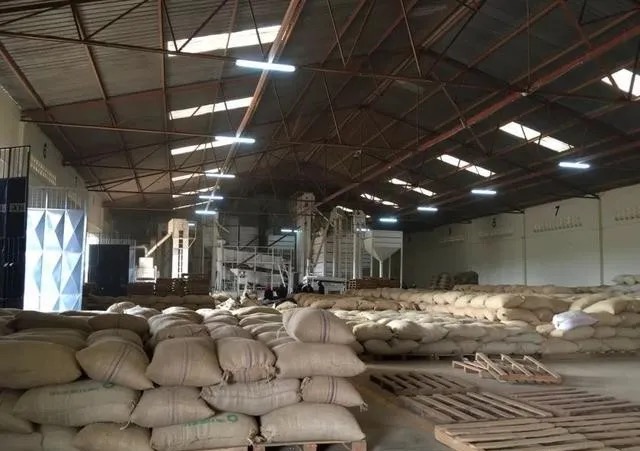
Major Kenyan Coffee Growing Regions
Kenya's coffee areas are best known for seven major regions: Thika, Kirinyaga, Mt. Kenya West, Nyeri, Kiambu, Ruiri, and Muranga. The foothills of Mt. Kenya and the Aberdare Range are the primary growing areas, including Kenya's premium regions of Kirinyaga, Thika, Nyeri, and Muranga.
The Nyeri region, in central Kenya, is home to the extinct volcano Mount Kenya. Its red soil nurtures Kenya's finest coffee, grown at elevations between 1,200 and 2,300 meters.
The Kirinyaga region lies on the slopes of Mount Kenya, next to Nyeri, and is renowned worldwide for coffee with intense flavor, rich complexity, and substantial body. Together with Nyeri, it is recognized as one of Kenya's two most outstanding regions, with coffee grown at elevations between 1,300 and 1,900 meters.
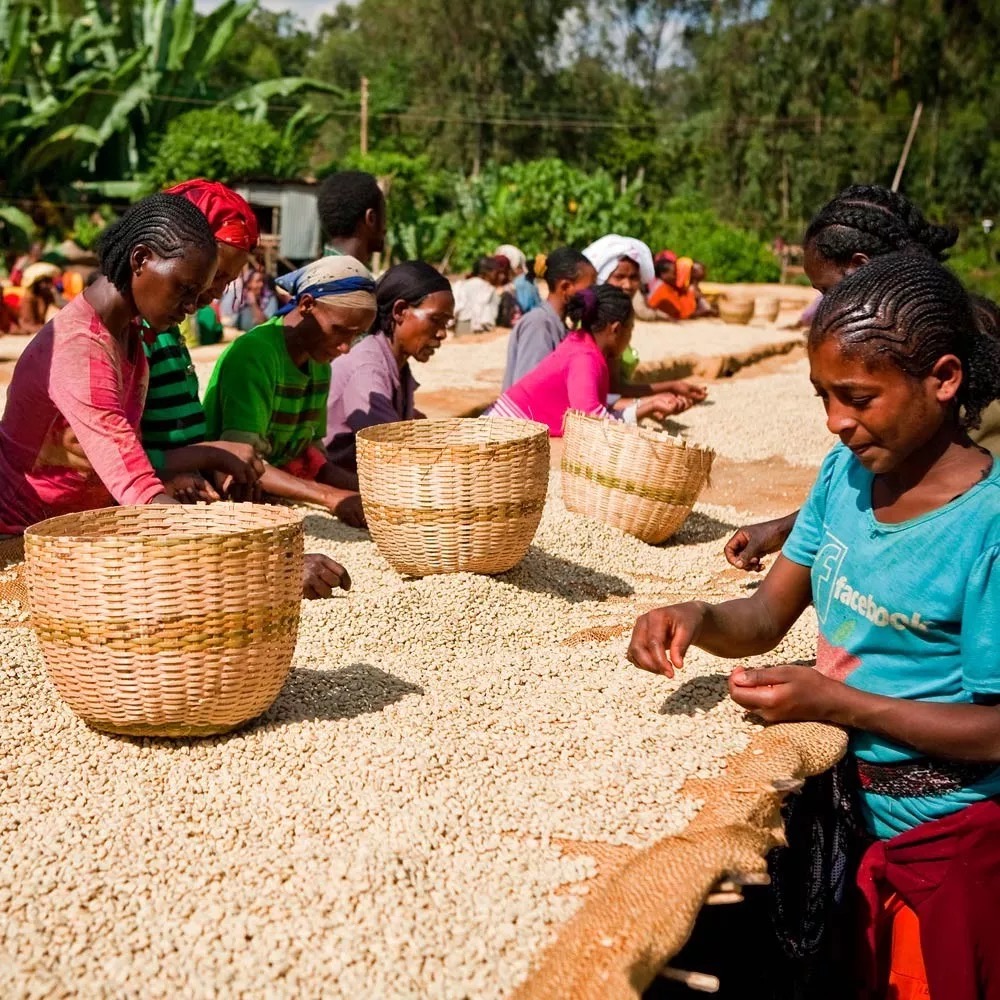
The Muranga region, part of Central Province, has roughly 100,000 coffee farmers. This inland region was one of the first places where missionaries settled, since the Portuguese barred them from living in coastal areas. It is another region that benefits from volcanic soil, with more smallholders than large estates. Coffee grows at elevations between 1,350 and 1,950 meters.
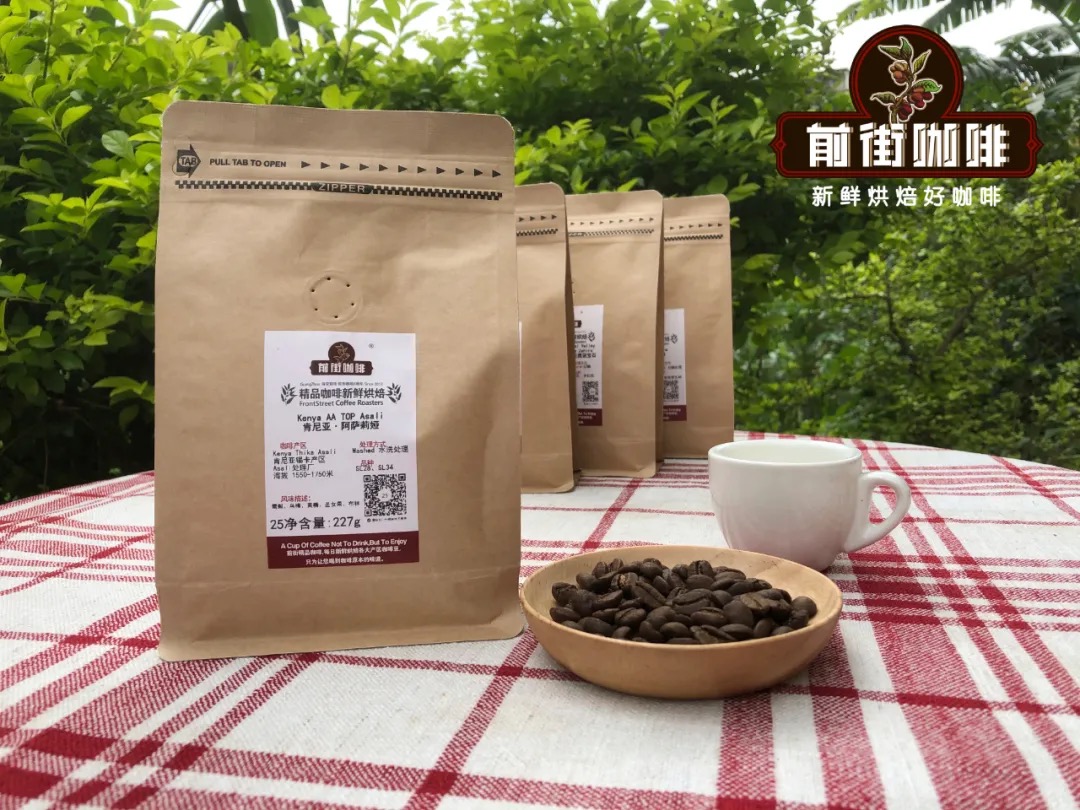
The Thika region, in central Kenya, has the highest elevation coffee-growing areas in the country. Thika itself is a secondary area within the region, at the foot of the Aberdare ridge, with red volcanic soil rich in organic matter. Coffee grows at elevations between 1,550 and 1,750 meters. The Kenya Assalia coffee beans sold by FrontStreet Coffee come from the AA-grade beans of the Assalia processing station (also known as the Bee processing station) in the Thika region.
What Are Kenya AA Grade Coffee Beans?
Kenyan coffee is graded primarily by bean size, shape, and density, and classified from highest to lowest as AA or AA+, AB, PB, C, E, TT, and T.
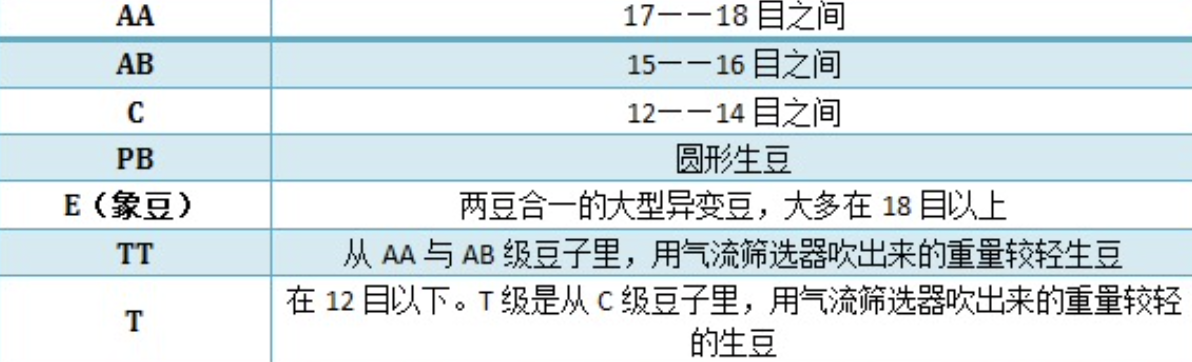
For AA and AB grade green beans, exporters add a further classification based on cupping results (not officially recognized by Kenyan authorities), ranked from highest to lowest as TOP, PLUS (+), and FAQ. The flavor grade of FrontStreet Coffee's Kenya Assalia reaches the TOP level.

Kenyan Coffee Bean Processing - 72-Hour Washed Processing
Kenya's washed processing is world-renowned, but it differs from a standard washed process. Kenya's K72 method refers to a 72-hour fermentation, whereas standard washed processing rarely exceeds 36 hours. This extended fermentation creates the distinctive acidity of Kenyan specialty coffee. The process starts with selecting ripe cherries, removing the pulp and skin, and soaking the beans in water tanks to ferment away the mucilage. This takes 72 hours, after which the beans are dried until they reach 12% moisture content.

Main Kenyan Coffee Varieties
When people mention Kenyan coffee, they often first think of its bright, lifted fruit acidity and full, juicy body, with a unique flavor that leaves a lasting impression. Kenyan washed processing is highly prized, and the SL varieties are celebrated worldwide as the country's representative varieties.
SL stands for Scott Laboratories, the name of Kenya's coffee research center, which first developed the SL series in the 1930s. Among them, SL28 and SL34 are two of the 40 experimental varieties from that program and the most well-known and popular specialty varieties. Scott Laboratories was established by the colonial government in 1922 and has since been renamed NARL (National Agricultural Laboratory). The laboratory employed an entomologist, a mycologist, and a plant breeder to give farmers technical advice and cultivation knowledge, and its other work included yield experiments, grafting trials, pruning, shade-growing, and root covering.

At the time, Kenyan agriculture was long afflicted by drought and other hazards, so scientists from the Scott Agricultural Laboratory traveled to neighboring Tanzania to collect local coffee varieties, selecting those with potential for drought and pest resistance. After nearly 30 years of selection and breeding, the laboratory finally released SL28 and SL34, the best performers in quality, in the 1950s and began promoting them nationwide. Soon these two new SL varieties gradually replaced the original Bourbon trees and became Kenya's main coffee varieties in the second half of the 20th century.
SL28 has mixed heritage from several varieties, including French Mission, Mocha, and Yemen Typica. The plants are tall with emerald green leaf tips, high yielding, with large beans and strong drought resistance, but they are susceptible to coffee leaf rust, coffee berry disease (CBD), and soil nematodes. In the cup, SL28 shows distinct black plum and citrus flavors along with rich, deep drupe acidity reminiscent of wine, with sweetness to match.

By comparison, SL34 trees have dark bronze leaf tips, higher nutritional needs during growth, relatively lower yields, and large beans. Grown at high altitude, they show excellent quality potential, expressing good fruit acidity with nut and spice aromas. The tree's constitution is similar to SL28, and both are highly sensitive to CBD, leaf rust, and pests. Together, SL28 and SL34 have created the classic flavors that made Kenyan coffee famous worldwide and that fascinate countless drinkers who love acidity. FrontStreet Coffee's own roasted Kenya Assalia is made up of SL28 and SL34 varieties, producing black coffee with intense aromas of cherry tomatoes, black plums, snow pears, and berries.
How to Brew Kenyan Coffee for Juice-Like Body?
Coffee from Kenyan regions is known for its distinctive, complex berry notes. With ideal extraction it offers both dense acidity and rounded fruit sweetness, with a smooth, viscous liquid that feels like biting into a bursting tomato. Given the bean's rich acidic fruit flavors, FrontStreet Coffee aims for clearer fruit aromas and uses a 1:16 ratio. Using the common single-cup dose of 15 grams from FrontStreet Coffee's stores, that means 240 grams of hot water, with high water temperature and a fine-sugar grind.

During segmented extraction, different components in the grounds extract at different rates, with flavors releasing in the order of acid, then sweet, then bitter. To raise the proportion of acidity and sweetness, more water can be allocated after the bloom while reducing the later pours for balance, which makes it easier for the coffee to express lively acidity.
During the bloom, even water absorption by the coffee bed helps dissolve the maximum amount of flavor compounds, especially increasing the concentration of acidic and floral aromas. FrontStreet Coffee experimented with splitting the bloom water into portions, pouring another 15 grams after the initial 15 grams, so the coffee extracts acidic and sweet compounds more quickly and in greater quantity.

Coffee grounds: 15 grams
Total water: 240 grams
Water distribution: 30 grams, 130 grams, 80 grams
Water temperature: 91°C
Grind size: EK43s setting 10 (82% pass-through rate on a #20 standard sieve)

Based on FrontStreet Coffee's brewing experience, coffee brewed with a large water flow shows richer layering and more prominent acidity, while a small water flow emphasizes softer, rounder sweetness. To highlight the fruity acidity and rich complexity without producing too short an aftertaste or too thin a body, FrontStreet Coffee uses a large flow first and a small flow afterward.
First, pour 30 grams of water and start the timer, blooming for 30 seconds. After the bloom, FrontStreet Coffee uses a medium-large flow (greater than 7 g/s) to quickly pour 130 grams in large circles. Once all the coffee liquid has dripped into the lower pot, use a small flow (less than 4 g/s) to slowly pour the remaining 80 grams in small circles. When all the liquid has dripped into the sharing pot, end the extraction, for a total time of 2 minutes (±10 seconds).

It is worth noting that the second pour is larger, and pouring it too quickly can build the coffee bed too high. When the water level drops, particles at the filter edge may then be hard to rinse with the final water, which can cause under-extraction. The rising final water level should therefore be controlled so it does not climb too high. Here FrontStreet Coffee keeps the water level at about 3/5 of the dripper height after the second pour.
This method highlights the dense berry acidity of Kenyan coffee in a hot pour-over, with a juice-like body that leans toward cherry tomatoes and an aftertaste carrying the refreshing sweetness of ripe blueberries, making it perfect for summer.
FrontStreet Coffee Recommendation
FrontStreet Coffee's Kenya Cherry Tomato is a washed Kenyan specialty bean built around cherry tomato, smoked plum, and a full, juicy body, making it a favorite for anyone who loves bright fruit acidity and complex flavor. It comes from Kenya's Thika region, grown at 1,550-1,750 meters from the classic local SL28 and SL34 varieties, with full, rounded beans. It undergoes Kenya's signature 72-hour double washed fermentation, which draws out the fruit while keeping the cup clean and pure, and FrontStreet Coffee gives it a light roast to preserve as much lively acidity and layered fruit as possible.
On the nose the dry fragrance already shows concentrated dried cherry tomato and florals. In the cup there are clear cherry tomato and smoked plum notes with a bright, solid acidity as full as freshly squeezed juice, a pronounced mid-palate sweetness threaded with the fresh fruit character of snow pear and black plum, and a clean, lingering finish with yellow-sugar sweetness and a faint green tea aroma. The balance of sweet and tart is distinctive and highly recognizable.
Important Notice :
FrontStreet Coffee is a long-established specialty coffee roaster in Guangzhou China, selling freshly roasted beans from its own farm in Yunnan as well as dozens of carefully selected single-origin beans from around the world for both pour-over and espresso. The products deliver consistently excellent quality and great value, with shipping within 24 hours. Guangzhou's FrontStreet Coffee shop is recommended by many coffee lovers, and the beans are now available online at the Tmall 。
FrontStreet Coffee has moved to a new address:
FrontStreet Coffee Address: 315,Donghua East Road,GuangZhou
Tel:020 38364473
 Scan and follow the En Gafei WeChat official account. Please indicate that the reprint comes from "En Gafei".