Introduction to Brazilian Coffee Bean Flavor and Profile Characteristics of Yellow Bourbon Variety from Queen Coffee Farm
Brazilian Coffee: An Overview
Brazil is the world's largest coffee producer, supplying both commercial and specialty beans to the global market, and instant coffee is a major part of its processing industry too. Beans grown at Brazil's lower altitudes are relatively low in density, with low acidity, high sweetness, and plenty of richness. The nutty, chocolatey notes that emerge in darker roasts make them a staple of espresso blends — which is why Brazilian coffee rarely appears as a single origin. Even so, FrontStreet Coffee offers two: the everyday Brazil Cerrado, and the single-origin Brazil Queen's Farm Estate.
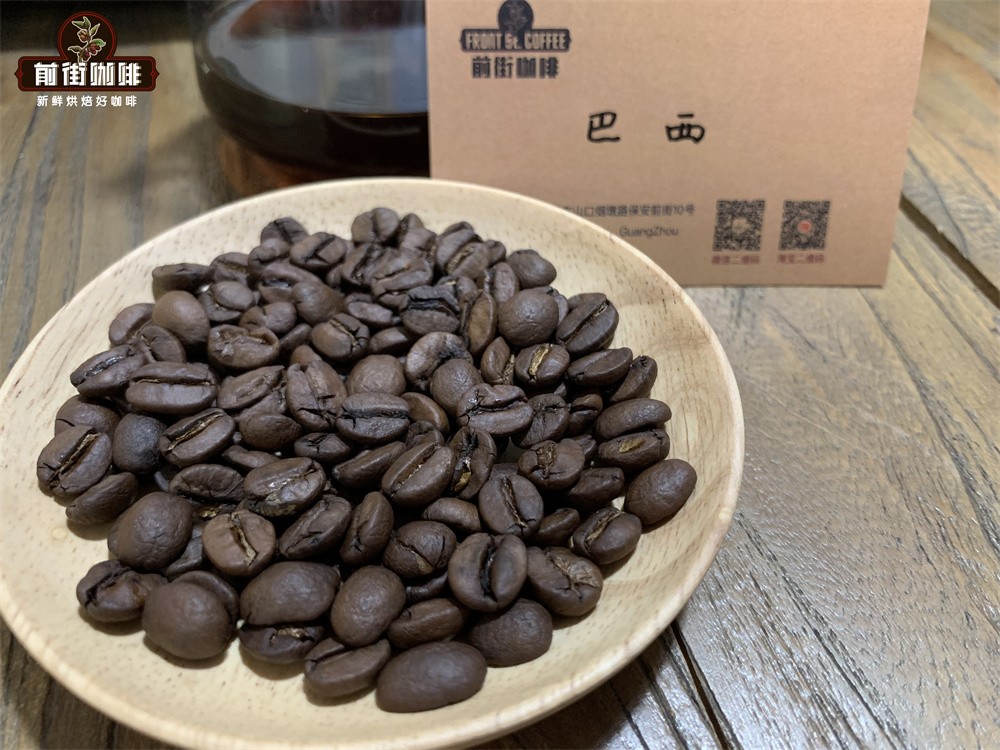
Though we carry both as single origins, Brazilian beans more often serve as blend bases, as in FrontStreet Coffee's classic, premium, and commercial blends. Take a first sniff of Brazilian coffee and you'll catch rich aromas of nuts, caramel, and peanut over a sweet, balanced profile. Little wonder people say: good espresso starts with good Brazilian beans.
Brazilian Coffee Growing Environment
Coffee normally demands strict growing conditions, but Brazil breaks the mold: no extreme altitudes, no shade trees. Brazilian coffee is generally planted on relatively flat land, and decades ago Brazilian estate owners developed improved Arabica trees that don't require high altitude or shade — varieties that thrive on plains and grasslands under direct sunshine, unlike the traditional shaded, high-altitude model. Most Brazilian plantations sit just a few hundred meters above sea level. This sun-grown approach lets cherries ripen faster, so flavor development is less complete and bean density — the "hardness" prized in high-grown coffee — is lower. Fruity acidity is notably subdued, flavors are straightforward, and coastal Rio coffee even carries iodine and salty notes, thought to be the work of certain microbes.

Brazilian Coffee Regions
Coffee arrived in Brazil in 1727, when the Portuguese diplomat Francisco de Melo Palheta was sent to French Guiana to mediate a territorial dispute. He won the affection of the governor's wife, who hid coffee seeds in a bouquet she gave him — allowing him to smuggle coffee into Brazil.
Brazil is aptly called the giant — and monarch — of the coffee world, with roughly 39.7 billion coffee trees. Smallholder farmers now grow 75% of the country's total production, and Brazil's coffee workforce is 2 to 3 times that of Colombia, the world's second-largest producer.
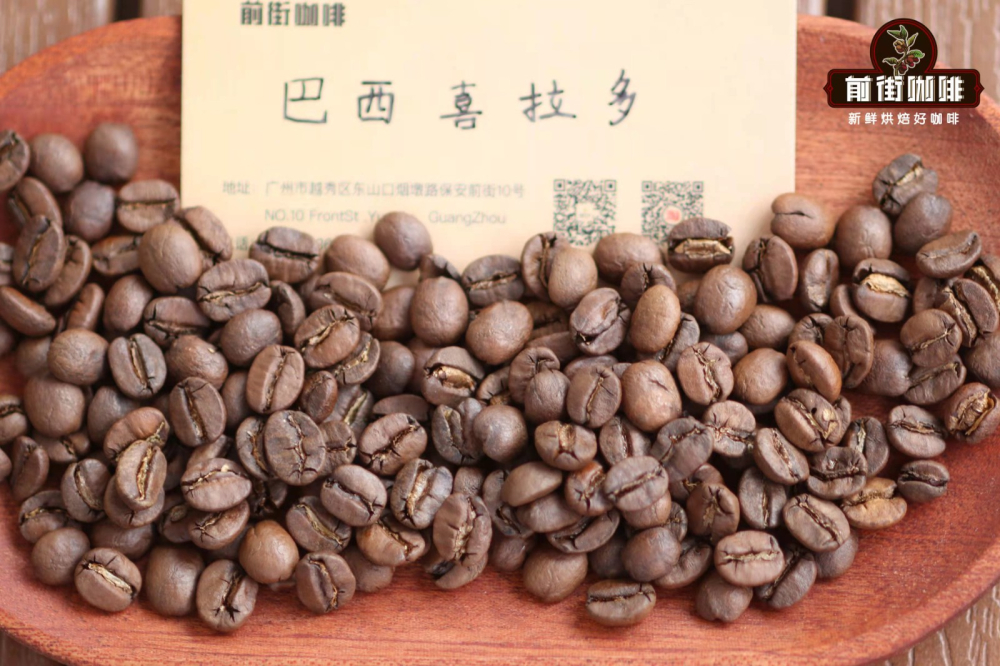
Brazilian coffee is concentrated in the central and southern parts of the country, spread across 7 states and roughly 14 producing regions: South Minas, Matas de Minas, Chapada de Minas, Montanhas do Espírito Santo, Conilon Capixaba, Mogiana, Centro-Oeste de São Paulo, Cerrado, Planalto da Bahia, Atlantic Baiano, Paraná, and Rondônia, among others.
Cerrado Region
The Cerrado is recognized as one of Brazil's specialty coffee regions. It takes its name from the vast "Cerrado" savanna climate zone spanning eight states of central Brazil — about two million square kilometers, or 22% of Brazil's total area, deep in the country's interior. "Cerrado" means "closed-off place" in Portuguese. The savanna stretches from Mato Grosso in the southwest through central-west Minas to western Bahia; the Cerrado coffee region proper refers to the part that extends into Minas state at 850–1,200 meters, distinguished from South Minas (Sul de Minas), which also lies in Minas. The flat, open terrain suits large estates perfectly, and distinct wet and dry seasons with a relatively cool plateau climate complete the picture.
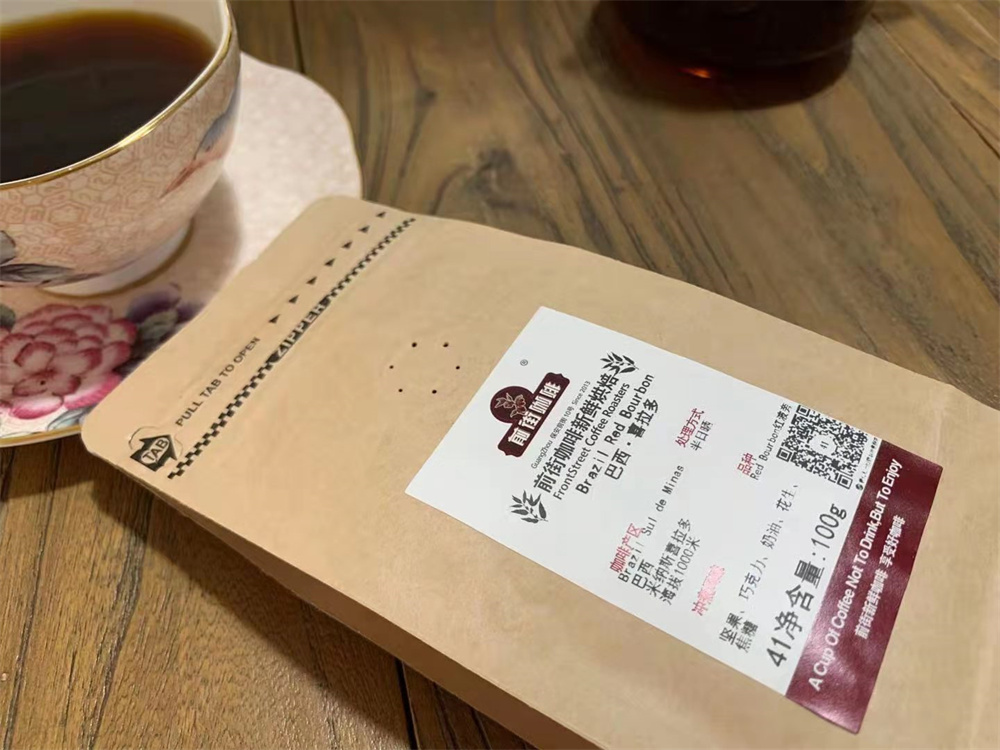
Not all "Cerrado" coffee comes from the whole savanna, though — the designation is limited to the coffee-growing areas of central-west Minas above 1,000 meters. These represent the essence of the region: high altitude and fertile soil yielding specialty beans with clear sweetness, high body, and high cleanliness. FrontStreet Coffee finds this coffee rich in flavor yet free of earthiness. Our everyday Brazilian bean comes from exactly this region.
Mogiana Region
The renowned Queen's Farm Estate sits in Mogiana, close to southern Minas, where bean quality is excellent and coffee grows among shrubs and grasses. The estate occupies relatively high ground with beautifully preserved surroundings. Its cherries are entirely hand-harvested, and the estate cultivates low-yield, high-quality Bourbon varieties. As a flagship of Brazil's premium coffee, Queen's Farm consistently earns praise — FrontStreet Coffee suspects that beyond terrain and climate, it comes down to the business model: a combination of traditional large-scale farming and modern, small-scale management. High-tech growing equipment helps make the region's coffee notably sweet, with a clarity reminiscent of sugarcane.
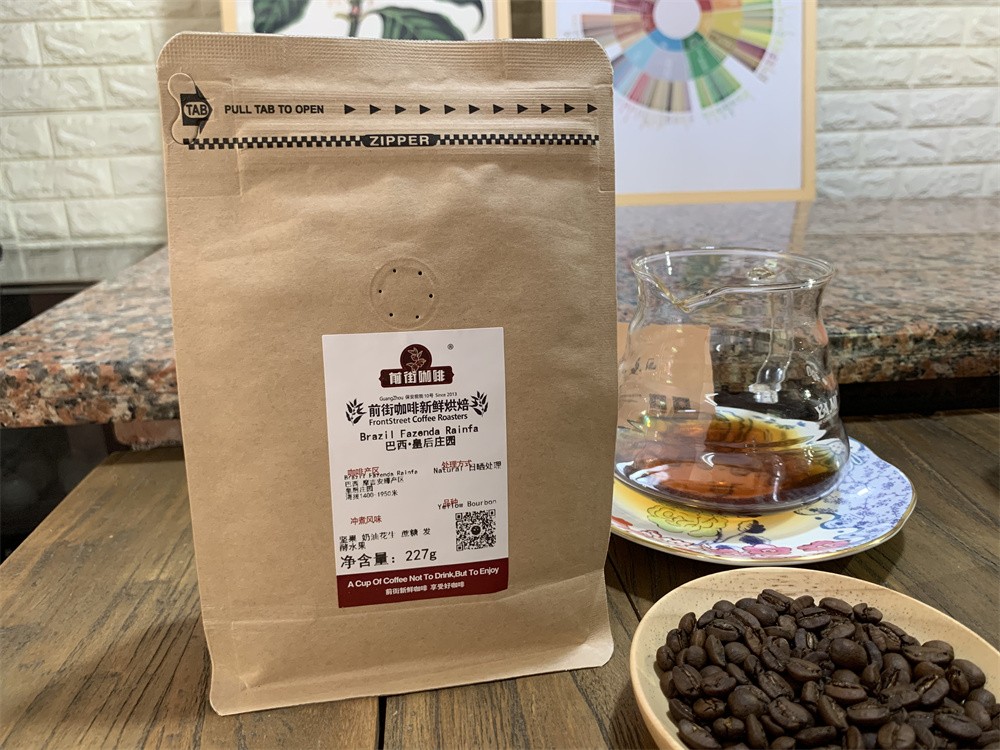
Queen's Farm Estate Introduction
Queen's Farm Estate (Fazenda Rainha) lies in the Alta Mogiana region of São Paulo state, north of São Paulo city. It is highly celebrated in Brazil and owned by the Carvalho Dias family, whose four major estates have won awards every year since the first Brazil Cup of Excellence in 1999 — more than 12 wins in 7 years, including a sweep of the championship, 9th, and 11th places in 2004. Fazenda Rainha's own record is brilliant: 2nd place in 2000, 3rd in 2001, and 29th in 2005.
Brazil has countless estates, most of which never win such honors, yet this family's four do so year after year. Yellow Bourbon beans are naturally sweet and clean, and natural (or semi-natural) processing tempers their acidity, marries it to the sweetness, and adds tropical fruit aromas.
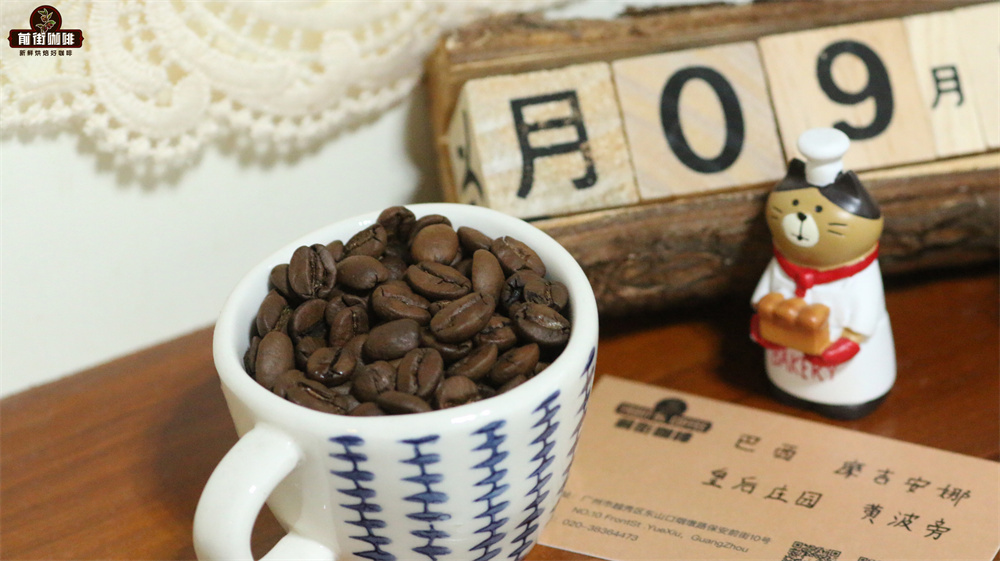
Fazenda Rainha belongs to a medium-scale farm organization in the local Grama Valley that primarily exports specialty Bourbon varieties. The organization's office is in nearby Poços de Caldas, complete with a national-level cupping laboratory and large warehouses. It also partners with local universities on research — among them Lavras University, home to the renowned agricultural researcher Dr. Flavio Borem.
Brazilian Coffee Varieties
Brazil grows coffee in 17 states and cultivates an enormous range of varieties, currently dominated by Red Bourbon, Yellow Bourbon, Mundo Novo, and Catuai. Bourbon and Typica are both ancient lineages. Bourbon was first cultivated on Réunion Island — known as Bourbon Island before 1789 — and is a natural mutation of Typica; together they are the oldest coffee varieties in existence. When its fruit ripens, it turns a bright red.
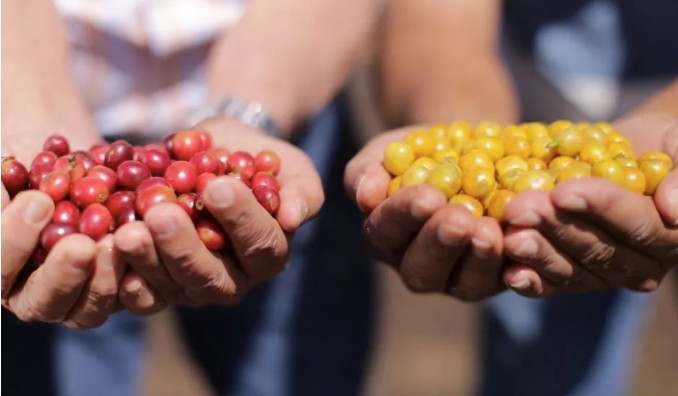
On a typical Red Bourbon tree, the cherries progress from green to slightly yellow, to slightly orange, to mature red, and finally a deeper red at full ripeness — hence the name "Red Bourbon," which is really just the Bourbon variety we all know: an Arabica branch that generally bears red fruit. There are also Yellow Bourbon and Orange Bourbon; Yellow Bourbon yields less but with better quality, while Red Bourbon remains the most widely planted variety in Brazil.
FrontStreet Coffee's everyday Brazilian bean is Red Bourbon, while our Queen's coffee is Yellow Bourbon — of the estate's 280 acres, 200 are planted entirely with Yellow Bourbon.
Brazilian Coffee Processing - The Pulped Natural Method
Before 1990, Brazil relied almost exclusively on crude natural processing, which left beans vulnerable to woody or earthy flavors: the cherries needed two to three weeks of sun, and any rain that re-wetted them easily bred moldy notes. To escape the tyranny of weather, Brazil leveraged its relatively dry climate and in 1990 developed the pulped natural (semi-natural) method, cutting processing time. It reduces the earthy notes while enhancing fruity aromas and sweetness — ideal for single-origin coffee — and has become essential equipment for Brazilian specialty producers.
That doesn't mean every region switched: the drier Cerrado still primarily uses natural processing, with pulped natural in a supporting role. The Red Bourbon FrontStreet Coffee sources from Cerrado, however, is pulped natural processed.
Queen's Farm Estate's Depulping Processing System
Fazenda Rainha uses small-batch refined natural processing, sun-drying on African raised beds, with dedicated staff turning the cherries and monitoring moisture throughout to maximize quality.
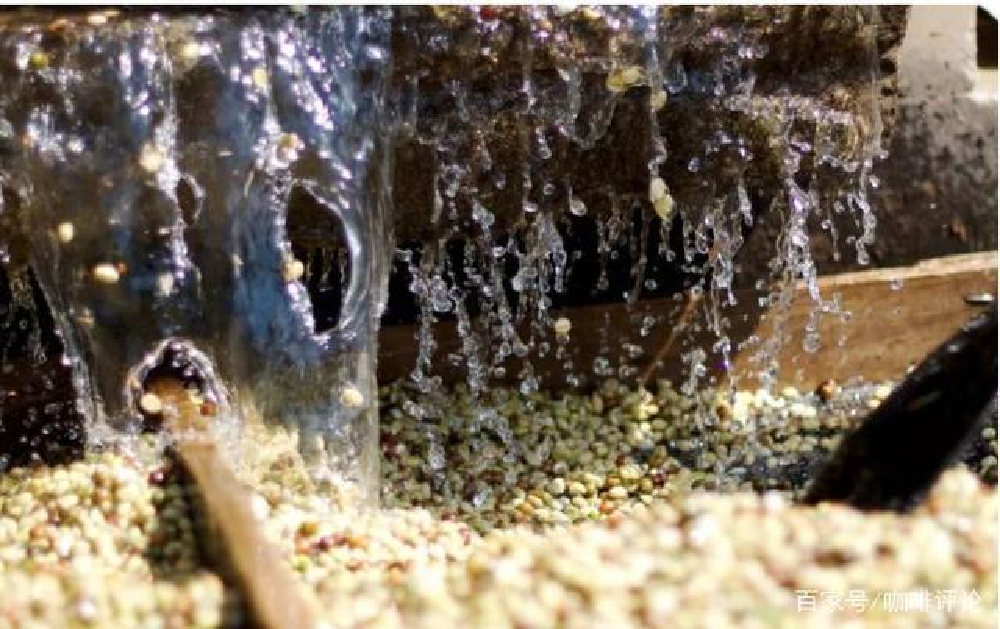
Mature cherries are hand-picked into cloth bags so they never touch the ground, and everything harvested on a given day goes to the estate's mill for pulped natural processing that same day. Hand-picking and cloth bags prevent earthy flavors and improper fermentation. At the mill, the cherries are immediately washed and floated: unqualified or dried fruits (the "bóia" floaters) are filtered out by size, and the qualified cherries move on to the depulper.
FrontStreet Coffee's Brewing Recommendations
Whether you brew pour-over or espresso, a great cup needs good beans — handled well. FrontStreet Coffee has always held that freshness is central to brewing: every order ships within 5 days of roasting, under our philosophy of "Freshly Roasted Good Coffee." With a resting window of about 4–7 days, your coffee arrives at its flavor peak.
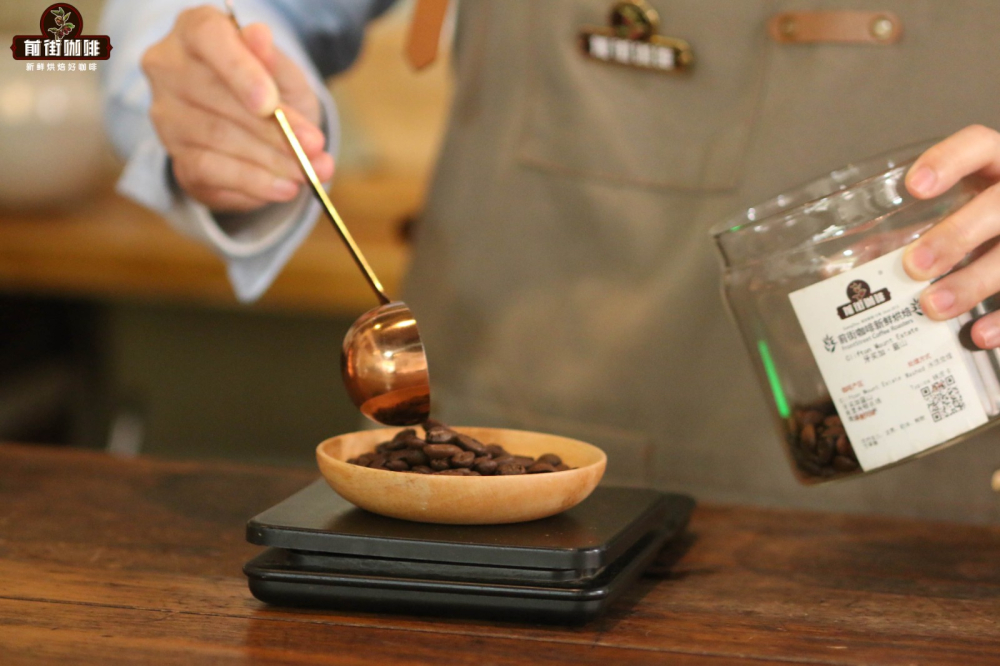
If you'd like your beans pre-ground, that's fine too — but a reminder: pre-ground coffee needs no further resting, since the CO₂ pressure that builds in the bag during shipping actually helps mellow the flavor, so you can brew the moment it arrives. Still, grounds oxidize quickly once exposed to air, and their flavor dissipates fast. That's why we recommend buying whole beans and grinding fresh for every brew.
FrontStreet Coffee's Brazilian Coffee Brewing Parameters:
For darker roasts built on richness, we choose the Kono dripper. Its steeping function extracts more through partial immersion, deepening the mouthfeel; with few ribs, concentrated near the bottom, the filter paper hugs the walls and restricts airflow, slowing the drawdown and lengthening coffee-to-water contact.
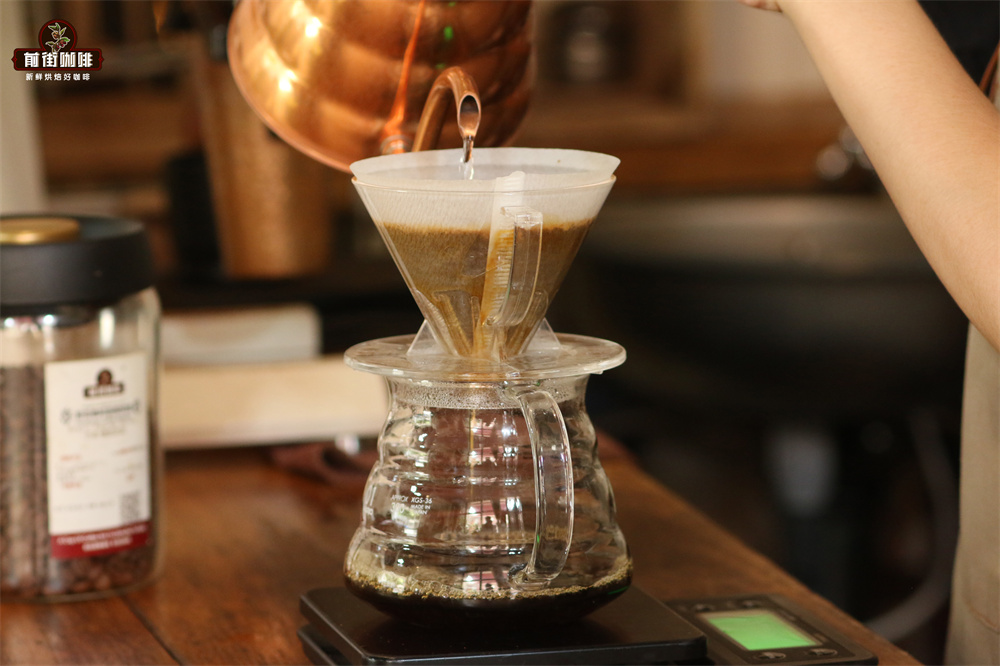
Parameters: Kono dripper, 88°C water, 15g dose, 1:15 ratio, medium-fine grind (75% pass-through on a #20 standard sieve).
Pour in segments: bloom with twice the dose — 30g — for 30 seconds, pour to 125g and pause, then continue to 225g and stop. Once the dripper finishes dripping, remove it. Timing from the first pour, extraction takes 2'00". Swirl the full cup before pouring to taste.
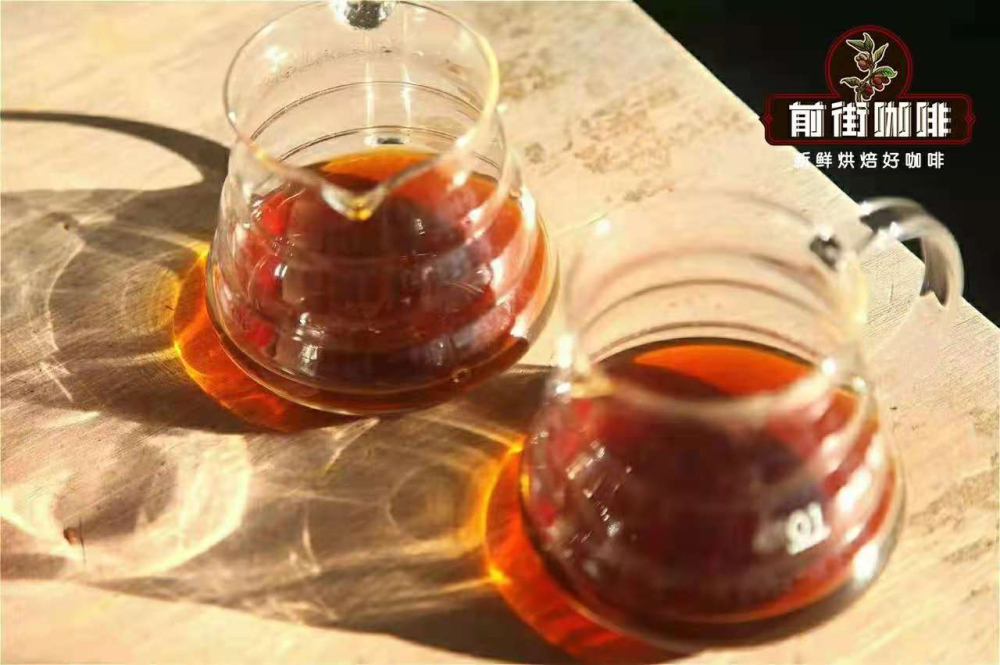
Pulped natural Brazil Cerrado: obvious sweetness on entry with a faint lemon note, rich nuttiness, and clear dark chocolate in the finish — rounded overall.
Natural Brazil Fazenda Rainha: balanced mouthfeel with prominent sugarcane sweetness over almond and cocoa — a full, abundantly sweet coffee.
Conclusion
Brazilian coffee's overall balance is exactly why it anchors so many espresso blends. Of course, tastes differ — some love Ethiopian florals and fruit, some Indonesian nutty-herbal depth, some Colombian nuts and dark chocolate. FrontStreet Coffee believes every one of them is worth tasting, because each flavor reflects a different coffee culture!
FrontStreet Coffee Recommendation
If you'd like to taste Brazil at its best, start with FrontStreet Coffee's two single origins. Our everyday Brazil Cerrado is a Red Bourbon from central-west Minas grown above 1,000 meters and pulped natural processed — medium-roasted, it pours out cream, peanut, toasted bread, caramel, and hazelnut aromas with a rounded, gentle cup that works as pour-over, moka pot, espresso SOE, siphon, or French press. For something rarer, choose the Fazenda Rainha Yellow Bourbon from Mogiana: a natural mutation of Red Bourbon with a cleaner fruit character and a sugarcane sweetness you won't find in any other origin, alongside fruit and chocolate notes.
Brazilian beans also power our espresso lineup — the crema-rich classic blend, the nutty premium blend, the barista-favored black cocoa blend, and our shop-grade commercial blend all contain Brazil. The beans bring chocolate and cream aromas, a soft balance of acidity, sweetness, and bitterness, and a steadier extraction. And since freshness is half the cup, every order ships within 5 days of roasting — rest the beans 4–7 days from the roast date and you'll taste them exactly at their peak.
Important Notice :
FrontStreet Coffee is a long-established specialty coffee roaster in Guangzhou China, selling freshly roasted beans from its own farm in Yunnan as well as dozens of carefully selected single-origin beans from around the world for both pour-over and espresso. The products deliver consistently excellent quality and great value, with shipping within 24 hours. Guangzhou's FrontStreet Coffee shop is recommended by many coffee lovers, and the beans are now available online at the Tmall 。
FrontStreet Coffee has moved to a new address:
FrontStreet Coffee Address: 315,Donghua East Road,GuangZhou
Tel:020 38364473
 Scan and follow the En Gafei WeChat official account. Please indicate that the reprint comes from "En Gafei".