Arabica Coffee Origins: A Guide to Coffee Estates and Growing Regions

In the coffee we typically drink, the most common varieties are Arabica and Robusta. Arabica appears more often as specialty coffee, while Robusta is more commonly used in blends or espresso.
Ethiopia is the birthplace of coffee and the homeland of the famous Arabica coffee bean. In Ethiopia, people still maintain the tradition of harvesting wild coffee today.

Ethiopia possesses the most diverse varieties on Earth. Its main producing regions include Sidama, Yirgacheffe, Kochere, Harar, and Djimmah (English spellings for Ethiopian place names vary slightly). Ethiopia is a rare origin, with countless native wild varieties yet to be discovered. Most coffee varieties in Central and South America were introduced from Ethiopia.
Arabica and Robusta Varieties
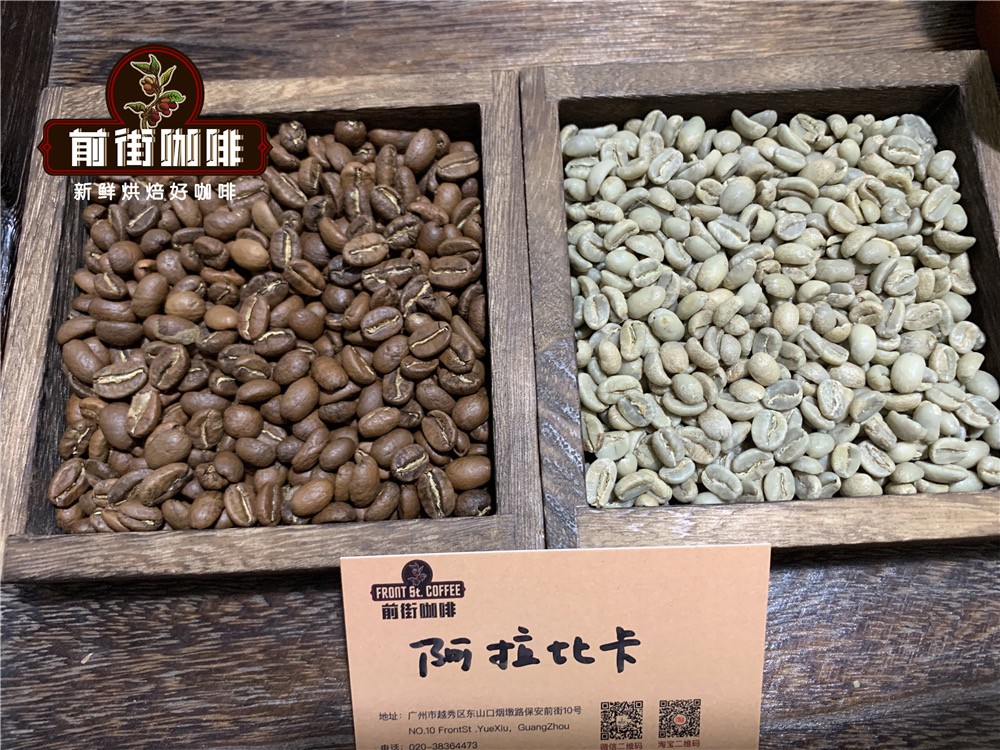
The Arabica variety, scientific name Coffea arabica, originates from the Abyssinian plateau of Ethiopia (now the Ethiopian plateau). Initially used mainly as medicine, the habit of roasting for drinking developed in the 13th century. It entered Europe through the Arab region in the 16th century and subsequently became a beverage loved worldwide. It has low resistance to drought, frost, and pests, and is particularly vulnerable to coffee's natural enemy, leaf rust disease. Main Arabica producing regions include South America, Central America, Africa (East African countries), and Asia (including parts of Yemen, India, and Papua New Guinea). Caffeine content is around 1.5%.
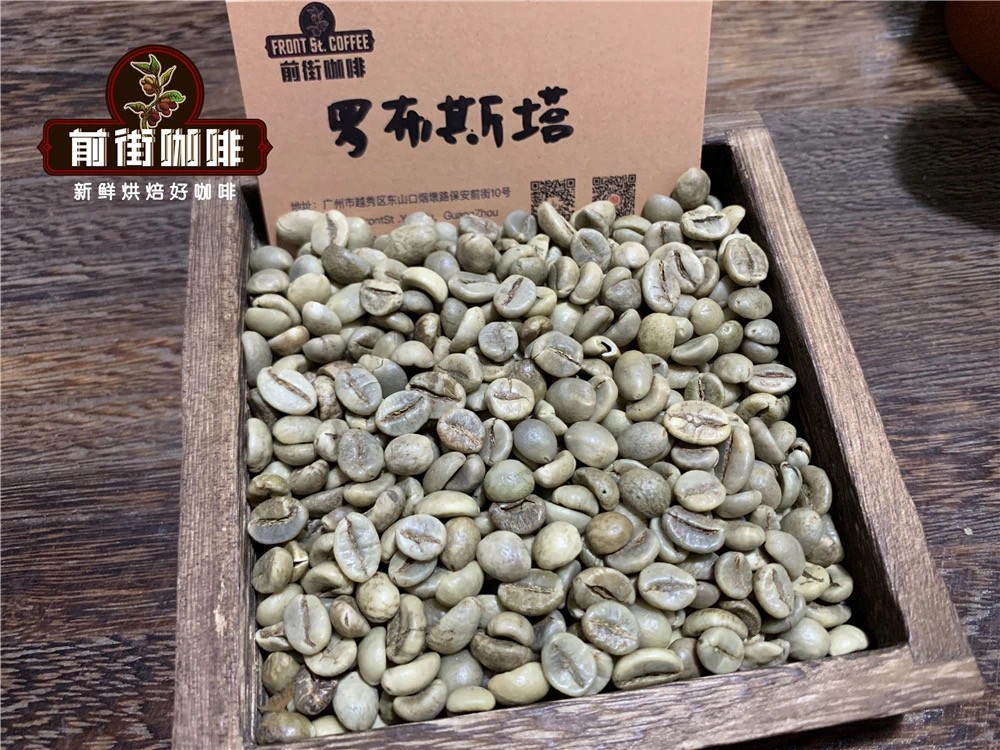
The Robusta variety, scientific name Coffea robusta Linden, is a leaf rust-resistant variety discovered in Congo, Africa, with stronger disease resistance than Arabica. It is actually a mutant of the Congo species (scientific name Coffea canephora). The name Robusta has become commonly used by the public, which treats it as the same species as Congo. This variety has a unique aroma (called "Robusta flavor," which some consider a moldy smell) and bitterness, and is generally used in industrial coffee production such as instant coffee, canned coffee, and liquid coffee, or in small amounts in blends. Caffeine content is around 3.2%.
Ethiopia's Coffee Growing Environment
Ethiopia's geographical environment is very suitable for coffee growth. Coffee is mainly grown on the southern highlands at altitudes between 1,100 and 2,300 meters. After thousands of years of evolution and adaptation, a unique coffee terroir has formed. Ethiopian coffee grown in natural wild environments is called "wilderness coffee," retaining the most primitive and natural flavors of coffee beans, with the most direct and complete expression of terroir. Ethiopia offers unique flavors distinct from others, providing customers worldwide with extensive taste choices.
In the southwestern highlands of Ethiopia, the forest coffee ecosystems of Kaffa, Sheka, Gera, Limu, and Yayu are considered the homeland of Arabica coffee. These forest ecosystems also host various medicinal plants, wildlife, and endangered species.
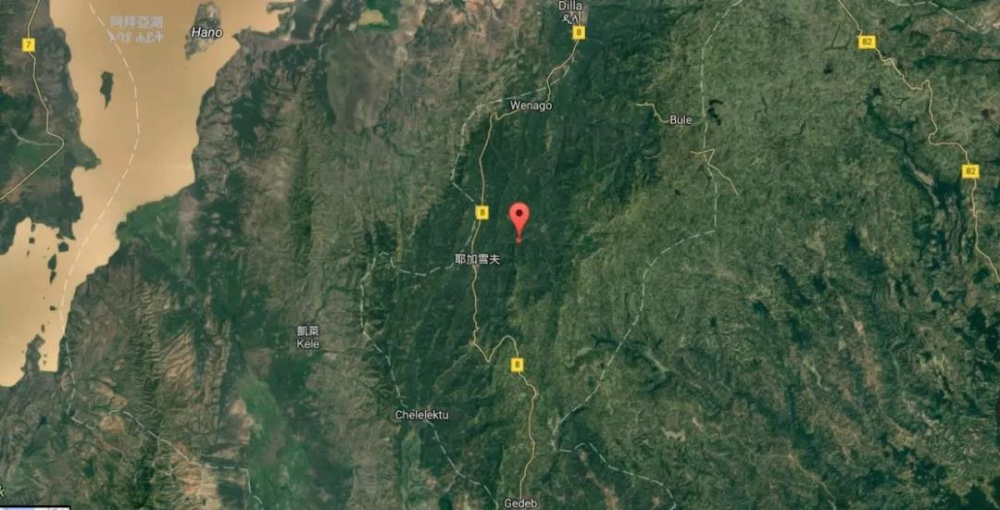
The full name is the Federal Democratic Republic of Ethiopia (formerly "Abyssinia"), a country located in northeastern Africa. Ethiopia is the country of origin for coffee, the homeland of coffee. Ethiopia possesses unique natural conditions suitable for growing all imaginable coffee varieties.
Ethiopian coffee beans, as highland crops, are mainly grown in areas at altitudes between 1,100-2,300 meters above sea level, roughly distributed in the southern regions of Ethiopia. Deep, well-drained, slightly acidic soils, red soils, and soft loam-rich lands are suitable for growing coffee because these soils are nutrient-rich and have sufficient humus supply. Rainfall is evenly distributed during the 7-month rainy season; during the plant growth cycle, fruit develops from flowering to fruiting, and crops receive 900-2,700 mm annually, while temperatures fluctuate between 15°C and 24°C throughout the growth cycle. Most coffee production (95%) is done by smallholder farmers, with an average yield of 561 kg per hectare.

Ethiopian Coffee Production and Quality
For centuries, smallholder farmers in Ethiopian coffee farms have been producing various high-quality types of coffee. The secret to producing quality coffee lies in the coffee farming culture developed through generations of repeated learning under suitable environmental conditions. This mainly includes farming methods using natural fertilizers, selecting the reddest and fully ripe fruits, and processing fruits in clean environments. The differences in Ethiopian coffee quality, natural characteristics, and varieties all stem from altitude, region, location, and even soil type.

The trace elements in each producing region affect coffee flavors differently. To let everyone taste more of the different regional flavors from coffee's birthplace, FrontStreet Coffee has selected more than a dozen coffee beans from different regions of Ethiopia.
Sidama, Yirgacheffe, and Kochere are the main washed specialty bean producing regions. The most well-known Yirgacheffe is a small city located north of Sidama with an average altitude between 1,850 and 2,400 meters and annual average rainfall of 1,300 mm. Due to its unique geographical environment and special flavors, it became independent from the Sidama producing region. Yirgacheffe is famous for its jasmine fragrance and citrus characteristics. Natural-processed Yirgacheffe has strawberry and a creamy mouthfeel, while Harar/Sidama has stronger wild blueberry and berry flavors.

Yirgacheffe Coffee Producing Region
The Yirgacheffe coffee producing region is a famous specialty coffee region in Ethiopia, mainly using washed processing. Coffee here has rich floral and citrus flavors. FrontStreet Coffee's daily bean selection chooses washed Yirgacheffe as the representative of Ethiopia's producing regions. Its refreshing, bright lemon acidity and citrus aftertaste leave an endless impression—you'll fall in love with it after one cup.

Yirgacheffe is a small town in Ethiopia with altitudes between 1,700 and 2,100 meters. It can be called synonymous with Ethiopian specialty coffee. This area has been wetland since ancient times. In the old language, "yirga" means "settle down" and "cheffe" means "wetland," so Yirgacheffe means "settle down in this wetland." Initially, Yirgacheffe was a sub-region of Ethiopia's Sidamo province, located northwest of Sidamo, and one of Ethiopia's highest-altitude coffee producing regions. Because the production methods and flavors here are so outstanding, Ethiopian coffee farmers competed to take pride in their coffee having Yirgacheffe flavor, so it became independent from the Sidama producing region to become Africa's most renowned producing region.
Hambella Coffee Producing Region
As a specialty coffee producing region, Sidama has both washed and natural processing methods. Among FrontStreet Coffee's selections, the most representative is the natural-processed Coffee Flower Queen 5.0. Flower Queen 5.0 has floral, tropical fruit, berry, and citrus sweetness, with a rich mouthfeel. This coffee bean is therefore very popular at FrontStreet Coffee. Hambella was originally a sub-region of Guji, which was under Sidama. It is administered by Oromiyaa, Ethiopia's southernmost administrative state. To the west it faces the Yirgacheffe producing region's Kochere across mountains at a distance of 3,200m, to the east it borders Shakiso, to the south it connects to Uraga, and to the north it connects to Kercha.

Currently there are about 20 processing plants in Hambella, distributed across different villages and estates of the sub-region, with varying sizes. In 2017, a coffee bean from the Hambella producing region won the Ethiopian TOH natural-processed category championship. From then on, Hambella rose to prominence. That year's championship bean was renamed "Flower Queen" when introduced to China. Subsequent Flower Queen series coffees are all produced in Hambella.

FrontStreet Coffee's Brewing Parameters for Ethiopian Coffee
Because Yirgacheffe coffee should present acidity as the main flavor direction, FrontStreet Coffee uses medium-light roasting. The washed Yirgacheffe Gudina cooperative beans use light roasting to retain more bright acidity and white floral notes, while the natural-processed Yirgacheffe red cherry beans use medium-light roasting to present rich berry sweetness and acidity.

Because Yirgacheffe uses light roasting, the beans are harder and require 91°C water to extract the floral and fruit flavors. FrontStreet Coffee recommends a medium-fine grind size (80% pass-through rate on China standard #20 sieve). Too coarse a grind cannot extract the body substances, making the brewed coffee appear thin. Too fine a grind easily leads to over-extraction at high water temperatures, making the coffee prone to bitterness.
FrontStreet Coffee's specific brewing parameters are: V60 dripper, water temperature 91°C, water-to-coffee ratio 1:15, coffee amount 15g, medium-fine grind size (80% pass-through rate on China standard #20 sieve).
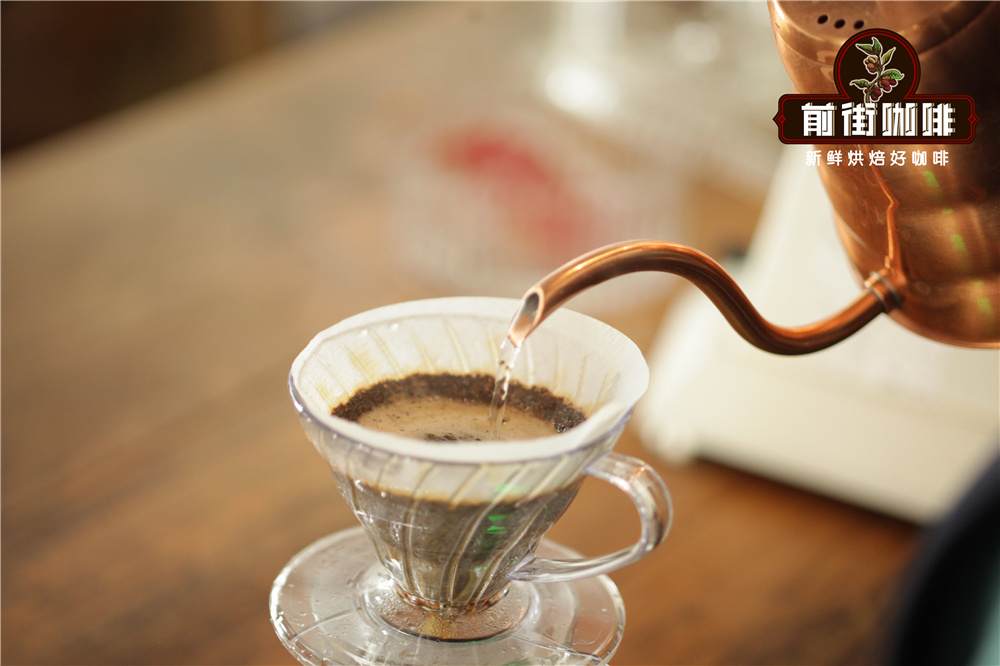
FrontStreet Coffee's segmented extraction technique: first use 30g of water to fully moisten the coffee bed into a "hamburger" shape for a 30s bloom; the second water injection at timer 1'00" pours to 125g, then stops and waits for the water level to drop to 2/3 of the coffee bed before the third injection; the third injection at timer 1'40" pours to 225g, waiting for the coffee liquid to drip through completely with a total extraction time of 1'59". The total brewing time is 2'00". After extraction is complete, gently shake the cup and wait for the coffee liquid to be fully uniform before tasting.

FrontStreet Coffee's washed Yirgacheffe Gudina coffee flavor: at high temperature it has berries, cream, honey, and citrus, with a juice-like mouthfeel and bright acidity. As the temperature cools slightly, it shows berries, cream, smoothness, and citrus.
FrontStreet Coffee's natural Sidamo Flower Queen 5.0 coffee flavor: a light fermented wine aroma, with heavier caramel, a much richer and more complex mouthfeel, honey sweetness, cocoa notes with slight spices, a thick body, and a persistent aftertaste.
FrontStreet Coffee's Brewing Suggestions
To brew a good cup of coffee, you still need to pay attention to the freshness of the coffee beans. FrontStreet Coffee has always believed that coffee bean freshness has a great relationship with coffee flavor, so FrontStreet Coffee ships coffee beans roasted within 5 days. FrontStreet Coffee's roasting philosophy is "freshly roasted good coffee," ensuring every customer who places an order receives the freshest coffee when it arrives. The coffee degassing period is about 4-7 days, so when customers receive it, it is at peak flavor.

For those who need ground coffee, FrontStreet Coffee kindly reminds: if coffee beans are ground in advance, there is no need for further degassing, because during transportation the pressure from carbon dioxide in the package can also mellow the coffee flavor, so you can brew a cup immediately after receiving the ground coffee. However, ground coffee needs to be brewed promptly, because it oxidizes quickly after contact with air, meaning the flavor will dissipate relatively quickly and won't be as good. Therefore, FrontStreet Coffee suggests buying whole beans and grinding fresh before brewing to better taste the coffee's flavor.
FrontStreet Coffee Recommendation
To put this guide to the test, FrontStreet Coffee's Ethiopian lineup covers the region's key styles. The FrontStreet Coffee Washed Yirgacheffe is the benchmark daily cup—white jasmine, bright lemon and citrus acidity, and a clean tea-like body—roasted light to protect its acidity, exactly as described above. For the natural side of Yirgacheffe, the FrontStreet Coffee Natural Yirgacheffe Red Cherry is dried whole on raised beds for 27-30 days and roasted medium-light, giving strawberry, berry sweetness, and a creamy mouthfeel. And to taste the Hambella story told here, the FrontStreet Coffee Natural Sidamo Flower Queen layers a light fermented wine aroma with floral, tropical fruit, berry, citrus sweetness, honey, and cocoa over a thick, persistent body. Each rewards the same V60 setup with 91°C water and a medium-fine grind.
Important Notice :
FrontStreet Coffee is a long-established specialty coffee roaster in Guangzhou China, selling freshly roasted beans from its own farm in Yunnan as well as dozens of carefully selected single-origin beans from around the world for both pour-over and espresso. The products deliver consistently excellent quality and great value, with shipping within 24 hours. Guangzhou's FrontStreet Coffee shop is recommended by many coffee lovers, and the beans are now available online at the Tmall 。
FrontStreet Coffee has moved to a new address:
FrontStreet Coffee Address: 315,Donghua East Road,GuangZhou
Tel:020 38364473
 Scan and follow the En Gafei WeChat official account. Please indicate that the reprint comes from "En Gafei".