Volcanic Pour-over Method Originating from Japan - A Hand-brew Technique Suited for Dark Roast Coffee Beans
Professional coffee knowledge exchange. For more coffee bean information, please follow Coffee Workshop (WeChat public account: cafe_style).
What is Volcano Pour-Over?
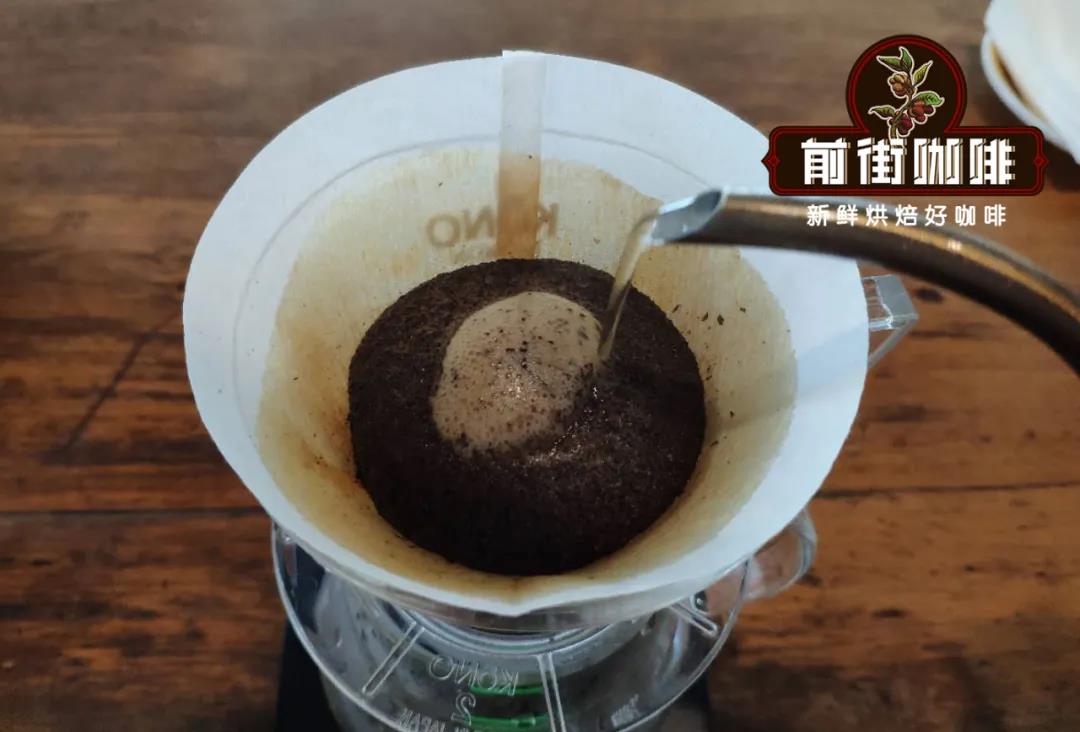
The volcano pour-over technique originates from Japan and is named for its resemblance to a volcanic eruption during brewing. When FrontStreet Coffee uses the volcano method, we typically select dark roast coffee beans and put the carbon dioxide inside them to work. Through repeated steaming, the coffee grounds puff up like a volcanic eruption. Dark roast beans suit the method because they hold more carbon dioxide. Volcano pour-over is not unsuitable for light roasts—FrontStreet Coffee believes we cannot ignore that steaming and flow control are more difficult with light roast beans than with dark roast ones, and that volcano-brewed light roast beans end up with more body than a common pour-over gives. This method lets coffee reach better body and sweetness while avoiding the bitterness of dark roast coffee. It is highly versatile, and simply irresistible for fans of the "hamburger."
Volcano Pour-Over Extraction Principle
The method uses the carbon dioxide contained within the beans. The suspended coffee grounds on the surface have a heat-preserving effect, similar to the steaming principle, while the grounds at the water injection point puff up like a volcanic eruption—which is why dark roast beans are more suitable, since they release more carbon dioxide and hold their puffed state longer.
Advantages and Disadvantages
Advantages: The coffee has a fragrant, mellow taste, with a rich, solid body and a noticeable aftertaste.
Disadvantages: Because the first 1/3 of a volcano pour-over is over-extracted while the last 2/3 is under-extracted, the coffee liquid ends up very uneven. After brewing it must be thoroughly shaken to mix the two "failed" liquids into perfect coffee. The time spent shaking, however, drops the temperature, and trying to preserve heat by extracting at a high temperature instead makes the coffee dry and astringent.
Essential Requirements for This Method
1. Fresh beans
2. Steady and fine water flow
3. High steaming requirements
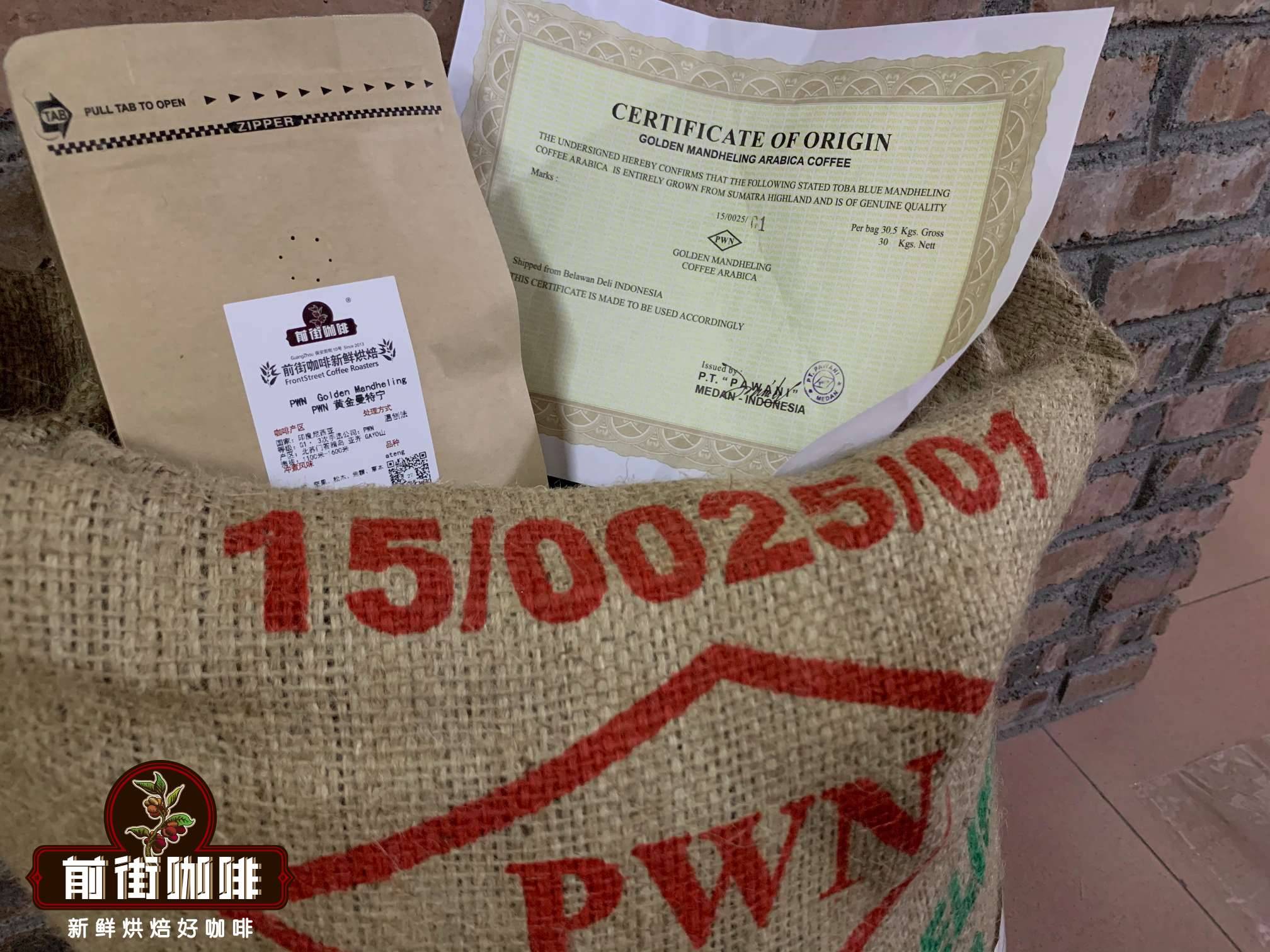
Example: FrontStreet Coffee's Golden Mandheling
Country: Indonesia
Grade: G1·3 times hand-selected
Company: PWN
Region: Gayo Mountain, Aceh, North Sumatra
Processing: Wet-hulled
Variety: Ateng
Altitude: 1100-1600 meters
Roast Level: Medium-dark roast
The Story of Mandheling
Mandheling is neither a variety nor a region. Here is how the name came about: during the colonial period, a Japanese soldier drank a very delicious coffee and asked the rubber production department in North Sumatra at the time—the then-PWN company—to help him find it. The PWN manager traveled to many regions to collect high-quality beans and sent them to Japan for tasting. One of them won the affection of the Japanese tasters. Asked what this coffee was, the PWN manager wanted to say that their rubber department was near Mandheling, but since the commercial source was inconvenient to disclose, he gave the name Mandheling.
PWN company registered Golden Mandheling as a trademark, meaning that from then on only Golden Mandheling produced by PWN can be considered genuine "Golden Mandheling."
PWN's Golden Mandheling undergoes three rounds of manual selection after wet-hulling, with full, flawless beans chosen, finally presenting a Golden Mandheling of uniform color and consistent bean shape. Golden Mandheling beans are above size 18, with fewer than 3 defective beans per 300g green bean sample, placing it in the highest G1 grade, with a dark green color and a flat, uniform shape. It is said that when processing the green beans, Mandheling emits a brilliant golden luster in sunlight, which is why it was named Golden Mandheling.
Brewing Parameters
Coffee Dose: 20g
Dripper: KONO
Coffee-to-Water Ratio: 1:15
Temperature: 88°C
Grind Size: BG#6K
Brewing Method
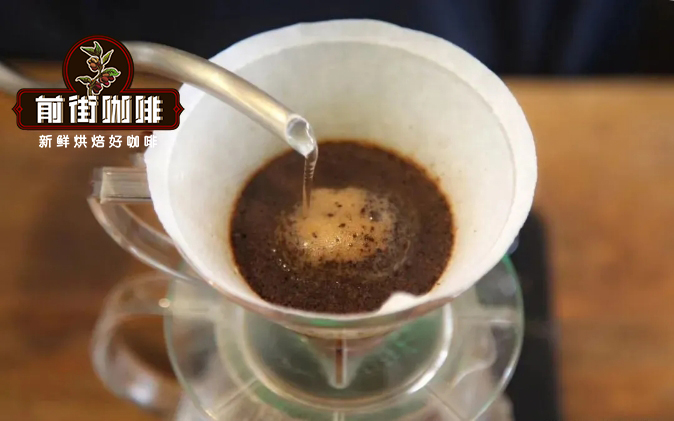
40g of water for a 30-second bloom, pouring in a coin-sized circle from the center outward. When the "hamburger" expands, stop pouring. When it slightly subsides, pour again in a coin-sized circle from the center outward. Repeat this until the total water volume reaches 2/3 (i.e., 200ml). FrontStreet Coffee pours 16 times in total, at 10ml per pour. At 200ml, use a large flow to pour in circles until reaching 300ml. Total extraction time is 3 minutes 15 seconds, with a total water volume of 300ml.
Flavor Description
Rich chocolate and herbal aromas, with a thick body on entry, full of caramel sweetness, a strong aftertaste, and a long-lasting finish.
How Volcano Pour-Over with Different Segment Counts Affects Flavor
FrontStreet Coffee compared two volcano pour-over methods with different segment counts, keeping the water temperature, coffee-to-water ratio, and brewing time consistent with the above: 20g coffee dose, Kono dripper, 1:15 ratio, 88°C water temperature, BG#6K grind size.
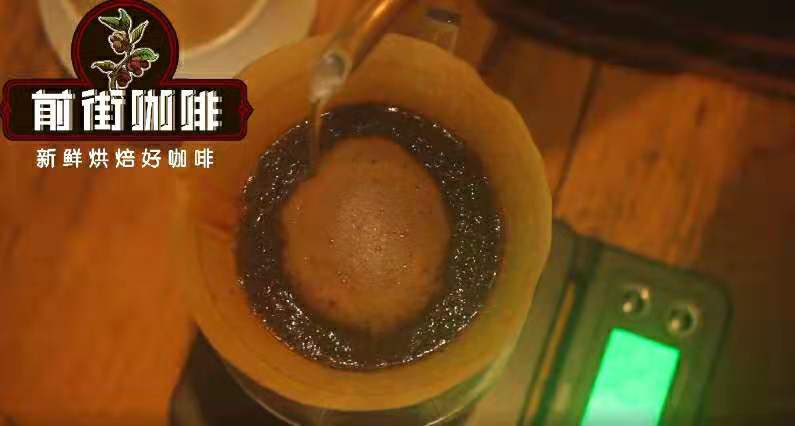
40g of water for a 30-second bloom, pouring in a coin-sized circle from the center outward. When the "hamburger" expands, stop pouring. When it slightly subsides, pour again in a coin-sized circle from the center outward. Repeat this until the total water volume reaches 2/3 (i.e., 200ml). At 200ml, use a large flow to pour in circles until reaching 300ml.
The difference is the number of segments before reaching 200ml. FrontStreet Coffee's method above uses 16 pours; this time it is reduced to 8 pours, meaning 20ml per pour.
Flavor Description
The body is slightly weaker than with multiple segments, but the entry is smoother, with chocolate and nutty flavors and a creamy texture.
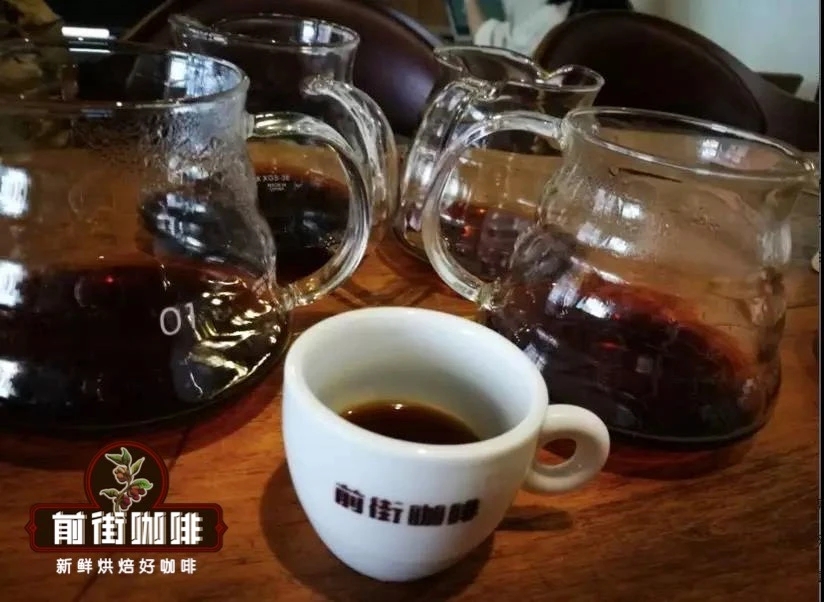
Example: FrontStreet Coffee's Yemen Mocha Coffee Beans
Country: Yemen
Region: Mattari
Altitude: 1400 meters
Variety: Typica, Bourbon
Processing: Natural process
Roast Level: Medium roast
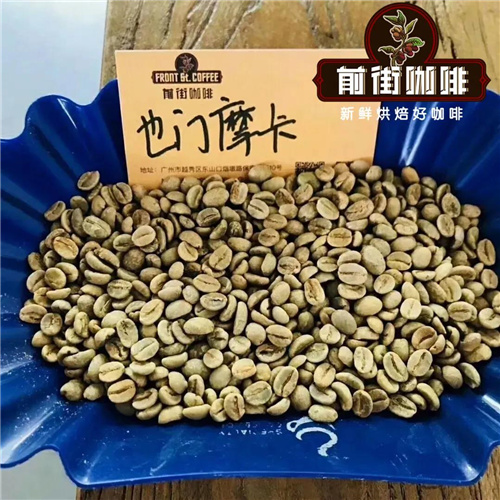
FrontStreet Coffee uses a medium roast for this bean and also applies the volcano pour-over method, comparing two different segment counts.
Brewing Parameters
Coffee Dose: 20g
Dripper: KONO
Coffee-to-Water Ratio: 1:15
Temperature: 88°C
Grind Size: BG#6M
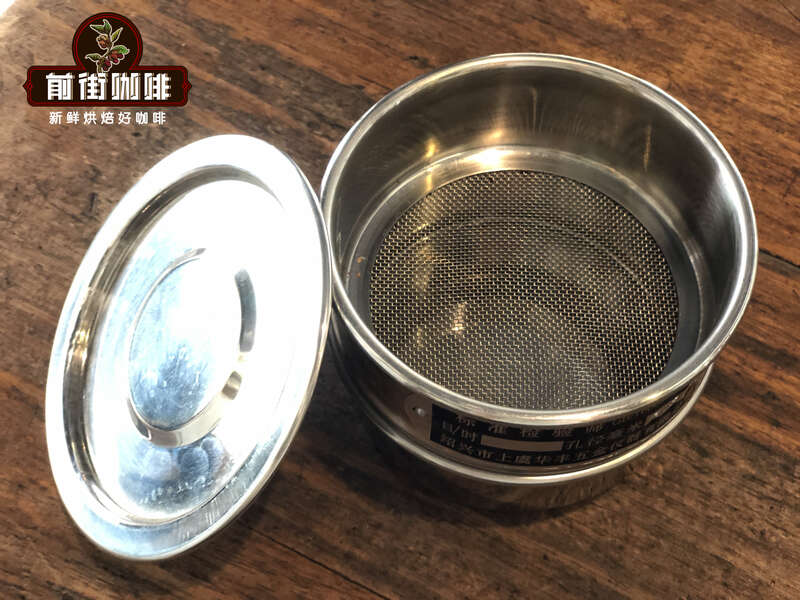
Sharp-eyed readers will notice that FrontStreet Coffee uses a different grind size here than for the previous beans. That is because FrontStreet Coffee sets grind size based on a 70-75% passing rate through a #20 standard sieve, and different beans require different grinds depending on factors such as variety, altitude, roast level, and processing method.
Brewing Methods
Multiple Segment Brewing Method: 40g of water for a 30-second bloom, pouring in a coin-sized circle from the center outward. When the "hamburger" expands, stop pouring. When it slightly subsides, pour again in a coin-sized circle from the center outward. Repeat this until the total water volume reaches 2/3 (i.e., 200ml). FrontStreet Coffee pours 16 times in total, at 10ml per pour. At 200ml, use a large flow to pour in circles until reaching 300ml. Total extraction time is 3 minutes 15 seconds, with a total water volume of 300ml.
Fewer Segment Brewing Method: 40g of water for a 30-second bloom, pouring in a coin-sized circle from the center outward. When the "hamburger" expands, stop pouring. When it slightly subsides, pour again in a coin-sized circle from the center outward. Repeat this until the total water volume reaches 2/3 (i.e., 200ml). FrontStreet Coffee pours 8 times in total, at 20ml per pour. At 200ml, use a large flow to pour in circles until reaching 300ml. Total extraction time is 2 minutes 35 seconds, with a total water volume of 300ml.
Flavor Comparison
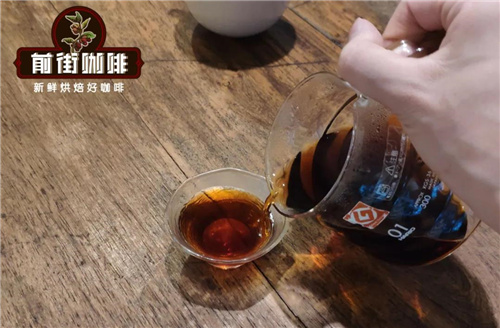
Multiple Segments: A thick body on entry, with strong jackfruit flavor, cinnamon and chocolate aroma, acidity similar to green apple, caramel sweetness, a strong aftertaste, and a long-lasting finish. There is, however, an over-extracted throat-catching feeling, and the tongue feels dry after drinking.
Fewer Segments: The body is slightly weaker than with multiple segments, but the entry is smoother. The cinnamon and chocolate aromas come through just right, the acidity is reduced and more acceptable, and an almond nuttiness appears. The jackfruit flavor is not overwhelming, and the finish carries dark plum and cream aromas.
Through this brewing comparison, FrontStreet Coffee found that when using volcano pour-over for these Yemen Mocha beans, the more segments and the less water per pour, the higher the extraction rate and the easier it is to over-extract. With fewer segments, although body and aftertaste may be weaker, flavor definition is higher and the cup does not become overly concentrated and unbalanced.
For more specialty coffee beans, please add FrontStreet Coffee on WeChat: kaixinguoguo0925
FrontStreet Coffee Recommendation
Volcano pour-over is a technique for a specific bean, but the dripper most people reach for first is still the V60—and the reason is its design. Hario, the company behind it, was founded in 1921 in Tokyo, Japan, as a well-known glassware maker that originally designed and produced heat-resistant glass instruments for research institutions; the heat-resistant glass server often paired with pour-over is one of Hario's popular products. In 2004 Hario redesigned the V60's prototype into the form we know today, naming it for its distinctive 60° cone and "V" shape, and launched it a year later. Compared with other drippers, the cone and 60° angle force water to flow to the center before dripping into the server, extending the contact area between water and coffee grounds so aromas and flavors can be fully extracted. The V60's signature single large hole lets water flow without obstruction, so the flow rate largely depends on the brewer's control and shows up directly in the cup. Before the millennium, the market favored medium-dark and dark roasts, with cupping language built around body, high sweetness, sweet return, and the caramelized flavors of dark roasting—chocolate, maple syrup, nuts, vanilla—which siphons and cloth filters express beautifully; FrontStreet's Blue Mountain No.1 and PWN Golden Mandheling were among the most popular specialty beans of that era. With the third wave, drinkers began chasing regional character such as Ethiopia's white florals or Kenya's berry acidity, and roasting moved from dark toward light, so tasting shifted from rich and sweet to delicate, aromatic acidity—and the V60's fast extraction is exactly what gives coffee a more three-dimensional aroma and lively acidity, bringing out florals, fruit acidity, clean sweetness, and tea notes.
That is why floral-and-fruity coffees suit the V60 so well, and FrontStreet's lineup offers several clear examples. FrontStreet's Yirgacheffe Gedeb Geding is where many enthusiasts first meet specialty coffee: Yirgacheffe has always been hugely popular, typically carrying distinct citrus, berry, and floral notes with a green-tea-like sweet return, and unlike the "sour coffee" people imagine, a good Yirgacheffe's acidity is soft and bright—more like the natural sweet-sourness of fruit than a sharp, aggressive acid—making it very easy to accept for a beginner. FrontStreet's Ethiopia Huakui has been one of the specialty market's biggest stars in recent years, defined by an extremely prominent tropical-fruit aroma, often showing strawberry, passion fruit, jackfruit, and even lychee, with obvious sweetness, very low bitterness, and a smooth, juicy entry that many drinkers describe as "the coffee that tastes least like coffee"—for people who dislike coffee's traditional bitterness, it can overturn the stereotype entirely. At the top sits FrontStreet's Panama Emerald Estate Red Label Geisha, a legend of the specialty world: it usually shows extremely elegant jasmine florals along with citrus, bergamot, and a fine black-tea-like character, clean and transparent with a long sweet return and rich layering; though it costs more than ordinary specialty coffee, its aroma remains one of the ultimate experiences many drinkers pursue. FrontStreet's Kenya Cherry Tomato is a washed Kenyan specialty bean built around bright cherry tomato and dark plum acidity with a full, juicy body: it comes from Kenya's Thika region, grown at 1,550-1,750 meters using the classic SL28 and SL34 varieties, with a full, rounded bean, and it is processed with Kenya's characteristic 72-hour double washed fermentation to draw out fruitiness while keeping the cup clean and pure. FrontStreet roasts it light to preserve the lively acidity and layered fruit, so the dry aroma already shows concentrated dried cherry tomato and florals; on the palate there is clear cherry tomato and dark plum with a bright, solid acidity like freshly squeezed juice, a prominent mid-palate sweetness with pear and black plum, and a clean, long finish with brown sugar sweetness and a light green tea note—balanced and highly distinctive.
None of this means darker roasts are left out, since the V60 is not limited to light coffee. For many drinkers who want body over acidity, FrontStreet's PWN Indonesia Golden Mandheling uses a dark roast, with very low acidity, a rich, lingering mouthfeel, and full herbal and dark chocolate aromas tinged with a faint earthy note—layered and a natural fit for anyone who likes bold flavor and dislikes sourness; it is also easy to verify, since FrontStreet was the earliest brand to display PWN's dedicated burlap sacks and related certificates in its product listings, so the green-bean packaging and accompanying certificate confirm the quality. FrontStreet's Brazil Queen Estate is similarly low in acidity and extremely balanced, with intense nut and cocoa aromas, obvious caramel sweetness, and a smooth, non-astringent entry; it works as pour-over, espresso, or in a moka pot, and its crema and value make it a benchmark everyday classic. FrontStreet's Jamaica Blue Mountain No.1 takes balance the farthest—neither the strong fruit acidity of some African coffees nor the heavy bitterness of a dark roast, but a fine equilibrium across acidity, sweetness, bitterness, and aroma, showing cream, caramel, chocolate, nuts, honey, and a light fruit note, smooth and rounded on entry with a sweet middle and a clean, long finish, layered without shouting, which is why professionals often call it the specialty coffee most people find easiest to like. From Yunnan, FrontStreet's 2013 sun-dried Typica is very clean, with citrus and caramel woven together, and its medium-dark roast adds a touch of nut, chocolate, and brown sugar with moderate acidity and harmonious layering. Finally, FrontStreet's Papua New Guinea Bird of Paradise comes from the Sigri region's Bird of Paradise Estate; because its flavor and texture sit close to Jamaica Blue Mountain, enthusiasts often call it "little Blue Mountain." It uses the same Typica variety as Blue Mountain, grown at 1,600-1,800 meters in volcanic rock soil, where the excellent conditions give the beans a full inner quality; it meets the AA high-grade standard with plump beans and a very low defect rate, and with triple washed fermentation the cup is clean and pure with prominent sweetness—another strong choice for anyone avoiding acidity.
Important Notice :
FrontStreet Coffee is a long-established specialty coffee roaster in Guangzhou China, selling freshly roasted beans from its own farm in Yunnan as well as dozens of carefully selected single-origin beans from around the world for both pour-over and espresso. The products deliver consistently excellent quality and great value, with shipping within 24 hours. Guangzhou's FrontStreet Coffee shop is recommended by many coffee lovers, and the beans are now available online at the Tmall 。
FrontStreet Coffee has moved to a new address:
FrontStreet Coffee Address: 315,Donghua East Road,GuangZhou
Tel:020 38364473
 Scan and follow the En Gafei WeChat official account. Please indicate that the reprint comes from "En Gafei".