Premium Coffee Indonesia Golden Mandheling Coffee Beans Flavor Profile Taste Quality - Who Is Mandheling Suitable For?
When coffee drinkers think of full-bodied coffee, Indonesian Mandheling is usually the first name that comes to mind. Coffee in Indonesia grows at comparatively low altitudes, the cup is less delicate than that of other great origins, and green-bean handling can be rough—yet these very conditions are what give Mandheling its unique flavor and its thick, substantial body. In this article, FrontStreet Coffee takes a closer look at Mandheling coffee beans.
When Did Indonesia Start Growing Coffee?
In 1699, the Dutch brought Typica coffee from Ceylon (modern-day Sri Lanka) to Java and began cultivating it. Between 1699 and 1709 Indonesia was already exporting 60 tons of coffee a year, making it one of the great coffee-growing territories beyond Yemen and Ethiopia. From 1725 to 1780 the Dutch East India Company (VOC) held a monopoly on the trade for over 60 years, and as demand kept rising, cultivation spread to central and eastern Java, parts of Sumatra, and Sulawesi, and coffee was promoted aggressively as a premium commodity.
Is Mandheling the Name of a Coffee?
Strictly speaking, Mandheling is the name of an Indonesian ethnic group. When the Japanese returned home after their period in Indonesia, they asked local traders to source the unforgettable coffee they had tasted. But with a language barrier—and perhaps commercial motives—when traders asked what the beans were called, members of the Mandailing tribe simply gave their own name. Japanese pronunciation then turned "Mandailing" into "Mandheling." The trader in question spotted the business opportunity and built what is now a renowned Indonesian green-coffee house: Pwani Coffee Company (PWN), the first company to sell top-grade Mandheling to Japan.

Can All Indonesian Coffee Be Called Mandheling?
FrontStreet Coffee's Mandheling comes from the mountains surrounding Lake Toba, the high-altitude freshwater lake north of Medan, capital of Sumatra. Only beans from this region may be called Mandheling. The variety is Typica or its descendants, grown at an average elevation of about 900 m, with the Lintong and Gayo areas the most famous producing zones. PWN originally bought its beans from Lintong and, after careful selection, exported them to Japan under the name PWN Golden Mandheling.
FrontStreet Coffee has stocked PWN Golden Mandheling for many years. In the new 2020 harvest, PWN switched from 60 kg to 30 kg bags, and the sourcing area moved from Lintong to the Gayo Mountains.

How Is PWN Golden Mandheling Selected?
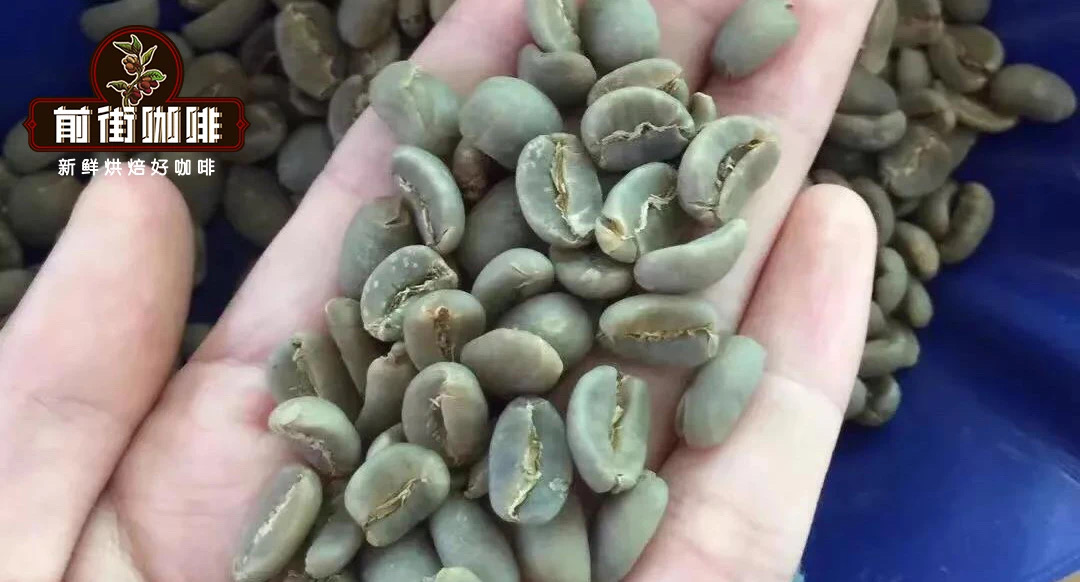
PWN selects only Mandheling beans of 19 screen size or larger, with fewer than 3 defects in a 300 g green sample—the top G1 grade—with a dark green color and flat, uniform shape. On top of that sits a strict screening system: after processing, beans are density- and color-sorted, then hand-picked. After four rounds of careful selection, PWN Golden Mandheling shows uniform color and consistent shape. Legend has it that during processing the beans glint gold in the sunlight—hence "Golden Mandheling."

How Do You Recognize Authentic PWN Golden Mandheling?
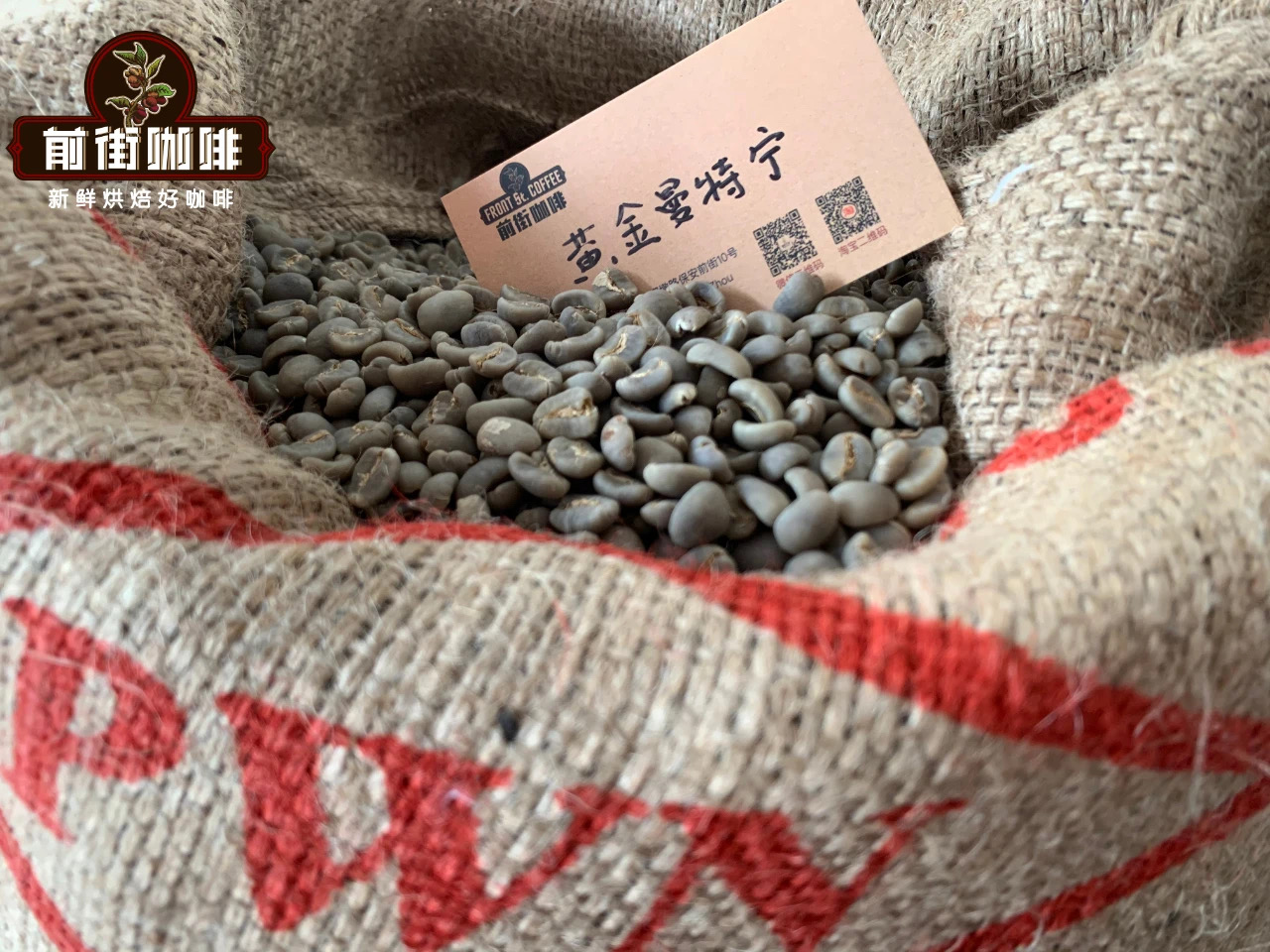
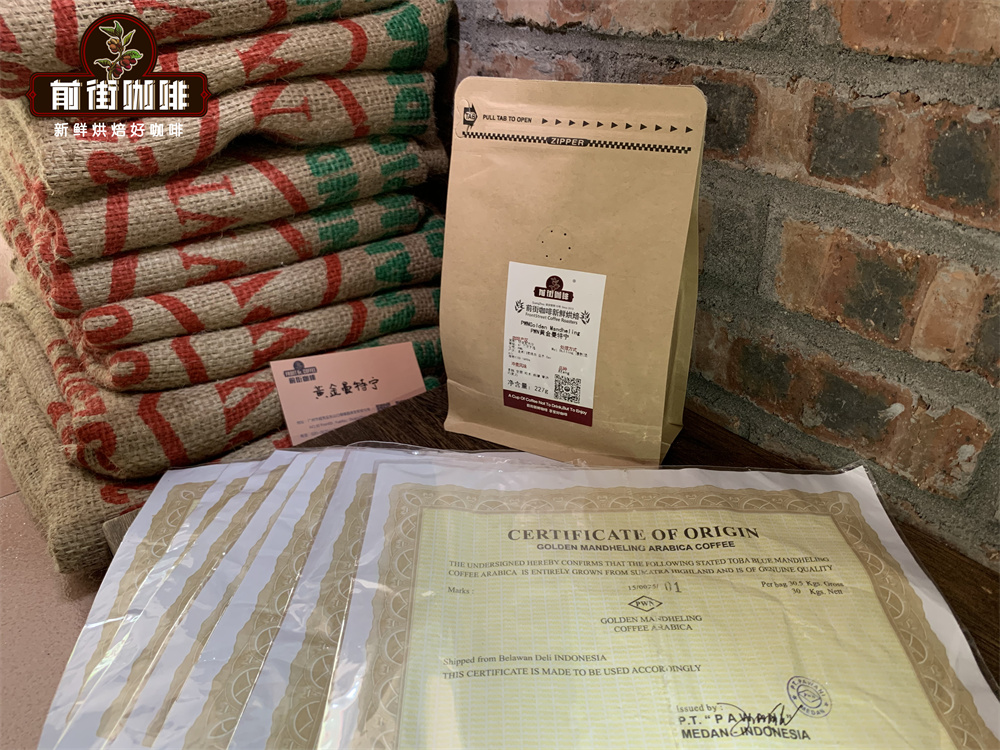
Every lot PWN exports ships in jute sacks printed with the PWN logo, accompanied by a factory certificate for PWN Golden Mandheling.
Flavor Characteristics of PWN Golden Mandheling
Cupping and comparing Mandhelings from different regions and with different rounds of sorting, FrontStreet Coffee found that PWN Golden Mandheling lacks the earthy impurities typical of ordinary Mandheling: it is cleaner and more transparent, with noticeably stronger sweetness and aroma.
How Does FrontStreet Coffee Roast PWN Golden Mandheling?
To emphasize body while keeping the cup clean, FrontStreet Coffee's roaster uses a medium-dark profile on a Yangjia 800N roaster with 480 g batches. Preheat to 200°C with the damper at 3. After 1 minute, drop the heat to 160°C, damper unchanged. At 5'40", the bean temperature reads 148°C, the surface yellows, the grassy smell is gone, and dehydration is complete—heat down to 140°C, damper to 4. At 9'40", wrinkling and black specks appear on the bean surface and the toast aroma turns distinctly coffee-like: the prelude to first crack. Listen carefully now. At 9'54" first crack begins; heat drops further and the damper opens to 5, with the beans dropped at 204.5°C.

How Does FrontStreet Coffee Brew PWN Golden Mandheling?
To showcase the body, cleanliness, and richness of this coffee, FrontStreet Coffee's barista brews it on a KONO Meimon cone dripper. Its rib grooves run all the way down to the outlet, and because the ribs are short and seated at the bottom, they sit flush against the filter paper; the flow is slower than a V60's, which suits coffees meant to express body. The grind is medium-coarse (73% passes through a 0.85 mm sieve), with 15 g of coffee, a 1:15 ratio, and water at 88°C.
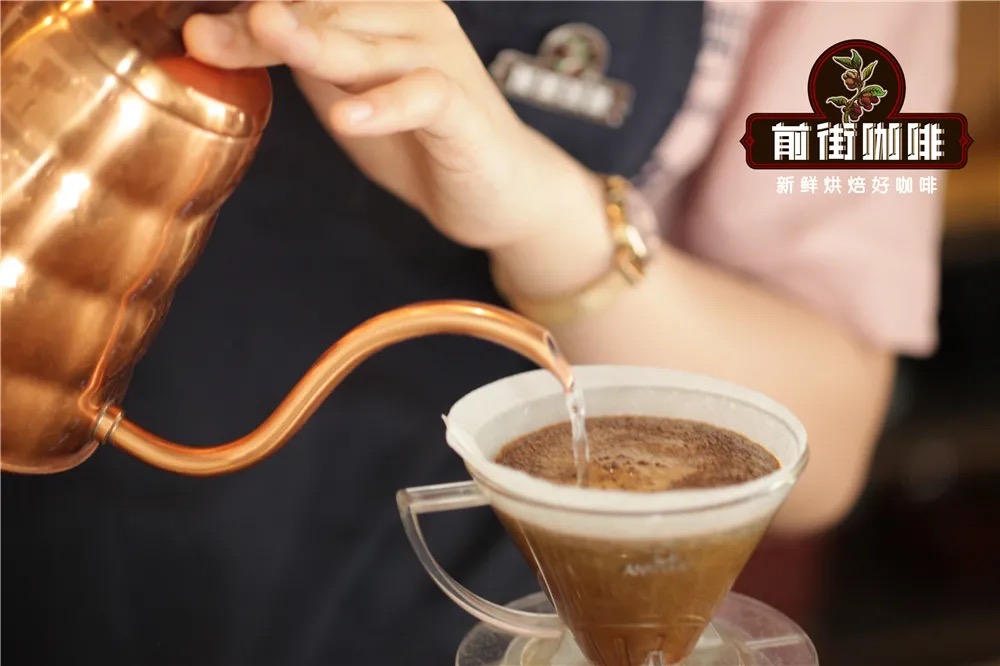
The pour is done in three stages: first, 30 g of water for a 30-second bloom; second, slow circles up to 125 g, then pause; once the water level has dropped and the coffee bed is nearly exposed, continue to 225 g and stop. When the bed is again nearly exposed, remove the dripper. Total extraction time is 2'20", timed from the start of the bloom.

Taste Description
Complex and layered overall, full-bodied and clean: rich nut and caramel aromas with chocolate notes, a persistent aftertaste, and excellent balance.
FrontStreet Coffee Recommendation
Why Wet-Hulled Sumatra Tastes the Way It Does
Indonesia's rainy season overlaps with coffee harvest (September through April), humidity runs at 70-90% all year, and annual rainfall can exceed 2,000 mm. Sun-drying for two to three weeks, as done in Africa, is simply impossible, and fully washed processing costs too much time, labor, and water for smallholders. The local answer is the wet-hulled (giling basah) method: producers remove skin and pulp, rinse briefly, and start drying; while the beans are still half-dry, a machine strips the parchment so the green beans dry directly in the open air. The trade-off is that the exposed beans pick up ambient yeasts and microbes, creating Mandheling's unmistakably wild, earthy, herbaceous character.
FrontStreet Coffee PWN Golden Mandheling
For the finest expression of wet-hulled Sumatra, FrontStreet Coffee recommends PWN Golden Mandheling—today's benchmark for premium Mandheling, produced to exacting standards: screen-18 or larger beans, fewer than 3 defects per 300 g sample (G1 grade), followed by machine sorting plus repeated hand-picking for a clean, sweet, uniform cup. Most Golden Mandheling goes to Japan and the US, so genuinely authentic lots are scarce; FrontStreet Coffee stocks it with PWN's certificate and the logo-stamped sacks to prove provenance. Medium-dark roasted, it shows roasted aroma, black chocolate and caramel, a thick body, and very low acidity—ideal for anyone who dislikes sour coffee.
FrontStreet Coffee Lintong Mandheling
For the classic rustic profile, FrontStreet Coffee's Lintong Mandheling from the traditional Lake Toba region is fragrant and intense, with clove and woody aromatics, spice and mint-like notes, and a long, thick sweetness.
Brewing Suggestions
Pour-over brings out Golden Mandheling best: water at 87-88°C, 15 g of coffee, a 1:15 ratio, and a grind like coarse sugar. Pour in three stages—30 ml to bloom and degas, 100 ml to lift the bed and bring up the golden crema, then a gentle 95 ml centered pour for sweetness—yielding a full, syrupy cup with caramel sweetness and chocolate-nut flavors. On an espresso machine, Mandheling produces rich crema and a strong, caramel-forward shot; it is also the backbone of FrontStreet Coffee's Classic Blend, where Brazil's creamy nuttiness meets butter, roasted chestnut, and caramel, plus a touch of Robusta for extra crema.
Important Notice :
FrontStreet Coffee is a long-established specialty coffee roaster in Guangzhou China, selling freshly roasted beans from its own farm in Yunnan as well as dozens of carefully selected single-origin beans from around the world for both pour-over and espresso. The products deliver consistently excellent quality and great value, with shipping within 24 hours. Guangzhou's FrontStreet Coffee shop is recommended by many coffee lovers, and the beans are now available online at the Tmall 。
FrontStreet Coffee has moved to a new address:
FrontStreet Coffee Address: 315,Donghua East Road,GuangZhou
Tel:020 38364473
 Scan and follow the En Gafei WeChat official account. Please indicate that the reprint comes from "En Gafei".