Characteristics of Jamaica Blue Mountain Washed Coffee Beans - Authentic Blue Mountain Coffee Processing and Production Process Images
The History of Jamaican Blue Mountain Coffee
Sir Nicolas Lawes, the Governor of Jamaica, brought the first coffee seedlings from Martinique to Jamaica. By 1790, some of the coffee farmers among the refugees fleeing Haiti had settled in the Blue Mountain region, bringing their cultivation techniques with them. In 1838, Jamaica abolished slavery, which allowed freed slaves to cultivate their own land; the liberated farmers moved into the mountains to specialize in coffee and exported their crop to Britain. The coffee gradually gained fame as British high society sought it out.
Jamaican Blue Mountain Coffee Standards
The Jamaican government has established very strict definitions for Blue Mountain coffee. Only coffee grown within the coffee cultivation areas at 3,000 to 5,000 feet in the Blue Mountain peaks, as designated by the Jamaican Coffee Industry Board, processed by government-certified authorized roasting companies, and inspected and certified by the Coffee Industry Board, can be considered genuine Blue Mountain Coffee. The Jamaican government established the Coffee Industry Board (CIB) in 1950. Its main functions are to regulate and guide the development of Jamaica's coffee industry, ensure coffee quality, establish specific industry standards for Blue Mountain coffee, designate Blue Mountain cultivation areas, and inspect the quality of exported Blue Mountain products. Every batch of Blue Mountain coffee exported from Jamaica must be inspected by the Coffee Industry Board and obtain origin certification from international coffee organizations before it is approved for export, only then truly earning the name Jamaican Blue Mountain coffee.
Coffee Bean Specifications
A. Washed and Unwashed
Washed: after friction with water flow and tools in a water tank removes the pulp and mucilage, the beans are dried; these are called washed coffee beans, and their quality is consistent.
Unwashed: after natural sun drying, the pulp and skin are removed with a hulling machine. Quality is unstable.
B. Flat Bean and Peaberry
A coffee fruit typically consists of two oval seeds facing each other. The side where they connect is a flat interface, which is why such a seed is called a flat bean. Some fruits, however, consist of a single round seed, called a peaberry, and there is no difference in taste between the two. Ripe red coffee cherries have a multi-layered structure, and at the very center sits the precursor to the coffee bean, a light green seed.
Generally, the fruit holds two oval seeds opposite each other, and the connecting side is a flat interface, hence the name flat bean. Some fruits contain a single round seed instead, again with no difference in taste.
C. Coffee Bean Size
Screen Size (Mesh No.)
Flat Beans: 20-19 Extra Large, 18 Large, 17 Standard Large, 16 Normal, 15 Medium, 14 Small, 13-12 Extra Small
Peaberries: 13-12 Large, 11 Standard Large, 10 Normal, 9 Medium, 8 Small
D. Altitude
By cultivation altitude, coffee can be classified into various grades, such as the 3rd, 4th, and 7th. Generally, high-altitude beans are of better quality than low-altitude beans, and because transportation costs rise, their prices are higher too.
Grade Classification by Altitude (meters):
Grade 1: Premium - 1,500m and above
Grade 2: Superior - 1,200-1,500m
Grade 3: Medium - 1,000-1,200m
Grade 4: Premium Washed - 900-1,000m
Grade 5: Superior Washed - 760-900m
Grade 6: Excellent Washed - 610-760m
Grade 7: Fine Washed - Below 610m
E. Quality
Using statistical methods, the types and quantities of defects in a given sample are converted into a percentage "defect count" to determine the quality grade. The smaller the defect count, the higher the quality.
F. Flavor
Countries such as Brazil, Haiti, Kenya, and Zaire have their own unique flavor testing methods, and coffee may be exported only after passing flavor tests.
G. From Harvest to Shipping
After harvesting, coffee beans must have their outer skin, pulp, inner pericarp, and silver skin removed before they are shipped to market. There are two methods: dry processing, also called natural or unwashed, and washed processing. The dry method is relatively simple. Freshly harvested fruit is spread widely in drying fields for one to two weeks until it makes a cracking sound, achieving natural drying, after which hulling machines remove the dried pulp, inner pericarp, and silver skin. Beans refined this way show a slight acidity with a mild bitterness. Almost all Brazilian coffee is obtained this way, as are the coffees of Ethiopia, Yemen, and other regions. The method's disadvantages are its vulnerability to weather and its tendency to incorporate defective beans and other impurities, which makes careful sorting necessary.
The other method is washed processing, in which harvested fruit is placed in flowing water tanks, fruit floating on the surface is removed, and pulp removers strip away the outer skin and pulp. The beans are then returned to water tanks to remove floating pulp before being transferred to fermentation tanks and soaked for half a day to a day to dissolve the mucilage on the surface. After washing, they are dried for several days, then machine-dried, and finally the inner pericarp is removed with hulling machines to become marketable green coffee beans. Washed beans have better color and fewer impurities, and about 70% of the coffee from Colombia, Mexico, Guatemala, and other countries uses this method. Improper handling during fermentation can produce fermentation odors and characteristic sour tastes, but when handled properly, each type of bean can emit its own unique coffee aroma.

FrontStreet Coffee Recommendation
Washed processing is exactly why Blue Mountain tastes the way it does, and FrontStreet Coffee's Jamaica Blue Mountain No. 1 is a good example of the method at its best. It comes from the highest-graded lots of the historic Clifton Estate, where coffee has been grown and processed since the mid-eighteenth century, around 1750, at an average of 4,300 feet (1,310.64 meters), which gives the trees enough altitude, gentle afternoon cloud cover, generous sunlight, and mineral-rich soil, and lengthens the ripening of the cherry.
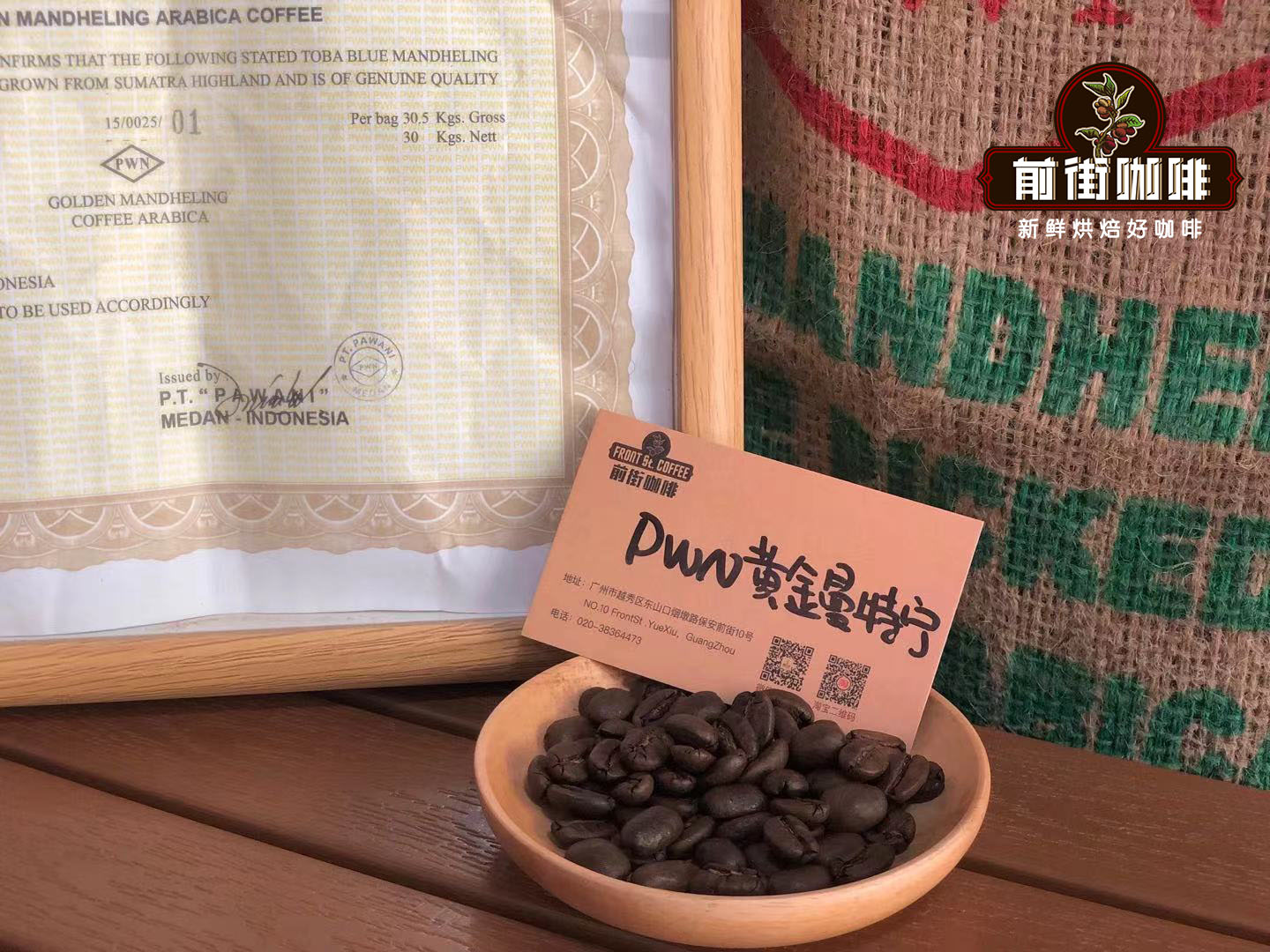
Above all, Blue Mountain rewards careful buying. The whole Blue Mountain area yields fewer than 2,500 tons a year, a tiny share of world production, and Japan historically took more than 70% of it, so genuine supply reaching other markets is limited; formal exports of Blue Mountain green beans to the Chinese market began in 2003. FrontStreet Coffee's listing shows the estate's certification documents alongside the original wooden barrels used to ship the coffee, which makes the source traceable and gives you a way to check authenticity before you buy. In the cup, the coffee is balanced almost to a fault, avoiding both the sharp fruit acidity of some African coffees and the heavy bitterness of a dark roast, and instead showing cream, caramel, chocolate, nuts, honey, and a light fruit thread, soft on entry, sweet through the middle, and clean and long in the finish.
FrontStreet Coffee roasts to a medium-dark level, which emphasizes the full body and the traditional bitter-then-sweet character, and ships within 5 days of roasting so the beans arrive close to their peak. For brewing, use a Kono dripper to better build the thick, rounded body, 15g for one serving, and let the beans rest 4 to 7 days from the roast date, counting the roast date as day one. Grind a little coarser than for a light roast, about the texture of granulated sugar, and pour water at 87 to 88°C at a 1:15 ratio: 30g to bloom for 30 seconds, a small, slow vertical spiral to 120g, then a final pour to 225g with a slightly faster stream so the bed does not clog. The result is a clean, complex, gentle cup with chocolate sweetness and a persistent fruit finish.
Important Notice :
FrontStreet Coffee is a long-established specialty coffee roaster in Guangzhou China, selling freshly roasted beans from its own farm in Yunnan as well as dozens of carefully selected single-origin beans from around the world for both pour-over and espresso. The products deliver consistently excellent quality and great value, with shipping within 24 hours. Guangzhou's FrontStreet Coffee shop is recommended by many coffee lovers, and the beans are now available online at the Tmall 。
FrontStreet Coffee has moved to a new address:
FrontStreet Coffee Address: 315,Donghua East Road,GuangZhou
Tel:020 38364473
 Scan and follow the En Gafei WeChat official account. Please indicate that the reprint comes from "En Gafei".