Introduction to Coffee from Panama's Boquete Region: Baru Volcanic Area and Flavor Profile of Boquete Geisha Coffee Beans

Panama: The Land of Exceptional Coffee
Panama is a Central American country, bordered by Costa Rica to the west and Colombia to the east. Anyone familiar with single-origin coffee knows that Panamanian coffee earned its reputation in the coffee world through the Geisha variety from Hacienda La Esmeralda. Ever since La Esmeralda's Geisha won the Best of Panama (BOP) championship in 2004, the names Panama and Geisha have been tightly bound together. Complementing each other over the decade that followed, Panamanian coffee has become almost synonymous with the finest coffee. Whenever the world's best coffees are discussed, Panama is always on the shortlist. It is a country that pursues excellence in coffee and produces high-quality beans.
Panamanian coffee is famous for the Geisha from Hacienda La Esmeralda, and the region where that estate sits is equally renowned: Boquete, in Chiriquí province. Boquete is a town in Chiriquí province, near the border between Panama and Costa Rica and close to the famous Barú volcano, with beautiful scenery, fertile and rich soil, and a climate and terrain perfectly suited to producing high-quality coffee.

At FrontStreet Coffee we carry several excellent coffees from the Boquete region, the most famous being the Red and Green Label beans from Hacienda La Esmeralda; and besides Esmeralda, there is Elida Estate. These outstanding beans owe everything to the region's environment and climate, its varieties, and its processing methods. Let's join FrontStreet Coffee in exploring what makes this region so special.
Note: Boquete may appear translated as "Bokete," "Boquete," or "Boquet," all referring to the same place. We will consistently use "Boquete" throughout this text.
Panama has two main coffee-producing regions: Boquete and Volcán. Both lie within Panama's Chiriquí province. In the language of the indigenous people who lived here in pre-Columbian times, "Chiriquí" means "Valley of the Moon." Chiriquí province sits in western Panama, bordering the Pacific Ocean to the south, only a 3-hour drive from the Caribbean Sea, and shares a border with Costa Rica to the northwest.

Between these two regions, one feature must be mentioned: the Chiriquí volcano, better known to us by another name — Barú volcano.

Volcán Barú
The Chiriquí volcano, also known as Barú volcano, is the highest mountain in Panama, with its main peak reaching 3,474 meters above sea level. The volcano extends approximately 35 kilometers along the border with Costa Rica. Because of the volcano's height and Panama's elongated shape, on a clear day it is possible to see both the Pacific Ocean and the Caribbean Sea from the mountain at once.
Barú volcano is dormant, its most recent potential activity occurring only within Chiriquí province on the western side of the North American continental divide. The volcano is surrounded by fertile highlands, and many rivers rise from the mountains, primarily the Chiriquí and Caldera rivers. Most settlements cluster on the western side of the volcano, with the notable exception of the town of Boquete, home to approximately 19,000 residents, on the eastern side.

(Reference for the distribution of famous estates in Panama)
Barú volcano is not only Panama's highest mountain range; sediment from early volcanic activity and eruptions has also left behind large amounts of very fertile soil. That soil is rich in nutrients, and the volcanic ash contains abundant phosphorus and sulfur. Combined with unique climate patterns, this has formed an environment ideally suited to growing high-quality coffee, while the dense forests and numerous species create rich biodiversity.
The area around Barú volcano offers excellent conditions for coffee cultivation, with appropriate rainfall, high altitude, and cloud cover that help the coffee trees grow slowly and accumulate nutrients. Panama's distinct dry and rainy seasons favor natural processing methods — favorable timing. Meanwhile, Barú volcano supplies nutrient-rich volcanic soil and numerous mountain rivers with ample water, which benefits washed processing — a geographical advantage. Together, these favorable conditions create the prerequisites for cultivating high-quality Panamanian coffee.

Boquete
Boquete is known to us as one of Panama's coffee-producing regions, lying on the eastern side of Barú volcano. Boquete has excellent growing conditions, with coffee cultivated at altitudes between 1,200 and 2,000 meters, minimum temperatures around 11°C and maximum temperatures around 27°C — neither cold enough to frost nor hot enough to stress the plants, while also offering significant temperature variation.
In his book "The Coffee Hunter," Hsu Baolin describes Boquete this way: "The mild climate, fertile young volcanic soil, moderate rainfall, and varied microclimates have earned the mountainous areas around Boquete the reputation of a 'coffee paradise.' The high heat and humidity of Panama City, which visitors find unbearable, contrast sharply with the forests, blue skies, clean air, and pleasant temperatures of the producing region Boquete. The capital has a typical equatorial climate, while Boquete feels like New Zealand or Switzerland in summer."

From Hsu's description, it is easy to picture just how pleasant Boquete is — and it is precisely such a delightful place that grows such high-quality coffee. The Boquete region is also home to many excellent estates, including the aforementioned Hacienda La Esmeralda, as well as Elida Estate, Kotowa Duncan Estate, and others producing high-quality specialty coffee.
Besides estate coffees, FrontStreet Coffee also offers a coffee from the Boquete region. Composed of 70% Geisha blended with Caturra and Catuai, it has become an excellent introductory Geisha with outstanding value in many consumers' eyes. This remarkably good-value bean has a very beautiful name — Flower Butterfly.
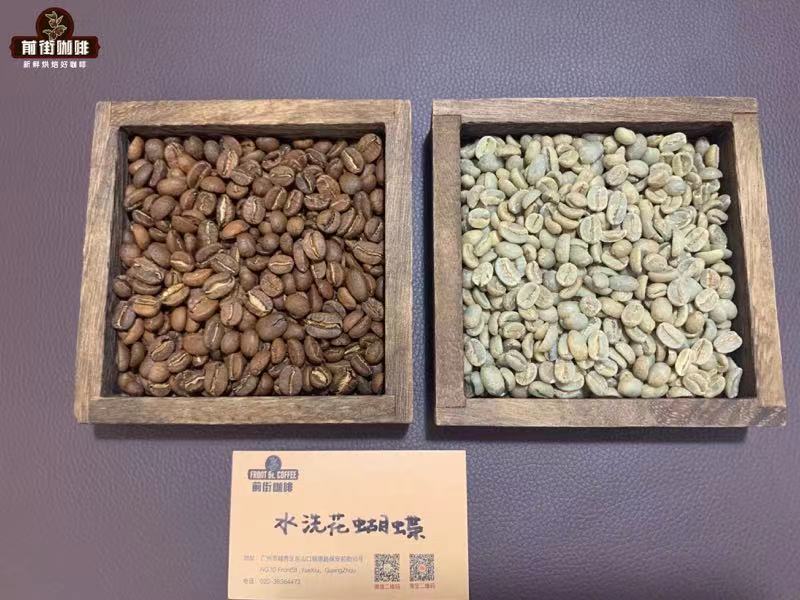
FrontStreet Coffee: Panama · Washed Flower Butterfly Coffee Beans
Coffee Region: Panama, Boquete
Altitude: 1,600 meters
Variety: Geisha, Caturra, Catuai
Processing Method: Washed
Flower Butterfly coffee consists of 70% Geisha, made up of three varieties: Geisha, Caturra, and Catuai. It is cultivated in the Barú volcano region of Boquete, growing in volcanic terrain at 1,600 meters. The processing plant uses fine washed methods. Panama's special local microclimate brings abundant rainfall to the area, and combined with large day-night temperature differences, the region's unique volcanic soil, and meticulous harvesting and careful processing, this coffee performs outstandingly in body, acidity, and floral aroma.
Another important factor is the microclimate in the Boquete highlands, a unique resource for specialty coffee in the region. Because Panama runs east to west, cold air currents converge above 6,500 feet through the Central Mountains, creating multiple microclimates across Boquete, where the temperature and rainfall suit plant growth very well. Coffee trees planted here therefore thrive.
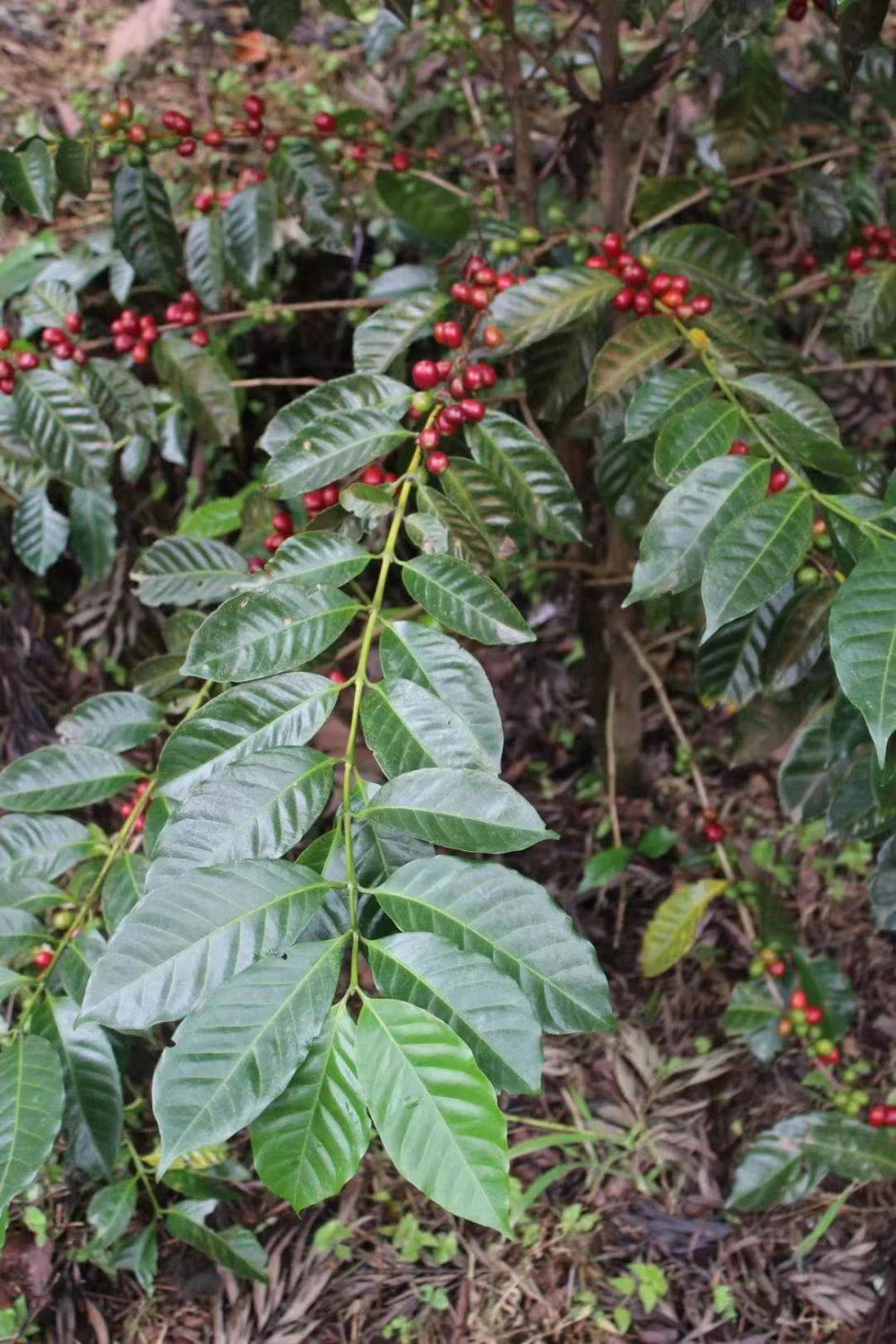
Panama Coffee Varieties
What makes Geisha special is its very distinct, clear floral and citrus flavors, extremely high clarity, soft and elegant acidity, lasting and gentle sweetness, and a premium tea-like mouthfeel. Its floral aromas and intense tropical fruit sweetness create a unique floral and fruity character.
Caturra
Caturra is a Bourbon variety, discovered in Brazil in 1937. It yields better and resists disease better than Bourbon, and its shorter plant makes harvesting convenient. Highly adaptable, it needs no shade trees and thrives in direct sun, hence its nickname "Sun Coffee." Caturra suits cultivation from 700 meters at low altitude up to 1,700 meters, showing broad altitude adaptability, though the higher the altitude the better the flavor — and the lower the yield. Caturra is characterized by bright acidity and a low-to-medium body. It has less clarity and sweetness than Bourbon, with citrusy or lemony acidity in the cup.

Catuai
Catuai is a hybrid of Mundo Novo and Caturra, with good resistance to natural disasters, especially wind and rain. It inherits Caturra's short plant height while fixing Mundo Novo's shortcomings. Another advantage is its firm fruit set, which makes it less likely to fall off in strong winds, compensating for the delicacy of Arabica coffee cherries.

Typica
Typica is one of the oldest Arabica varieties known today, Bourbon being the other. Arabica originated in Ethiopia, where the variety still grows wild in the highland primary rainforest. Typica beans are elongated, the tree is tall and elegant, the cherries are oval, and the branches are slightly inclined. Typica has four slender branches that spread outward at an angle of 50-70 degrees. The coffee yield per tree is very low, but cupping scores are very high.
FrontStreet Coffee's featured beans from Panama's Elida Estate are precisely of the Typica variety.

Elida Estate mainly cultivates three varieties: Catuai, Typica, and Geisha.

FrontStreet Coffee: Panama · Elida Estate Coffee Beans
Region: Boquete, Panama
Estate: Elida Estate
Altitude: 1,850 meters
Variety: Typica
Processing Method: Natural
Elida Estate lies in the Boquete region, and its altitude is almost the highest in all of Panama. Nearly half of its area falls within a national protected park, making it a rare ultra-high-altitude estate in Central America. Elida Estate covers a total of 65 hectares, more than half of it inside Barú Volcano National Park. Of that, 30 hectares are planted with coffee trees, while the remaining 35 hectares are primary forest. Coffee is cultivated at altitudes from 1,670 to 1,850 meters, making it one of the two highest-altitude coffee estates in Panama (the other estate of comparable altitude is Carmen Estate, in the Volcán valley).
Coffee Processing Methods
Natural Processing
In natural processing, coffee cherries delivered to the washing station are first separated by hand to remove lower-density defective cherries. The qualified cherries are then spread evenly on raised drying beds to dry in the sun. Natural drying takes approximately 21 days, until the cherries reach a moisture content of about 12%. Once drying is complete, a hulling machine removes the cherry's skin, pulp, and parchment before packaging and storage. FrontStreet Coffee believes that naturally processed coffee has the lowest acidity, the highest sweetness, and the clearest mouthfeel, though slightly lower clarity. Flavor-wise, it produces more berry-like notes and greater complexity.

Washed Processing
There are many variations of washed processing today, but broadly, once coffee cherries are harvested, floating beans are removed, the pulp is removed, and the beans are soaked in fermentation tanks. Enzymes in the water soften the mucilage clinging to the parchment inside the beans, while natural yeast breaks down the sugars in the mucilage. This stage is called fermentation. When fermentation is complete, the beans are moved to drying patios. During drying they must be turned constantly to ensure even drying. Finally, they are stored in parchment in the warehouse, and hulling and bagging happen only once green bean suppliers place their orders. Coffee processed this way has a clean mouthfeel, emphasizing bright, lively fruit acidity along with clear fruit flavors and floral aromas.

Because most Panamanian coffee consists of high-altitude beans with primarily acidic flavor profiles, FrontStreet Coffee's roasters use light to medium roasting. Based on FrontStreet Coffee's brewing experience, harder coffee beans require higher water temperatures to brew, with the aim of raising the extraction rate. Using a V60 dripper brings out richer layers of flavor in both coffees.
Dripper: V60
Water Temperature: 91-92°C
Coffee Dose: 15g
Coffee-to-Water Ratio: 1:15
Grind Size: Fine sugar size (80% passing through a #20 sieve)

Three-stage extraction: first, use 30g of water for a 30-second bloom. Second, pour 95g of hot water. When the coffee bed drops halfway, begin the third pour of 100g and continue until all the coffee has finished dripping. Start pouring from the center point, using small, gentle circular motions throughout to avoid uneven extraction.
FrontStreet Coffee Recommendation
If you want to taste the famous Geisha character without going straight to the top of the range, FrontStreet Coffee's Boquete Geisha is the natural starting point. Grown at 1,600 meters on Boquete's fertile volcanic soil, it is an estate-level introduction to the variety, offering the classic Panama Geisha balance of orange aroma and honeyed sweetness, an oolong tea-like body, and delicate, finely layered fruit acidity.
For the highest tier from Hacienda La Esmeralda, FrontStreet Coffee's Emerald Red Label Geisha — formally "Esmeralda Special" — grows at 1,600-1,800 meters. Every batch must cup above 90 points, carries its own lot number, and comes entirely from a single small plot, such as the Jaramillo lot, letting buyers pick the batch that matches their flavor preferences.
For a more accessible way into the same estate, FrontStreet Coffee's Emerald Green Label Geisha — originally "Private Collection" — is a blend of batches from several plots rather than one, expressing the estate's signature high-altitude Geisha profile. It offers outstanding value as an everyday way to enjoy Esmeralda's Geisha character.
Important Notice :
FrontStreet Coffee is a long-established specialty coffee roaster in Guangzhou China, selling freshly roasted beans from its own farm in Yunnan as well as dozens of carefully selected single-origin beans from around the world for both pour-over and espresso. The products deliver consistently excellent quality and great value, with shipping within 24 hours. Guangzhou's FrontStreet Coffee shop is recommended by many coffee lovers, and the beans are now available online at the Tmall 。
FrontStreet Coffee has moved to a new address:
FrontStreet Coffee Address: 315,Donghua East Road,GuangZhou
Tel:020 38364473
 Scan and follow the En Gafei WeChat official account. Please indicate that the reprint comes from "En Gafei".