Mandheling Review and Brewing Methods: What Parameters for Pour-Over Indonesian Dark Roast Mandheling?

For more specialty coffee knowledge, follow the official WeChat account: FrontStreet Coffee
There are many coffee-producing countries in the world, and Asia has one very famous region: Indonesia. Coffee enthusiasts have likely heard of Mandheling. As Indonesia's signature coffee, Mandheling has a rich flavor profile with prominent herbal and dark chocolate notes, which is why connoisseurs and dark roast lovers favor it. This article follows FrontStreet Coffee through a full look at Indonesian coffee.
Indonesian Coffee History
In 1699, while Indonesia was still under Dutch colonial rule, the VOC (Dutch East India Company, Vereeniging Oost-Indische Compagnie) introduced Arabica coffee plants to break Arabia's global monopoly on the coffee trade. The Dutch colonial government first planted coffee around Batavia, now Jakarta.
More plantations followed in East Java, Central Java and West Java, as well as parts of Sumatra and Sulawesi. Indonesia was the first place outside Arabia and Ethiopia to cultivate coffee widely. The VOC successfully monopolized the trade between 1725 and 1780.
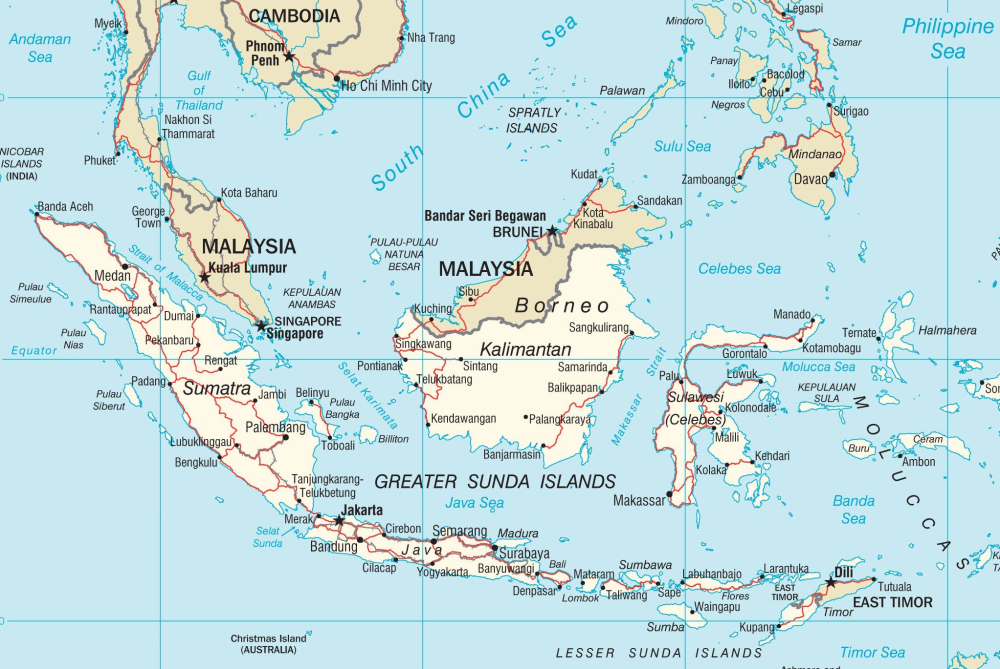
By the mid-18th century the East India Company had expanded Arabica cultivation across Sumatra, Bali, Sulawesi and Timor. Coffee was first planted on Sulawesi in 1750. In the North Sumatra highlands it was first planted near Lake Toba in 1888, and later in the Gayo Highlands near Lake Laut Tawar in 1924. In the late 18th century Dutch colonists established large plantations on the Ijen Plateau in eastern Java.
In the 1920s smallholder farmers across Indonesia began planting coffee as a cash crop. Disaster struck in 1876, when coffee leaf rust swept through and wiped out most of the Typica variety. Robusta (C. canephora var. robusta) was introduced as a replacement in East Java in 1900, particularly in the low-altitude areas where rust hit hardest.

The Java plantations were nationalized after independence and revitalized with new Arabica varieties in the 1950s. Smallholder farmers adopted those varieties too, through government and development programs. Today over 90% of Indonesia's coffee is grown by smallholders on farms averaging one hectare or less.
Indonesian Coffee Regions
Sumatra
Sumatra is Indonesia's largest island and the world's sixth-largest. It lies in the northwest of the country, and its position gives it the country's earliest harvest season, from November to March.
Mandheling beans grow on Arabica plants in Sumatra. Sumatran coffee is characterized by low acidity and complex flavors that many enthusiasts describe as spicy and herbal.
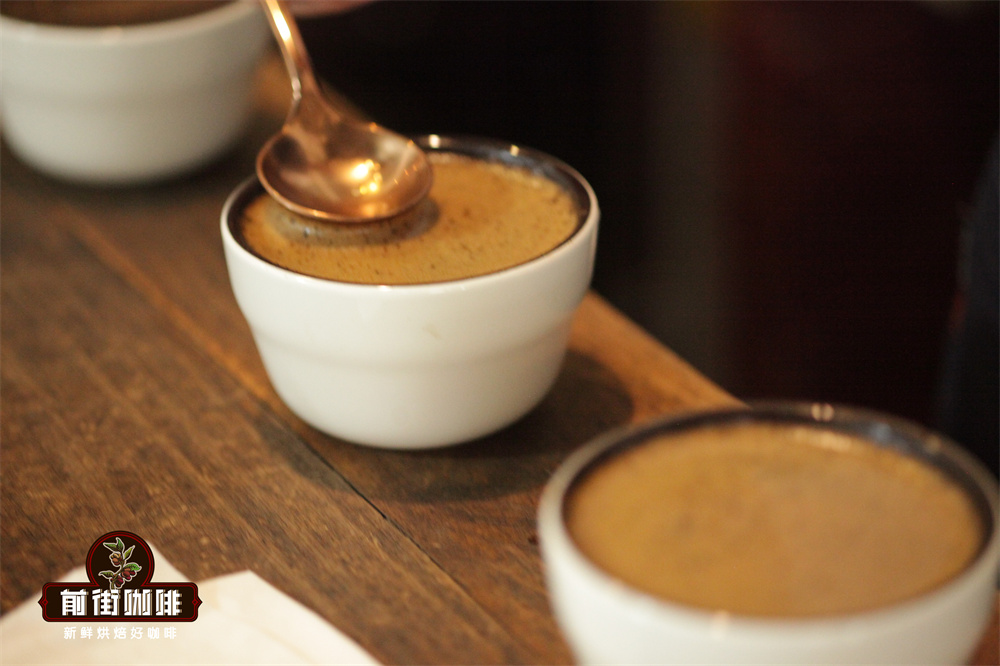
FrontStreet Coffee sees several factors behind Sumatran flavor. The island's fertile volcanic soils contribute the earthy notes, while the low acidity comes above all from the processing method common here, wet hulling, which is explained in detail below.
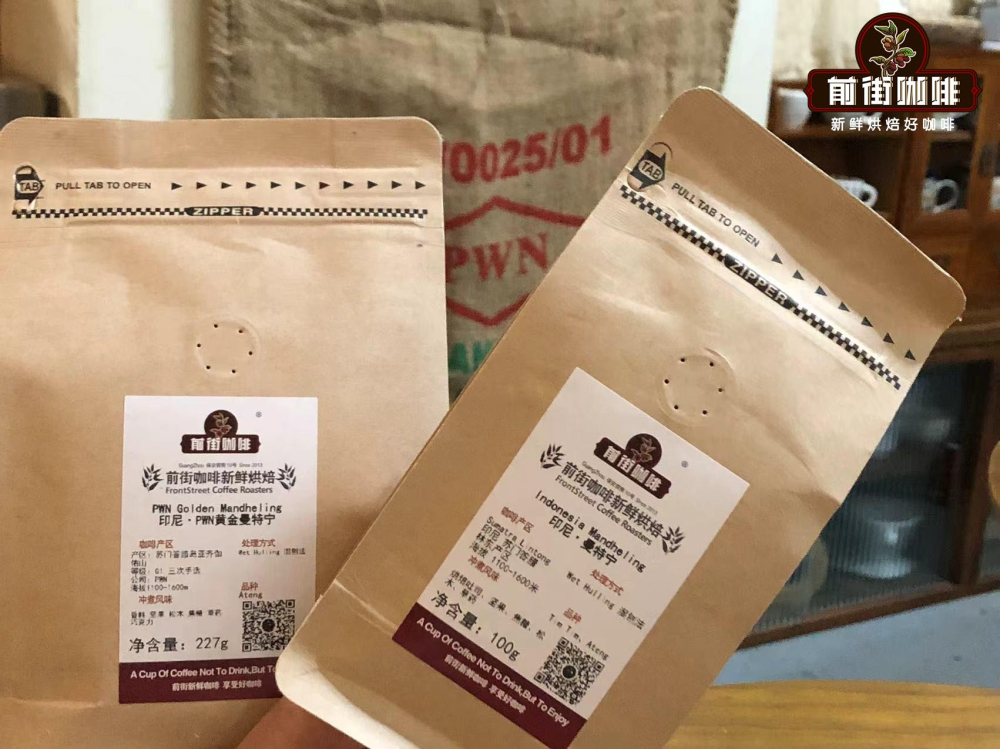
On Sumatra, specialty Mandheling comes mainly from the Lake Toba region and the Gayo Highlands. FrontStreet Coffee currently offers two Indonesian coffees, both from these specialty origins. "FrontStreet Coffee - Daily Series Lin Dong Mandheling Coffee Beans" presents toasted bread, nuts, caramel, pine and herbs, while "FrontStreet Coffee - PWN Gold Mandheling Coffee Beans" goes deeper, with spice, nuts, pine, caramel, herbs and dark chocolate.
Java
Anyone deeply into coffee knows that Java is synonymous with it. What you may not know is that Java Island is where some of the world's best coffee originates. In the 17th century the Dutch East India Company brought Arabica plants to Indonesia. Most of Java's coffee grows on five government-owned estates: Blawan, Tugosari, Pancoer, Jampit and Kayumas. Java coffee is wet processed, which makes it cleaner and fuller-bodied than earthy Sumatran coffee, and it is known for low acidity with rich molasses, clove and fig flavors.

Sulawesi
Formerly known as Celebes, Sulawesi has six provinces. South Sulawesi is where most of the island's coffee grows, particularly on smallholder farms in the Tana Toraja highlands. Compared with other Indonesian coffees, Sulawesi is milder. Through cupping comparison, FrontStreet Coffee found that specialty beans from Tana Toraja have bright acidity, distinct layering and rich caramel sweetness, with the herbal and spicy notes held back and a slight floral edge.
Flores
Flores is relatively small next to Indonesia's other islands, spanning 200 miles end to end. It is known for lush vegetation and is one of the few places where the endangered Komodo dragon can be found. Most coffee is produced around the town of Bajawa at elevations between 1,200 and 1,800 meters. Flores has rugged terrain with several active and dormant volcanoes, and volcanic ash has built fertile ridge soils that are ideal for organic coffee.

Bali
Bali is famous for its beaches, coral reefs and yoga retreats. This tropical paradise also offers some of the best coffee in Indonesia and the world. Most of it grows in the Kintamani highlands, between the Batukaru and Agung volcanoes.
The Origin of Mandheling Coffee
Most coffee on the market is named after the region or country where it grows, but Mandheling is different. It takes its name from the Mandheling people, who traditionally grow and process these beans. Why?

The story begins during World War II, when a Japanese soldier stationed in Sumatra asked a local where his coffee came from. The Sumatran, misunderstanding and thinking he was being asked about his ethnicity, answered: "Mandheling." After the war, the soldier back home remembered that the uniquely flavored coffee seemed to be called Mandheling. In 1968 Osaka's Nomura Trading Company visited Indonesia's N.V. Pawani Medan and imported 15,000 kilograms of Sumatran Mandheling, which became hugely popular in Japan. From then on, the reputation of Mandheling coffee and the Pawani company soared.
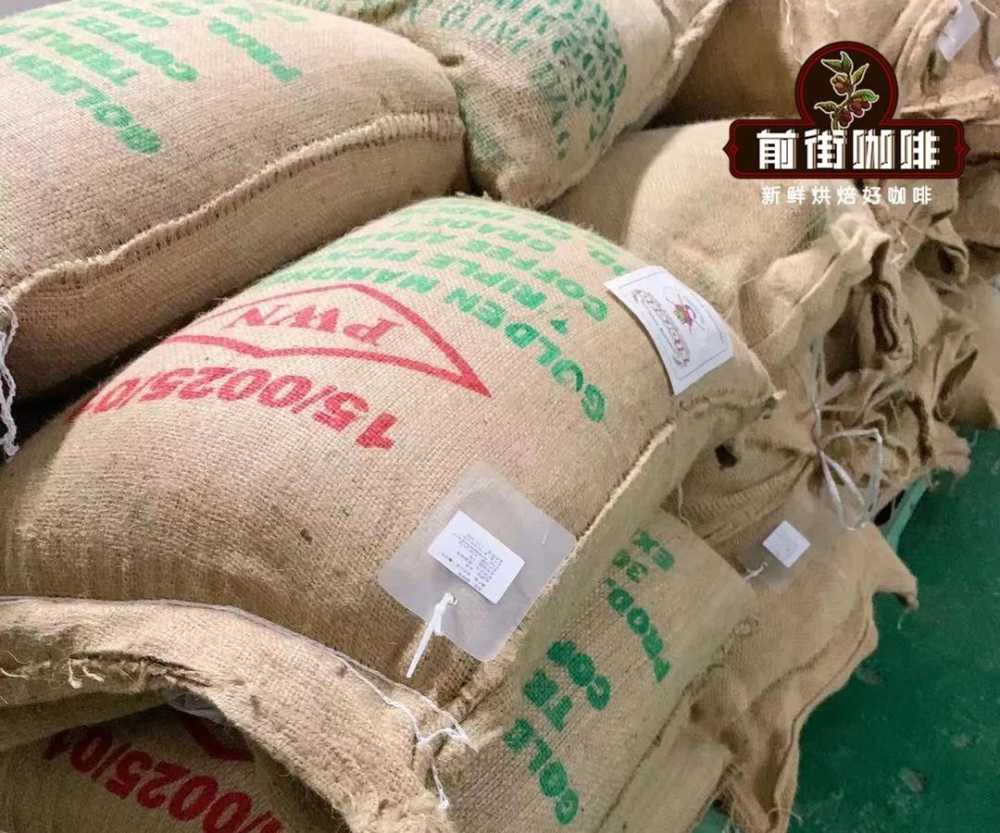
PWN is a well-known local green bean buyer in Indonesia. Its wet-hulled Mandheling green beans go through one machine selection plus three manual hand-sortings to bring every batch to Indonesia's highest grade, G1. The machine pass first screens for beans 18 mesh or above, while the later hand sortings remove uneven and defective beans. Cutting the defect rate is what raises Mandheling's quality so much.
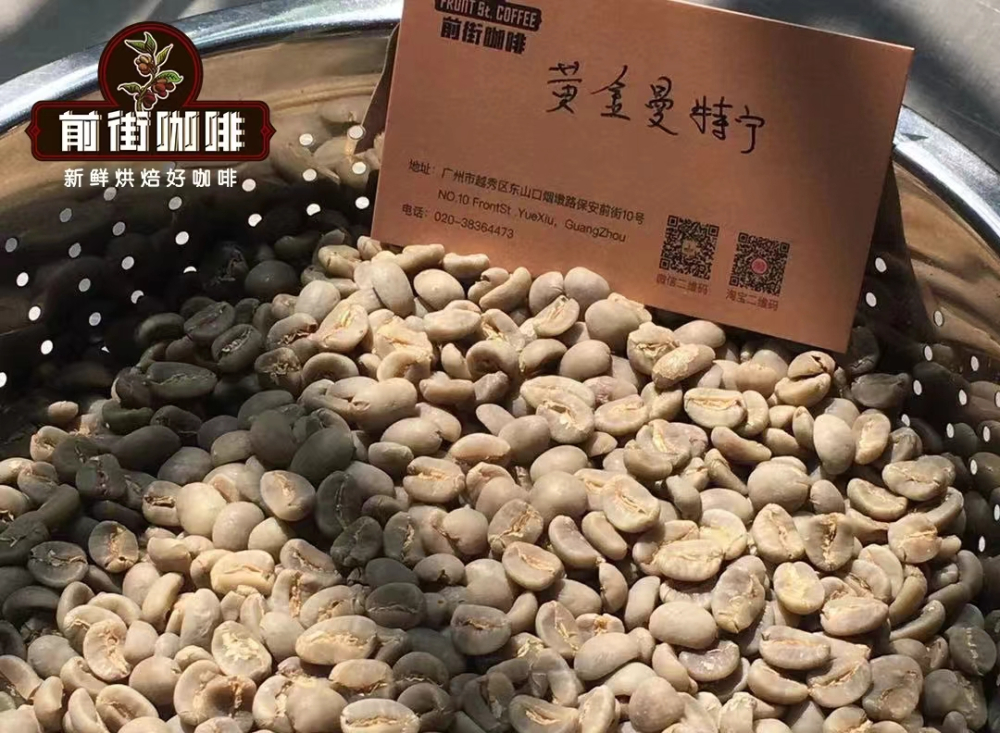
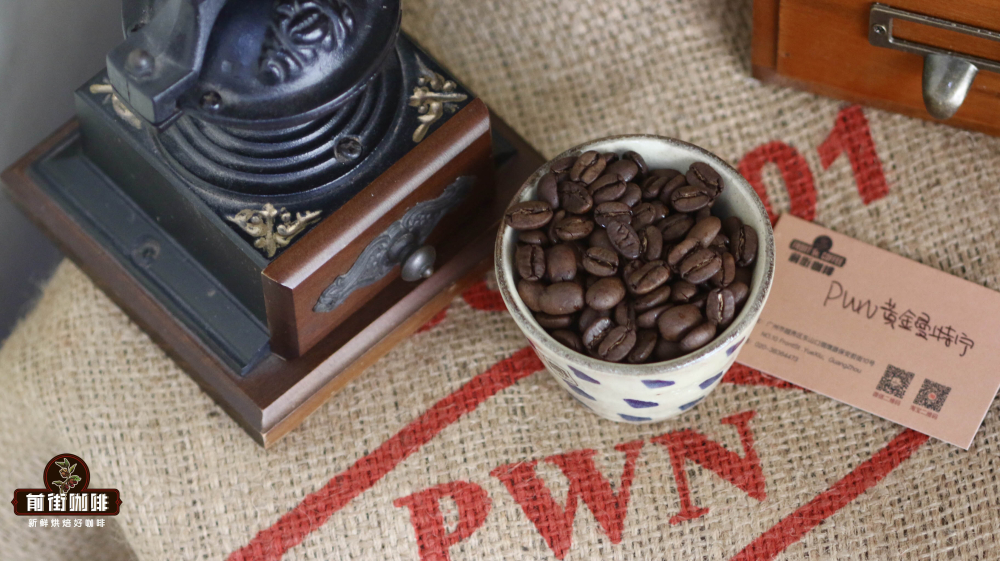
To set itself apart from regional Mandheling coffee, PWN registered "Gold Mandheling" as a trademark. The Gold Mandheling sold by FrontStreet Coffee all comes from PWN, and at FrontStreet Coffee's physical stores you can see PWN's Gold Mandheling certificates and coffee sacks printed with the company logo.
Special Processing Method - Wet Hulling
Wet hulling, also called wet dehulling and known locally as "giling basah," is a traditional Indonesian processing method. Judging by the name it sounds similar to wet processing, but the flavors the two methods produce are completely different.
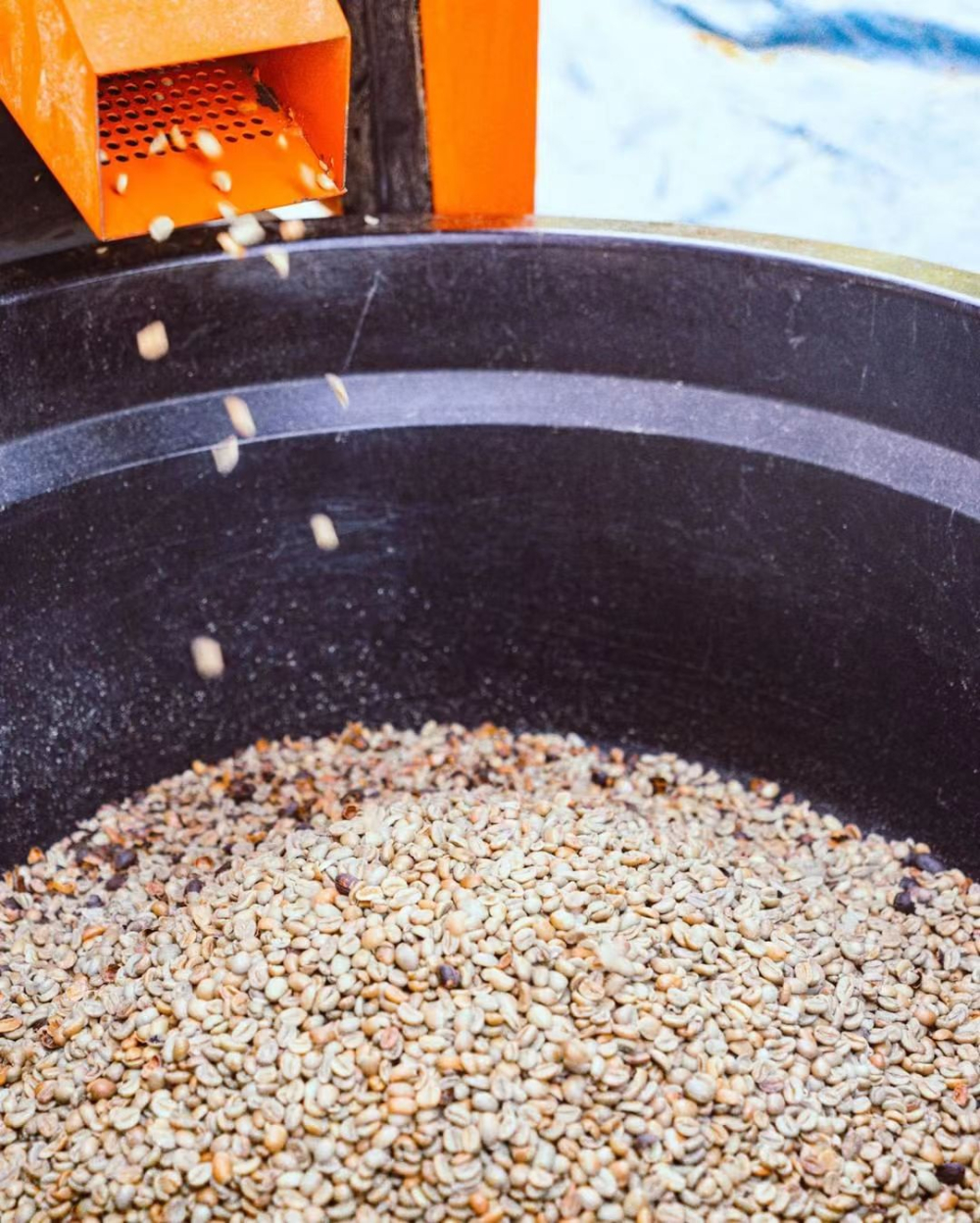
So how does wet hulling actually work?
- Remove fruit skin and pulp, keeping parchment and mucilage
- Ferment in water tanks
- Wash off mucilage
- Sun-dry with parchment for 2-3 days until moisture content reaches 20-24%
- Remove parchment
- Dry green beans until moisture content reaches 12-13%
- Prepare for export

FrontStreet Coffee's Gold Mandheling is a textbook example of wet hulling. Because the method is so fast, defect rates run high, so workers at the processing plant hand sort to remove defects. Generally there is DP (double picking) and TP (triple picking), and Mandheling given the triple hand sorting sees a significant drop in defects.
Setting aside minor differences, wet-hulled beans are generally thought to carry earthy, smoky and chocolate flavors, with low acidity and a full body that can sometimes read as dull. PWN's Gold Mandheling, however, shows quality herbal aromas, very prominent caramel sweetness, and a steady, elegant entry. After swallowing, the mouth fills with rich sweetness, body and wild spice.
FrontStreet Coffee Brewing Recommendations
- Dripper: Kono dripper
- Water Temperature: 88-89°C
- Coffee Amount: 15 grams
- Coffee-to-Water Ratio: 1:15
- Grind Size: Medium-coarse grind (70% pass-through rate on China No. 20 standard sieve)
Reason for choosing Kono dripper: The Kono has few ribs and they sit at the bottom, so the filter paper fits tightly against the wall, restricting airflow and extending contact time between water and grounds, which allows full extraction and builds body.

Use 30 grams of water for a 30-second bloom. Pour small circular streams to 125 grams for a partial pour. When the water level drops and is about to expose the coffee bed, continue to 225 grams and stop. Wait until all the water has passed through the grounds, then remove the dripper to finish. Timing starts from the bloom; extraction runs about 2 minutes.
For more specialty coffee knowledge, follow the official WeChat account: FrontStreet Coffee
FrontStreet Coffee Recommendation
For the wet-hulled style described above, FrontStreet recommends the PWN Gold Mandheling. PWN screens at 18 mesh or above and runs one machine pass plus three rounds of hand sorting to reach the top G1 grade, then registers the "Gold Mandheling" trademark, so the beans come out uniform, large and translucent with a very low defect rate. FrontStreet's bags all come from PWN, and PWN certificates and logo-printed sacks are on display in store as proof. Roasted medium-dark, the beans carry plenty of toasty aroma, and the brewed cup is clean yet full, an easy fit for anyone who dislikes acidic coffee.
FrontStreet also offers a Daily Series Lin Dong Mandheling from the Lintong area of Sumatra, alongside the PWN Gold from the Aceh side. Both are medium-dark roasted to soften the acidity and put the body first, while keeping the wild herbal note that comes from Sumatra's growing environment and wet-hull processing rather than from the roast. The Lin Dong leans on toasted bread, nuts, caramel, pine and herbs; the Gold Mandheling goes darker, with spice, nuts, pine, caramel, herbs and dark chocolate.
Mandheling also does well in milk. The Classic Blend builds on the creamy nut character of Brazilian coffee and adds medium-dark Mandheling, so butter, roasted chestnut and caramel stand out, with Mandheling raising the whole cup's body and lending sandalwood, herbal and spice notes. A small share of Robusta goes in to boost the crema, which makes latte art and layered Dirty drinks straightforward.
Important Notice :
FrontStreet Coffee is a long-established specialty coffee roaster in Guangzhou China, selling freshly roasted beans from its own farm in Yunnan as well as dozens of carefully selected single-origin beans from around the world for both pour-over and espresso. The products deliver consistently excellent quality and great value, with shipping within 24 hours. Guangzhou's FrontStreet Coffee shop is recommended by many coffee lovers, and the beans are now available online at the Tmall 。
FrontStreet Coffee has moved to a new address:
FrontStreet Coffee Address: 315,Donghua East Road,GuangZhou
Tel:020 38364473
 Scan and follow the En Gafei WeChat official account. Please indicate that the reprint comes from "En Gafei".