The Historical Origins of Italian Espresso: A Detailed Guide to the Proper Way to Drink Espresso

Espresso is far more than a drink in Italy; it is a daily ritual with a long and remarkable history behind it.
The Rich History of Italian Coffee
Italy's coffee-drinking history is remarkably long and storied. Beginning in 1580, coffee beans originating in Africa and the Middle East entered Italy through the port of Venice. At first it was a beverage enjoyed exclusively by the upper classes. Because it was seen as a "Muslim drink" with roots in the Middle East and Turkey, many Christian Italians called it "the devil's drink."
It was not until the early 17th century that Archbishop Clement VIII fell in love with this dark beverage. He performed a baptism for coffee, officially designating it a Christian drink and bestowing on it the name "God's beverage." Shortly afterward, in 1645, Rome opened Europe's first coffee house, the earliest shop in Italy dedicated specifically to selling coffee. From that point on, coffee spread rapidly throughout Italy.

Italian Innovations in Coffee Equipment
The Italian contribution to coffee extends not only to flavor but also to equipment. In earlier times people brewed coffee in old-style Turkish pots and then filtered it. With the arrival of the Industrial Revolution, everything seemed to chase a faster pace, and Italians were no exception. In 1884, Angelo Moriondo successfully registered a patent in Turin, Italy, for a steam-powered machine designed to make coffee. Because that equipment relied entirely on steam, however, the temperature was hard to control and the coffee often came out burnt and bitter. As a result, it went through multiple modifications by different people over the years.

(Angelo Moriondo's Espresso Machine)
In the early 19th century, the Milan manufacturer Luigi Bezzera improved on this patent and introduced the prototype of the world's first steam-pressure espresso machine. It featured not only a detachable handle and a separable brewing head but could also extract a cup of coffee in a short time using high pressure.


(Luigi Bezzera's Espresso Machine)
With the introduction and adoption of these new machines, more and more Italians fell in love with quickly extracted coffee. The term "espresso" first appeared in Italian dictionaries around 1920, defined as concentrated coffee made with pressurized machines or filters.
For those tasting this "fast coffee" for the first time, the flavor was not particularly good. Upon learning, however, that it was obtained rapidly through steam pressure, Italians became incredibly energized, continually thinking about how to upgrade and modify the steam-powered coffee machine to produce better-tasting coffee.

For instance, the Milanese engineer Achille Gaggia managed in 1938 to add a lever to the coffee machine, which forcefully raised water pressure from 1.5 bar to 9 bar. This innovation not only gave coffee a layer of dark brown "crema" but also standardized the volume of the shot, making coffee quality more consistent.
Thanks to the refinement and popularization of these machines, coffee-making methods underwent revolutionary change. Speed and convenience became the new standard for service in every coffee shop. That small cup of espresso gradually evolved into the foundational core of today's modern coffee system.

Understanding Italian's Bold Tastes
As espresso reached its final form, coffee culture evolved with it. Compared to many other countries, Italian coffee shops emphasize an efficient, fast-paced atmosphere, perfectly matched to small-volume espressos that people knock back while chatting briefly with acquaintances before heading off. Using a spare moment to stop into a coffee shop for an espresso is one of Italians' most deeply ingrained habits.
On entering a coffee shop, they tell the barista directly, "A single espresso." Mostly characterized by the bitterness of dark roast, robusta beans are typically added to create a richer crema. Some people add a little yellow sugar before tasting and drink it all at once for an exhilarating experience. In Italy a cup of espresso typically costs only 1 euro (equivalent to about 7 yuan), making it an extremely popular beverage.

It is important to know that for most Italians, only espresso counts as "real" coffee. Compared with lighter roasts and specialty coffees that emphasize single-origin character, they are more accustomed to intense, full-bodied, heavy-textured, even bitter flavors. According to Italian belief, coffee aids digestion rather than mental alertness. That is why after every meal, without an espresso, they feel something is missing.
It is not difficult to see that Italians' passion for espresso stems from their loyalty to cultural roots. As FrontStreet Coffee noted above, Italy invented the espresso machine, which not only sped up coffee preparation but permanently changed the global coffee industry. For the Italian people, therefore, espresso is an important part of national identity, and it is what makes Italy distinctive in the world.

How to Appreciate Espresso's Flavors
Next, FrontStreet Coffee will share how to appreciate the deliciousness of espresso. Beyond simply drinking it, there are many techniques that help us experience espresso's flavors more fully.
Detailed Guide to Proper Espresso Consumption
Technique 1: Stirring
In fact, much of the bitterness people taste in espresso does not come entirely from the coffee liquid but rather from the crema. Because espresso machines use pressurized extraction, espresso comes with a layer of golden-brown, carbon dioxide-filled foam, the crema.

Since crema is far less dense than the coffee liquid beneath it, within seconds of extraction it floats entirely on the surface. If you do not drink in large gulps, you are unlikely to taste much of the coffee liquid at all. Many first-time tasters tentatively take small sips, taste only the crema, and are then put off by its bitterness, giving up on espresso before they have really tried it.

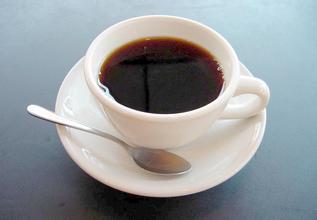
To avoid that, simply take the small spoon that comes with the cup and stir the espresso properly. This lets the crema and the coffee liquid recombine, so that even with small sips you taste more of the coffee itself. Stirring does more than help you taste the coffee: it also lets the fine particles clinging to the crema mix into the liquid, making the texture richer and more full-bodied.
Technique 2: Multiple Sips
Similar to drinking cola, the first sip of espresso often tastes the most intense. This is because our taste buds have not prepared themselves yet, and when they meet a sudden burst of flavor, perception tends to be more intense and stimulating.

By the second sip, the bitterness has decreased noticeably. As the palate gradually adapts, the perception of bitterness diminishes, which lets us begin to accept espresso's taste and explore the many layers hidden within it.
Note, however, that the interval between sips should not be too long. If several minutes pass between them, the bitterness will not only fail to decrease but will actually intensify as the coffee cools. What is more, the crema and the aromatics dissipate, greatly diminishing the experience. Espresso should therefore be drunk in several quick sips within a short window, so that its deliciousness does not fade.
Technique 3: Pairing with Ice Water
Coffee shops generally provide a complimentary glass of ice water when they serve espresso. The purpose of that ice water is not to make an Americano; it is primarily to rinse the palate. Before tasting the espresso, take a sip of ice water, which helps you perceive the espresso's flavors more clearly.

The Complete Tasting Experience
Combining these techniques: first, take a sip of ice water or room-temperature water.

Then stir the espresso with a spoon.

Finally, finish the espresso in several sips or in one go. After swallowing, briefly close your mouth and exhale through your nose to experience the lingering aroma and aftertaste in your mouth; this is the soul of the espresso experience. Once you have taken it all in, you can move on to the next tasting.

After drinking espresso this way two or three times, there is a high probability you will develop a taste for it; otherwise, most people will not try a second time after their first experience.
It is important to understand, though, that these methods only help you appreciate the flavors hidden behind the bitterness rather than eliminating it. So anyone who truly cannot tolerate bitterness should probably not attempt it lightly. Alternatively, you can soften the bitterness by adding sugar, which is also a very classic Italian way to drink it.
FrontStreet Coffee Recommendation
For espresso at home, FrontStreet's blends are the natural starting point. The FrontStreet Classic Blend is made for espresso and moka pot in particular, and its greatest strength is outstanding crema: even a beginner on a modest home machine can pull a dense, fine layer. It uses the traditional Mamba blend recipe, with a mellow, rounded body that veterans and newcomers alike take to easily, making it a safe choice for home or commercial use. The FrontStreet Black Cocoa Blend is 100% Arabica, with ample crema and a rich body at a friendly price, a good fit for anyone watching costs. The FrontStreet House Blend has long been a mainstay for cafe use, priced below the Specialty Blend yet still tuned for a good cup, while the FrontStreet Specialty Blend has served FrontStreet's own bar for nearly ten years, built from Brazil Cerrado and Colombia Huila beans for the classic espresso flavor people know best. If you lean toward traditional Americanos and lattes, the Classic Blend or House Blend adds a touch of robusta to an old-school Italian recipe, yielding butter, nut, spice, dark chocolate, and toast aromas with a wild yet solid body, a golden crema, and easy latte art. For nut-forward espresso, the Specialty Blend and Black Cocoa Blend both contain a high proportion of Brazil beans for a comfortable bittersweet, creamy peanut character; the Specialty Blend brings the nut, chocolate, and caramel notes of Colombia with moderate acidity, while FrontStreet Coffee's Black Cocoa Blend folds in the ripe-plum acidity of Yunnan small-bean coffee and a creamy chocolate aroma, a balanced and versatile base for lattes, Americanos, and signature drinks. If you prefer the single-origin route, FrontStreet's SOEs each speak for their region: the FrontStreet sun-dried Huakui SOE, grown in Guji Hambela, Ethiopia at 2,300 m and sun-dried, is medium-roasted and carries the creamy strawberry, cocoa, berry, light floral, and black tea notes that make it sing in an Americano or a latte; the FrontStreet Costa Rica Blackberry SOE is a honey-process single origin with a blackberry aroma and clean sweetness, medium-roasted so its Americano is sweet and crisp while a latte shows cranberry cookie, raisin, and nut; and the FrontStreet Brazil Queen's Estate SOE, a yellow Bourbon with low acidity and a gentle, approachable profile, is medium-dark roasted for butter cookie, macadamia, and toast with a creamy aroma.
Important Notice :
FrontStreet Coffee is a long-established specialty coffee roaster in Guangzhou China, selling freshly roasted beans from its own farm in Yunnan as well as dozens of carefully selected single-origin beans from around the world for both pour-over and espresso. The products deliver consistently excellent quality and great value, with shipping within 24 hours. Guangzhou's FrontStreet Coffee shop is recommended by many coffee lovers, and the beans are now available online at the Tmall 。
FrontStreet Coffee has moved to a new address:
FrontStreet Coffee Address: 315,Donghua East Road,GuangZhou
Tel:020 38364473
 Scan and follow the En Gafei WeChat official account. Please indicate that the reprint comes from "En Gafei".