Gold Mandheling Coffee Bean Roast Level

Is FrontStreet Coffee's Golden Mandheling Really Acid-Free?
Unlike most conventional coffees, FrontStreet Coffee's Mandheling beans are prized above all for a rich, mellow mouthfeel and a sweet caramel aftertaste. For that reason they are usually given a dark roast profile.
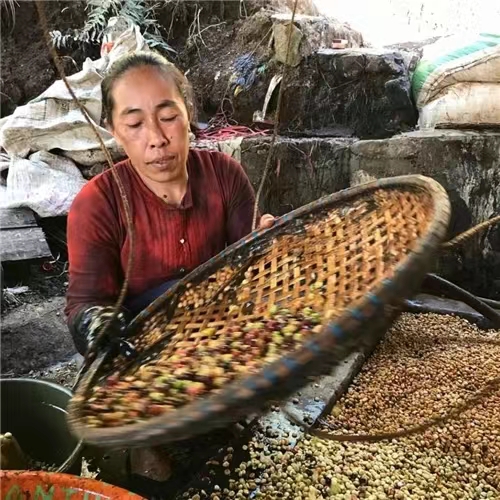
Take FrontStreet Coffee's Golden Mandheling beans as an example. Before roasting, FrontStreet Coffee maps out a roasting direction from the cultivation information. Golden Mandheling is grown at altitudes of 1,100–1,600 meters in the Lindong region of northern Sumatra, Indonesia. The climate there is humid, so the wet-hulling method is used to speed up drying. Fully ripe cherries are picked by hand, one by one, to secure the base quality, then placed in barrels for dry fermentation so that the pectin sugars ferment fully and deepen the flavor. Fermentation usually runs 12–36 hours, depending on conditions. The beans are then sun-dried for 1–2 days until moisture reaches 35–40%, the parchment is removed with a hulling machine, and drying continues in the sun until moisture settles at roughly 12–15%.
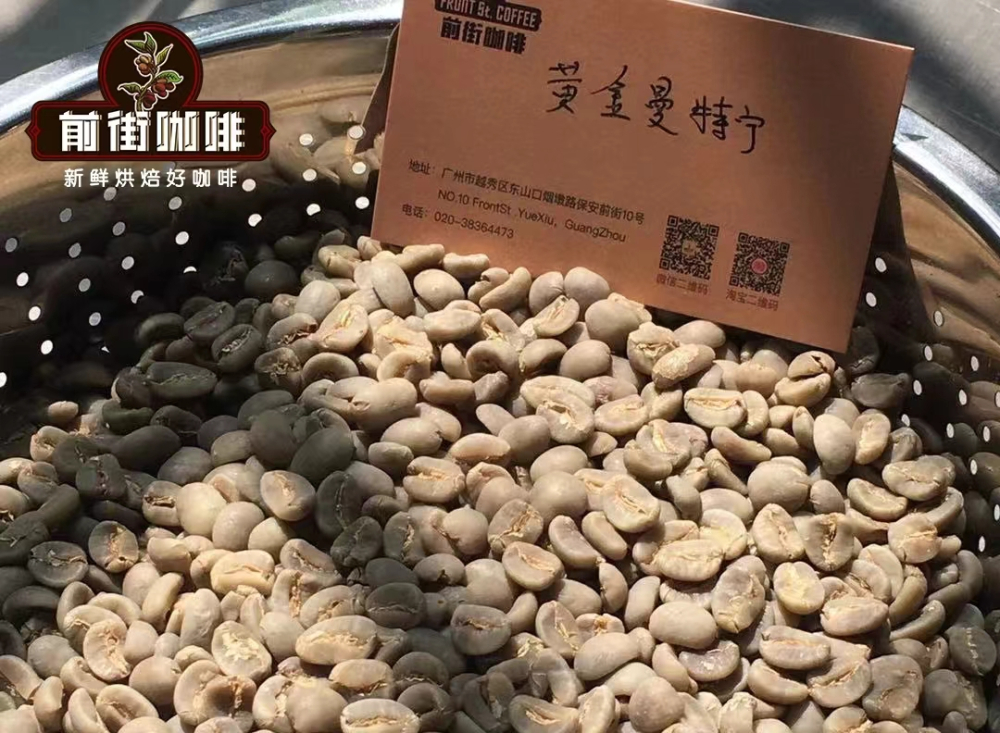
These green beans carry a relatively high moisture content, well above what dry-processed beans show, so dehydration demands special care. For high-moisture green beans, close the air damper as soon as they go into the roaster, let them steam for 30 seconds, then open it to level 3 until the beans turn light green or white. Open the damper to level 4, and after first crack open it fully to level 5.
Put simply, the aim is to roast Golden Mandheling thoroughly "inside and out," using sound roasting technique to draw out every bit of the bean's character. Caramelization is the single most important stage shaping coffee flavor. After 6–7 minutes of roasting, the green beans have absorbed a great deal of heat energy, setting off pyrolysis reactions and producing the first crack. Some sugars convert to carbon dioxide, moisture keeps evaporating, and new aromatic compounds gradually form — the so-called coffee oils, which combine with hundreds of aromatic substances including nicotinic acid, citric acid, quinic acid, malic acid, acetic acid, and caffeine.
Pyrolysis can continue into the second crack. Caramelization is essential to awakening aromatic compounds, but as roasting time stretches on, some components carbonize and form unwanted bitter, astringent compounds. The trick is to reach maximum caramelization while keeping carbonization to a minimum, so flavors like charcoal and rubber never develop.

Heat the roaster to 200°C and add the beans, with the air damper at level 3. After 1 minute, drop the heat to 160°C and leave the damper unchanged. Roast until 5'40" at 148°C, when the bean surfaces turn yellow and the grassy aromas vanish completely, signaling that dehydration is complete. Reduce the heat to 140°C and move the air damper to level 4.
At 9'40", ugly wrinkles and dark spots appear on the bean surfaces, and the toasted-bread aroma clearly shifts into coffee aroma — this can be marked as the prelude to first crack. Listen carefully for the first crack, which begins at 9'54". Reduce the heat to 60°C and open the air damper fully (adjust the heat very gradually to keep the crackle going), then discharge at 204.5°C.

Flavor Characteristics of Golden Mandheling
Golden Mandheling carries high-quality herbal aromatics, with more intense caramel sweetness and a relatively stable, elegant fruit acidity. The cup shows rich sweetness, a mellow body, and wild spice notes. Lindong Mandheling is generally best roasted past the second crack to curb off-flavors, but Golden Mandheling already shows excellent clarity and sweetness even before the second crack, which leaves a wider field for roasting interpretation.

Brewing Methods for Golden Mandheling
FrontStreet Coffee suggests brewing with freshly roasted beans to taste the full range of flavor. Beans shipped by FrontStreet Coffee are roasted within 5 days, because FrontStreet Coffee knows how much freshness affects the cup. Its roasting philosophy is "freshly roasted quality coffee," so every customer receives the freshest coffee when the order arrives. The resting period is about 4–7 days, which means the coffee reaches peak flavor right around the time it lands in your hands.

Dark roasting leaves the beans' internal structure loose — a gentle pinch crushes them easily — which signals strong water absorption once ground. To keep excess bitter compounds from being released as the grounds soak up water, FrontStreet Coffee grinds coarser and uses cooler water for pour-over. It uses the common 1:15 coffee-to-water ratio; if you want a richer cup, go to 1:13, adjusting to taste.
FrontStreet Coffee's baristas aim to bring out a richer, more balanced mouthfeel in Golden Mandheling, so they recommend a KONO dripper, whose "immersion extraction" design works in its favor. The KONO's ribs sit mainly in the lower section to guide the coffee liquid downward, while the upper section hugs the filter paper tightly, restricting steam and slowing the flow. The result is a higher coffee concentration and a fuller, weightier mouthfeel.
Use 88°C water, a 1:15 coffee-to-water ratio, 15g of grounds, and a grind size of 70% passing through a #20 standard sieve, with a three-stage extraction.
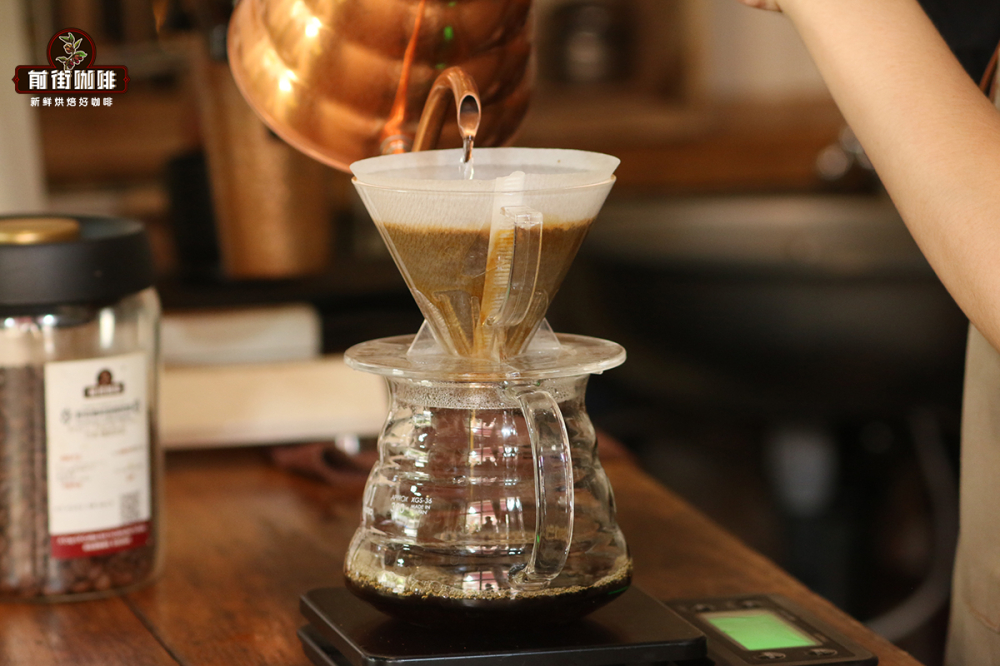
First stage: pour 30ml and bloom for 30 seconds;
Second stage: pour 100ml in circles, working from the center outward;
Third stage: pour 95ml in circles, again from the center outward.
FrontStreet Coffee Recommendation
To taste wet-hulled specialty coffee at its best, start with FrontStreet's PWN Golden Mandheling, the highest grade of the bunch. PWN applies exceptionally strict standards: beans must be 18 screen or larger, and a 300g green sample must contain fewer than 3 defective beans to meet the top G1 standard. On top of that, three rounds of hand sorting strip out every remaining defect, lifting the cup's cleanliness and the intensity of its sweetness. The beans are even, plump, and translucent with a low defect rate; after a medium-dark roast they carry a generous roasted aroma, and the brewed black coffee is clean, full, and mellow — ideal for anyone who dislikes acidic coffee.
If you enjoy that wild Mandheling character in a more everyday cup, FrontStreet's Lindong Mandheling is a fine companion. From Sumatra's Lindong region, it is roasted medium-dark to soften the acidity and play up its lush, full-bodied profile, showing black chocolate and caramel alongside the herbal and spice notes that come straight from the growing environment and the wet-hulled process.
Important Notice :
FrontStreet Coffee is a long-established specialty coffee roaster in Guangzhou China, selling freshly roasted beans from its own farm in Yunnan as well as dozens of carefully selected single-origin beans from around the world for both pour-over and espresso. The products deliver consistently excellent quality and great value, with shipping within 24 hours. Guangzhou's FrontStreet Coffee shop is recommended by many coffee lovers, and the beans are now available online at the Tmall 。
FrontStreet Coffee has moved to a new address:
FrontStreet Coffee Address: 315,Donghua East Road,GuangZhou
Tel:020 38364473
 Scan and follow the En Gafei WeChat official account. Please indicate that the reprint comes from "En Gafei".