Where is the origin of Blue Mountain coffee beans? What grade does Blue Mountain No. 1 coffee belong to?
For professional coffee knowledge exchange and more coffee bean information, follow Coffee Workshop (WeChat public account: cafe_style)
For more specialty coffee beans, add the private WeChat account of FrontStreet Coffee, WeChat ID: qjcoffeex
Many people getting into coffee have heard of "Blue Mountain Coffee" and heard that it is the best coffee there is. Because it also carries a very high price, plenty of them have never dared to try it.
In today's fast-growing specialty coffee industry, authentic Blue Mountain beans sit in the specialty grade and are a very high-quality bean with worldwide recognition, deeply loved by gourmands. FrontStreet Coffee believes the reason is Blue Mountain's own flavor: it balances sour, sweet and bitter, offering a rich, mellow taste while staying clean and full in the mouth.
Where does Blue Mountain Coffee come from?
Blue Mountain Coffee is produced on the Caribbean island of Jamaica. The island is crossed by many mountain ranges, and their slopes are Jamaica's main coffee-producing areas. Blue Mountain itself, northeast of the capital, is just one peak among those ranges. The name is so beautiful for a reason: British soldiers arriving in Jamaica saw the peak wrapped in blue light and exclaimed, "Look, the blue mountain!" The name stuck. Jamaica is ringed by the Caribbean, and on clear days brilliant sunlight strikes the sea; the distant mountains, through the refraction of that azure water, take on a faint, ethereal blue haze that reads as misty and slightly mysterious.
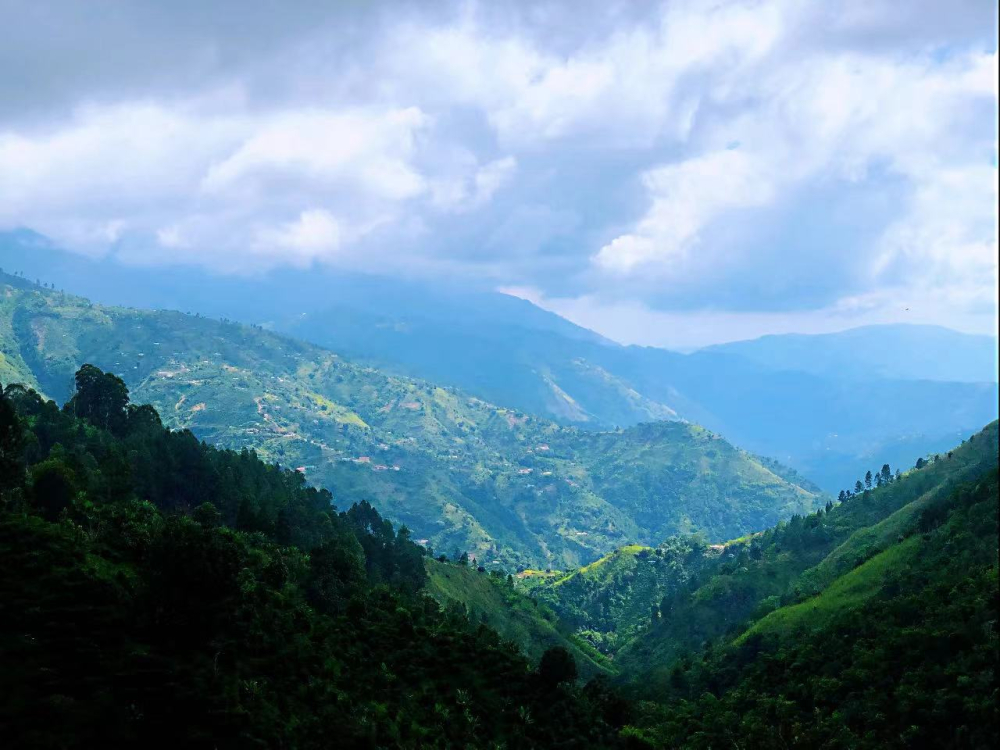
Most of the Blue Mountain range sits above 1,800 meters, with the highest peak at 2,256 meters, the tallest point in the Caribbean and a famous tourist destination. Blue Mountain's distinctive flavor is tied to its unusually favorable location and climate. The range lies in the coffee belt between 25 degrees north and south latitude, with fertile new volcanic soil, fresh unpolluted air, year-round rainfall and wide day-to-night temperature swings. Most importantly, every afternoon cloud and mist wrap the whole summit, providing natural shade for the trees and bringing abundant water vapor, which is what makes the taste and aroma stand out.
Only coffee grown at an altitude of 900-1,700 meters in the Blue Mountain range can be called Blue Mountain Coffee. One American coffee enthusiast goes further, insisting that "coffee grown at an altitude of 2,256 meters is the real Blue Mountain Coffee." Relatively speaking, coffee grown at moderate altitude produces the best quality. Altitude, air humidity, rainfall and light together created the bean known as the King of Coffee.
FrontStreet Coffee - Jamaica Blue Mountain No. 1 Coffee Beans
Region: Blue Mountain Region
Farm: Clifton
Altitude: 1310m
Variety: Typica
Processing Method: Washed
Grade: NO.1
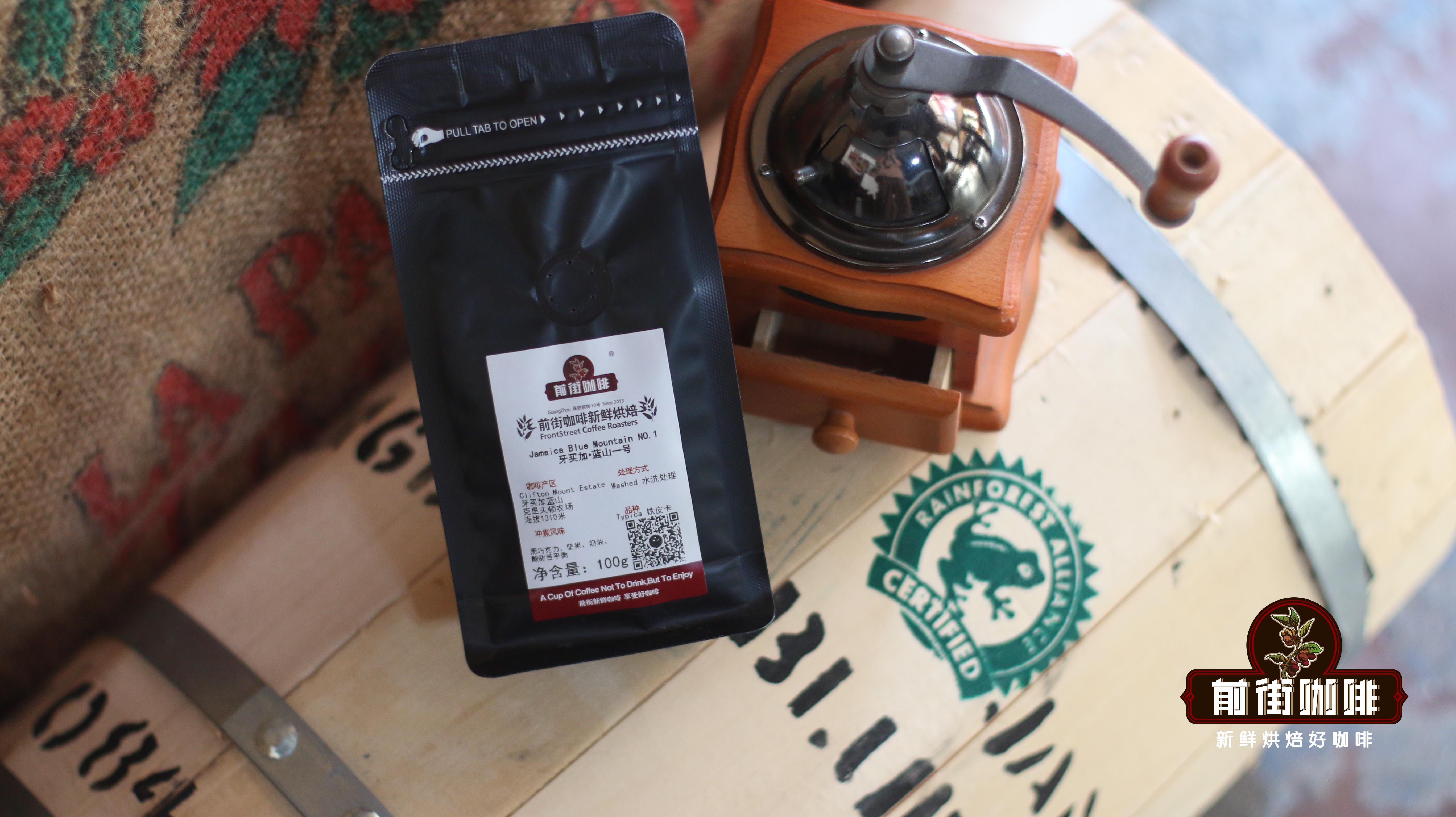
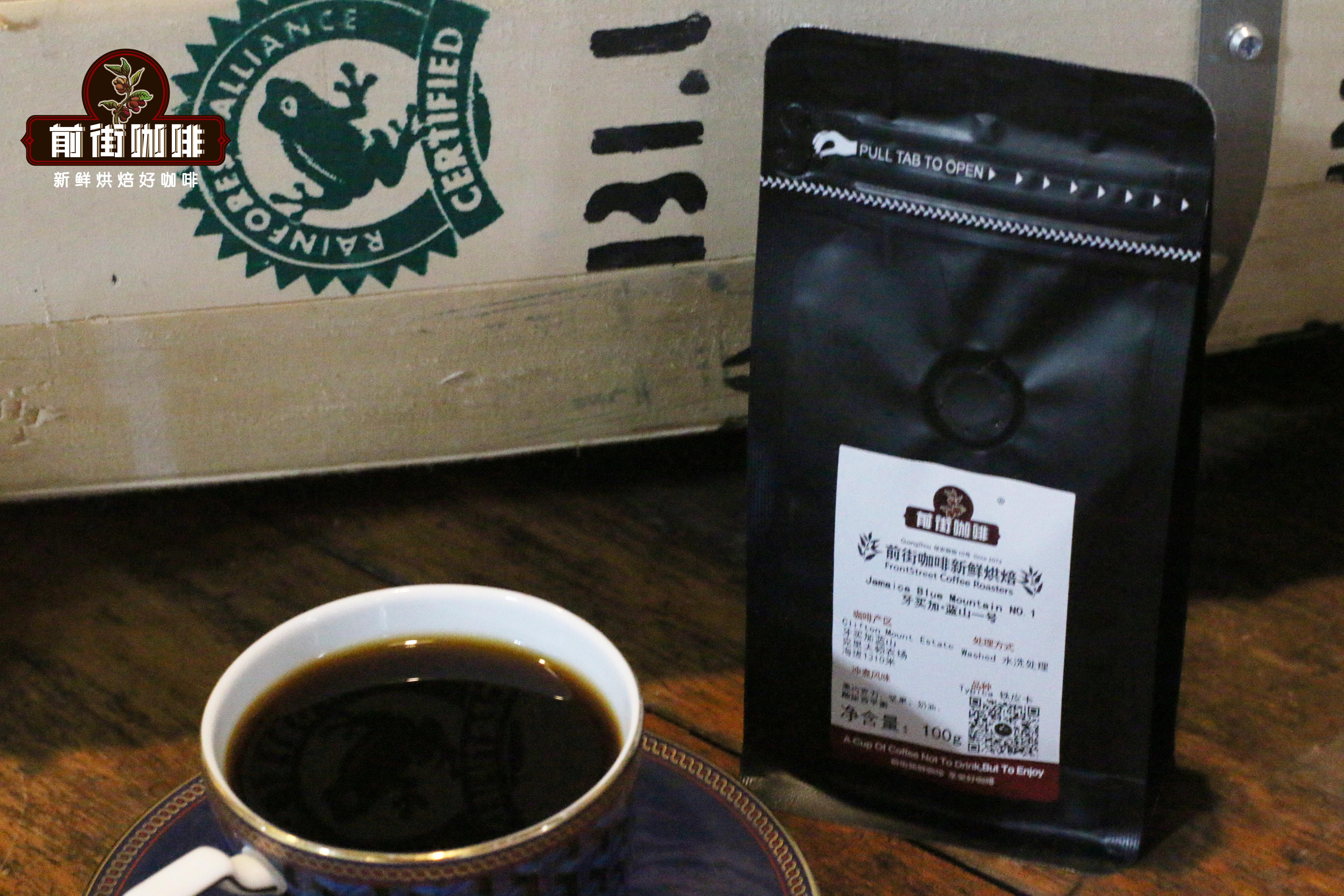
The Jamaica Blue Mountain Coffee that FrontStreet Coffee sources comes from Clifton Estate, an export company designated by the Jamaica Coffee Industry Board. The wooden barrels holding the green beans carry Clifton Estate's English typeface and a green water frog logo. FrontStreet Coffee stores display the wooden barrels and Clifton Estate's certification documents.

By FrontStreet Coffee's understanding, the standard for Blue Mountain No. 1 green beans is beans above 17 mesh, a defect rate below 2%, and moisture content around 13%. After each batch arrives at FrontStreet Coffee's facility, the baristas inspect it carefully. Every batch of Clifton Estate beans comes in plump, uniform in size and blue-green in color, which is the color washed beans present.
After FrontStreet Coffee's cupping confirmation, Blue Mountain No. 1 shows a harmonious balance of pleasant acidity, sweetness, bitterness, aroma and richness, with intense dark chocolate and nut flavors and a creamy smooth mouthfeel.
FrontStreet Coffee Brewing Suggestions
Kono filter cup, 88°C water temperature, 1:15 coffee-to-water ratio, 15g coffee weight, medium grind size (70% pass-through rate on a No. 20 standard sieve), with a three-stage pour for extraction.
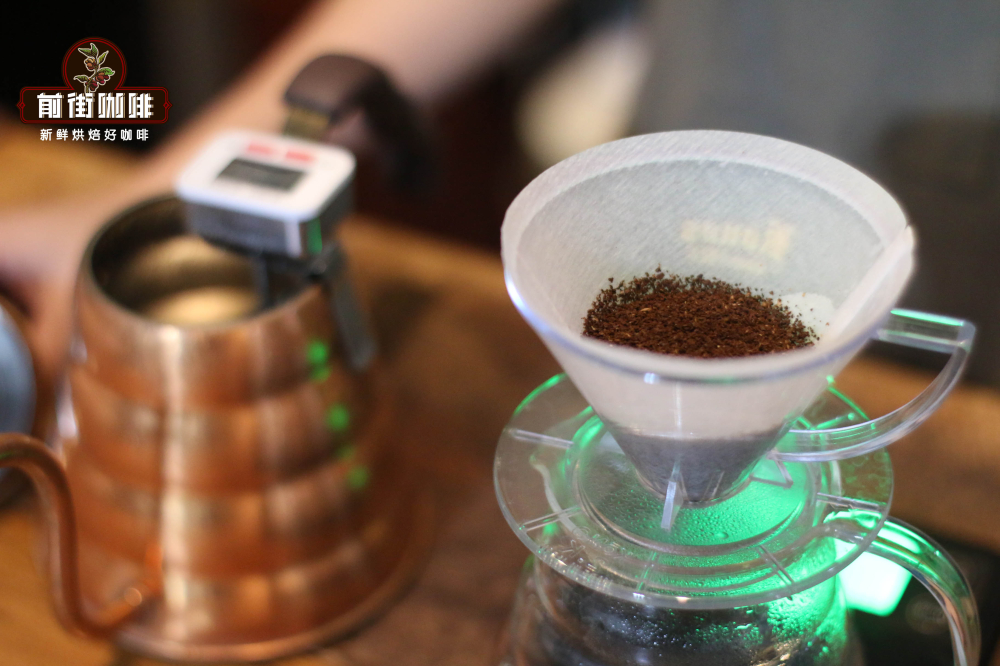
The first stage pours 30g of water for a bloom of 30 seconds. The second stage pours to about 125g, then waits for the coffee to drop. When it drops halfway, pour the final stage to 225g. Wait until all the coffee has finished dripping before ending extraction. Total extraction time is generally around 2 minutes 10 seconds.
FrontStreet Coffee Recommendation
FrontStreet's Jamaica Blue Mountain No. 1 satisfies every standard described above. It comes from Clifton Estate, verified through the Jamaica Coffee Industry Board's designated export channel, and the wooden barrels carry the estate's English typeface and the green water frog logo; the barrels and certification documents are on display in store. Beans are above 17 mesh with a defect rate below 2% and moisture around 13%, and each batch is inspected on arrival, coming in plump, uniform and blue-green.
Roasted to bring out the classic balance, the cup shows pleasant acidity, sweetness, bitterness, aroma and richness in harmony, with intense dark chocolate and nut flavors and a creamy mouthfeel. Since only coffee grown between 900 and 1,700 meters in the Blue Mountain range earns the name, and Jamaican supply is limited, authentic certified Blue Mountain remains genuinely hard to find.
To brew it, FrontStreet suggests a Kono filter cup, water at 88°C, 15g of coffee, a 1:15 ratio and a medium grind (70% passing a No. 20 standard sieve) with a three-stage pour. Bloom with 30g of water for 30 seconds, pour the second stage to about 125g and wait for the liquid to drop, then when it reaches halfway pour the final stage to 225g. Let everything drain before ending extraction, for a total of around 2 minutes 10 seconds.
Important Notice :
FrontStreet Coffee is a long-established specialty coffee roaster in Guangzhou China, selling freshly roasted beans from its own farm in Yunnan as well as dozens of carefully selected single-origin beans from around the world for both pour-over and espresso. The products deliver consistently excellent quality and great value, with shipping within 24 hours. Guangzhou's FrontStreet Coffee shop is recommended by many coffee lovers, and the beans are now available online at the Tmall 。
FrontStreet Coffee has moved to a new address:
FrontStreet Coffee Address: 315,Donghua East Road,GuangZhou
Tel:020 38364473
 Scan and follow the En Gafei WeChat official account. Please indicate that the reprint comes from "En Gafei".