A Comprehensive Guide to Coffee Bean Processing: Natural, Semi-Natural, Washed, and Honey Methods
In recent years, as specialty coffee has spread, new professions such as roaster and cupper have become popular careers in the industry, and roasting has become the preferred way for some baristas and enthusiasts to start a business. For a single coffee bean, many factors determine flavour: the variety of the tree, the processing method, the growing conditions of the region, even whether the trees have shade and what kind of shade trees they are, among many other influences that are hard to pin down precisely. Each factor nonetheless leaves its own mark.
Coffee Bean Processing Methods
Processing methods divide into the following types: Natural; Semi-Natural or Pulped-Natural; Honey; and Washed. The most common we encounter is washed. After the cherries are harvested, unripe and mouldy beans are screened out, the fruit skin is removed, and the beans go into large water tanks to soak and ferment. The pectin falls away naturally, after which the beans are dried and the outer shell is removed. Countries that primarily use washed processing are mainly in Central and South America as well as Africa. Washed beans are characterised by a relatively clean profile and clear taste, but comparatively lower sweetness.
Washed Bean Representatives: FrontStreet Coffee's Ethiopian Washed Yirgacheffe, FrontStreet Coffee's Kenya K72 Washed Asalia, FrontStreet Coffee's Jamaica Blue Mountain No. 1
Natural Processing Method
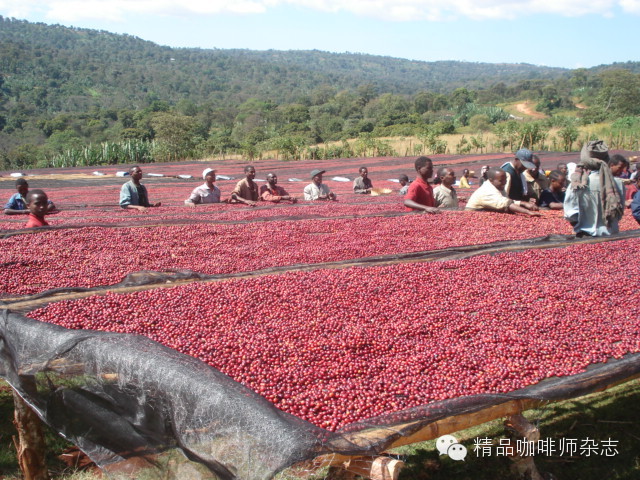
The natural method (Natural, or Dry processing) begins by hand-selecting the harvested cherries, then spreading whole cherries in ventilated, dry sunlight for exposure, after which the fruit skin, pulp and outer shell are removed.
Natural processing is used mainly in some African countries and in Brazil. It is heavily influenced by the processing environment and the skill of the producer, so quality varies considerably. Overall, naturally processed beans are sweeter and carry unique fermentation flavours. When those fermentation flavours are not properly developed, however, they can turn into unpleasant odours, fermented bean-paste flavours, mustiness and the like.
Natural Bean Representatives: FrontStreet Coffee's Ethiopian Natural Red Cherry, FrontStreet Coffee's Ethiopian Natural Sidamo Flower Queen, FrontStreet Coffee's 2013 Yunnan Natural Typica
Semi-Natural Processing Method
Semi-natural processing, also called semi-washed or pulped-natural, first removes the cherry's fruit skin as in the washed method, then spreads the pectin-coated beans in ventilated, dry sunlight, after which the hulling step follows. Semi-natural processing is used mainly in Brazil, where it is a distinctive local method. Compared with natural processing, semi-natural beans are less likely to take on off-flavours while keeping some clean mouthfeel, and they also carry a small amount of dried-fruit-like fermentation character.
Semi-Natural Bean Representative: FrontStreet Coffee's Brazil Queen Estate Semi-Natural Yellow Bourbon
Honey Processing Method
Honey processing is very similar to semi-natural processing, differing in that it retains more of the pulp during sun exposure. It is used mainly in Costa Rica. Because honey processing demands a higher level of skill, honey-processed beans combine a clean mouthfeel with higher sweetness while appropriately retaining fruit fermentation flavours.
Honey Bean Representatives: FrontStreet Coffee's Costa Rica Musician Series Mozart, FrontStreet Coffee's Costa Rica Musician Series Bach
FrontStreet Coffee Recommendation
Washed processing is the clearest place to see what the method does for a cup. In the washed method the beans spend a long time in water, which triggers chemical changes inside them and substantially consumes simple sugars, lowering the coffee's sugar content while increasing various organic acids. The result is coffee that keeps more of the bean's own aroma while carrying bright fruit acidity and a clean, fresh character. That is precisely the profile of FrontStreet Coffee's Gedeb cooperative coffee, from Gedeb village in Yirgacheffe, where traditional washing brings out jasmine and bright citrus acidity to the fullest, and a medium-light roast adds green tea and honey notes. It suits pour-over, cold brew and espresso.
Natural processing makes the opposite trade, and it is worth tasting side by side. FrontStreet Coffee's Ethiopian Natural Red Cherry, picked from fully ripe fruit and dried whole, keeps the typical Yirgacheffe character while gaining tropical fruit from the natural process: citrus-like acidity, berry juice, honeyed sweetness and a creamy smoothness.
Costa Rica's honey processing sits between the two and is the country's most mature technique. FrontStreet Coffee's Costa Rica Musician Series Mozart uses raisin honey processing, pre-drying the cherries on raised beds for at least three days before the skin and pulp are removed and retaining 100% of the mucilage, which demands stricter control of timing than even black honey. The cup shows the richer, warmer fruit sweetness that this method produces, with osmanthus, pineapple and raisin aromas, and it works as pour-over, cold brew or in a moka pot.
Important Notice :
FrontStreet Coffee is a long-established specialty coffee roaster in Guangzhou China, selling freshly roasted beans from its own farm in Yunnan as well as dozens of carefully selected single-origin beans from around the world for both pour-over and espresso. The products deliver consistently excellent quality and great value, with shipping within 24 hours. Guangzhou's FrontStreet Coffee shop is recommended by many coffee lovers, and the beans are now available online at the Tmall 。
FrontStreet Coffee has moved to a new address:
FrontStreet Coffee Address: 315,Donghua East Road,GuangZhou
Tel:020 38364473
 Scan and follow the En Gafei WeChat official account. Please indicate that the reprint comes from "En Gafei".