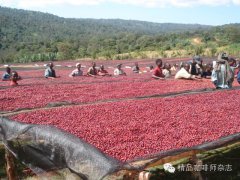
Honduras Coffee Beans Flavor and Taste Characteristics: Introduction to Sherry Coffee Bean Barrel Processing

The Rise of "Morning Coffee, Evening Alcohol"
China's beverage market keeps growing, and the habit of drinking only coffee or only alcohol is gradually giving way to the morning coffee, evening alcohol lifestyle. Some people who want to stay clear-headed in the morning still find themselves drawn to the aroma of spirits, and for them coffee beans with spirit-like aromas are ideal. Many customers come to FrontStreet Coffee's shops to order pour-over made from Honduras Sherry, remarking on its distinctive spirit aroma and wanting to know more about the beans. FrontStreet Coffee introduces Honduras coffee below.
Honduras
Honduras lies in northern Central America, bordered by the Caribbean Sea to the north and the Pacific's Gulf of Fonseca to the south. It shares borders with Nicaragua and El Salvador to the east and south and with Guatemala to the west, and its terrain is mostly mountainous highland. The country has a tropical climate with mild temperatures and abundant rainfall, making it an ideal place to grow coffee.
Honduras produces two types of exceptionally high-quality coffee that drinkers prize. One is Highland Coffee, grown between 1,000-1,500 meters, and the other is Selected Highland Coffee, grown between 1,500-2,000 meters, the country's highest grade.
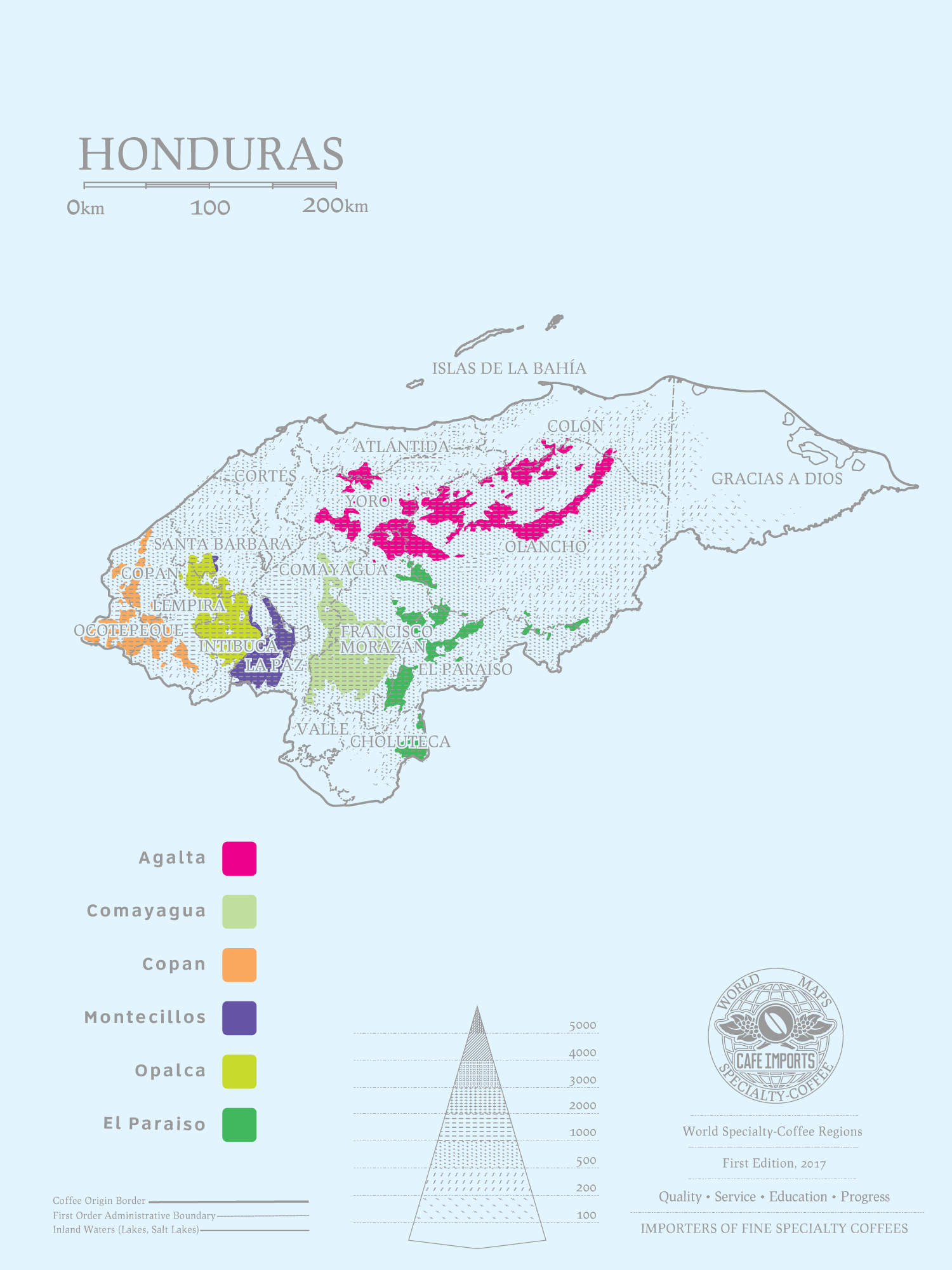
Today Honduras is the largest coffee-producing country in Central America. Its growing regions fall into roughly six: Copán, Montecillos, Agalta, Opalaca, Comayagua and El Paraíso.
Copán Region
This region lies in western Honduras, bordering Guatemala. Average elevation runs from 1,000 to 1,500 meters, with high humidity and significant temperature variation, minimum temperatures reaching 11.5°C.
Montecillos Region
Growing areas in Montecillos sit at an average elevation between 1,200 and 1,600 meters, with cooler night temperatures ideal for the slow maturation of the cherries, which produces a sweeter bean. Coffee from this region shows citrus, peach and apricot fruit notes, caramel-like sweetness and a smooth mouthfeel.
Agalta Region
Agalta lies in southeastern Honduras, where the climate is more typically tropical, with growing elevations between 1,100 and 1,400 meters. Coffee from Agalta has tropical fruit and chocolate flavours, low acidity and caramel sweetness.
Opalaca Region
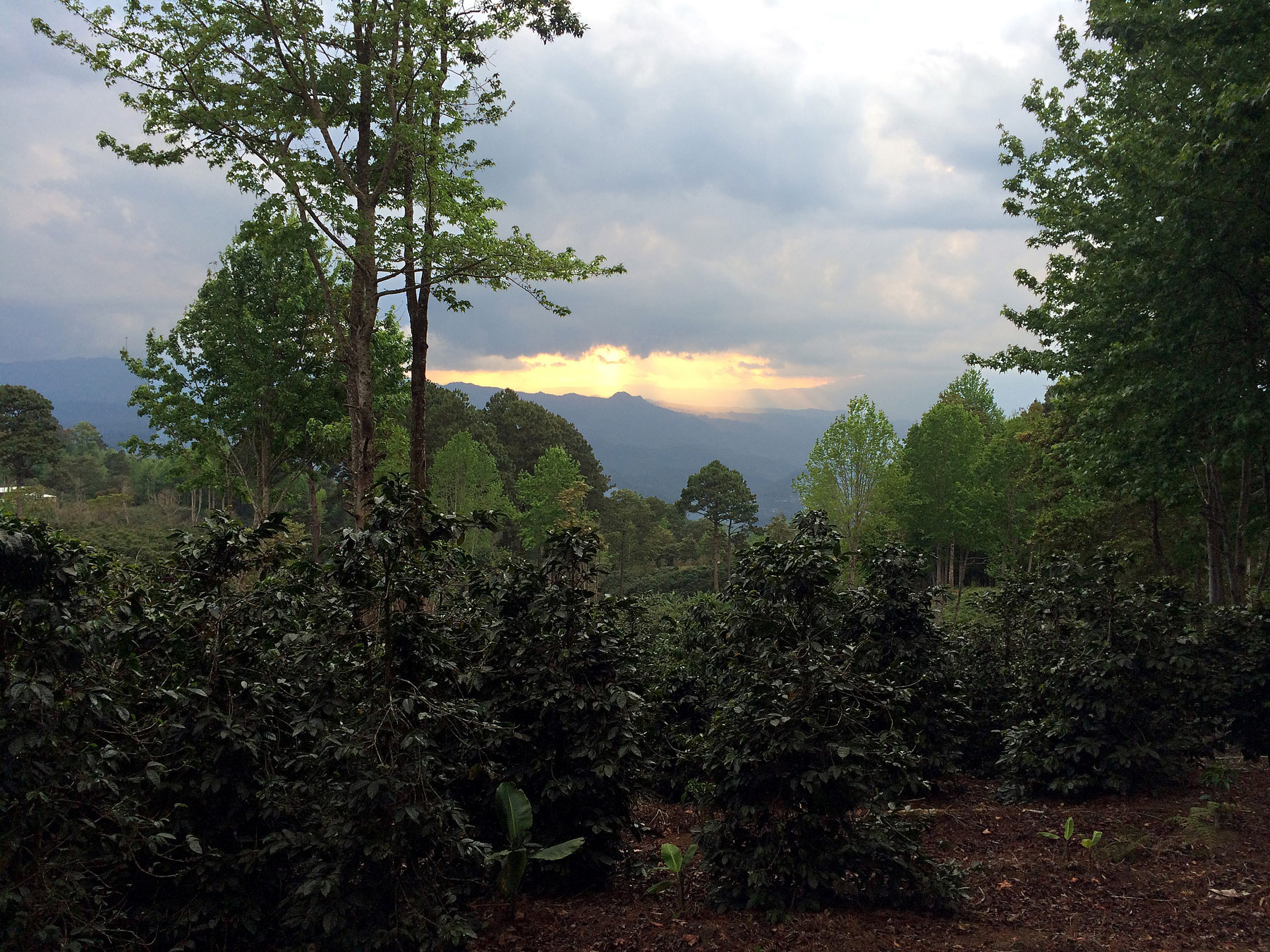
Opalaca borders Copán. Common varieties here include Bourbon, Catuai and Typica, with growing elevations from 1,100 to 1,500 meters. Coffee from Opalaca has more complex layers, more refined acidity and a more balanced aftertaste.
Comayagua Region
Comayagua lies in central Honduras. In 2016 it had the highest coffee production in the country. Coffee from Comayagua features citrus acidity and a creamy mouthfeel.
El Paraíso Region
El Paraíso lies in southern Honduras, bordering Nicaragua. Growing elevations run from 1,000 to 1,400 meters, with higher temperatures between 16°C and 22.5°C. It is Honduras' largest and oldest coffee-growing region.

Coffee Varieties
FrontStreet Coffee's bean menu features two Honduras coffees, Sherry and Lychee Orchid. Lychee Orchid is made up of the Caturra and Catuai varieties, while Sherry is Caturra, Catuai and Pacas.
Caturra
Caturra is a natural mutation of Bourbon, discovered between 1915 and 1918 on a plantation in Minas Gerais, Brazil. Caturra plants are smaller, allowing higher planting density. The variety reached Guatemala in the 1940s and later spread from there to Costa Rica, Honduras and Panama.

Catuai
Catuai is a hybrid developed by the Sao Paulo State Agricultural Research Institute in Brazil, crossing Mundo Novo with Caturra. Catuai plants are more compact, allowing denser planting, but they are susceptible to pests and disease.
Pacas
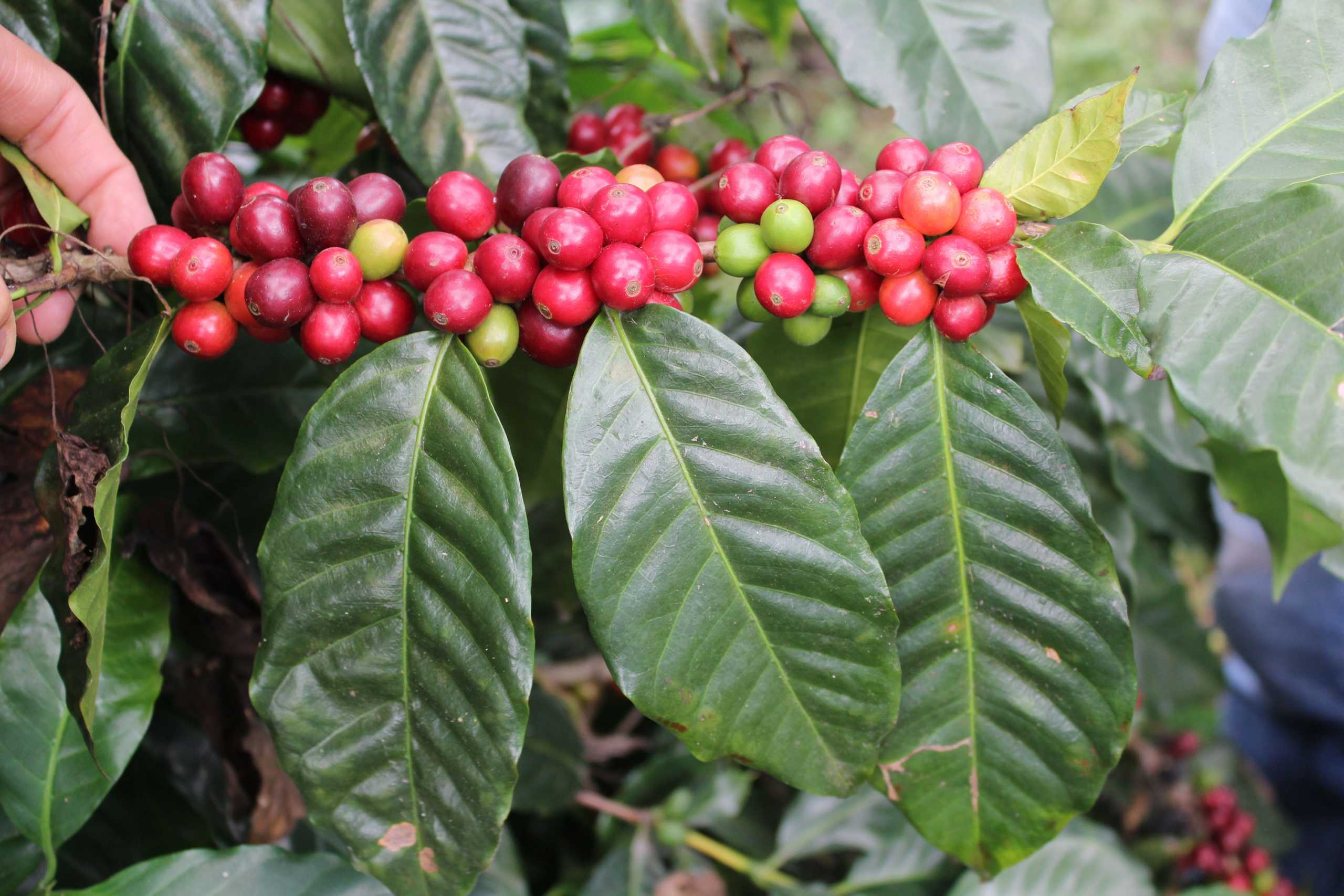
The Pacas variety was discovered in 1949 on a farm owned by the Pacas family in the Santa Ana region of El Salvador. In 1960 the Salvadoran Coffee Research Institute (ISIC) began a pedigree selection program for Pacas, selecting individual plants through successive generations. Honduras' IHCAFE introduced and began cultivating the variety in 1974. Pacas is also a natural mutation of Bourbon, similar to Caturra with relatively small plants, but it offers higher yields and excellent quality.
Processing Methods
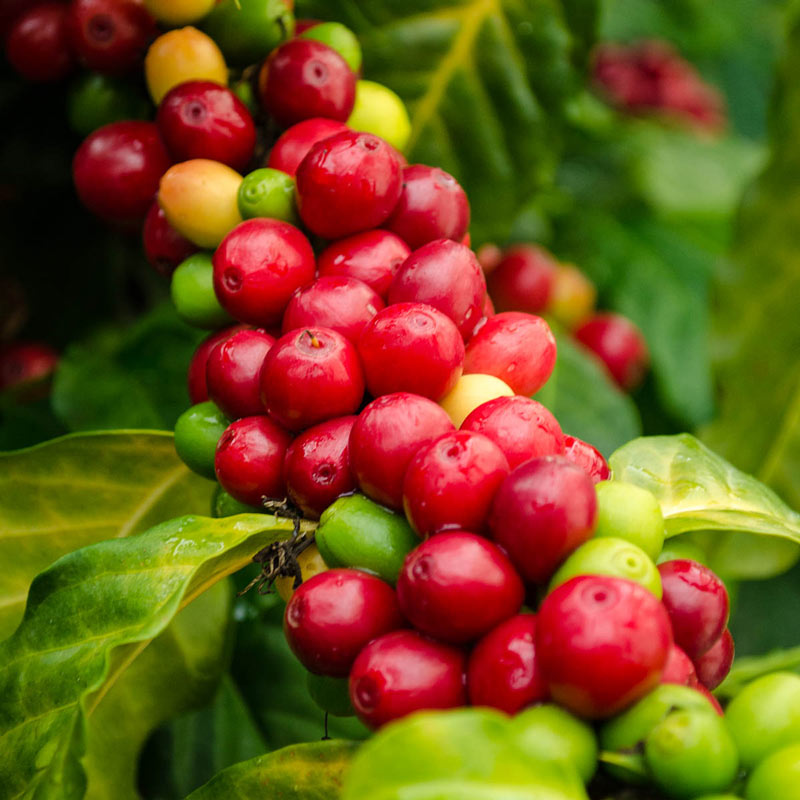
High-quality Honduras coffee generally uses the washed method. It begins with soaking, during which defective fruits float to the surface and are removed and discarded. The good fruits then go into a pulping machine, where rotational force removes the skin. The pulped fruits are sorted mechanically to select the highest quality beans, and larger fruits generally mean better maturity.
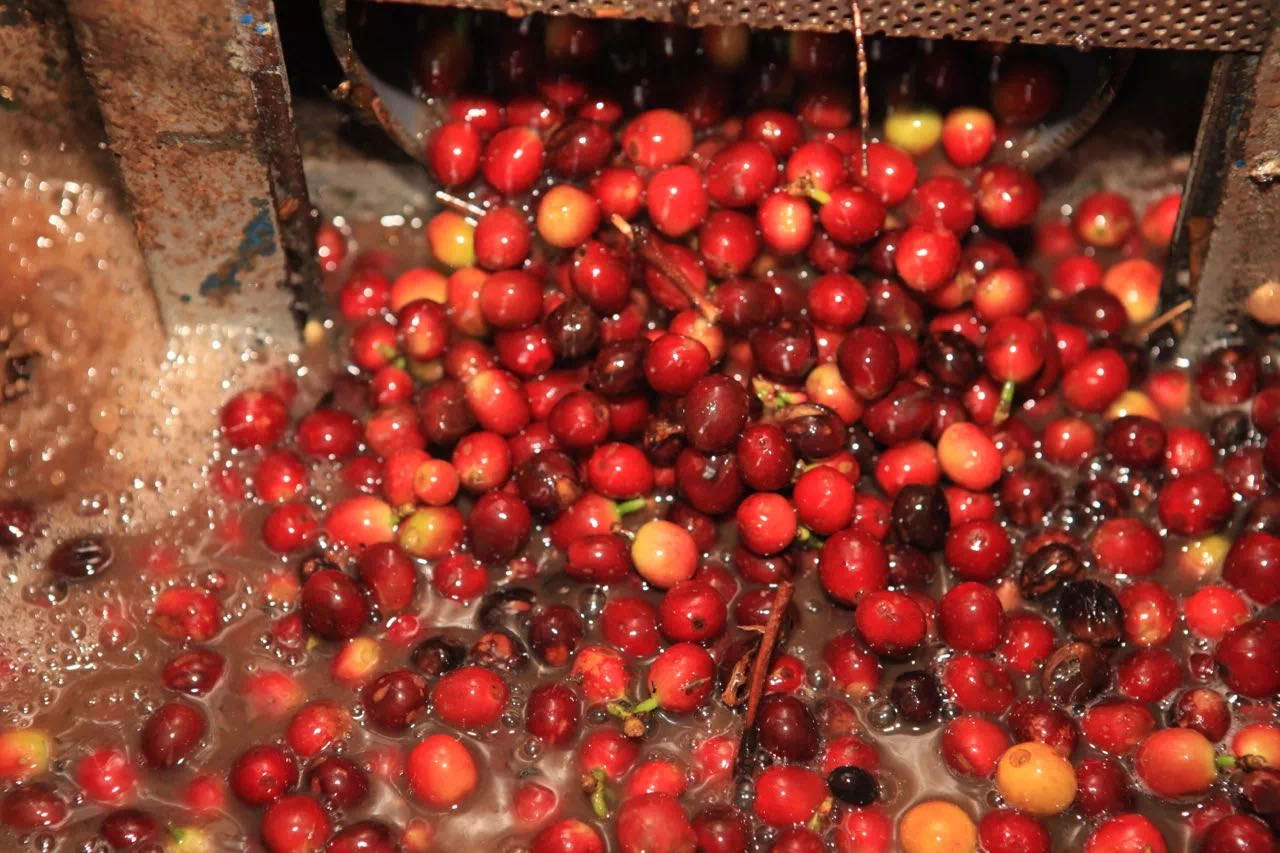
FrontStreet Coffee's Honduras Sherry beans, after washing, are placed in spirit barrels for fermentation. Sherry belongs to the whisky-barrel fermented category.

FrontStreet Coffee's Honduras Sherry
Region: Finca Masaquara, Honduras
Elevation: 1500m-1700m
Processing Method: Fine Washed + Whiskey Barrel Fermentation
Varieties: Caturra, Catuai, Pacas
FrontStreet Coffee's Sherry is washed and then placed in sherry whisky barrels for low-temperature fermentation at 15°C to 20°C for 30-40 days, followed by drying in shaded areas. Sun drying is avoided because, after exposure to sun, the spirit aroma breaks down as temperatures rise and can produce more fermentation acids.
Brewing Recommendations
FrontStreet Coffee Brewing Parameters
Filter: Hario V60
Water Temperature: 90°C
Coffee Dose: 15 grams
Coffee-to-Water Ratio: 1:15
Grind Size: EK 43s #10 (80% pass-through rate on standard #20 sieve)
Brewing Technique
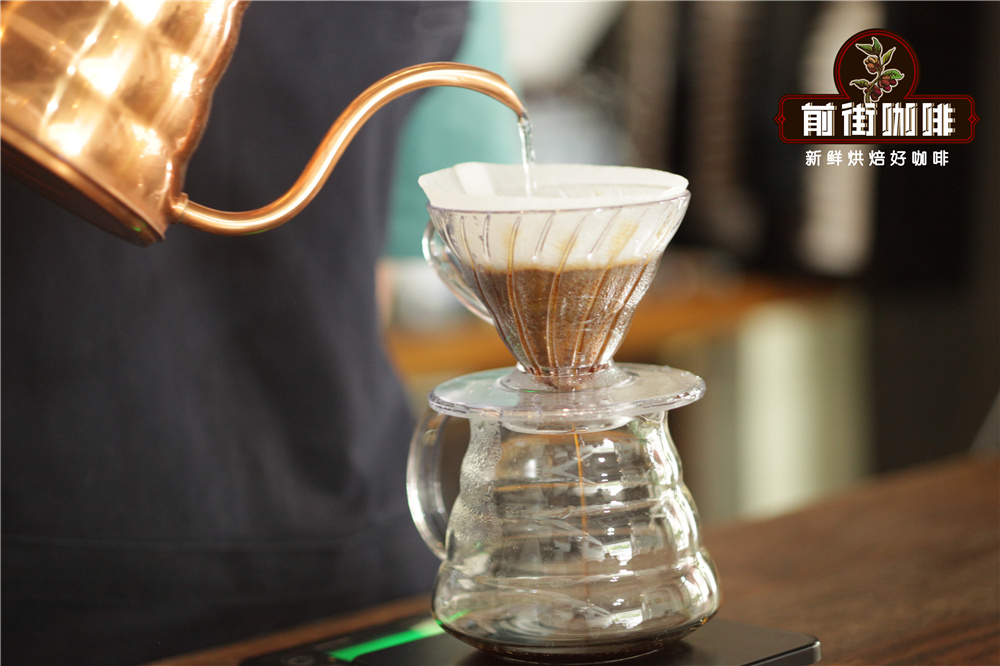
When brewing Honduras Sherry, FrontStreet Coffee uses a three-stage pour. First pour 30 grams of water to saturate the grounds fully and bloom for 30 seconds. Then, with a small circular stream, pour to 125 grams and stop. Wait until the water level drops to just before the coffee bed is exposed, then continue pouring in a circular motion to 225 grams and stop. Remove the filter once all the water has dripped into the serving pot, timing from the bloom, for a total extraction time of 2'00".
Honduras coffee has a rich, full flavour with neither bitterness nor excessive acidity, offering high body and aromatic intensity, which makes it quite distinctive. FrontStreet Coffee's Honduras Sherry shows this well: it enters with a cream-like smoothness, accompanied by whisky and vanilla aromas and berry-like acidity, and finishes with black chocolate and honey.
FrontStreet Coffee Recommendation
Honduras Sherry is brewed above in a V60, and the Hario V60 is a good lens on why. Hario, the Japanese glassmaker, was founded in Tokyo in 1921 and began as a maker of heat-resistant glassware for scientific use, and the glass server that so often accompanies pour-over is one of its products. In 2004 Hario redesigned the prototype of the V60 into the shape we know, naming it for its 60-degree cone and V shape, and launched it the following year. Its conical 60-degree angle forces water to travel to the centre before dripping through, extending contact with the coffee, while the single large hole lets the flow run freely, so the speed depends almost entirely on how steadily you pour.
That fast extraction rewards beans with delicate aromatics. FrontStreet Coffee's light-roast Ethiopian options suit it especially well. The washed Yirgacheffe Gedeb, from the Woka area, gives citrus, berry and white floral notes with a green-tea sweetness, and its acidity is soft and bright rather than sharp, so it appeals even to drinkers who usually avoid acidic coffee. If you want more fruit, the Ethiopia Huakui is built on tropical aromatics with strawberry, passion fruit, jackfruit and lychee, obvious sweetness and almost no bitterness, juicy and smooth enough that people call it the coffee that does not taste like coffee. For something more delicate again, the Panama Boquete washed Geisha brings jasmine, green tea, honey and citrus at a far gentler price than the famous estate lots.
Resin V60s are the version FrontStreet Coffee tends to favour: the material holds heat in well, and in standard industrial production it takes shape with the least variance, so the cone you buy performs the way the design intends.
Important Notice :
FrontStreet Coffee is a long-established specialty coffee roaster in Guangzhou China, selling freshly roasted beans from its own farm in Yunnan as well as dozens of carefully selected single-origin beans from around the world for both pour-over and espresso. The products deliver consistently excellent quality and great value, with shipping within 24 hours. Guangzhou's FrontStreet Coffee shop is recommended by many coffee lovers, and the beans are now available online at the Tmall 。
FrontStreet Coffee has moved to a new address:
FrontStreet Coffee Address: 315,Donghua East Road,GuangZhou
Tel:020 38364473
 Scan and follow the En Gafei WeChat official account. Please indicate that the reprint comes from "En Gafei".