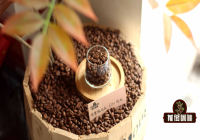
Panama La Esmeralda Estate - Official Coffee Bean Introduction from the Emerald Estate

Ask any specialty coffee lover to name the ultimate pour-over bean and Geisha will come up almost immediately. FrontStreet Coffee's bean list alone carries dozens of Geisha options, which can feel dizzying. But if you want to understand Geisha and taste its classic signature profile, FrontStreet Coffee recommends starting with Panama Esmeralda Geisha — because Geisha's exalted status today owes a great deal to one famous estate: Hacienda La Esmeralda.
Hacienda La Esmeralda — The Estate That Discovered Geisha
Hacienda La Esmeralda, also translated as Esmeralda Estate, was purchased in 1964 by the retired American banker Rudolph Peterson, who moved to Panama and settled in the Boquete region in the country's west. Sitting between the Pacific and the Atlantic, the area enjoys a classic tropical maritime climate, with lingering mountain mist that provides ideal shade for coffee trees. Mineral-rich volcanic ash soil, abundant rainfall, wide day-night temperature swings, and microclimates shaped by rolling terrain all combine to produce coffee of remarkable depth. For more about the estate, you can visit its official website at haciendaesmeralda.com.

The Geisha variety was originally brought to Panama as an improvement cultivar. With low yields and only average flavor at low altitudes, it never caught on among local farmers. When Rudolph A. Peterson bought Hacienda La Esmeralda in Boquete in the 1960s, his primary business was dairy farming. In 1973, his son returned to Boquete to help manage the farm, began taking coffee seriously, expanded the planted area, and introduced new varieties — Geisha among them.
In the 1990s, leaf rust swept through much of the farm, yet Daniel Peterson noticed the Geisha trees were barely affected. The family decided to transplant Geisha trees into more of the estate's land and pushed them to higher altitudes. In 2003, the Petersons finally realized what they had. The first cupping revealed intense white florals, berries, citrus, and a bergamot-like finish with an exceptionally clean mouthfeel — the classic Panama Geisha profile was born. Astonished, the family entered it in the 2004 Best of Panama (BOP) competition, where it went on to win consecutive championships.

In 2005, Hacienda La Esmeralda entered its Geisha in the Specialty Coffee Association of America (SCAA) competition, beating out a field of star contenders to claim world-class specialty coffee honors, then swept the world championships again in 2006 and 2007. Coffee professionals everywhere took notice. Since then, producers across Central and South America — Colombia, Guatemala, Bolivia, and more — have rushed to plant Geisha, and in recent years even Yunnan in China has produced small quantities. But if you want the classic Geisha flavor, FrontStreet Coffee believes nothing represents it better than Panamanian Geisha.
What Makes FrontStreet Coffee's Esmeralda Geisha Special?
After winning Best of Panama in 2004, the estate's Geisha kept shattering auction price records year after year. Hacienda La Esmeralda not only made Geisha famous but was also the first estate to grade its Geisha rigorously, and each year's lots draw close industry attention. After the championship wins, the Peterson siblings began managing the estate's Geisha trees systematically by altitude, region, and cupping performance.

Broadly, the estate's Geisha grows across three major plots: Cañas Verdes, Jaramillo, and El Velo. To guarantee traceability, each major plot is further divided into smaller sub-plots, so buyers can look up exactly where a given batch was grown simply by its lot number.
Geisha was first discovered in the Jaramillo plot, and it was also here that Daniel and his family first moved Geisha to higher altitudes. As the birthplace of the estate's Geisha program, Jaramillo is Hacienda La Esmeralda's most famous plot, with an average altitude above 1650 meters. The cool, moist mountain air gives the coffee a natural, intensely fragrant character. Jaramillo is divided into five sub-plots: Mario, Noria, Reina, Bosque, and Buenos Aires, of which Mario and Bosque have performed especially well in major competitions.

The estate's processing mill sits in Cañas Verdes, at the foot of the Barú Volcano, about a twenty-minute drive from Boquete town. Each harvest, workers pick only perfectly ripe cherries by hand and follow strict selection standards, then rush the fruit to the mill for further screening in the shortest possible time.
What Are Red Label and Green Label?
FrontStreet Coffee carries roughly ten Geisha options, and newcomers often wonder what "Red Label" and "Green Label" actually mean.

Red Label is the estate's Esmeralda Special grade (including the auction lots). The top Red Label coffees come from high-altitude Geisha grown at 1600-1800 meters with cupping scores above 90 points, drawn mainly from the Jaramillo and Cañas Verdes farms. Despite the challenges of cultivating and harvesting at altitude, Geisha's florals and fruit are most pronounced in the Boquete region. Hacienda La Esmeralda runs its own auction, and Red Label batches taken from designated plots for bidding are called bid lots. Each bid lot carries a unique number corresponding to one entire batch from a specific plot — the Mario plot of Jaramillo is the most famous. The Red Label Geisha FrontStreet Coffee obtained comes from the Mario plot and is naturally processed.

FrontStreet Coffee likes to compare brewing coffee to cooking: variety and terroir create the quality of the "ingredients," while processing is the critical step that prepares them. Traditional natural processing let Geisha display its rich fruit character in the 2004 Best of Panama competition, and the estate's exacting standards at every stage of green bean processing protect that quality.
For its naturals, Hacienda La Esmeralda spreads freshly harvested ripe cherries out to dry whole, pulp and skin intact, so the beans absorb more fruit aroma. Drying time depends on the weather and the drying surface. Typically the cherries sun-dry on concrete patios for 3-5 days at 8 hours per day, then finish in rotating mechanical dryers for 72 hours to complete drying and prevent fermentation. Once dry, hullers remove the dried shell. FrontStreet Coffee finds naturally processed Geisha shows more fruit-fermentation sweetness and acidity.

Green Label refers to the Private Collection grade. These lots also come from trees grown at 1600-1800 meters, all harvested from Jaramillo and Cañas Verdes, but the estate does not specify plot information and they do not enter the auction. Though a tier below Red Label, Green Label captures the signature classic profile of high-altitude Geisha at a friendlier price. The Green Label Geisha FrontStreet Coffee carries is washed processed, cupping with fresh, clean lemon, berry, grapefruit, and Tieguanyin tea notes.

In washed processing, screened cherries first pass through a pulper to strip away skin and most of the pulp; the beans, still coated in sticky mucilage, then ferment in water for about 24 hours; next they are washed through channels of flowing water to remove the remaining mucilage; after washing, the parchment coffee is sun- or machine-dried to about 12% moisture; finally the parchment is hulled off. FrontStreet Coffee finds that as one of the most traditional processing methods, washing not only makes quality more consistent but also gives Geisha greater clarity — fresh, bright, and floral, like a cup of Tieguanyin tea.
FrontStreet Coffee's Barista's Pour-Over Suggestions
Different Geisha lots grow in different environments, so roasters adjust accordingly, but the overall roasting direction highlights Geisha's florals and fruit acidity with a medium-light roast. For high-altitude dense beans with prominent acidity, FrontStreet Coffee suggests water at 92-93°C to coax out more aromatics.

FrontStreet Coffee brews in multiple pours. After grinding, add the coffee to the filter paper and pour 30g of water from the center to bloom for 30 seconds. Keep the pour gentle throughout, moving steadily in circles from the center outward. Pour 95g of water in the second pour, and once the liquid has nearly drained, begin the third pour of 100g. When everything has filtered through, remove the dripper. Total brew time runs about 2 minutes, give or take 10 seconds.

FrontStreet Coffee compared the natural Red Label Geisha lot with the washed Green Label. The Red Label opens with an intense rose aroma the moment it's ground, fills the mouth with mango and tropical fruit, and coats the palate with a smooth, creamy texture — less like coffee than a floral fruit tea. The Green Label is cleaner and brighter, with jasmine florals, sweet-tart berries and lemon, and a lingering green tea finish.
FrontStreet Coffee Recommendation
If a full auction-lot Esmeralda is out of reach, FrontStreet Coffee's Boquete Geisha is an excellent entry point into the classic Panama profile. This entry-level Geisha delivers the signature orange-blossom sweetness and honeyed character of high-quality Panamanian Geisha, with delicate fruit acidity, a distinct oolong-tea-like finish, and clear layering — all at an accessible price. For those ready to step up, the Esmeralda Green Label (Private Collection) Geisha offers that same high-altitude classic profile with fresh lemon, berry, and grapefruit notes and excellent value.
Important Notice :
FrontStreet Coffee is a long-established specialty coffee roaster in Guangzhou China, selling freshly roasted beans from its own farm in Yunnan as well as dozens of carefully selected single-origin beans from around the world for both pour-over and espresso. The products deliver consistently excellent quality and great value, with shipping within 24 hours. Guangzhou's FrontStreet Coffee shop is recommended by many coffee lovers, and the beans are now available online at the Tmall 。
FrontStreet Coffee has moved to a new address:
FrontStreet Coffee Address: 315,Donghua East Road,GuangZhou
Tel:020 38364473
 Scan and follow the En Gafei WeChat official account. Please indicate that the reprint comes from "En Gafei".