What are the origins and regions of Kenyan coffee? Introduction to Kenyan coffee flavor and tasting appreciation

Kenyan coffee makes an unforgettable impression on anyone who tastes it, thanks to its bright fruit acidity and vivid, full-bodied character. FrontStreet Coffee has cupped countless beans from across Kenya, and if high acidity is the soul of good coffee, then Kenya is where that soul speaks loudest. Kenyan beans also carry a trait that sets them apart: most coffees with such bright acidity feel thin in the mouth, yet Kenya delivers a mouth-coating berry-juice sensation. Ethiopian beans, by contrast, feel clean and refreshing on the palate, while Kenyan coffee floods the whole mouth, almost like tomato juice.
Development History of Kenyan Coffee

Kenya sits in East Africa, bordering Ethiopia. Its coffee history is younger than Ethiopia's: coffee arrived only around the turn of the 20th century, when Kenya was a British colony. The colonial government promoted coffee cultivation widely to earn foreign exchange, shipping the harvested beans to London for export sales.
In 1922 Kenya established the Scott Agricultural Laboratories (Scott Labs, the source of the SL28 and SL34 names) to research coffee cultivation. Within the decade that followed, researchers selected SL28 and SL34 as the most suitable varieties for the region out of 42 candidates, giving the young industry an excellent foundation. Today those two varieties cover 90% of Kenya's coffee area.

The Kenyan government has always taken coffee sales seriously. In 1931 it founded the Kenya Growers' Cooperative Union and the Kenya National Coffee Committee to guide the industry from both the grassroots and the national level. In 1937 the Nairobi Coffee Exchange opened, launching Kenya's coffee auction system, establishing the principle that good coffee earns good prices, and setting the tone for how coffee is priced. In 1938 the government issued a coffee grading system (the AA, AB, and PB grades we know today), giving Kenyan coffee a formal quality benchmark.
Kenyan Coffee Cultivation
Most Kenyan coffee grows in the fertile, loose, acidic volcanic red soil of the highlands north and east of Nairobi. This area enjoys ample sunlight, good drainage, and altitudes between 1,400-2,000 meters. Because the temperature difference between day and night is greater at altitude, Kenyan coffee ripens more slowly than coffee at lower origins, resulting in denser beans and richer flavor.

Kenyan coffee typically flowers after the rains of March and April. The cherries mature from May to July, then mature again in September and October, allowing for two harvest seasons each year.
Kenyan Coffee Regions
Kenya's coffee regions are divided into six main areas: Thika, Kirinyaga, Mt. Kenya West, Nyeri, Kiambu, and Muranga. All six harvest from October to December (the main season) and from June to August (the secondary season).
Thika
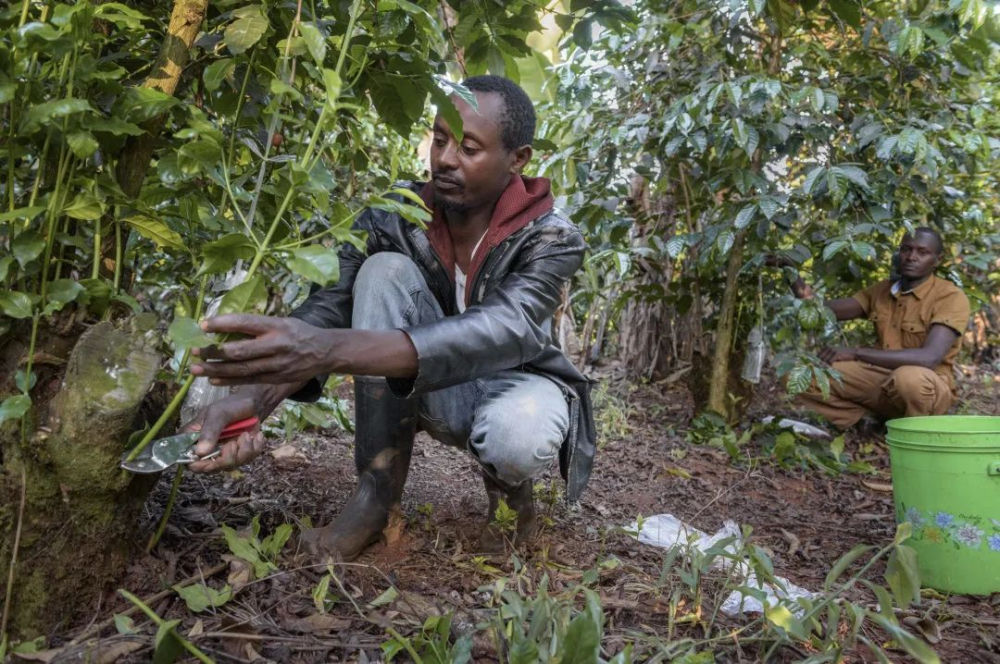
Thika is a small town near Kenya's capital, Nairobi. Many coffee fields surround the capital, and Thika is an industrial town ringed by farmland and waterfalls. Around 2,000 farmers work in the Thika area. Coffee cultivation here dates back to the late 19th century, when varieties were introduced from neighboring Ethiopia to the north. Through local improvement, the common varieties now include Bourbon, Kents (SL34, SL28), Typica, and Ruiru 11, with SL34 and SL28 accounting for about 90% of plantings. The newer Batian variety, introduced in 2007, has not yet been widely planted. Coffee from this region shows bright fruit acidity, a thick berry-juice texture, and honey-like sweetness.
Altitude: 1,550-1,750 meters
Varieties: SL-28, SL-34
Kirinyaga
Kirinyaga sits on the slopes of Mount Kenya next to the Nyeri region, and is renowned worldwide for coffee with intense, complex flavor and a solid body. Together with Nyeri, it is recognized as one of Kenya's two finest coffee-producing regions. Most producers here are smallholder farmers who belong to cooperatives. The cooperatives coordinate the work and run the washing stations where members deliver their cherries for processing. Kirinyaga coffee shows bright fruit acidity, moderate body, and delicate sweetness.
Altitude: 1,300-1,900 meters
Varieties: SL-28, SL-34, Ruiru 11, Batian

Mount Kenya West
Mount Kenya West includes the Kisii region and the Bungoma area of Mount Elgon. Kisii lies in southwestern Kenya, not far from Lake Victoria, and is a relatively small producing area where most beans come from cooperatives formed by small producers. The flavor here differs noticeably from the central regions: roasted nuts and gentle fruit acidity, widely favored by buyers who dislike sharp acidity.
Altitude: 1,450-1,800 meters
Varieties: SL-28, SL-34, K7
Nyeri
Located in central Kenya, Nyeri is home to the extinct volcano Mount Kenya. The red soil of this region nurtures Kenya's finest coffee. Agriculture is extremely important here, with coffee as the primary crop. Cooperatives formed by smallholder farmers are more common than large estates. Nyeri has two harvest seasons, but the main-season coffee is generally higher in quality. The coffee here shows a bright berry-juice character with citrus and subtle floral notes. The beans grown here made Kenyan coffee world-famous.
Altitude: 1,200-2,300 meters
Varieties: SL-28, SL-34, Ruiru 11, Batian
Kiambu
This region in central Kenya has the highest-altitude coffee growing areas in the district. However, some coffee trees at these altitudes suffer from dieback disease and stop growing. The region takes its name from Nakuru town. Coffee here comes from both estates and smallholder farmers, though production is relatively small.
Altitude: 1,850-2,200 meters
Varieties: SL-28, SL-34, Ruiru 11, Batian
Muranga
The Muranga region belongs to Central Province and has approximately 100,000 coffee farmers. This inland region was one of the first settlement areas chosen by missionaries, because the Portuguese barred them from living in coastal areas. Another region blessed with volcanic soil, it has more smallholder farmers than estates. Coffee from this region has bright acidity and a thick, juice-like body.
Altitude: 1,350-1,950 meters
Varieties: SL-28, SL-34, Ruiru 11, Batian

Kenyan Coffee Auctions and Direct Trade
Almost all Kenyan coffee must be sold through the Coffee Exchange in the capital, Nairobi. During the harvest season, auctions are held every Tuesday at the Exchange. Licensed traders receive green bean samples in advance, cup them, select their preferred beans, and then bid in the auction, with the highest bidder winning. Kenya's auction system is considered the model for today's popular Cup of Excellence competitions: transparent and efficient, it rewards growers who pursue quality, delivering high prices for premium lots.

Effective as the auction system is at raising the price of high-quality coffee, it is not without drawbacks. First, the many trade intermediaries erode farmers' interests, since the high auction prices do not flow fully back to the people who grew the coffee. Second, auctioned coffee is hard to trace back to specific production information, and traceability is a key standard for evaluating green beans in the growing specialty market. For these reasons, the Kenyan government has begun to relax restrictions on direct coffee trade. Nationally certified exporters can sell beans directly to foreign specialty roasters and other clients, allowing farmers who produce high-quality coffee to be rewarded more fully.
Kenyan Coffee Bean Grading System
From the description above, coffee enthusiasts can see how much emphasis Kenya places on coffee. It is precisely this attention that drives Kenya's pursuit of quality, and that pursuit produced a bean grading system. AA beans, for example, are regarded as the highest quality. But although we call it "grading," does AA necessarily taste better than AB? And what exactly is the grading based on?
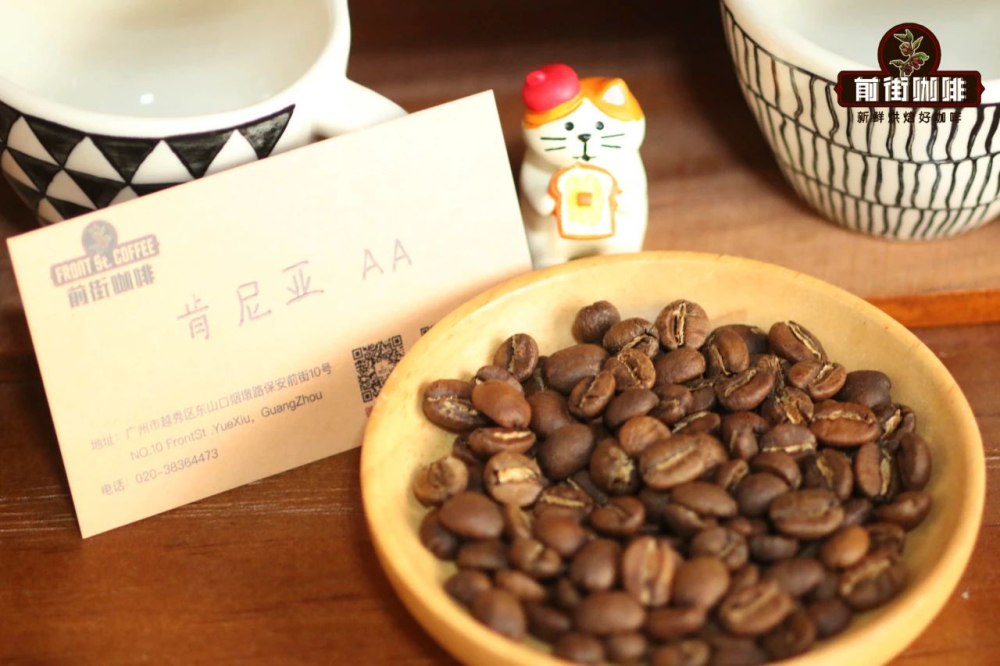
Kenya's coffee bean grading standards rest primarily on size. The difference between AA and AB is only size. As for taste, FrontStreet Coffee has found through cupping that both AA and AB Kenyan beans are very delicious. Regional flavor differences stem mainly from region, altitude, and growing conditions. Even so, AA and AB Kenyan coffees are undoubtedly among the most reliable in quality.
As noted above, these grades are based on bean size only. The most famous processing method for Kenyan beans is undoubtedly the K72 washed process, so Kenya's highest-quality coffees are mainly washed. Washed coffee is generally divided into eight grades:
E: Elephant Bean, also called elephant ear beans, flat beans with a particle size above 19 mesh.
AA: particle size 17-18 mesh
AB: particle size 15-16 mesh, accounting for the majority of production
TT: lighter beans blown out of AA and AB grade beans by an air classifier
C: screen size smaller than AB / below 14 mesh, too small to be classified as specialty grade
T: lighter beans blown out of C grade beans (below 14 mesh) by an air classifier, meaning both size and density are too small to be classified as specialty grade
PB: Peaberry, meaning round beans, classified by shape rather than size, unrelated to flavor or weight, accounting for about 10% of total production.
UG: beans that do not meet any of the above standards
There are also lower-quality natural processed coffees that do not undergo Kenyan-style washing because of their poorer quality and are generally supplied to the domestic Kenyan market. These beans are graded M'buni. FrontStreet Coffee also stresses that this green bean grading system, still in use today, was established by government authorities in 1938, 40 years before the concept of "specialty coffee" existed. Kenya now has newer coffee bean grading concepts, but the size-based grading standard remains the more common one.
Kenya's Current New Coffee Grading Standards:
The Kenyan Coffee Research Institute and the local industry commonly use a set of procedures developed by the institute to evaluate coffee quality: the Coffee Bean Quality Grading Procedure, which grades coffee comprehensively on three aspects: green bean quality, roasted bean quality, and cupping quality.
Green bean quality: subdivided into green bean appearance and size, green bean color, and defects.
Roasted bean quality: subdivided into center crack condition, roasted bean condition, and defective beans.
Cupping quality: scored on acidity, body/texture, flavor, and negative defects.

Combining the scores from these three aspects, coffee beans are graded from 1 to 10, with 1 being the best and 10 the worst.
As the above shows, the difference between AA beans and AB or PB beans is only size. That said, larger screen-size beans generally have lower defect rates, giving cleaner flavor and naturally higher prices.

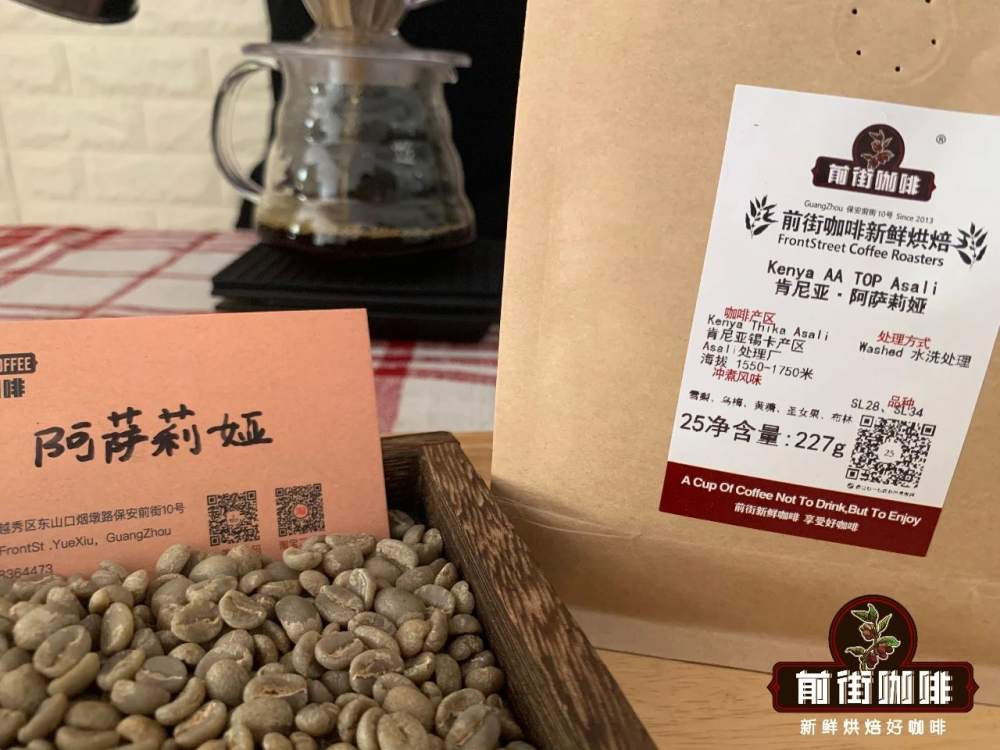
FrontStreet Coffee: Kenya Assalia Coffee Beans
Country: Kenya
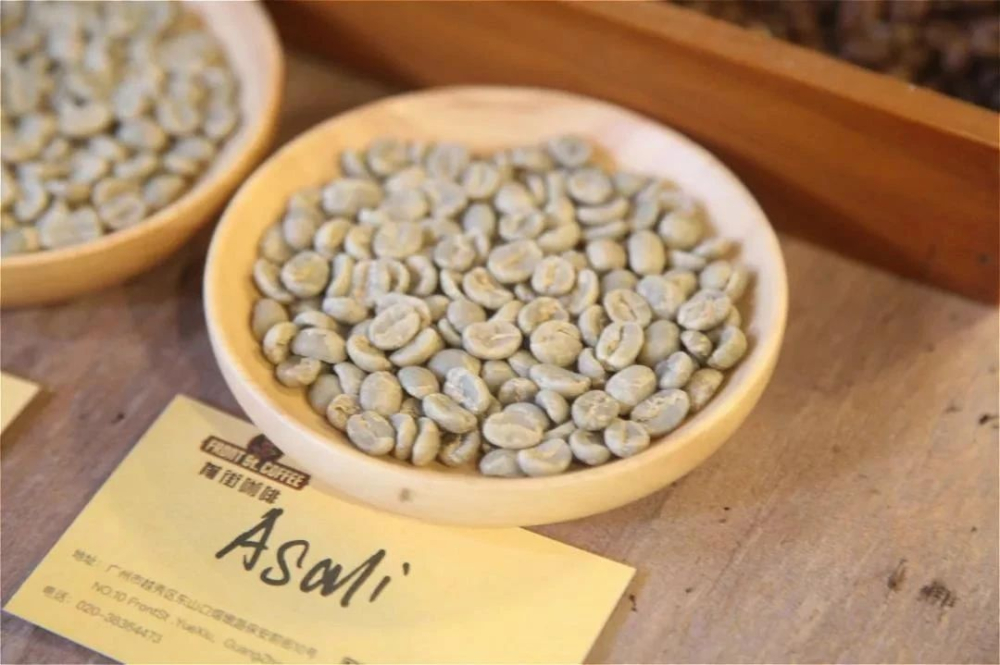
Region: Asali (Honey Processing Station)
Altitude: 1,550-1,750m
Varieties: SL28, SL34
Processing: 72-hour washed processing
Flavor: Snow pear, smoked plum, brown sugar, cherry tomato, plum
Coffee Bean Processing: Kenyan 72-Hour Washed
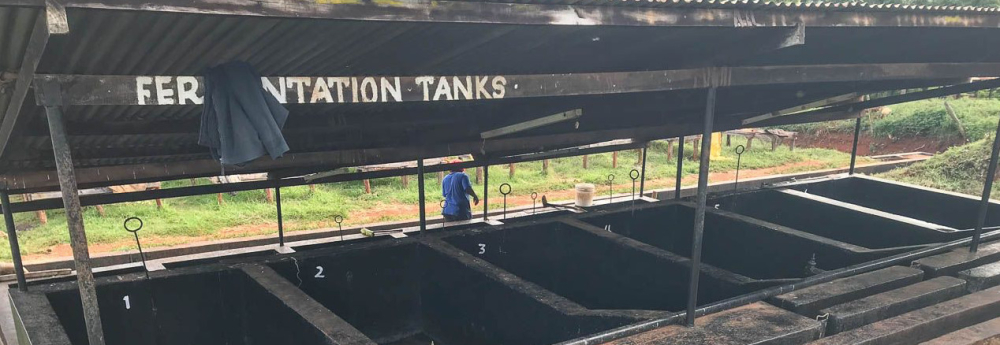
Kenya employs a cyclic, repeated method of washing after fermentation. Processing begins on the day of harvest, selecting the highest-quality coffee cherries for pulping and fermentation, with a fermentation time of 24 hours. After 24 hours the beans are washed in clean river water. Then they undergo another 24-hour fermentation in clean river water, followed by washing again. Repeating this cycle three times for a total of 72 hours gives Kenyan-style 72-hour fermented washed processing, abbreviated [K72].
First Wash and Fermentation
After the coffee cherries are harvested, they first undergo water density sorting, which uses differences in bean density to select the best fruit. High-density (heavy) beans sink in water, while low-density beans float. Fully ripe, high-quality fruit has high density and is selected for further processing.
After selecting high-quality, fully ripe fruit, the skin is removed and the beans are soaked in water, allowing the mucilage attached to the outside of the beans to ferment. Mucilage contains natural sugars and alcohols that play a crucial role in developing the coffee's sweetness, acidity, and overall flavor. Fermentation lasts up to 24 hours, after which 80-90% of the mucilage is removed, leaving the flavor within the bean.

Second Wash and Fermentation
Next, the second wash and fermentation begins. After the beans from the previous stage are cleaned, they are soaked again in water for 24-48 hours. This process increases proteins and amino acids, giving the coffee's acidity complex and delicate layered textures. Finally, all remaining mucilage is removed and the beans are moved to raised racks for sun drying.
The fermentation time lasts up to 24 hours, after which 80-90% of the mucilage is removed, leaving only the flavor within the beans. Finally, all remaining mucilage is removed and the beans are moved to raised racks for sun drying. Drying time varies with the weather, generally taking about 5-10 days to complete. FrontStreet Coffee believes that Kenyan 72-hour fermented washed processing, which involves long fermentation at low temperature followed by sun drying, results in beans with brighter, cleaner yet fuller flavor.
FrontStreet Coffee Brewing Recommendations
This bean uses a medium-light roast, so FrontStreet Coffee recommends a higher water temperature and a faster-flowing dripper: high temperature is needed to extract its bright acidity, while the faster flow guards against over-extraction, which is why a V60 dripper is the choice.
Coffee-to-water ratio: 1:15
Coffee grounds: 15g
Total water volume: 225ml
Water temperature: 91°C
Grind size: Fine sugar thickness | EK43s setting 10 (80% pass-through through #20 standard sieve)

First pour 30g of water for a 30-second bloom, then pour 95g (the scale shows approximately 125g), completing in about 1 minute. When the water level drops to 2/3 of the coffee bed, pour the remaining 100g (the scale shows approximately 225g), completing in about 1 minute 40 seconds. Dripping completes at 2'00", so remove the dripper and finish the extraction.
Brewing flavors: the entry reveals smoked plum and cherry tomato flavors, with strong, thick acidity in the texture. Sweetness is prominent in the mid-section with a juice-like sensation. The aftertaste features berry aroma and brown sugar sweetness, with a green tea fragrance.
FrontStreet Coffee Recommendation
The clean, juicy, high-acid fruit that defines Kenyan coffee has a close relative just across the border. FrontStreet Coffee's washed Yirgacheffe comes from Ethiopia and shows the same family of flavors: clear jasmine florals and bright citrus acidity, carried by a light, elegant body with a tea-like finish. If Kenya's berry-juice character is what draws you in, this is a natural next step.
For something fruitier, FrontStreet Coffee also offers the natural-processed Yirgacheffe Red Cherry, with peach, cocoa, honey and lemon notes, and the Gutingguting cooperative lot, where citrus and lemon acidity is framed by elegant white florals. Both lean on the same East African brightness that makes Kenya so distinctive.
Brew them much as you would the Kenyan Assalia above: a V60 pour-over, 15g of coffee to 225g of water at 91°C, a 30-second bloom and a total drawdown of about two minutes. That keeps the acidity crisp and the finish clean.
Important Notice :
FrontStreet Coffee is a long-established specialty coffee roaster in Guangzhou China, selling freshly roasted beans from its own farm in Yunnan as well as dozens of carefully selected single-origin beans from around the world for both pour-over and espresso. The products deliver consistently excellent quality and great value, with shipping within 24 hours. Guangzhou's FrontStreet Coffee shop is recommended by many coffee lovers, and the beans are now available online at the Tmall 。
FrontStreet Coffee has moved to a new address:
FrontStreet Coffee Address: 315,Donghua East Road,GuangZhou
Tel:020 38364473
 Scan and follow the En Gafei WeChat official account. Please indicate that the reprint comes from "En Gafei".