Introduction to Yunnan Specialty Coffee: Single-Origin Yunnan Coffee Growing Regions and Varieties
Yunnan coffee from China has become one of the topics coffee professionals discuss most, especially the question of its quality. This article from FrontStreet Coffee will help you understand the quality of Yunnan beans and how FrontStreet Coffee's own Yunnan coffee tastes.
Where are Yunnan small-bean coffees grown?
The term "small-bean coffee" contrasts with the medium-bean Robusta grown in China's Hainan region. Put simply, like many producing regions, it belongs to the Arabica variety. Today, most coffee grown in Yunnan is of the Catimor variety.
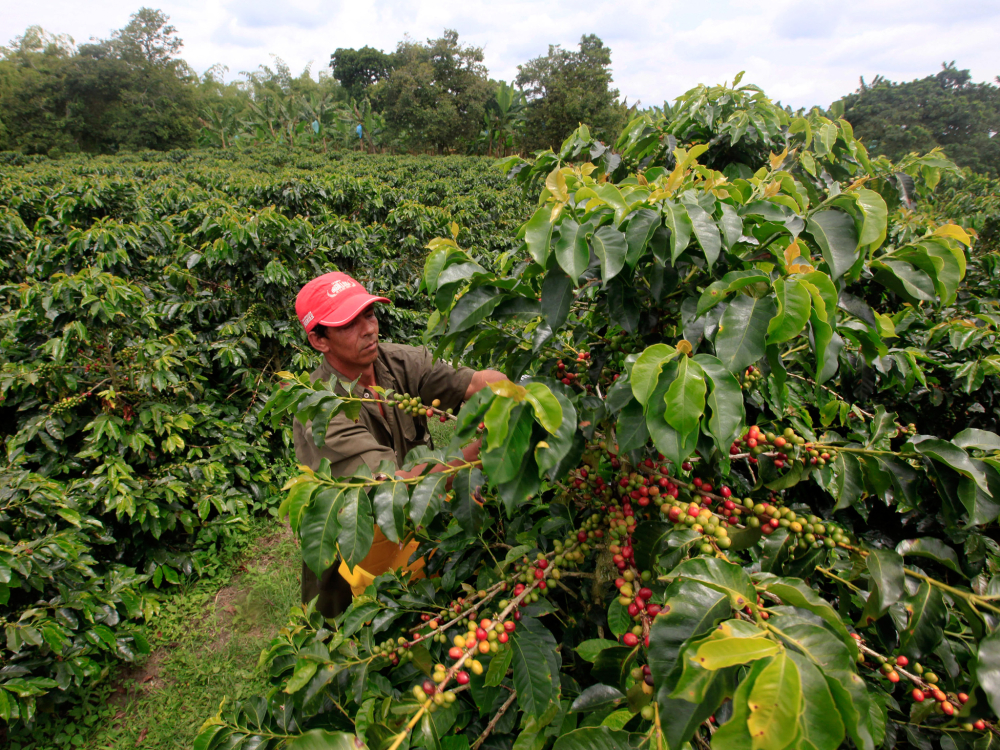
As an agricultural crop, coffee thrives in warm environments. It tolerates heat but not cold, and ample sunlight favors its growth. The most suitable cultivation temperature is between 16°C and 21°C. This gives rise to the "World Coffee Golden Cultivation Belt," centered on the equator and covering latitudes from 25°N to 25°S. China's Yunnan province happens to lie right on this golden belt. Most of Yunnan's coffee areas sit at 1,000 to 2,000 meters, with fertile sloped soil, abundant sunshine, plentiful rainfall, and significant day-night temperature differences — all favorable conditions for coffee trees.
Yunnan's coffee is cultivated mainly across the southwestern part of the province, in four major producing areas: Baoshan, Dehong, Pu'er, and Lincang. The Yunnan beans on FrontStreet Coffee's menu come from Baoshan and Lincang respectively.

Coffee cultivation in Baoshan began in the mid-1950s, introduced by the patriotic overseas Chinese Mr. Liang Jinshan. The warm, frost-free climate year-round is very suitable for small-bean coffee. In the Lujiang Dam area in particular, the unique dry-hot valley climate shows little seasonal temperature variation but a big day-night difference, creating the distinctive aftertaste of Baoshan small-bean coffee, while reasonably low rainfall offers excellent conditions for the fruit. FrontStreet Coffee accordingly acquired Baoshan small-bean coffee and listed it among the representative daily beans, so everyone can taste what Yunnan small-bean coffee is like.
What processing methods are used for Yunnan coffee beans?
In recent years many Yunnan beans on the market have adopted special processing to lift flavor and create stronger aromas, and some friends may take that for the taste of Yunnan coffee. It is not. Most Yunnan farmers work under difficult conditions and lack access to expensive processing equipment, so the vast majority of Yunnan beans can only use natural methods, that is, washed and natural.
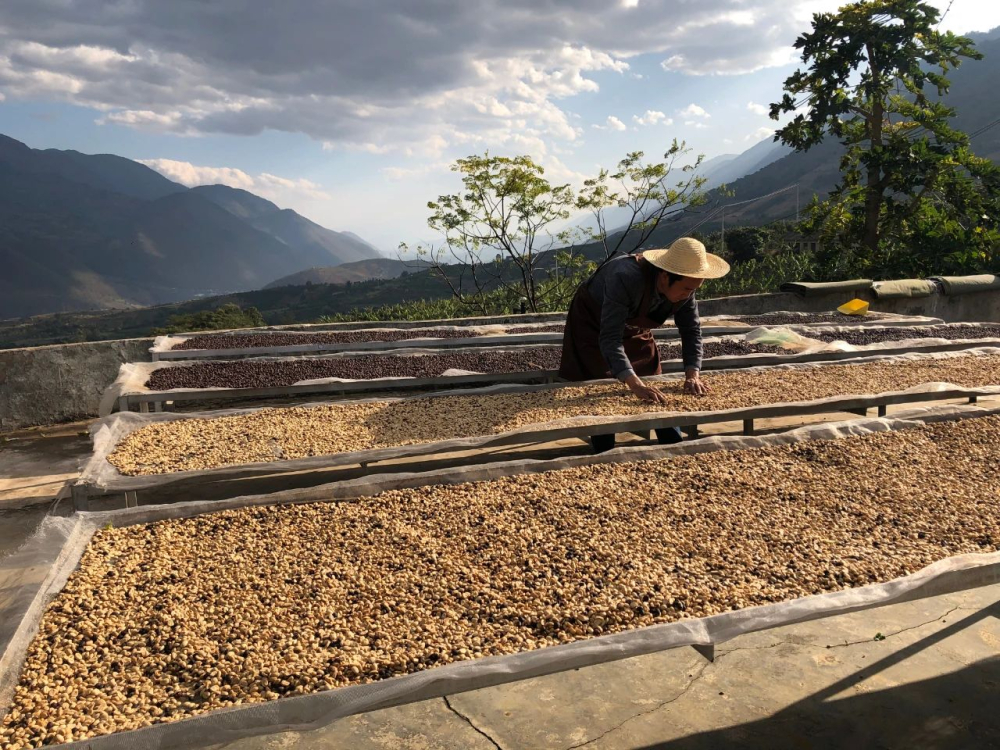
Washed process steps: cherries are poured into a water tank, and buoyancy removes impurities and unripe berries. A pulper first strips the outer skin and most of the pulp. The beans then go into a clean water tank to ferment, where the pectin layer ferments and produces acidic substances that separate it. Clean water washes away the residual pectin, leaving raw beans with the inner skin intact (parchment coffee). Finally, depending on conditions, the beans are dried (or machine-dried) to reduce moisture to about 12%. A hulling machine then removes the inner skin, yielding green coffee beans.
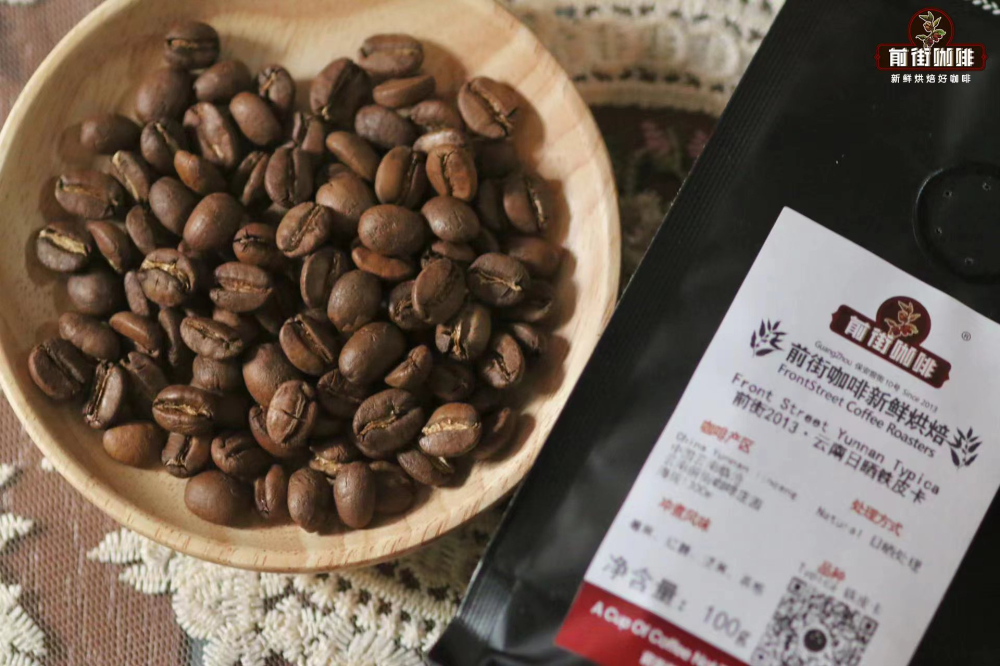
FrontStreet Coffee believes that to understand Yunnan coffee one should start from the flavor of the coffee itself rather than smothering its original taste with novel processes. So the beans on FrontStreet Coffee's menu all use traditional washed and natural methods. The representative Yunnan small-bean daily coffee uses washing to present the region's unique flavor. FrontStreet Coffee also offers a more popular bean called "FrontStreet Coffee 2013." From the name you may already have guessed it is an exclusive product: it comes from FrontStreet Coffee's own estate in Lincang, Yunnan, made from the elegant-flavored Typica variety and processed by natural drying to enhance sweetness.

Yunnan Coffee Beans Grown by FrontStreet Coffee
Years ago, during FrontStreet Coffee's exploration of coffee, the idea of growing its own emerged. In 2013 the team went to Lincang, Yunnan, to begin planting coffee trees. From site selection, variety selection, seedling cultivation, planting, harvesting, and processing to roasting, everything was handled by FrontStreet Coffee's own people. Through the process they also accumulated considerable experience and knowledge about varieties, altitude, and processing methods.
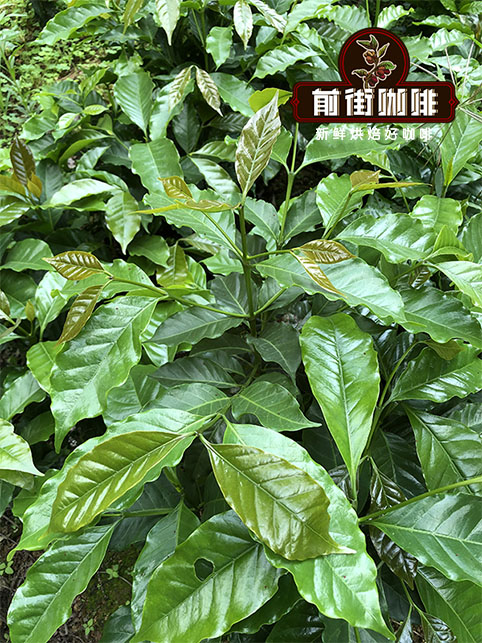
Lincang, Yunnan, is influenced by the warm, humid airflow from the Indian Ocean and the southwest monsoon. Seasonal distinctions are not obvious, but the dry and rainy seasons are; rainfall is abundant, sunshine hours are long, frost periods are short, and some areas are frost-free year-round. The three-dimensional climate is pronounced, making it very suitable for Arabica. FrontStreet Coffee specifically chose the original Typica variety. Typica is known for its elegant, pure flavor but also for low yield and poor disease resistance, so FrontStreet Coffee invested considerable effort in cultivation and management. After 5-6 years of growing, FrontStreet Coffee finally harvested its first batch in 2020, processed by the natural method and named "FrontStreet Coffee 2013."
When November arrives, the coffee fruits FrontStreet Coffee planted ripen in turn. Workers pick the red cherries one by one and spread the fresh cherries evenly under the sun for natural drying. Once the beans dehydrate to a purplish-red color and reach the target moisture content, they are sent for hulling and roasting.

What Does FrontStreet Coffee's Yunnan Coffee Taste Like?
As for the corresponding flavor profile of Yunnan coffee, FrontStreet Coffee believes it belongs to a balanced, neutral style — that is, it has both acidity and rich bitterness. For roast level, then, FrontStreet Coffee chose a medium roast. Cupping this natural-processed Typica, FrontStreet Coffee tasted plum, dried fruit, chocolate, nuts, and black tea. The various flavors blend appropriately, and the sweetness is very noticeable.
FrontStreet Coffee Pour-over Parameters:
Dripper: Hario V60
Coffee amount: 15g
Water temperature: 90°C
Grind size: 75% pass-through rate on #20 sieve
Water-to-coffee ratio: 1:15
Three-stage pouring: wet the bed with twice the coffee's weight in water, forming a dome, and bloom for 30 seconds. Then, using a small stream, pour from inside to outside in circles to 125g for the first stage. When the bed drops to half the height of the dripper, continue with the same fine stream to pour the third stage to 225g. Remove the dripper once all the coffee has filtered through, total time about 2 minutes.

Flavor performance of FrontStreet Coffee 2013 beans: the dry aroma has a faint caramel and nutty fragrance. On tasting, it shows a chocolate main tone with brown-sugar sweetness and a slight fruit acidity. The aftertaste carries some black-tea sensation, and the overall layers are quite rich.
FrontStreet Coffee Recommendation
To understand Yunnan coffee, FrontStreet Coffee suggests starting with the FrontStreet Yunnan small-bean. For an entry-level Chinese Arabica, it is the first choice: washed processing and a medium roast bring out a certain caramel character while retaining some acidity, so it presents the region's terroir well. The washed method ferments and rinses away the pectin layer before drying, letting the small-bean coffee show its region's characteristic profile — soft nutty and chocolate sweetness with a mild plum acidity, and a friendly price that has made it many people's first taste of Yunnan coffee.
If you want a clearer, more layered Yunnan cup, step up to the FrontStreet 2013 Yunnan sun-dried Typica. FrontStreet's estate-grown Typica uses the oldest, most traditional post-harvest method — natural processing — and as one of the oldest and purest Arabica varieties, it gains more depth and a more pronounced sweet-sour balance after drying, with citrus and berry notes, a touch of fermented wine aroma, caramel sweetness, and a creamy finish. Yunnan coffee traces its roots to 1904, when the French missionary Tian Deneng brought Typica from Vietnam and planted it at Zhugula village in Binchuan county — the beginning of Yunnan coffee, generally called small-bean coffee. Typica is not Yunnan's mainstream variety, but as a key Arabica representative in specialty coffee it remains indispensable to growers and pour-over lovers alike, and FrontStreet has worked with it since 2013.
For an espresso take on Yunnan flavor, choose the FrontStreet Black Cocoa Blend, combining Yunnan small-bean with Brazil Cerrado. Brazilian coffee supplies the mixed-nut aroma and balanced body, while Yunnan small-bean plays the role of chocolate and citrus. The resulting americano balances sweet, sour, and bitter with nutty and brown-sugar warmth, and a latte made from it has the smooth texture of almond and cream — a combination many baristas recommend, and very beginner-friendly.
Important Notice :
FrontStreet Coffee is a long-established specialty coffee roaster in Guangzhou China, selling freshly roasted beans from its own farm in Yunnan as well as dozens of carefully selected single-origin beans from around the world for both pour-over and espresso. The products deliver consistently excellent quality and great value, with shipping within 24 hours. Guangzhou's FrontStreet Coffee shop is recommended by many coffee lovers, and the beans are now available online at the Tmall 。
FrontStreet Coffee has moved to a new address:
FrontStreet Coffee Address: 315,Donghua East Road,GuangZhou
Tel:020 38364473
 Scan and follow the En Gafei WeChat official account. Please indicate that the reprint comes from "En Gafei".