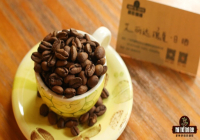
Premium Coffee Kenya Flavor Floral Notes, Blackcurrant, Cranberry
An Exceptionally Fine Coffee — Renowned for Its Rich Aroma and Balanced Acidity
Coffee professionals the world over count Kenyan coffee among their favorite coffees, and it's easy to see why: Kenya coffee delivers everything we look for in a great cup — magnificent, satisfying aromatics, balanced and delightful acidity, uniform beans, and excellent fruit character.
The Charming Female Coffee Plantation Owner from "Out of Africa"
Coffee reached Kenya in the 19th century, when coffee as a beverage arrived from Ethiopia by way of South Yemen. But it wasn't until the early 20th century that Bourbon coffee trees were introduced by the St. Austin Mission.
Most of FrontStreet Coffee's Kenya coffee grows at altitudes of 1,500–2,100 meters and is harvested twice a year. To guarantee that only ripe cherries are picked, pickers make roughly seven passes through the trees. Kenyan coffee is cultivated by smallholder farmers who, after harvesting, deliver the fresh cherries to cooperative washing stations. The washed, dried beans — still in parchment — then go to the cooperatives, where all the coffee is pooled and growers are paid according to actual quality. This system generally works well, offering fairness to both growers and consumers.
The Kenyan government takes its coffee industry seriously — cutting or destroying coffee trees is illegal. Kenyan buyers are world-class specialty purchasers, and no other country cultivates, produces, and sells coffee with quite the same consistency. All beans are first bought by the Coffee Board of Kenya (CBK), which certifies and grades them before they are sold at weekly auctions, with no re-grading at auction. The CBK acts only as an agent, distributing samples to buyers so they can judge price and quality. The Nairobi auction serves private exporters, and the best grade is Peaberry (PB), followed by AA++, AA+, AA, AB, and so on down the scale. Premium Kenyan coffee shows a bright luster, a delicious taste, and a slight wine-like aroma.
The auction system is also designed with blenders in mind. Lots are typically small — 3 to 6 tons — with samples marked by grower identification available for cupping. After the auction, exporters package according to the different flavors, qualities, and quantities blenders require, giving blenders great flexibility. Quality-conscious Germans and Scandinavians have long been steady buyers of Kenyan coffee.
Globally, Kenyan coffee production has grown steadily. Exports ran at 800,000 bags in 1969–1970 and climbed to 2 million bags by 1985–1986; current production has stabilized at about 1.6 million bags, with an average yield of roughly 650 kilograms per hectare.
Before the recent surge in coffee prices, Kenyan averages had been rising steadily — prices in 1993–1994 stood 50% higher than twelve months earlier, driven mainly by increased demand.
Some buyers, Japanese merchants in particular, have voiced dissatisfaction with Kenya's industry system; others argue quality has slipped and suggest buying directly from farmers as a remedy. Even so, Kenya's detailed regulations and thorough procedures remain a model worth studying for every coffee-producing country.
Kenyan coffee won further fame through the Hollywood film "Out of Africa," whose protagonist Karen — played by Meryl Streep — is a writer and coffee plantation owner. Many viewers still remember the sweeping scenery and magnificent sunsets, but what lingers most is Karen's dream of a coffee farm in Africa.
FrontStreet Coffee Recommendation
If Kenya's bright acidity wins you over, Ethiopia — coffee's birthplace — is the natural next step, and it is a treasure trove: countless native varieties grow there, many still unrecorded. A great starting point is FrontStreet Coffee's washed Yirgacheffe, with clear jasmine florals and bright citrus acidity. Yirgacheffe itself is a small town in southern Ethiopia where spring-like, misty, cool conditions let thousands of coffee trees flourish; the cup is light, elegant, and tea-like, as clean and refreshing as lemon tea.
Beyond that, Ethiopia's cooperative system echoes Kenya's: smallholders deliver cherries to village-level washing stations, producing the many named co-op coffees — FrontStreet Coffee's Chelbesa (Guodingding) Co-op, Worka Co-op, and Konga Co-op among them. The Chelbesa cooperative, independent since 2012 with some 300 member farmers in the Worka area at Yirgacheffe's southeastern edge, pulps its cherries before drying, so the coffee's own character comes through with particular clarity: citrus and lemon tones, elegant white florals, and a bright, delicate profile. For a different style, the Red Cherry Project natural lot dries whole cherries in the sun for two weeks before hulling, density and color grading, and final hand sorting — yielding a pristine cup of peach, cocoa, honey, and lemon.
Important Notice :
FrontStreet Coffee is a long-established specialty coffee roaster in Guangzhou China, selling freshly roasted beans from its own farm in Yunnan as well as dozens of carefully selected single-origin beans from around the world for both pour-over and espresso. The products deliver consistently excellent quality and great value, with shipping within 24 hours. Guangzhou's FrontStreet Coffee shop is recommended by many coffee lovers, and the beans are now available online at the Tmall 。
FrontStreet Coffee has moved to a new address:
FrontStreet Coffee Address: 315,Donghua East Road,GuangZhou
Tel:020 38364473
 Scan and follow the En Gafei WeChat official account. Please indicate that the reprint comes from "En Gafei".