The Taste Profile of Mandheling Coffee: An Introduction to Sumatra Aceh Golden Mandheling Coffee Bean Varieties, Grades, and Flavors
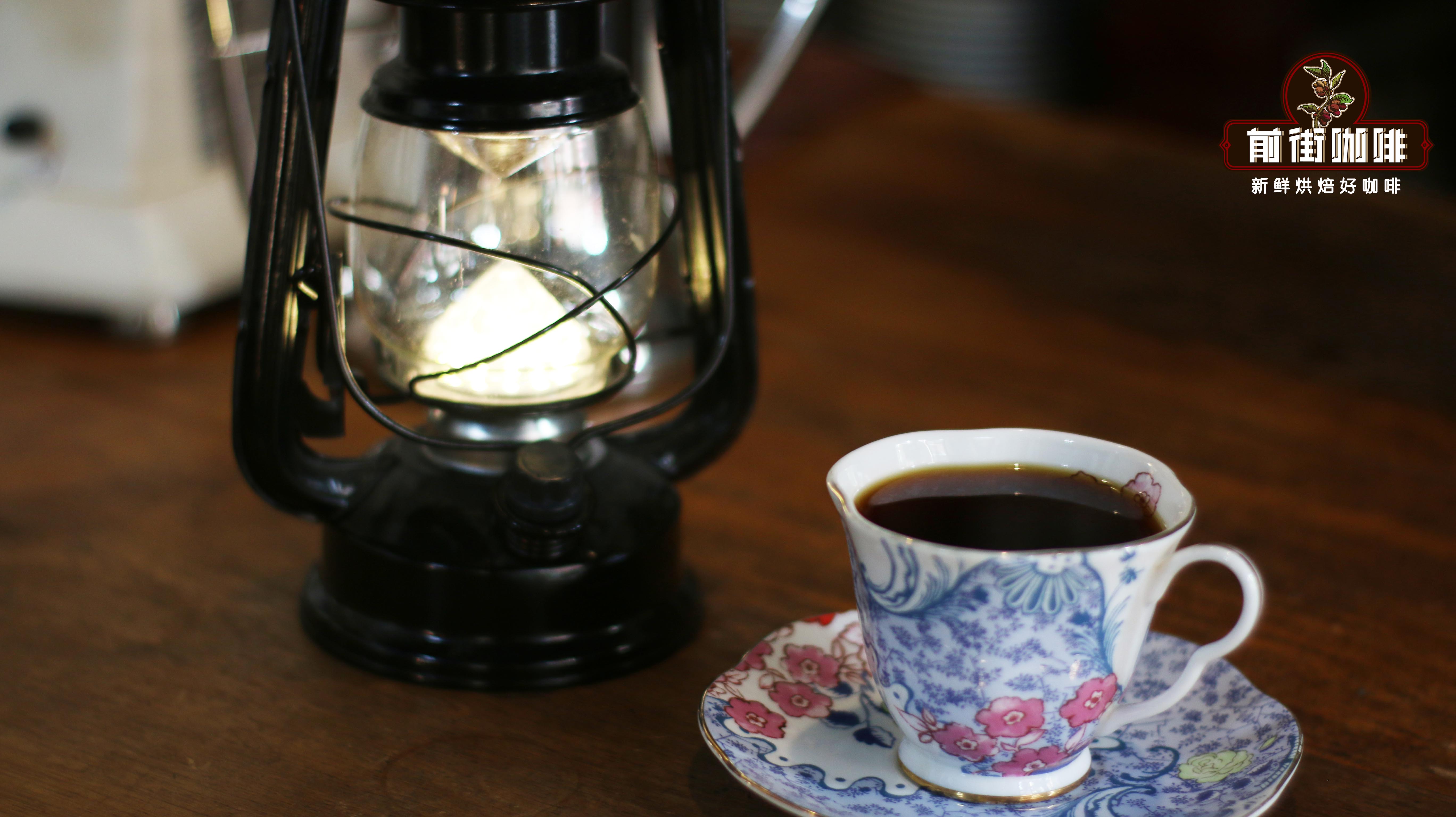
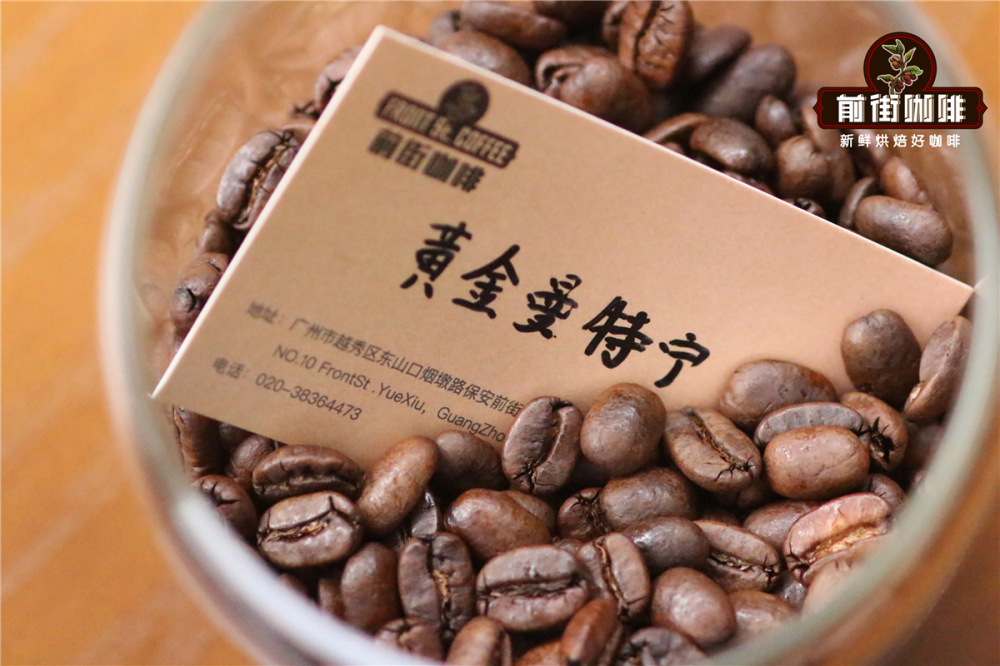
FrontStreet Coffee's medium-dark roasted Mandheling gives off a rich "coffee aroma" with complex notes reminiscent of nuts, dark chocolate, roasted chestnuts, and spices like cinnamon. It drinks as smoothly as caramel and cream, with a full-bodied richness that completely fills the palate, a substantial mouthfeel, and a sweet aftertaste. It is one of the top single-origin choices for anyone who loves strong, bitter black coffee.
Why is FrontStreet Coffee's Mandheling mostly medium-dark roasted?
FrontStreet Coffee has noted that Mandheling on the market was once uniformly medium-dark roasted, presenting the classic rich black coffee profile. As specialty coffee culture developed in recent years, people began chasing more unusual flavors, and many merchants launched medium-roasted or even medium-light roasted Mandheling. The lighter the roast, the more acidity the beans retain, with flavors dominated by fruit, herbs, and tea-like notes, and a lower body. So we might ask: if medium-light roasted Mandheling is so refreshing, why not roast it lighter?
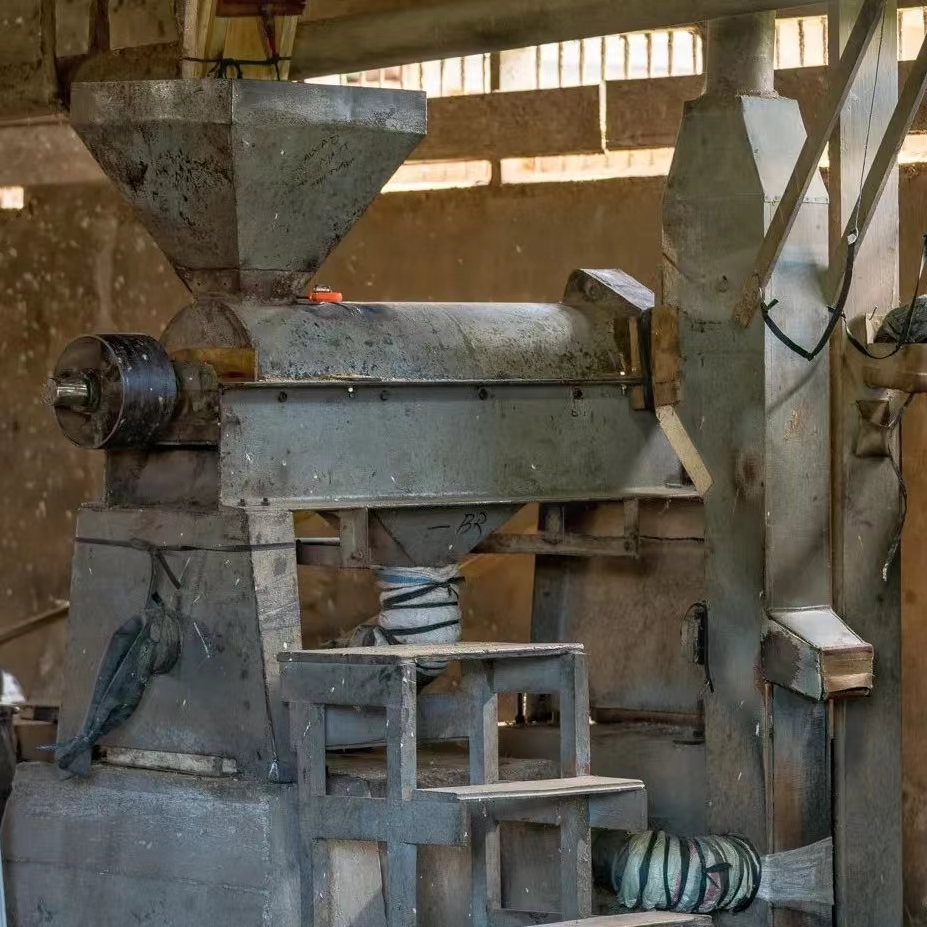
Anyone who drinks Mandheling regularly probably knows about Sumatra's wet-hulling method. In wet hulling, before the final drying stage, the beans are poured into a huller that uses significant friction to tear open the semi-dry parchment layer still clinging tightly to the green bean. Through that friction, the green beans are easily crushed or bruised. The "naked beans," stripped of their parchment, dry very quickly but are also directly exposed to a humid environment, which lets various microorganisms grow.

Wet hulling does create Mandheling's distinctive herbal and woody aromas, but it also raises the defect rate in green beans. Dark roasting masks that flaw perfectly. On top of that, Mandheling's fame originated with early Japanese discovery, and by their taste preferences nothing beats the Japanese deep roast. That is why most Mandheling is roasted so dark. FrontStreet Coffee wants everyone to experience the classic Mandheling flavor, so both of its daily offerings — FrontStreet Coffee's Lindong Mandheling from the Lindong region and FrontStreet Coffee's PWN Golden Mandheling from the Aceh region — are medium-dark roasted.
What grade is FrontStreet Coffee's Golden Mandheling?
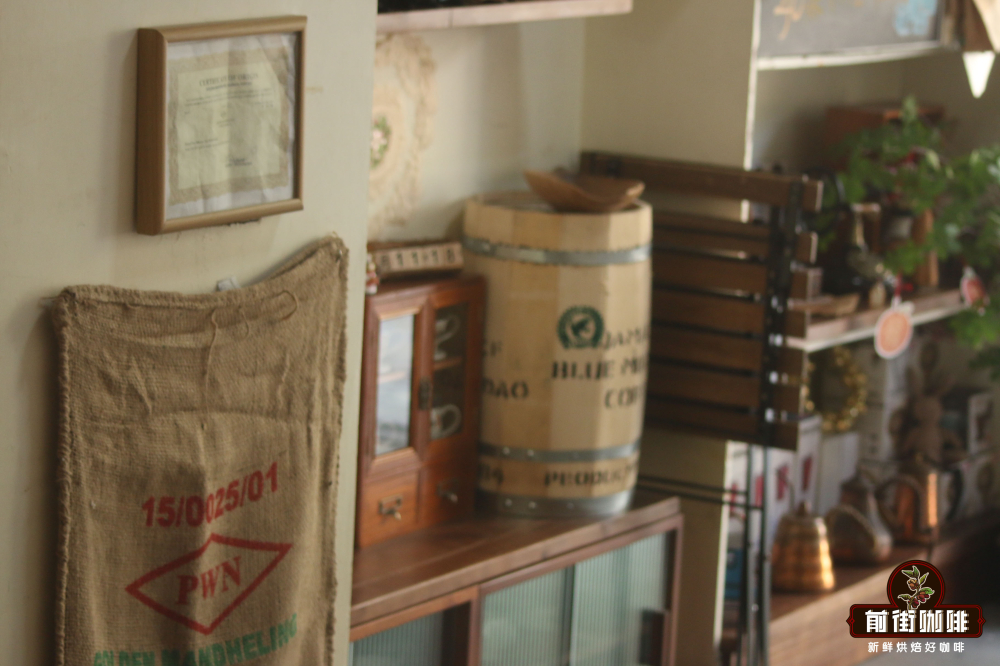
"Golden Mandheling" is the exclusive brand of Indonesia's Pwani Coffee Company (PWN). There are many kinds of Mandheling on the market. Since PWN has registered the English name "Golden Mandheling" as its trademark, only Golden Mandheling produced by PWN is truly FrontStreet Coffee's Golden Mandheling. You can identify authentic PWN Golden Mandheling by the green bean sacks bearing the PWN logo and a certificate of origin signed by PWN, both of which FrontStreet Coffee displays in its store.
After the Japanese took a liking to Sumatran coffee, they bought it long-term and gradually noticed that local bean quality was often inconsistent. They became more committed to Mandheling production and set strict standards and methods for screening defects, including parameters like bean density, size, shape, and color. The resulting Mandheling required both machine and manual defect removal to ensure the beans were whole, uniform, large, and translucent, while also reducing the earthy and grassy flavors of Mandheling. Legend says it was named "Golden Mandheling" because it gleamed golden in the sun.
Indonesian green bean grading is based primarily on the quantity of defective beans, with size as a secondary factor. General quality requirements include no live insects, no moldy or rotten beans, a maximum moisture content of 12.5%, and an impurity rate of less than 0.5%. According to defect rate, beans are divided into six grades, with the highest grade G1 requiring fewer than 11 defective beans in a 300g sample. FrontStreet Coffee's Lindong Mandheling, from FrontStreet Coffee's daily bean series, is G1 and uses the wet-hulling process, representing the regular version of the Indonesian Mandheling flavor.
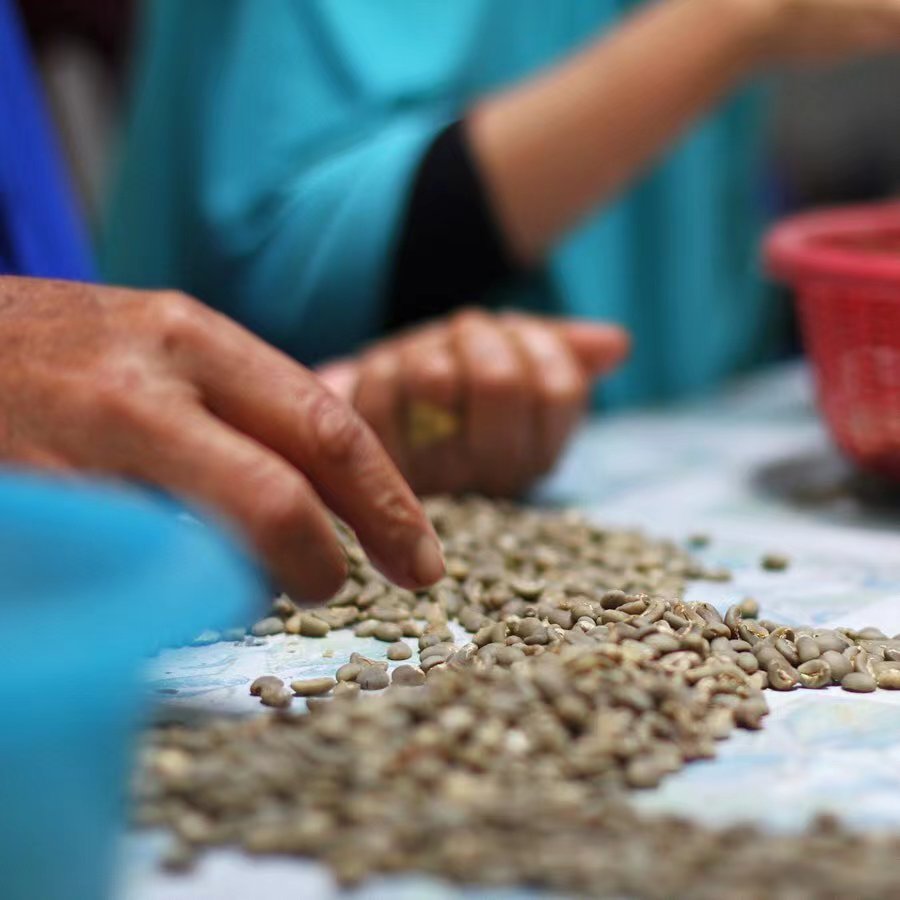
PWN, which goes to extremes in selection, buys Mandheling green beans of 18 screen or above with fewer than 3 defective beans in a 300g sample — G1 grade, the highest grade of Indonesian green beans. It then follows strict standards of one machine pass plus three manual defect removals to ensure the shape and size of the beans are uniform. Before packaging, PWN also runs the green beans through density and color sorting machines, which leaves Golden Mandheling evenly colored and translucent.
Does pour-over FrontStreet Coffee's Mandheling only have a bitter, burnt taste? Maybe you didn't brew it well.
FrontStreet Coffee's brewing parameters are based on bean characteristics, roast degree, and flavor profile. Mandheling belongs to the category of dark-roasted, bitter-tasting coffees. FrontStreet Coffee's barista chooses the KONO dripper for beans with such a rich mouthfeel. Compared with the V60, the KONO has a smooth curved surface with weaker exhaust effects, and its straight ribs cover only one-quarter of the dripper, letting the coffee and hot water form an immersion extraction for a rounder, fuller flavor. The KONO is also suited to FrontStreet Coffee's Brazil Queen Estate Coffee and FrontStreet Coffee's Jamaica Blue Mountain No. 1 Coffee — those medium-dark roasted coffees.
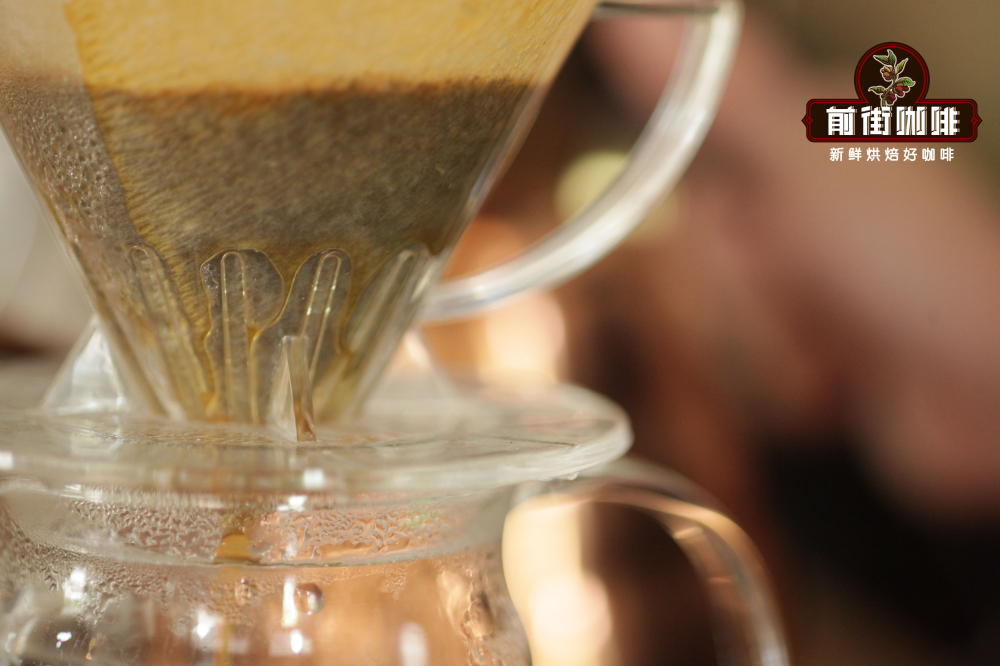
Dark roasting makes the internal structure of the beans loose; you can crush one easily with a gentle pinch, which signals strong water absorption after grinding. To keep the coffee from releasing too many bitter substances once it has absorbed water, FrontStreet Coffee adjusts to a coarser grind and uses lower-temperature water for pour-over.
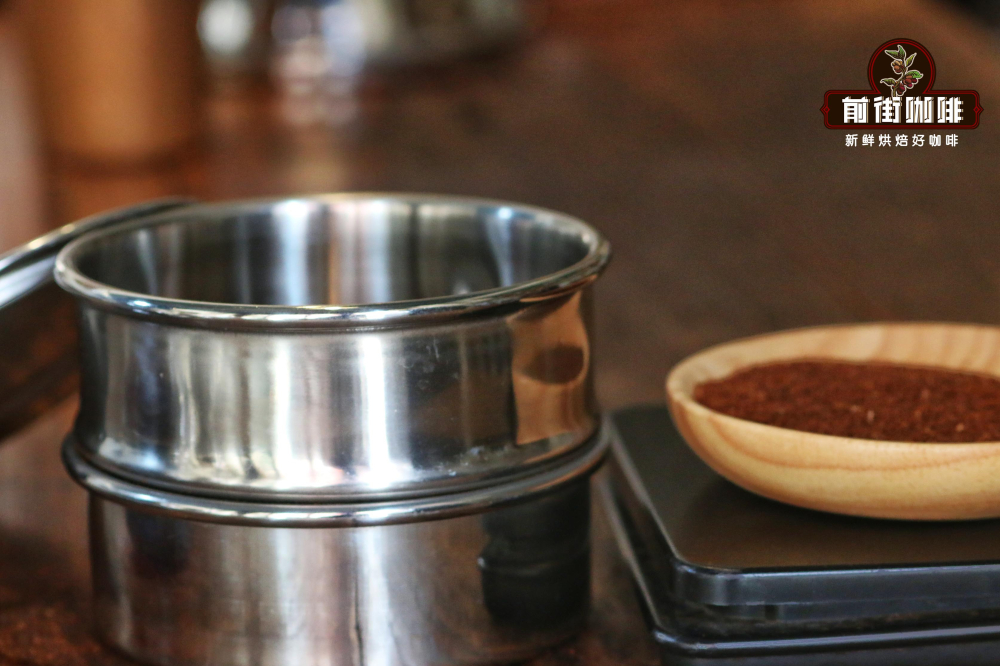
Grind size is one of the key factors affecting taste. Once beans are ground and meet hot water, they release a large amount of water-soluble flavor compounds. FrontStreet Coffee calibrates grind size with a tool — China's No. 20 0.85mm standard sieve. For medium-light roasted beans, FrontStreet Coffee consistently uses a 75-80% pass rate, while for medium-dark roasted beans it uses 70-75%. Compared with light-roasted coffee, the internal structure of medium-dark roasted Mandheling is looser, so it absorbs water better and releases large-molecule bitter compounds more easily. To avoid over-extraction, FrontStreet Coffee chooses a grind with a 70% pass rate through the No. 20 sieve.
Water temperature plays a role similar to grind size. The higher the water temperature, the higher the extraction efficiency, making it easier to release the various components and producing a higher concentration. Near-boiling water easily extracts unpleasant bitter and astringent substances. So when brewing medium-dark roasted beans, FrontStreet Coffee uses different parameters than for light-roasted beans: the caramelization reaction is further along than in a light roast, making large-molecule bitter compounds easier to release. To avoid extracting too many off-flavors, FrontStreet Coffee lowers the water temperature slightly. The brewing water temperature for light-roasted coffee is 91-93°C, while for medium-dark roasted beans FrontStreet Coffee recommends 87-88°C.
Brewing Recommendations:
Recommended brewing water temperature: 87-88°C
Coffee powder: 15 grams
Powder-to-water ratio: 1:15
Grind size: medium-coarse (70% pass rate through the China No. 20 sieve)
The brewing method uses a three-stage pour, which better expresses the full-bodied texture and caramel sweetness of FrontStreet Coffee's Golden Mandheling.
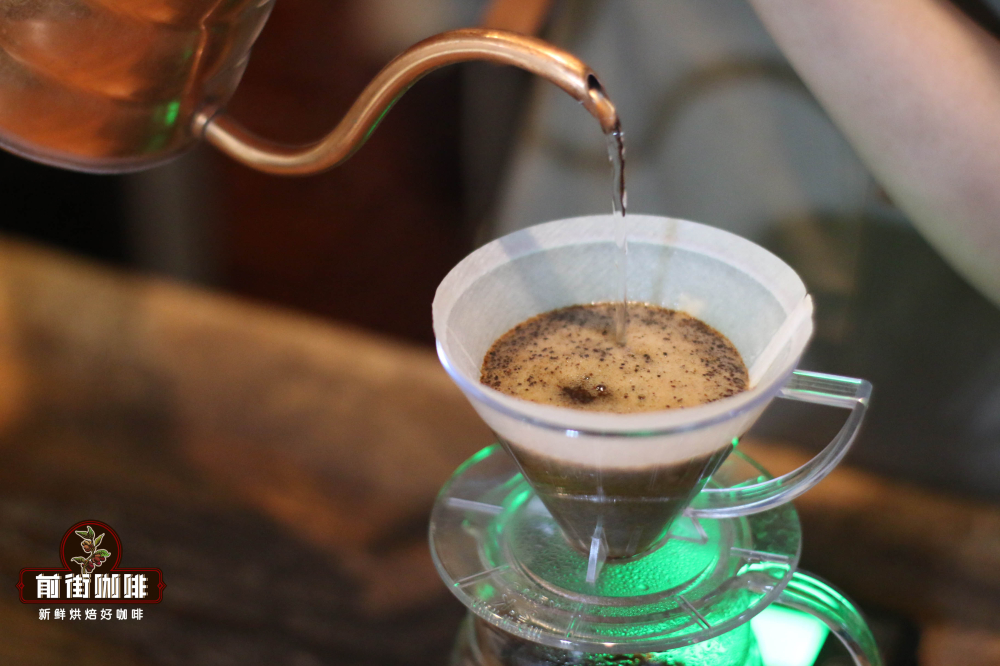
The first, bloom stage pours 30ml of water, completely wetting the grounds for degassing so the following stages extract flavor compounds more effectively. The second stage injects 100ml, mainly to bring out all the golden foam of FrontStreet Coffee's Golden Mandheling and raise the coffee bed.
The final stage gently pours 95ml of water at the centre, which lifts the coffee's sweetness. Brewed this way, FrontStreet Coffee's Golden Mandheling shows a rich, full-bodied texture with caramel sweetness and flavors of chocolate and nuts.
FrontStreet Coffee Recommendation
FrontStreet Coffee PWN Golden Mandheling is the highest-grade expression of the wet-hulled Sumatran style — G1, with beans 18 screen and above, medium-dark roasted for a clean, full-bodied cup of chocolate, caramel, and nuts. Brew it as a pour-over at 87-88°C with 15g of coffee at a 1:15 ratio, ground to coarse-sugar size: bloom with 30ml, then pour 100ml, then a gentle 95ml at the centre. FrontStreet Coffee Lindong Mandheling is the more rustic everyday version, with clove, woody, and mint notes. For espresso, FrontStreet Coffee Classic Blend adds medium-dark Mandheling to a Brazilian base for butter, roasted chestnut, and caramel.
Important Notice :
FrontStreet Coffee is a long-established specialty coffee roaster in Guangzhou China, selling freshly roasted beans from its own farm in Yunnan as well as dozens of carefully selected single-origin beans from around the world for both pour-over and espresso. The products deliver consistently excellent quality and great value, with shipping within 24 hours. Guangzhou's FrontStreet Coffee shop is recommended by many coffee lovers, and the beans are now available online at the Tmall 。
FrontStreet Coffee has moved to a new address:
FrontStreet Coffee Address: 315,Donghua East Road,GuangZhou
Tel:020 38364473
 Scan and follow the En Gafei WeChat official account. Please indicate that the reprint comes from "En Gafei".