Blue Mountain Coffee Beans Characteristics, Origin Introduction, and Blue Mountain Coffee History & Pricing

A customer once told a FrontStreet Coffee barista: "I always assumed Blue Mountain coffee was expensive and rare, but lately I see it sold in plenty of coffee shops. It costs more than other beans, but not as much as I expected. So how do I tell whether it is the real thing?"
What is Blue Mountain Coffee?
The definition is strict. Just as wine is defined by estate or variety, only coffee grown in one particular region of Jamaica may use the name, and that region is the Blue Mountain range.
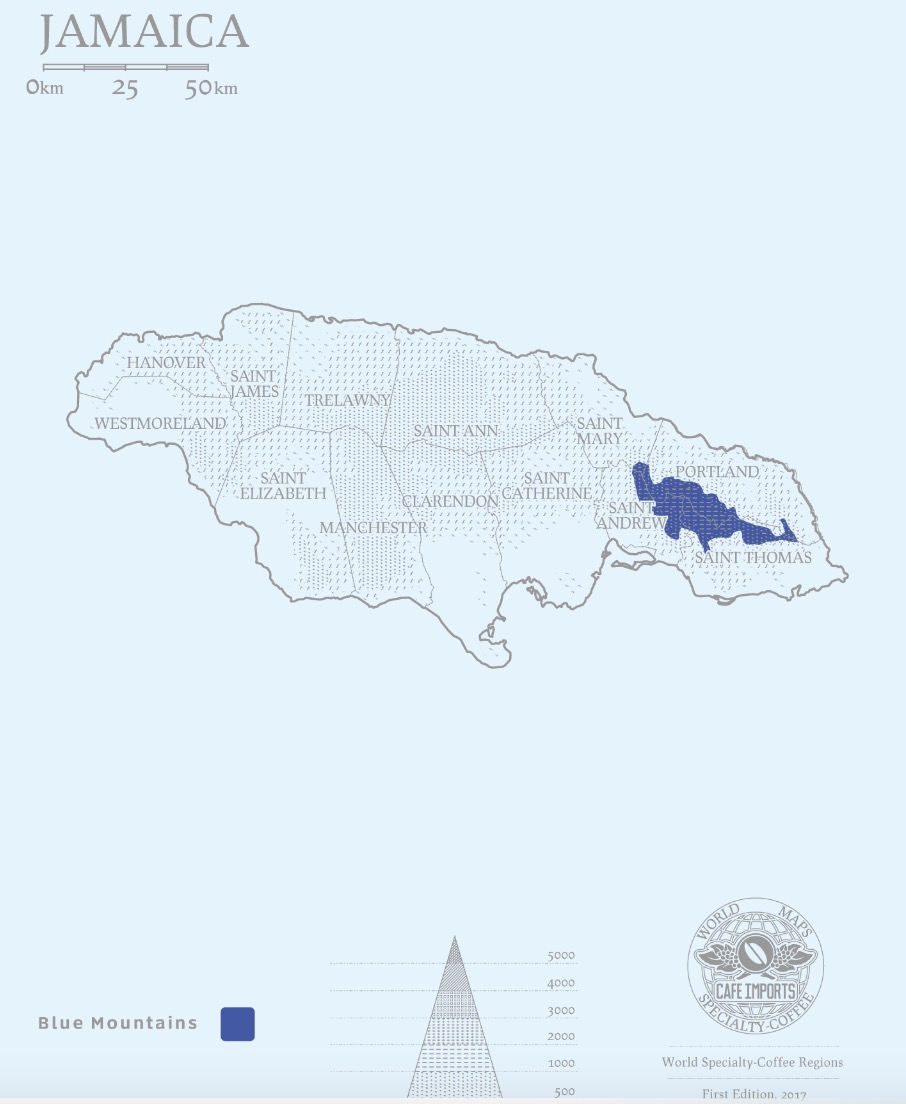
The Blue Mountains lie on the eastern side of Jamaica and form the country's highest mountain area, with the tallest peak reaching about 2,256 meters. Coffee may only be cultivated in designated zones between 1,000-1,700 meters, specifically in the Saint Andrew, Saint Thomas, Portland, and Saint Mary districts. Above 1,700 meters is Jamaica's ecological protection zone, where no cash crop may be planted.
Coffee grown between 460-910 meters can only be sold as "Jamaica High Mountain Coffee"; below 460 meters it may only be sold as "Jamaica Prime Coffee."
Not All Coffee Grown in Designated Areas is Called Blue Mountain No. 1!
"Blue Mountain No. 1" is a grade, not a place. Blue Mountain beans come in three grades: No. 1, No. 2, and No. 3.
- Blue Mountain No. 1 requires 96% of the cherries to be size 17 screen or larger, with a defect rate no higher than 2% after processing;
- Blue Mountain No. 2 requires 96% of the cherries to be size 16 screen or larger, with a defect rate no higher than 2% after processing;
- Blue Mountain No. 3 requires 96% of the cherries to be size 15 screen or larger, with a defect rate no higher than 2% after processing;
- Blue Mountain Peaberry requires 96% of the cherries to be size 10 screen or larger, with a defect rate no higher than 2% after processing.
How to Distinguish Authentic Blue Mountain Coffee Beans?
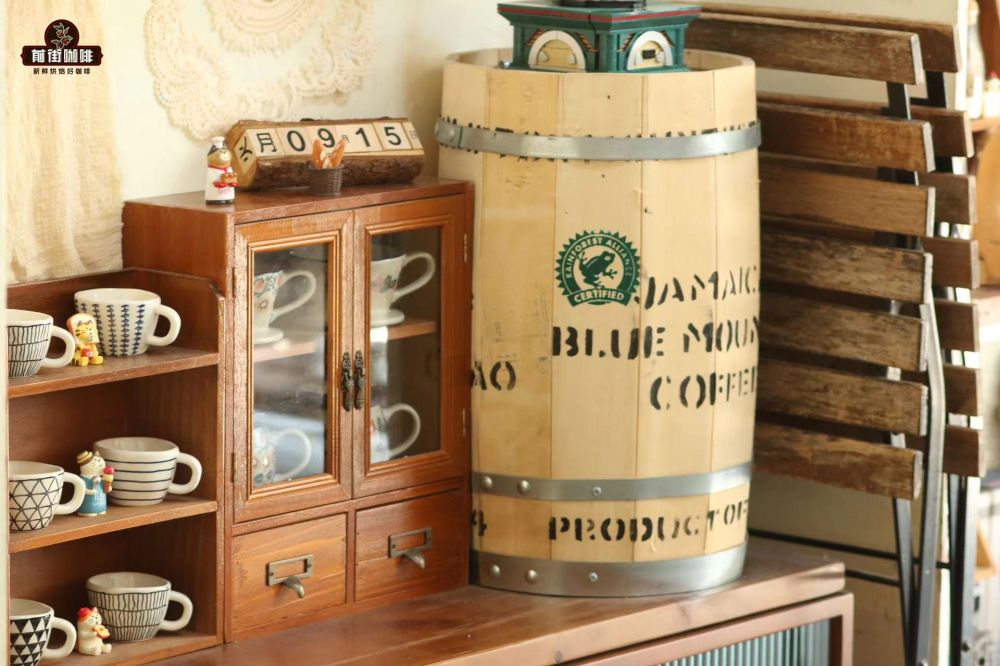
Blue Mountain imported into China today is mainly No. 1, and it arrives in wooden barrels. Jamaica is the only coffee-producing country that packs in wooden barrels, which makes the barrel an important indicator of authenticity.
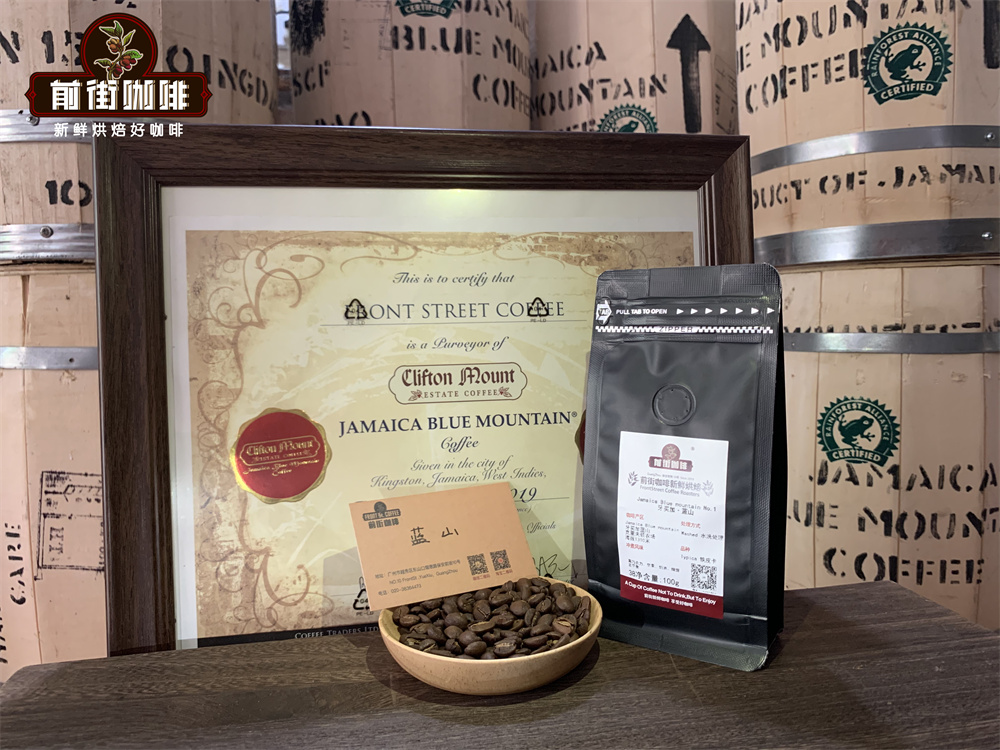
The Jamaican government also sets strict export requirements and standards for Blue Mountain. Beans that meet them are issued certification certificates by the Jamaica Coffee Industry Board. You can see the barrels and certificates for yourself at FrontStreet Coffee's physical stores.
What Variety is Jamaican Blue Mountain Coffee?
The coffee trees planted in Jamaica's mountains are all Typica, one of the oldest varieties in the Arabica lineage, prized for a clean and subtle cup. The plantation FrontStreet Coffee established in Lincang, Yunnan Province, also grows Typica; processed naturally and roasted medium, it shows a balanced cup with brown sugar, nuts, and dried apricot on the entry.

The first coffee tree on the Blue Mountain range was transplanted from Martinique to Jamaica in the 1720s. Over more than 200 years, Blue Mountain Typica has developed better disease resistance, particularly against coffee berry disease, than typical Typica. Combined with the mineral-rich volcanic soil of the range and a warm, rainy microclimate year-round, high-altitude Blue Mountain beans possess a sweet, subtle coffee flavor that other regions cannot reproduce: a balance of sweet, sour, and bitter with a mellow, even body that has captivated connoisseurs for generations.
Why is Blue Mountain Coffee So Expensive?
Is Blue Mountain No. 1 the Most Expensive Coffee Bean?
Blue Mountain No. 1 production is small, only 600-1,000 tons a year. In 1969 a hurricane devastated the Blue Mountain region and the coffee industry fell into hardship. Japanese companies provided loans that helped Blue Mountain recover, securing the market in the process. In gratitude, Jamaica signed an agreement with Japan in 1972 granting Japanese estates shares and priority purchasing rights, and 90% of Blue Mountain coffee went to Japan after harvest. Very little was left for other countries, and prices were extremely high. The situation has eased in recent years.

For a long stretch, Blue Mountain No. 1 rarely reached the Chinese market, and tasting the real thing was difficult. In 2012, however, the Jamaican government canceled Japan's priority purchasing rights, giving other countries far more opportunity to import Blue Mountain No. 1.
Blue Mountain is still relatively expensive today, but it is not the most expensive bean. Geisha from Panama can cost as much as over 40,000 yuan per pound, far above Blue Mountain.

Where Can I Buy Authentic Blue Mountain No. 1 Coffee Beans?
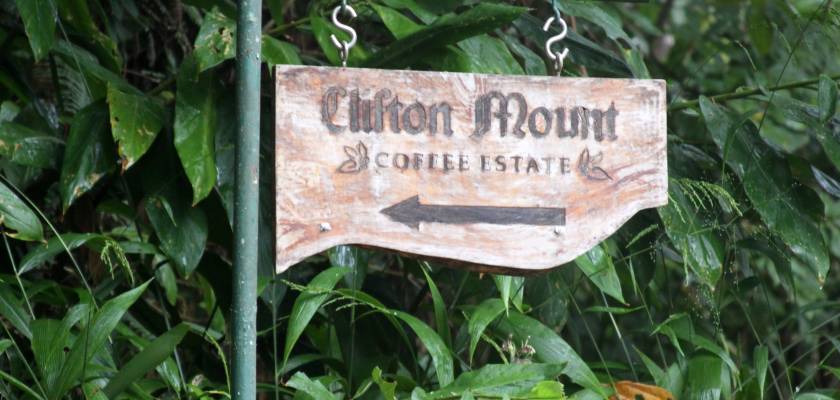
Both FrontStreet Coffee's physical stores and its Tmall flagship store carry authentic Blue Mountain No. 1. The Blue Mountain No. 1 sold by FrontStreet Coffee comes from Clifton Estate, the largest estate on the range, cultivated at an altitude of 1,310 meters.
Clifton Estate is Jamaica's oldest coffee-producing area still in normal operation, and among Jamaican estates only Clifton holds Rainforest Alliance certification. That certification requires meeting the Sustainable Agriculture System Standards, and the estate's wooden barrels carry the Rainforest Alliance logo.
Before 2020, Blue Mountain No. 1 was exclusively washed Typica. In 2020 Clifton Estate introduced a natural-processed version, so Blue Mountain now comes both ways. The washed version is cleaner overall, with a more even balance of sweet, sour, and bitter. The natural also performs well, but compared with the washed it has the fullness of berry juice, a more prominent acidity, and less overall balance.
The natural version was introduced for only one year. Its reception was lukewarm, and by 2022 there was no further word of natural-processed Blue Mountain beans.
How to Roast Blue Mountain No. 1 Coffee Beans?
To preserve Blue Mountain's balanced sweet, sour, and bitter character along with its mellow, solid body, FrontStreet Coffee roasts it medium-dark. Since all shipped coffee is roasted within 5 days, there is no need to brew the moment it arrives. Seal the beans in their original packaging and let them rest until 5-6 days after the roast date before you start brewing; the flavors will show better for it.

How to Brew Blue Mountain No. 1 Coffee Beans?
To avoid over-extraction, FrontStreet Coffee recommends a lower water temperature, paired with the slower-flowing Kono dripper so that extraction remains adequate even in cooler water. The parameters used are: Kono dripper, 88°C water, a 1:15 coffee-to-water ratio, a 15g dose, and a grind size with a 70-75% retention rate on a No. 20 standard sieve.

The technique is as follows. First pour 30 grams of water for the bloom and let it sit for 30 seconds. Second, pour up to about 125 grams and wait for the bed to drain; when the level drops about halfway, pour the final water to reach 225 grams. End the brew once all the coffee has dripped through. Total extraction time is usually around 2 minutes and 10 seconds.
FrontStreet Coffee's washed Blue Mountain No. 1 flavor profile: rich dark chocolate and nut flavors, a creamy smooth mouthfeel, and a balanced sweet-sour-bitter finish.
FrontStreet Coffee Recommendation
For readers who want the genuine article rather than a Blue Mountain blend, FrontStreet Coffee keeps one benchmark bean on its shelf.
FrontStreet Jamaica Blue Mountain No. 1 - Sourced from certified Blue Mountain growing zones and from Clifton Estate, the range's largest and oldest working estate, cultivated at 1,310 meters. FrontStreet keeps the full origin certification documents and the original shipping barrels, so the coffee's source can be traced clearly. Roasted medium-dark to let the classic balance come through, it unfolds in layers of dark chocolate, nuts, cream, and caramel, with a gentle sweetness, and the acidity, sweetness, bitterness, and aroma stay in step with one another. It fits pour-over, moka pot, or espresso equally well, and it holds up as both a daily specialty coffee and a gift worth giving.
Important Notice :
FrontStreet Coffee is a long-established specialty coffee roaster in Guangzhou China, selling freshly roasted beans from its own farm in Yunnan as well as dozens of carefully selected single-origin beans from around the world for both pour-over and espresso. The products deliver consistently excellent quality and great value, with shipping within 24 hours. Guangzhou's FrontStreet Coffee shop is recommended by many coffee lovers, and the beans are now available online at the Tmall 。
FrontStreet Coffee has moved to a new address:
FrontStreet Coffee Address: 315,Donghua East Road,GuangZhou
Tel:020 38364473
 Scan and follow the En Gafei WeChat official account. Please indicate that the reprint comes from "En Gafei".