The Most Comprehensive Guide to World Coffee Growing Regions - Panama Coffee Beans and Premium Quality Beans Pricing
FrontStreet Coffee – Hacienda La Esperanza
Country: Panama
Region: Boquete
Grade: SHB
Varieties: Caturra, Catuai, Typica
Roast Level: City+ (medium)
Process: Washed
Growing environment: Altitude 1400–1600 m
Producer: Hacienda La Esperanza
Certification: Organic certified
Flavor profile: This FrontStreet Coffee organic Boquete shows nut and berry aromatics in both the dry and wet fragrance. In the cup it offers gentle acidity, high sweetness, and a delicate yet rich body with an exceptionally long aftertaste—overall it resembles a baby Geisha in style and sweetness.
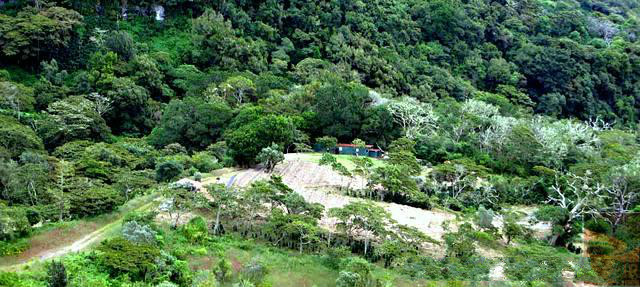
Hacienda La Esperanza Estate
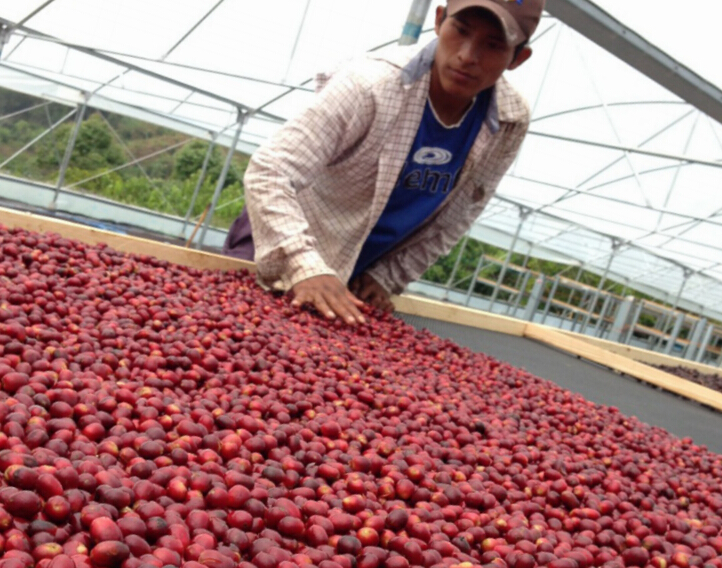
Hacienda La Esperanza sits at 1400–1600 meters and produces between 300 and 700 bags a year. Nearly all processing is done on the farm: coffee is washed and sun-dried, while the removed husks, pulp, and mucilage are recycled as fertilizer. The planting breaks down to 60% Caturra, 20% Catuai, and 20% Typica and other varieties, with Geisha the most famous—its Geisha won the Best of Panama championship in 2008. The estate also grows many native shade trees that nourish the soil, including citrus trees and tropical fruits such as lemons and grapefruits. A vast tropical rainforest reserve lies within its boundaries, fed by at least three mountain wells; average annual rainfall is 3200 mm, with daytime temperatures of 16–23°C and nighttime temperatures of 14–20°C.
What sets Hacienda La Esperanza apart from other estates is its staff: a PhD botanist, three professional cuppers, and 100 full-time employees, currently managing six affiliated estates. The estates belong to the Herrera brothers. Their grandfather once ran a coffee farm in the Trujillo region of Colombia, but when it declined, the brothers left Colombia—never abandoning, however, their dream of returning home to grow coffee.
The first estate the Herreras bought on that return was Hacienda La Esperanza in Trujillo, very close to their grandfather's original farm, and it now serves as their regional headquarters. The farm is 100% organic and grows Colombian, Castillo, and Caturra trees along with more than 14,000 organic Geisha plants. The brothers subsequently acquired four more estates in Trujillo and in Caicedonia to the north; together with La Cardeida estate in Boquete, Panama, which they leased in 2005, they now manage six estates with a combined 213 hectares under coffee.
The Café Granja La Esperanza estates span eight distinct microclimates across three mountain ranges in Colombia, giving their botanists ideal conditions to experiment with different terroirs, processing methods, and varieties—combining scientific rigor, commercial savvy, and an uncompromising commitment to quality. They tailor processing steps and standards to each microclimate and variety, and manage every batch from seedling to export with 95 data points.
The team led by chief botanist Hernando Tapasco has set up climate stations on the estates to track weather data and inform harvest decisions; farm data is collected continuously and analyzed weekly. After harvest, weather, production, and cupping data are cross-referenced to find correlations. Geisha pickers are strictly trained to take only fully ripe cherries and are paid a daily wage rather than by weight, so no one is tempted to strip unripe fruit to boost volume; half of the harvest workers have more than six years of experience. Picked cherries go straight to the central mill at Hacienda La Esperanza, where each Geisha batch is marked and processed separately. They first pre-dry for three days on raised drying patios before moving to small drying towers. Quality control is ruthless: of the 40,000–45,000 Geisha trees at Cerro Azul estate, only 5,000–7,000 produce beans worthy of the Cerro Azul name.
Variety experimentation never stops. Beyond the organic Caturra that once covered most of Hacienda La Esperanza, they now grow Geisha, organic Geisha, Mocha, Bourbon (including red, yellow, and Tekisic), Laurina, Pacamara, San Bernardo, and Pache—applying to coffee the same seriousness wineries devote to grape varieties. After Geisha, the estate's Pacamara, Bourbon, and Laurina have continued to surprise and impress the specialty coffee world.
Those efforts have paid off. Back at the 2008 Best of Panama competition, La Cardeida—the estate they lease in Panama—took the championship with a score of 93.16. In the 2012 Coffee Triple Crown, three of their Geisha-leading estates each earned a place: Cerro Azul finished second, Las Margaritas third, and Buenos Aires Experimental seventh.
FrontStreet Coffee Recommendation
Geisha (transliterated from Geisha/Gesha) is one of the most beloved Arabica varieties, prized for its unique florals and superb sweet-sour balance, yet its low yield, weak disease resistance, and demanding cultivation keep prices high. If you want great Geisha without a steep price, FrontStreet Coffee suggests starting with its washed Boquete Geisha—an entry-level Panamanian Geisha that lets you taste the classic orange-blossom-and-honey character of high-grade Panama Geisha, with oolong tea-like body, delicate fruit acidity, and distinct layering, at an affordable price. For connoisseurs, FrontStreet carries Hacienda La Esmeralda's Red-label Geisha (Esmeralda Special), grown at 1600–1800 meters, every batch cupping above 90 points and drawn from a single small plot so buyers can choose by subtle flavor differences; the Green-label Geisha (Private Collection) blends lots from multiple high-altitude plots to express Esmeralda's signature style at a more accessible price. On the Ethiopian side—the birthplace of coffee—FrontStreet offers Granana Estate Gesha from a single-variety farm near Kochere, whose raised-bed natural lots dry for 14–20 days and, at a medium-light roast, show bright citrus acidity, elegant ginger-flower aromas, and full ripe-fruit sweetness; plus Geisha Village's Gold-label (Geisha 1931, meticulous natural process, 10% of the estate's output, the top coffee outside its auctions) and Red-label (Gori Gesha, 15% of output, 88+ points on the SCA 100 scale, fully traceable single-terroir lots). Geisha is a medium-light roast with a hard, dense bean that tends to sink and clog the dripper, so grind at a coarseness with 78% pass-through on a No. 20 sieve (about fine-granulated-sugar size), brew at 91°C, and use a 1:16 ratio—15 g of coffee in a small Hario V60 with three pours: bloom to 30 g for 30 seconds, then to 125 g, then to 225 g, finishing in about 2:10–2:20. Geisha also shines as a SOE espresso: FrontStreet's medium-roast Granana Gesha SOE at a 20 g dose, 1:2 ratio, 25-second extraction yields apricot, caramel, and nutty notes—and at 1:5 with 200 g hot water, an Americano with orange, nut, and blueberry flavors.
Important Notice :
FrontStreet Coffee is a long-established specialty coffee roaster in Guangzhou China, selling freshly roasted beans from its own farm in Yunnan as well as dozens of carefully selected single-origin beans from around the world for both pour-over and espresso. The products deliver consistently excellent quality and great value, with shipping within 24 hours. Guangzhou's FrontStreet Coffee shop is recommended by many coffee lovers, and the beans are now available online at the Tmall 。
FrontStreet Coffee has moved to a new address:
FrontStreet Coffee Address: 315,Donghua East Road,GuangZhou
Tel:020 38364473
 Scan and follow the En Gafei WeChat official account. Please indicate that the reprint comes from "En Gafei".