What Are the Characteristics of Salvadoran Coffee Beans What Makes Premium Salvadoran Coffee Beans
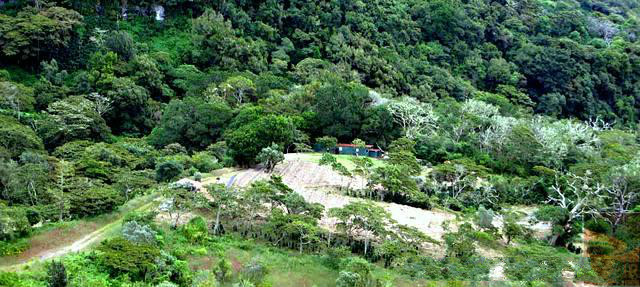
Many coffee enthusiasts may not be familiar with El Salvador. Located in Central America, it borders Guatemala and Honduras to the north, with its western and southern boundaries formed by the Pacific coastline. El Salvador is the smallest country in Central America by area and also the most densely populated. Its terrain is primarily mountainous and plateau-like, with numerous volcanoes. The Santa Ana active volcano, at an elevation of 2,385 meters, is the country's highest peak. The northern region consists of the Lempa River valley, while the south features a narrow coastal plain.
Despite its small size, El Salvador has dozens of volcanoes, making it one of the most volcanically dense countries in the world and earning it the nickname "Land of Volcanoes." The country's relatively high average elevation creates geographical conditions highly favorable for coffee cultivation. The western region, near Guatemala, is the main coffee-producing area.
Climate Characteristics
El Salvador has a tropical savanna climate. The plains experience a tropical rainforest climate, while the mountainous areas have a subtropical forest climate. The average annual temperature ranges from 25-28°C. Mountainous areas receive over 1,800 millimeters of rainfall annually, while coastal regions receive about 1,000 millimeters. The rainy season runs from May to October.
Do not underestimate El Salvador's coffee production. At its peak it was once the world's fourth-largest coffee-producing country. However, decades of civil war nearly devastated the coffee industry. Fortunately, in recent years the conflict has ceased and the industry has regained its vitality. The only benefit the civil war brought El Salvador was that farmers abandoned their fields and so failed to catch the trend of Catimor sun-dried cultivation that has been popular over the past twenty years—which preserved ancient Bourbon and Typica varieties. In other words, El Salvador coffee beans are still grown using the most traditional shade-grown methods.
That has positive implications for coffee aroma. In 2005, El Salvador's hybrid variety Pacamara made a spectacular showing in the Cup of Excellence (COE), confusing many international cuppers who did not know how to score it. Unexpectedly, this hybrid bean not only broke the existing boundaries of coffee richness but also raised El Salvador's visibility in the coffee world.
El Salvador's specialty coffee is concentrated in the western Santa Ana region and the northwestern Chalatenango volcanic rock area. In recent years, the top ten winners in cupping competitions have almost all come from these two regions. With elevations of approximately 900-1,500 meters, the main variety is Bourbon (accounting for 68%), followed by Pacas (29%), while hybrid varieties Pacamara, Duchila, and Caturra account for only 3%.
El Salvador's coffee harvest season runs from November through March of the following year. All coffee cherries are harvested by hand, and most coffee cultivation in El Salvador is done by small-scale farmers using traditional growing methods—nearly 100% shade-grown.
Overall, El Salvador coffee inherits the mild quality of Central American coffee: gentle and slightly acidic, with pleasant sweetness. It also has its own distinctive character. The aromatic flavor carries a very gentle acidity; it is pure without any off-flavors, with excellent balance. Its creamy, chocolate-like smoothness is impressive, and the dense mouthfeel gives the coffee depth of flavor and a long, lingering aftertaste.
Pacamara Variety Introduction
Pacamara is a hybrid variety discovered in El Salvador in the 1950s, created by crossing Pacas (a natural mutation of Bourbon) with the large-bean variety Maragogype (Elephant Bean).
It was first cultivated by Salvadoran researchers in 1958. Pacamara is a rare, excellent variety developed through artificial selection that surpasses its parent varieties. It perfectly inherits the advantages of both parents: Pacas' excellent flavor profile and Maragogype's large bean size. The beans are at least 70-80% the size of Elephant Beans, with 100% reaching 17 screen size or above and 90% reaching 18 screen size or above. The average bean length is 1.03 centimeters (compared to 0.8-0.85 cm for regular beans), average width is 0.71 centimeters (compared to 0.6-0.65 cm for regular beans), and thickness reaches 0.37 centimeters. The beans are full and round. The variety's most distinctive characteristic is its lively, sophisticated acidity—sometimes with biscuit aromas, sometimes with fruity notes—along with excellent body and mouthfeel. The best quality comes from El Salvador and Guatemala.
Finca Ataisi Estate Introduction
Finca Ataisi Estate is located in the volcanic region of Izalco, Sonsonate Province, El Salvador. Due to volcanic activity, the estate's soil contains very rich organic matter. The estate has an average elevation of approximately 1,800 meters and steep terrain, making it one of the highest-elevation estates in the area. It is currently managed by owner Rene Martin, whose philosophy is to maintain El Salvador's original traditional cultivation methods. Beyond necessary pruning and irrigation, the estate keeps large areas of natural agroforestry ecosystems intact. Over 90% of the estate is planted with the Pacamara variety.
In addition to excellent cultivation practices, Finca Ataisi Estate has its own coffee washing processing facilities. This avoids price exploitation from outsourcing and allows more meticulous handling of carefully selected coffee cherries. Rene Martin is very rigorous about the washing process, recording daily temperature and humidity and paying close attention to how the beans perform in the fermentation tanks.
Recommended Single Origin: El Salvador Finca Ataisi Washed Pacamara
- Country: El Salvador
- Certification: Rainforest Alliance Certified
- Region: Izalco area, Sonsonate Province
- Grade: SHG (Strictly High Grown)
- Processing: Washed fermentation, sun-dried
- Elevation: 1,800 meters
- Variety: Pacamara
Cupping Report
Dry Aroma: Spices, passion fruit aroma, hazelnut-like nuts, berries
Wet Aroma: Nutty chocolate, sweet and sour passion fruit, creamy chocolate, strawberry aftertaste, nuts
Slurping
The entry is very delicate and silky, with clear, gentle fruit acidity gliding across the tongue. Like all Pacamara, it is quiet and soft. The mid-palate reveals fresh wild berry acidity and hazelnut-like nutty aromas, with distinct caramel sweetness in the finish. The aftertaste feels delicately smooth and sweet, persistent with a long throat feel, suitable for careful appreciation on quiet nights.
FrontStreet Coffee recommended brewing method: pour-over.
Dripper: Hario V60. Because Pacamara beans have rich, layered flavors, FrontStreet Coffee suggests the fast-flowing V60 dripper to highlight those layers.
Water Temperature: 90°C. Due to the light roast level, FrontStreet Coffee recommends a higher brewing temperature.
Coffee-to-Water Ratio: 1:15-1:16. Because the flavor layers are rich, FrontStreet Coffee recommends a larger coffee-to-water ratio; more water lowers the coffee concentration and lets the layers express themselves better.
Grind Size: Medium-fine grind, which FrontStreet Coffee recommends for a light roast level.
Brewing Technique: Multi-stage extraction, using a multi-stage approach to slow the V60's flow rate and increase extraction from the grounds, which also produces a distinctly layered cup.
Sharing FrontStreet Coffee's brewing technique: 29g of water for a 32-second bloom, then pour to 120g for the first stage. When the water level drops and is about to expose the coffee bed, continue pouring to 226g and stop. When the water level drops and is about to expose the coffee bed again, remove the dripper. (Timing starts from the bloom.) Total extraction time is 1 minute 56 seconds.
FrontStreet Coffee Recommendation
Pacamara's lively, layered acidity and clean sweetness align neatly with FrontStreet Coffee's Panamanian Geisha offering. The FrontStreet Coffee Boquete Washed Geisha is an entry-level Geisha from Panama's most representative specialty region, with pure varietal genetics and a washed process that lets its orange-blossom honey, oolong tea, and delicate fruit sweet-tartness come through clearly and in distinct layers—all without bitterness. If you prefer a honey-processed sweetness, the FrontStreet Coffee Mozart brings raisin, blueberry, osmanthus, and rose notes with a crisp sweetness that shines whether you brew it as pour-over, cold brew, Americano, or latte.
Important Notice :
FrontStreet Coffee is a long-established specialty coffee roaster in Guangzhou China, selling freshly roasted beans from its own farm in Yunnan as well as dozens of carefully selected single-origin beans from around the world for both pour-over and espresso. The products deliver consistently excellent quality and great value, with shipping within 24 hours. Guangzhou's FrontStreet Coffee shop is recommended by many coffee lovers, and the beans are now available online at the Tmall 。
FrontStreet Coffee has moved to a new address:
FrontStreet Coffee Address: 315,Donghua East Road,GuangZhou
Tel:020 38364473
 Scan and follow the En Gafei WeChat official account. Please indicate that the reprint comes from "En Gafei".