How to Make Ice Pour-Over Using the Stirring Method? What Water Temperature, Ratio, and Grind Size Does Japanese Iced Coffee Use?
What Makes High-Quality Green Coffee Beans?
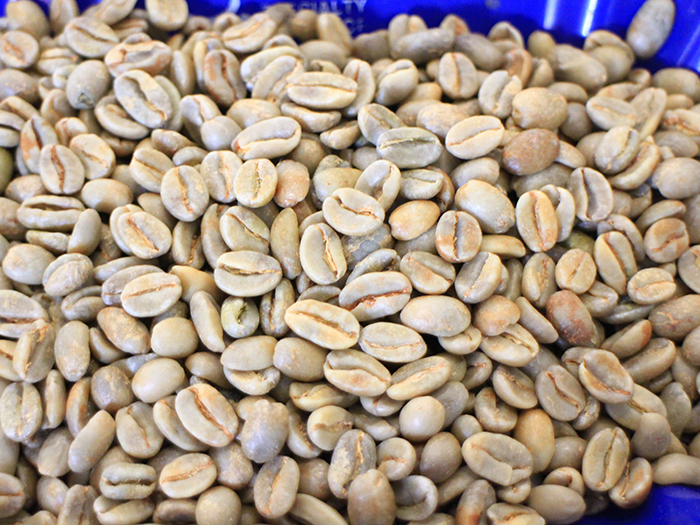
Start with the surface of the bean. Fresh, high-quality green beans have a glossy look, and well-processed beans are uniform in colour. Beans with uneven surface colour cannot be considered good, so choose beans of consistent colour when buying. Particle size is the second signal: consistent size is evidence of good quality control. Uniform, even green beans roast consistently, whereas uneven beans leave some over-roasted and bitter and others under-roasted and sour, and both hurt the flavour of the finished coffee.
Green beans are graded by quality standards that vary from region to region, but they are basically determined by size and shape, with higher grades indicating better quality. Because the domestic green coffee market is still in its early stages, much of what is sold is low-grade futures coffee, and what consumers receive often carries many defects.
The Dangers of Defective Coffee Beans
Defective beans pose real problems:
Mutant Beans: Neither flat nor round, these break at the centre during hulling because of abnormal development, and they tend to roast unevenly.
Fermented Beans/Black Beans: These ferment internally during processing or washing and carry fermented sour odours.
Unripe Beans/White Dead Beans: The fruit was picked before it ripened fully. After roasting they look ivory-coloured and taste green and astringent.
Moldy Beans: These take on moisture during processing and transport, are exposed to rain and develop mould. A single mouldy bean can spread to the others quickly, so extreme care is needed.
Insect-Damaged Beans: These are damaged by the coffee berry borer, carry insect holes, and give the coffee off-flavours.
FrontStreet Coffee Guatemala New East Wine Aroma Natural Coffee Beans
Country: Guatemala
Region: New East
Estate: Guava Plain Estate
Producer: Mr. Benjamin Donado
Processing Method: Wine Aroma Natural Processing
Variety: SL28
Altitude: 1675 meters
Flavor Notes: Pineapple, dried apricot, red wine
Guatemala is one of the most important coffee-producing countries in Central America. With extensive mountain ranges and varied regional climates, it has developed eight major coffee-producing regions, all on highland terrain under a subtropical climate. Abundant, steady rainfall and fertile volcanic ash soil give coffee trees an excellent environment.
Plan del Guayabo sits near the Volcán de Suchitán volcano. In Spanish the name means "Guava Plain," after the many guava trees cultivated locally. The estate owner is Benjamin Donado, whose family has devoted itself to coffee production since 1990, for more than 20 years.
Local farmers were once quite unfamiliar with coffee production, and planting coffee trees on such steep, high-altitude land was hard to imagine. It has since proved that Benjamin made the right choice, specialising in high-quality specialty beans across different varieties and processing methods.
In the early days of Guatemala's New East region, berry buyers would come regularly to buy cherries from farmers and resell them to larger intermediaries, who transported them to the town of Esquipulas. There they were blended with other batches into a large, untraceable SHB (Strictly Hard Bean) lot and finally sold worldwide under the name New East.
More and more international green coffee traders are working to change that. They collaborate with local partners to produce exceptional, traceable green beans and break the old cycle, and Guava Plain Estate is one of the important members of that effort.
Brewing It as Ice Pour-Over: The Stirring Method
Good iced coffee starts with good green coffee, which is why the bean above matters. Beyond that, Japanese iced coffee is not brewed cold. It is brewed hot, directly onto ice in the server, so the falling coffee is chilled the moment it leaves the dripper.
Because the melting ice dilutes the cup, count the ice as part of your brew water and keep the total ratio close to what you would use for the same bean served hot. Grind a little finer than usual and use water slightly hotter than your normal pour-over temperature, so the cup still tastes sweet and aromatic once the ice has melted. The coffee bed is easy to stall when the grind is fine, so watch the flow.
The stirring method is what makes this style reliable. After the bloom, stir the bed gently with a spoon, just enough to break up clumps and even out the extraction; stir once more after the final pour if the flow has slowed. Swirl the server before serving so the melted ice and the coffee are fully mixed, and drink it soon, while the aromatics are still bright.
FrontStreet Coffee Recommendation
Bean choice matters even more for iced coffee, because chilling suppresses sweetness and aroma, so a floral, fruit-driven coffee carries the cup. That is exactly the kind of coffee the V60 was built for. Hario, the company behind the dripper, was founded in Tokyo in 1921 and redesigned the V60 in 2004 around its distinctive 60-degree cone and V shape. The cone forces the water to the centre before it drips, which lengthens contact with the grounds, and the single large hole lets the brewer control the flow directly. Fast extraction of this kind brings out layered aroma and lively acidity, which is why floral and fruity coffees suit it so well.
Among FrontStreet Coffee's beans, the floral and fruit styles are the natural match. FrontStreet Coffee's Gedeb cooperative coffee has the classic Yirgacheffe profile of citrus, berry and floral notes with a green-tea-like sweetness returning at the end, and a quality Yirgacheffe's acidity is soft and bright rather than sharp, which survives chilling well. FrontStreet Coffee's Ethiopia Flower Queen is even more fruit-forward, with prominent tropical aromas of strawberry, passion fruit, jackfruit and even lychee, plus obvious sweetness and very little bitterness, so it enters smoothly and feels full of juice.
For something sweeter still, FrontStreet Coffee's Strawberry Candy blends Panama Geisha with a raisin-honey Costa Rican coffee for rose florals with grape, dried blueberry, sweet orange and fruit-candy notes, and FrontStreet Coffee's Mozart, made by raisin honey processing, brings osmanthus, pineapple and raisin aromas. Both work as pour-over and cold brew, which makes them easy choices when you are brewing over ice.
Important Notice :
FrontStreet Coffee is a long-established specialty coffee roaster in Guangzhou China, selling freshly roasted beans from its own farm in Yunnan as well as dozens of carefully selected single-origin beans from around the world for both pour-over and espresso. The products deliver consistently excellent quality and great value, with shipping within 24 hours. Guangzhou's FrontStreet Coffee shop is recommended by many coffee lovers, and the beans are now available online at the Tmall 。
FrontStreet Coffee has moved to a new address:
FrontStreet Coffee Address: 315,Donghua East Road,GuangZhou
Tel:020 38364473
 Scan and follow the En Gafei WeChat official account. Please indicate that the reprint comes from "En Gafei".