Does Blue Mountain Coffee Have Rich, Balanced Flavors? Is Blue Mountain Drip Coffee Bitter or Sweet?

Premium Blue Mountain coffee has earned its place among the world's most famous coffees thanks to its full-bodied richness and smooth, balanced flavor profile. In this article, FrontStreet Coffee walks through how to brew high-quality Jamaican Blue Mountain coffee, and what it tastes like prepared as drip bag black coffee.
Authentic Blue Mountain Coffee from Jamaica's Blue Mountains
Jamaica's coffee-growing areas sit in the Blue Mountain range of the island's eastern end. Ringed by the sea, the mountains take on a striking blue hue in sunlight—hence the name. With beautiful scenery, fresh air, and the Caribbean's highest peak at 2,256 meters, the range draws crowds of vacationing tourists.
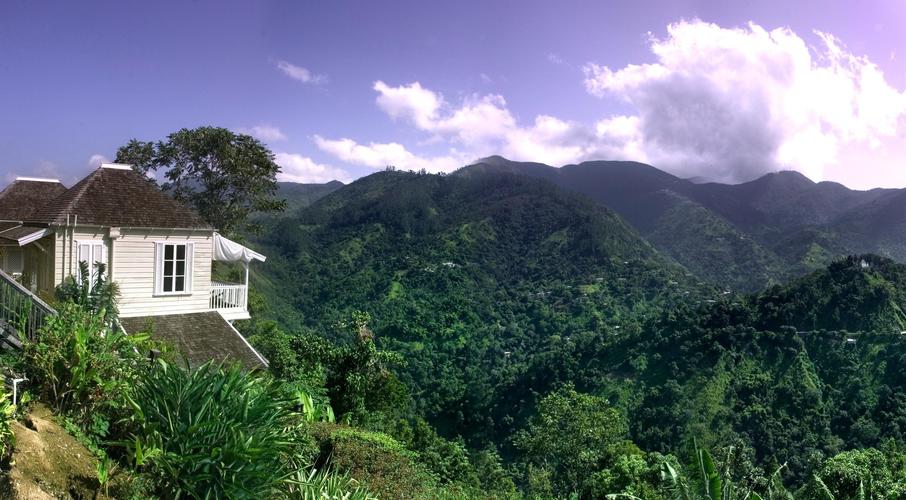
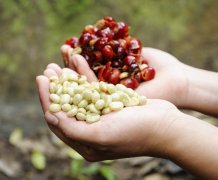
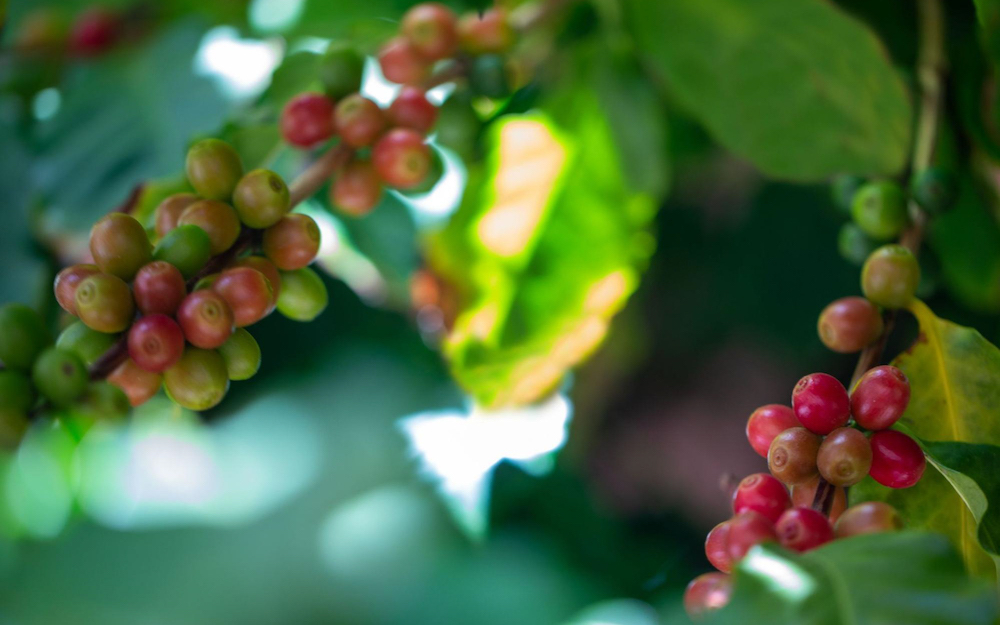
Located within the coffee belt, the Blue Mountains offer fertile volcanic soil, cool temperatures, and abundant sunshine and rainfall. The temperature swings of high altitude let coffee cherry ripen slowly, absorbing nutrients and developing more aromatic compounds. Locals plant their trees on steep, rugged slopes, which makes management and harvesting genuinely difficult—only experienced local women workers who know the terrain well can handle the picking.
Highest Grade Jamaican Blue Mountain No. 1 Coffee
The Jamaican government has designated land above 1,700 meters in the range as a nature reserve, so crops can only be cultivated below that line. Under the standards of the Jamaican Coffee Industry Board (CIB), only Arabica grown above 910 meters may be called Jamaican Blue Mountain coffee; beans from lower altitudes are classified as Jamaican High Mountain or Jamaican Prime coffee. The higher the altitude, the harder the cultivation, management, and harvesting—and the rarer, and pricier, the resulting beans.
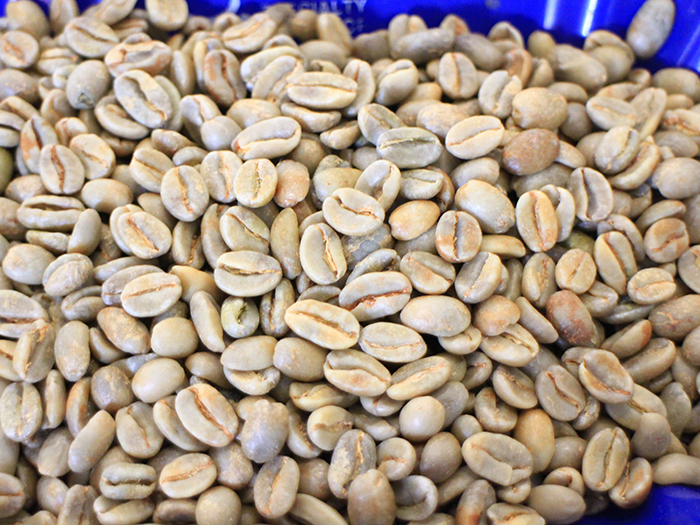
After harvest, Jamaican Blue Mountain cherries are typically processed by the traditional washed method. Machines crush the cherries under pressure to strip away skin and pulp, after which the beans ferment overnight in tanks. They are then washed repeatedly in clean-water pools, the friction between beans and flowing water polishing them smooth and clean. Finally, the parchment beans dry for 2–3 weeks until moisture reaches 12–14%. Because the pulp and mucilage are removed before drying, no excessive fermentation acidity creeps into the flavor, and Blue Mountain's natural aromatics come through remarkably balanced and clean.
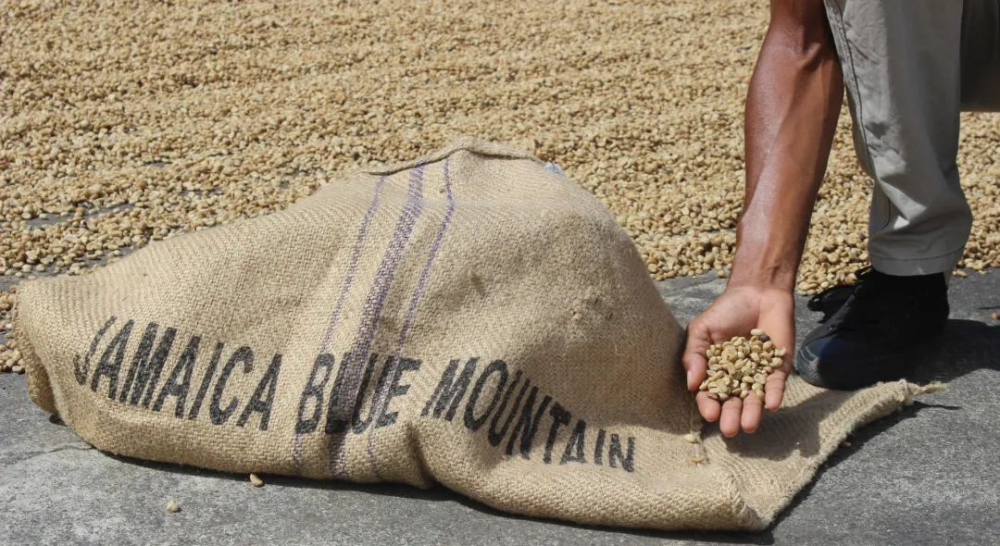
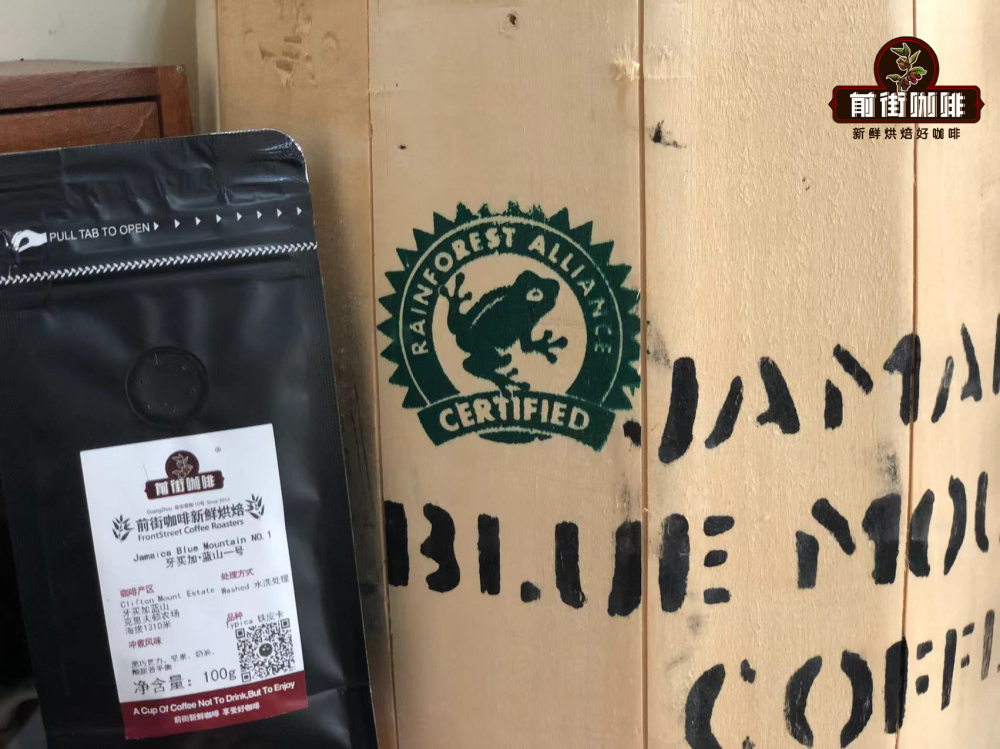
Processed green beans then face multiple quality inspections—defect ratio, size grading, and cupping scores. The highest grade, Blue Mountain No. 1, must meet the 17–18 mesh size specification, show a defect ratio no higher than 2%, and display well-balanced acidity, sweetness, bitterness, body, and aroma. Coffee this refined is inevitably scarce. FrontStreet Coffee's view is that to taste Blue Mountain at its best, you should choose the highest quality Jamaican Blue Mountain No. 1—and its own Blue Mountain No. 1 beans come from Clifton Mountain Estate.
Pour-Over Jamaican Blue Mountain No. 1 Coffee
FrontStreet Coffee brews this coffee in a Kono dripper to showcase the full-bodied, smooth texture of Blue Mountain No. 1. The Kono's ribs extend less than halfway up its walls, so the filter paper clings tightly to the dripper once wet, restricting airflow. That slows the drawdown and extends contact time with the coffee particles, producing more even extraction and a richer body.
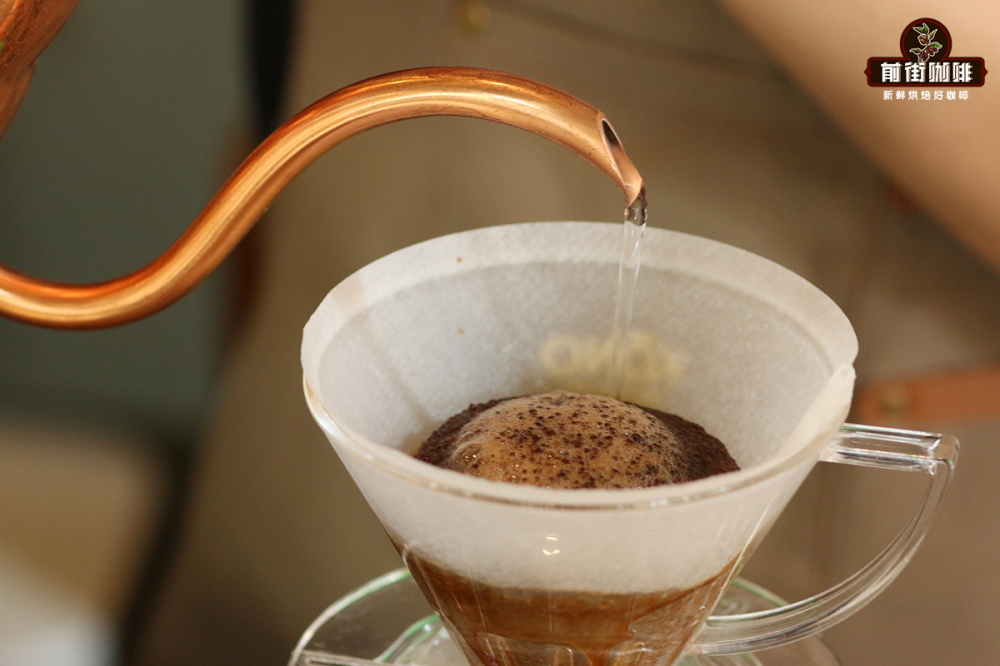
Blue Mountain No. 1 is also a medium roast, so its internal structure is more porous than a light roast's and absorbs water more readily. To guard against over-extraction, FrontStreet Coffee chooses a grind size with a 75% pass-through rate on a No. 20 standard sieve, 88°C water, and its customary three-stage pouring method.
Coffee grounds: 15g | Coffee-to-water ratio: 1:15
FrontStreet Coffee brews in three stages: begin with 30g of water for a 30-second bloom. The first pour uses a small circular flow up to 125g, then stop. Once the water level drops to just above the coffee bed, pour the second stage up to 225g to complete the extraction. Total extraction time, bloom included, is 2'00".
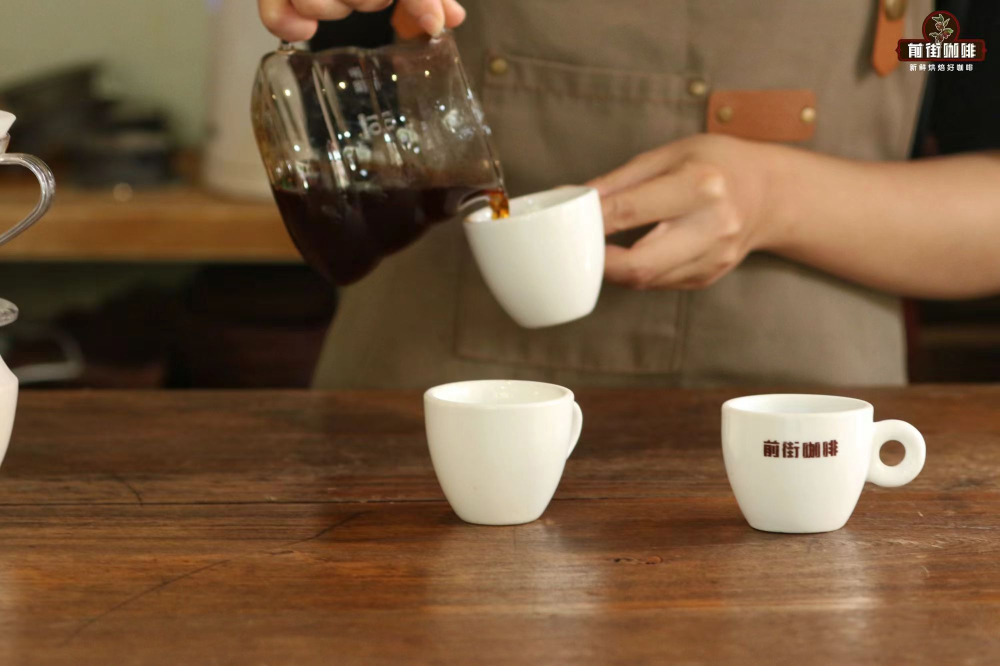
In the cup, pour-over Blue Mountain No. 1 delivers rich dark chocolate, nut, and caramel notes, a creamy smooth texture, moderate body, a sweet finish, and a beautifully balanced profile.
Brewing Recommendations
To pull the rich aromatics out of Blue Mountain No. 1, FrontStreet Coffee believes the first requirement is beans at their optimal flavor period. Once beans pass that window, their flavors are very hard to reproduce in the cup. FrontStreet Coffee's principle is "freshly roasted good coffee": beans are only shipped within 5 days of roasting, so that every customer receives coffee at peak flavor.
FrontStreet Coffee often hears from pour-over drinkers that their Blue Mountain No. 1 tastes overly bitter. That usually happens when the extraction rate climbs too high and releases too many large bitter molecules. Based on its own testing, FrontStreet Coffee offers the following points for reference and adjustment.
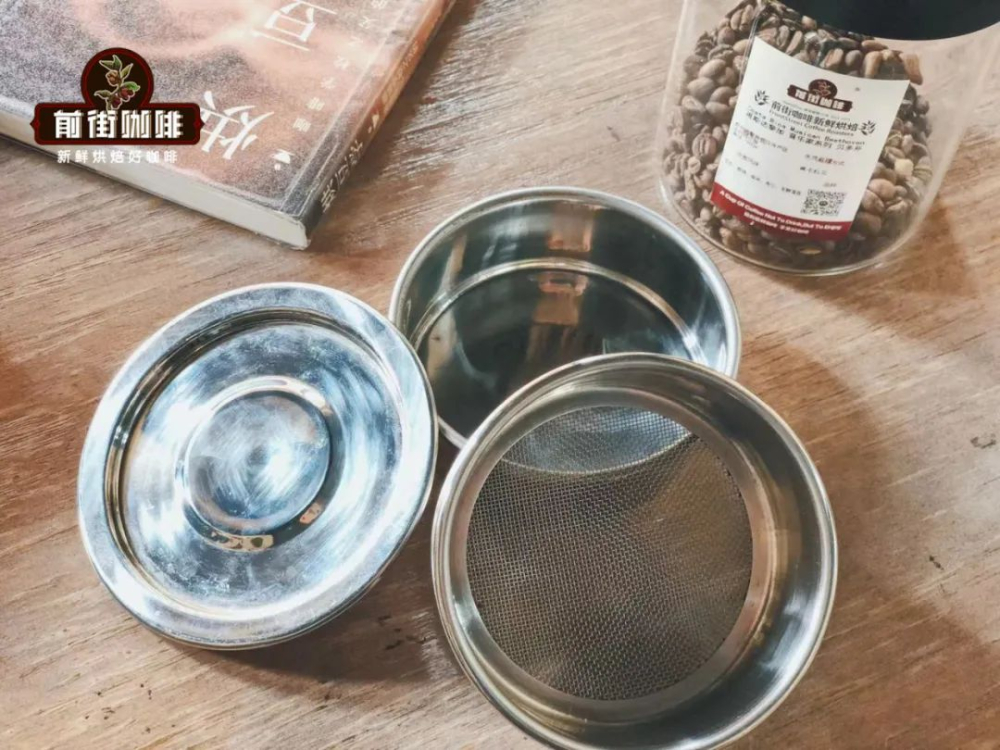
1. Grind too fine: dissolution efficiency rises and contact time stretches, leaving a bitter, muddled cup. Coarsen the grind. If you're unsure whether your grind is appropriate, FrontStreet Coffee suggests an inexpensive No. 20 standard sieve to help dial in the setting.
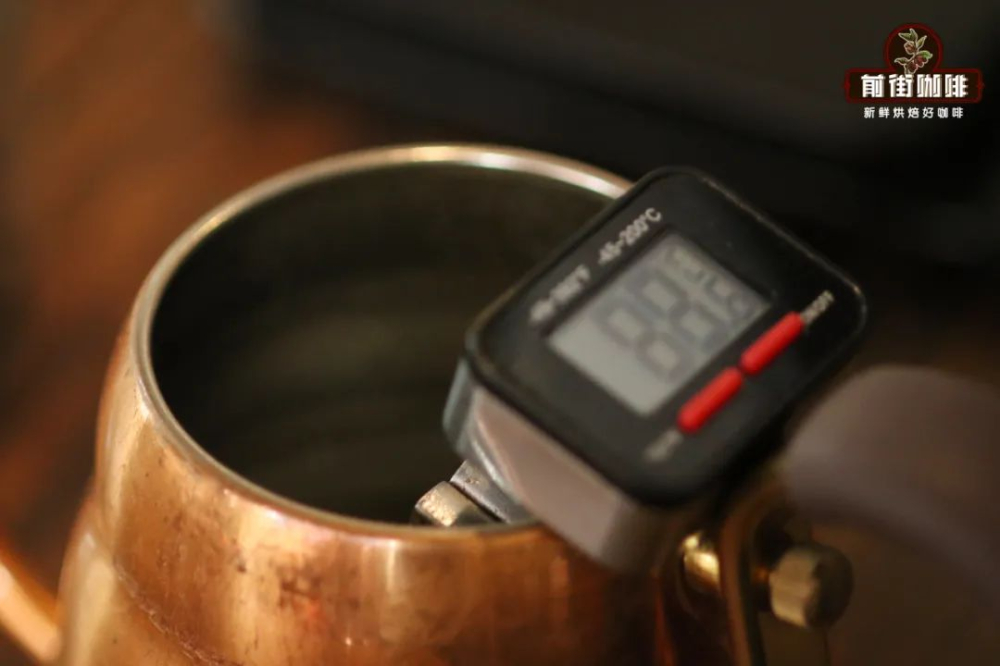
2. Water too hot: scorched bitterness becomes prominent. FrontStreet Coffee recommends keeping water between 86–93°C; for medium-dark beans like Blue Mountain No. 1, aim for 87–89°C.
3. Pouring too fast or stirring too vigorously releases too much from the grounds and dissolves extra bitter compounds. FrontStreet Coffee finds that sensible parameters combined with steady, gentle pouring will still extract all of the coffee's aromatics.
How to Brew Blue Mountain Drip Bag Black Coffee?
Besides pour-over, a Blue Mountain drip bag is another excellent way to enjoy Blue Mountain No. 1's refined flavors. It's convenient, quick, and saves time: with just a kettle of hot water and a clean cup, you can brew a rich, delicious Blue Mountain black coffee anywhere. Here's how FrontStreet Coffee does it.

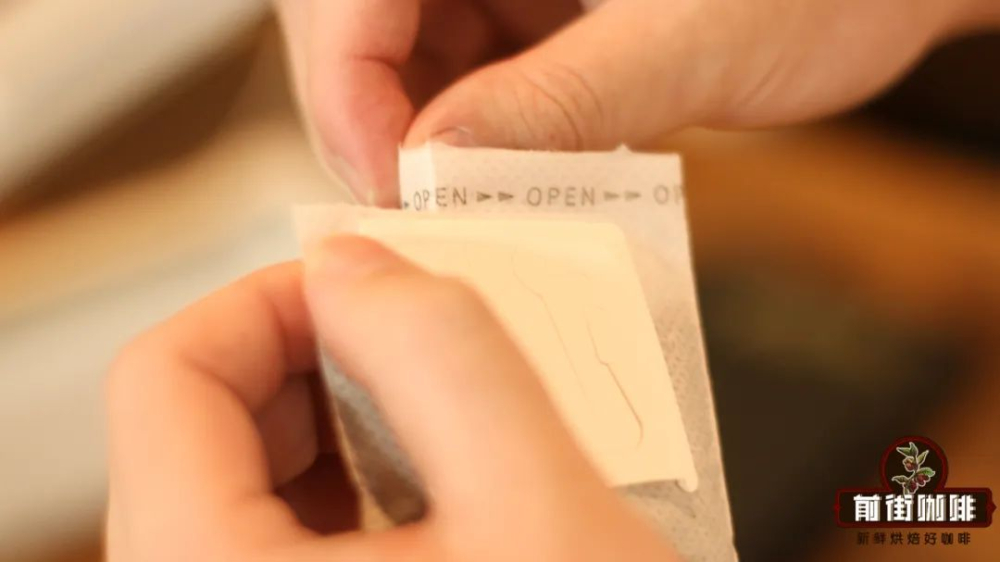
1. Set out your cup, open the drip bag package, tear the seal, and hang the bag on the rim of the cup!
2. Once the water reaches the target temperature, pour into the center of the bag until it's half full, then wait 10–15 seconds for the bloom. (Grounds in a drip bag carry little trapped gas, so no long bloom is needed.)
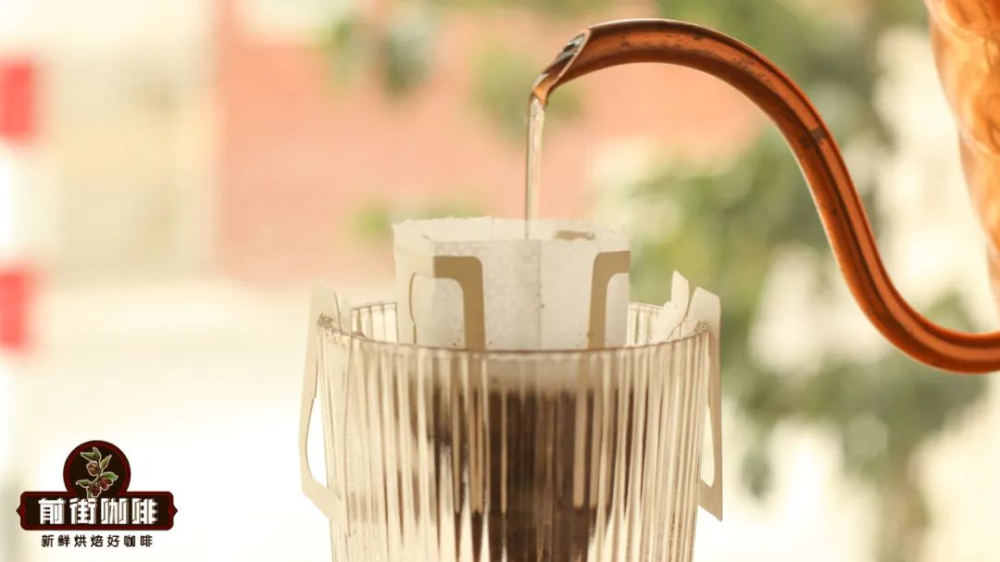
3. Pour a second time, filling the bag to nine-tenths. After it drains through, pour a third time, again to nine-tenths. Once dripping finishes, pour a fourth time, to nine-tenths once more.

4. When dripping is complete, lift out the bag and enjoy! Blue Mountain brewed this way has a notably smooth texture with nut, cream, walnut, and caramel aromas, finished with a light almond note.
FrontStreet Coffee Recommendation
Blue Mountain's charm lies above all in balance: no aggressive fruit acidity like some African coffees, no heavy roasty bitterness—just superb harmony among acidity, sweetness, bitterness, and aroma. A quality Blue Mountain shows cream, caramel, chocolate, nuts, honey, and a touch of fruit, entering soft and round, richly sweet through the middle, and finishing clean and long. That near-perfect equilibrium is why so many coffee professionals call it the easiest specialty coffee for almost anyone to love.
Genuine Blue Mountain is scarce: the entire Jamaican Blue Mountain region produces under 2,500 tons a year, and Japan has historically bought more than seventy percent of it, leaving only a limited supply for the rest of the world. FrontStreet Coffee's Blue Mountain No. 1 comes from the historic Clifton Estate, which has grown coffee since around 1750; the estate's growing and processing areas sit at an average of 4,300 feet (1,310.64 meters), where high altitude, afternoon cloud cover and mountain shade, ample sunshine, and mineral-rich soil give the trees ideal conditions and extend cherry ripening. Buyers can verify authenticity through the estate's certification documents and the original wooden barrels—traditional Blue Mountain ships in 15, 45, and 70 kilogram barrels, each one itself proof of genuine origin.
For brewing, FrontStreet Coffee roasts Blue Mountain No. 1 medium-dark and recommends resting the beans 4–7 days from the roast date before brewing. Use a Kono dripper, 15g of coffee ground slightly coarser than a light roast—about white-sugar texture—87–88°C water, and a 1:15 ratio in three stages: 30g bloom for 30 seconds, pour to 120g in slow vertical circles, then to 225g with a slightly faster pour to keep fines from clogging the dripper. The cup is clean, complex, and gentle, with chocolate sweetness and strong body—sweetness, acidity, and bitterness in perfect accord, a lingering fruit finish, and none of the harshness of the imitations.
Important Notice :
FrontStreet Coffee is a long-established specialty coffee roaster in Guangzhou China, selling freshly roasted beans from its own farm in Yunnan as well as dozens of carefully selected single-origin beans from around the world for both pour-over and espresso. The products deliver consistently excellent quality and great value, with shipping within 24 hours. Guangzhou's FrontStreet Coffee shop is recommended by many coffee lovers, and the beans are now available online at the Tmall 。
FrontStreet Coffee has moved to a new address:
FrontStreet Coffee Address: 315,Donghua East Road,GuangZhou
Tel:020 38364473
 Scan and follow the En Gafei WeChat official account. Please indicate that the reprint comes from "En Gafei".