What is Natural Processing Method? A Complete Introduction to Natural Coffee Bean Processing Steps, Flavor Characteristics, and Taste Profile
The Natural Process: The Traditional Coffee Processing Method
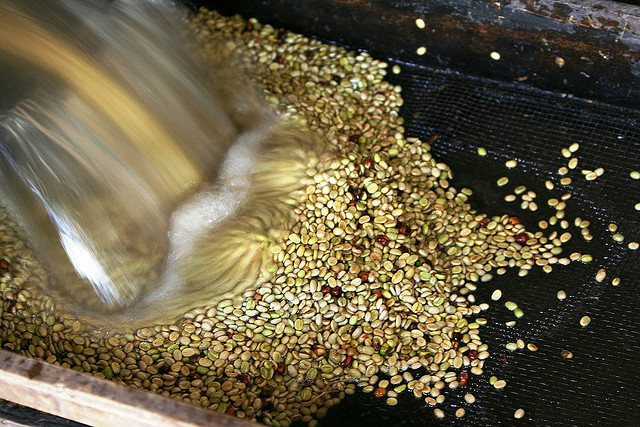
The natural process is the most traditional method of primary coffee processing in the world, also known as the dry processing method. Put simply, natural processing dries coffee cherries in the sun along with their pulp and skin until they are dry, after which the hulls are removed. That is why it is called "Natural" in English: it works with natural means.
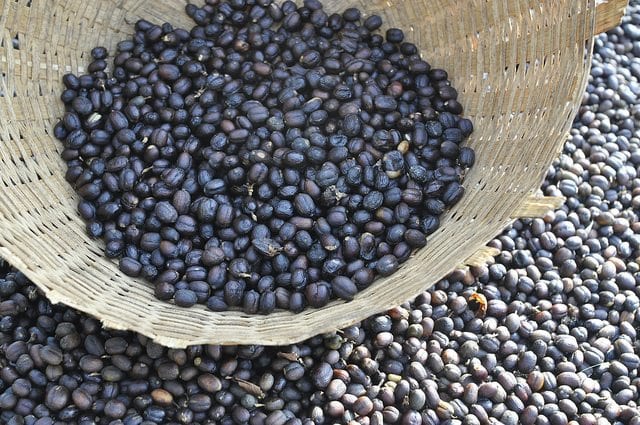
During drying, the sugars and aromas from the coffee pulp are well preserved and penetrate into the raw coffee beans. The longer the natural processing takes, the more thorough the fermentation. Because the process lets the cherries dry naturally, the beans mature inside the fruit without interference from the outside environment. Natural-processed beans therefore amplify their inherent flavors, showing distinct tropical fruit character, rich fermentation notes, and sweetness. Coffee regions short on water generally adopt this method, Ethiopia in Africa being one example.
Ethiopia's Natural Processing Heritage
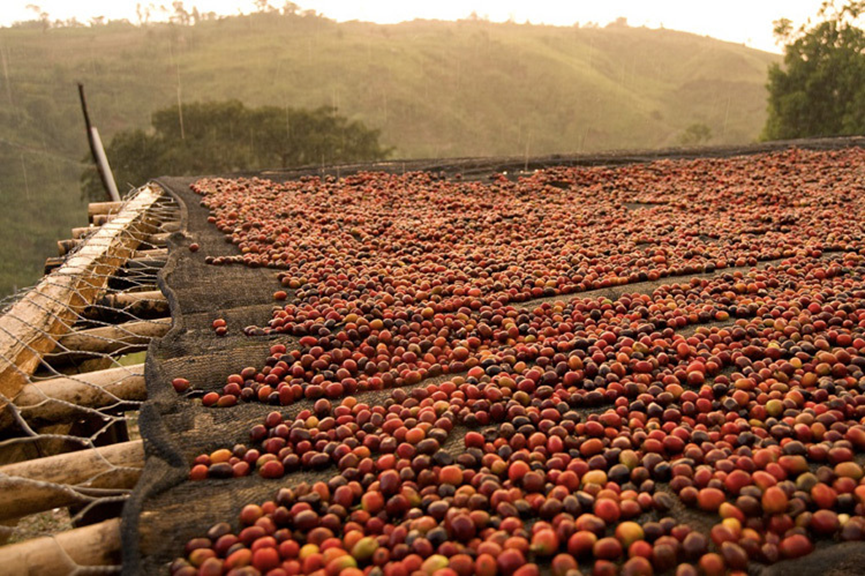
Ethiopia's high altitude, low rainfall, and long sunshine hours make it ideal for natural processing. Although natural processing saves water, if producers take the easy route and fail to control heating time and temperature strictly, the quality of the green beans varies widely. Traditional natural processing involves laying a cloth on the ground and placing the cherries directly on it to sun dry. Without frequent stirring, the temperature can run too high or the fermentation can turn uneven, and the various harmful microorganisms and contaminants on the ground can damage the coffee's flavor. For that reason, traditional natural processing often produced many undesirable defect flavors, and in the past high-quality beans were rarely processed this way, because people had a poor impression of natural processing and prices were low.
The Evolution of Premium Natural Processing
As specialty coffee has advanced in recent years, natural processing techniques have become increasingly refined. FrontStreet Coffee's Red Cherry coffee beans, for instance, use this refined natural method.
To raise the income of local Ethiopian farmers and improve coffee quality, the Dutch trading company Trabocca BV launched the "Operation Cherry Red Project" in 2007. The project focuses on improving processing techniques, including washed, semi-washed, and natural methods, in high-altitude regions such as Yirgacheffe, Ethiopia. Professional cuppers are involved, and different harvest volumes are set for different microclimate zones during the harvest season. Only 100% mature red cherries are harvested, with yields of approximately 1500 to 3000 KG. The economic loans, new hardware equipment, and production knowledge and technology that Trabocca provided greatly improved the quality of coffee beans in the Yirgacheffe region and across Ethiopia, so the coffee commands higher prices and farmers' incomes rise in turn.
Modern Natural Processing Techniques
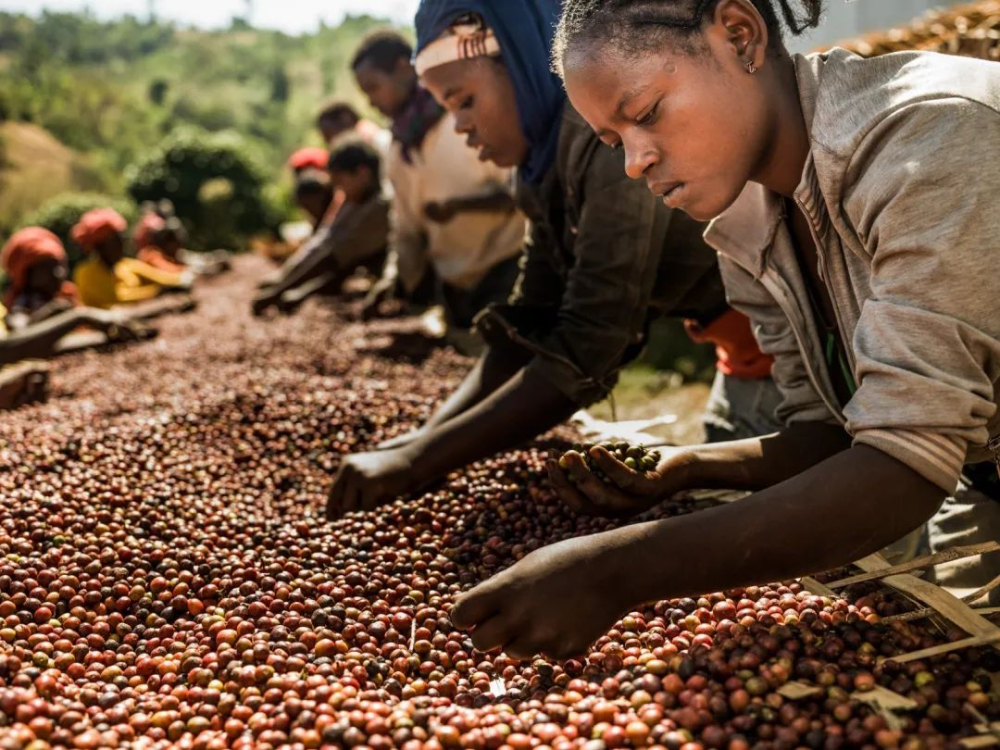
Unlike the past, today's natural processing puts far more effort into manual sorting and even drying. Freshly harvested red cherries are hand sorted to remove defective beans and any that are overripe or insect-damaged, leaving only the best. They are then taken to drying facilities. Different growing regions use different drying surfaces, some waterproof tarps and some raised beds, with African raised beds the most common. Drying generally requires 27 to 30 days, until the coffee turns dark purple and moisture content drops to 11%, at which point it is considered complete. Naturally processed Yirgacheffe has more intense flavors and richer layering, with wine-like fermentation notes and higher sweetness.
FrontStreet Coffee's Natural Yirgacheffe Red Cherry
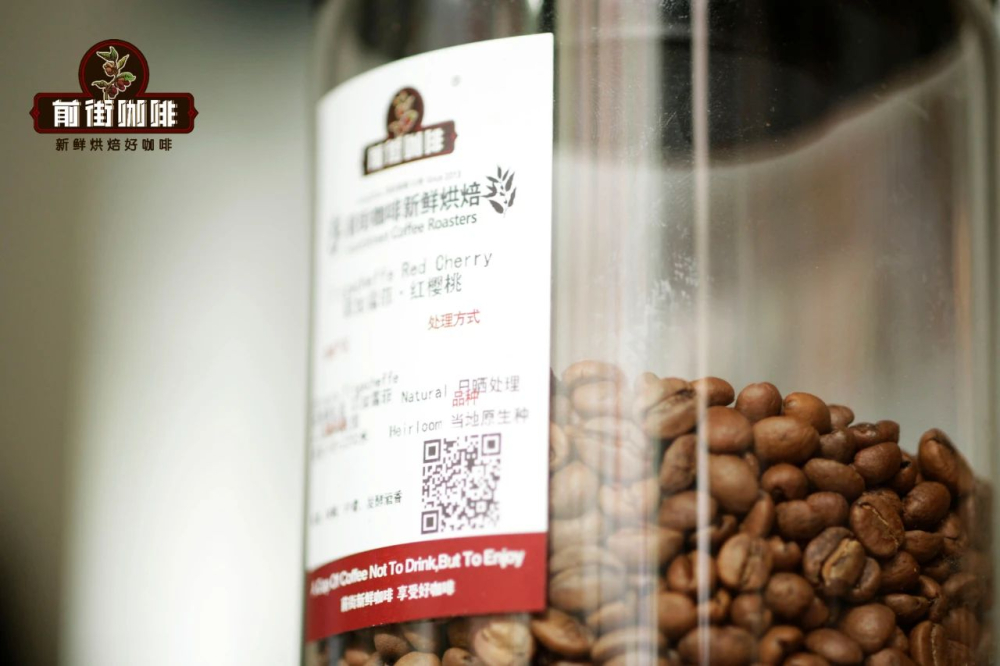
FrontStreet Coffee's natural Yirgacheffe Red Cherry beans are selected from fully red cherries and processed naturally at the Aletland farm. The green beans are light yellow, full-bodied, complete in appearance, and low in defects, and they are classified as G1 grade. Natural-processed Yirgacheffe has more intense flavors, richer layering, wine-like fermentation notes, and higher sweetness.
Brewing Parameters for FrontStreet Coffee's Natural Red Cherry
Filter: V60
Water Temperature: 92-93°C
Coffee Amount: 15g
Coffee-to-Water Ratio: 1:15
Grind Size: fine granulated sugar, about 78% pass-through on the #20 sieve
First, pour 30g of water for a 30-second bloom, then pour 95g more so the scale reads around 125g, completing that pour in about 1 minute. When the water level drops to two-thirds of the coffee bed, pour the remaining 100g so the scale reads around 225g, completing in about 1 minute 35 seconds. Drawdown finishes at 2'10"; remove the dripper and extraction is complete.

Flavor Profile
Natural Red Cherry flavors: lemon, licorice, citrus, berries, and sweet orange, with high overall sweetness. The aftertaste carries caramel and cream, and the finish has black tea aromatics.
FrontStreet Coffee Recommendation
Natural processing is only half of what Yirgacheffe offers, and tasting a washed lot beside it is the fastest way to understand how much the method changes the cup. FrontStreet Coffee's washed Yirgacheffe, a daily selection bean, is the classic introduction to the region and the first specialty coffee for many drinkers: white jasmine florals, bright citrus and lemon acidity, and a clear tea-like body, at an accessible price. Yirgacheffe is a small town in southern Ethiopia's Sidamo province at roughly 1,700 to 2,100 meters, with the trees planted above 1,800 meters, which makes it one of the highest coffee-growing areas in the world, and the name became famous enough that in 2010 the Ethiopia Commodity Exchange separated it from Sidamo as its own designation.
Within the town there are many smaller areas and villages, and the cooperatives there often bring a level of processing expertise that lifts the flavor another step. The most representative is the Guodingding Cooperative in the Worka area on the southeastern edge of Yirgacheffe, originally part of the Worka cooperative under the Yirgacheffe union before being developed as a single-origin expression, and it follows the most traditional washed process. Without the bitterness people sometimes expect from coffee, it carries fresh, bright citrus and lemon acidity and a jasmine fragrance, and after a medium-light roast it gains green tea and honey notes, which is why so many coffee lovers fall for it on the first cup.
For drinkers who prefer the fruit-forward side, FrontStreet Coffee's natural Red Cherry is the counterpart. It uses only fully ripe red cherries, which are screened once at the mill and then dried directly on raised beds; during the first days of drying the cherries are turned every 2 to 3 hours to prevent uneven heat and over-fermentation, and after 3 to 5 weeks of sun, depending on weather and temperature, the dried fruit is scraped off by machine and the beans are moved into storage. Because the coffee dries with the fruit still on it, it keeps the classic Yirgacheffe character while adding the tropical fruit aroma that natural processing brings, expressing citrus acidity, a berry-juice body, honey sweetness, and a creamy smoothness. Brewing is the same for either lot: a V60 with water at 90 to 91°C, 15g of coffee, and a 1:15 ratio, ground to about EK43s setting 10, or the texture of fine granulated sugar, at an 80% pass-through rate on the #20 sieve. Pour 30g for a 30-second bloom, add 95g to reach around 125g over about 1 minute, then, when the bed drops to two-thirds, add the remaining 100g to reach around 225g over about 1 minute 35 seconds, with drawdown completing at 2'00" to 2'10".
Important Notice :
FrontStreet Coffee is a long-established specialty coffee roaster in Guangzhou China, selling freshly roasted beans from its own farm in Yunnan as well as dozens of carefully selected single-origin beans from around the world for both pour-over and espresso. The products deliver consistently excellent quality and great value, with shipping within 24 hours. Guangzhou's FrontStreet Coffee shop is recommended by many coffee lovers, and the beans are now available online at the Tmall 。
FrontStreet Coffee has moved to a new address:
FrontStreet Coffee Address: 315,Donghua East Road,GuangZhou
Tel:020 38364473
 Scan and follow the En Gafei WeChat official account. Please indicate that the reprint comes from "En Gafei".