Arabica Bean Processing Method Green Bean Processing Semi-washed Processing Method Peru Washed Processing
Semi-Washed Method
The semi-washed method involves first removing the outer skin with water, then sun-drying the beans. This is a relatively new and quite rare method that works only in specific regions of certain countries with sufficiently long drying periods. Coffee processed this way ends up sticky, and the mucilage is not removed through fermentation in tanks. Semi-washed coffee therefore combines characteristics of both washed and dry processing. It offers excellent acidity, sweetness, flavor and aroma; its taste profile, however, is not as intense as coffee produced through purely dry or washed methods.
Washed Method (Wet Method)
The washed method produces coffee with good luster, few foreign impurities and slightly better acidity. It is used in Colombia, Mexico and Guatemala. The disadvantage is that improper timing during processing can produce unpleasant odors and distinctive sour flavors.
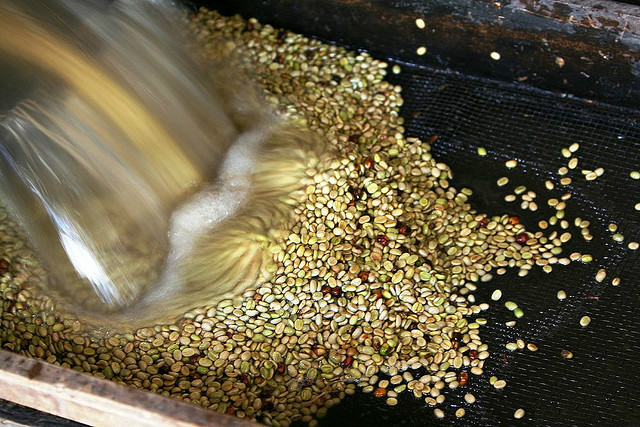
Harvested coffee cherries include perfectly ripe, overripe and unripe fruit, all mixed together. Without separating them for different processing, the resulting coffee would be undrinkable because of the many poor-tasting impurities. The cherries must first be washed clean and placed in large water-filled tanks for preliminary sorting. The best beans have higher density and sink in water, while overripe cherries float, making them easy to separate.
The outer fruit pulp is removed, and the cherries are soaked in large water-filled tanks. After fermentation, washed coffee develops a distinctive bright, clear flavor. The fermented beans are then washed with clean water, drained, and dried in sunlight or by machine. Finally, a hulling machine removes the parchment and silver skin, allowing the beans to be sorted and graded into different levels of green coffee.
Dry Method
The dry method produces coffee with gentle acidity and balanced bitterness. It is used in Brazil, Ethiopia and Yemen. The disadvantage is that it is easily affected by weather, with a higher chance of defective beans and foreign matter mixed in.
Coffee is either dried naturally on patios, machine-dried, or sometimes both. The process involves spreading cherries widely on drying grounds for two weeks and raking them several times daily to ensure even drying. Once dried, the beans separate from their outer skins, and hulling machines remove the dried fruit pulp and parchment. The beans are then sorted and graded into different levels.
Both washed and dry methods can produce the highest-quality coffee. Washed coffee generally has more prominent acidity and more consistent flavor; dry-processed coffee has lower acidity and more variable flavor profiles. Countries such as Colombia, Kenya, Costa Rica, Guatemala, Mexico and Hawaii use washed methods. Countries including Brazil, Ethiopia and Indonesia produce mostly dry-processed coffee.
Coffee sorting and grading are determined by bean size and density, as well as the number of defective beans per pound. Like the finest wines, professional coffee production involves careful processing and selection that shows in bean quality, because the product bears unique characteristics representing its origin, climate and growers.
Product Information
Product Name: FrontStreet Coffee Peru Washed Cajamarca Peru FTO SOLY CAFE
Country: Peru
Region: Cajamarca
Altitude: 1800-2000 meters
Processing Method: Washed
Varieties: Typica, Caturra, Bourbon, Catuai
Producer: SOLY COOPERATIVE
Flavor Profile: Nuts, Caramel, Cream
FrontStreet Coffee Recommendation
The processing methods above all describe how a coffee is dried and how much of the fruit is left on - and that, more than anything else, decides the style of the cup. If the washed, clear-and-bright profile described here appeals to you, FrontStreet Coffee's Colombia Huila is a good next step. Huila, in the southern part of Colombia's Central Cordillera, is the country's most famous specialty region: surrounded by mountains, planted above 1,500 meters, and home to the confluence of Colombia's most important rivers, which brings abundant water and humidity.
FrontStreet Coffee's washed Huila is roasted medium-dark, which pushes the dark chocolate and nut sweetness to the front and gives it a moderate oil and a full body. It suits pour-over and the French press, and also works for moka pot and espresso machine, so an Americano or a latte is well within reach.
Colombia has also been moving beyond washed processing in recent years. Anaerobic fermentation is one of the newer directions, sometimes called carbonic maceration: a low-oxygen or oxygen-free fermentation, usually carried out in a pressure-resistant stainless steel tank, where temperature, time and pH can be controlled. The best-known versions are anaerobic natural and anaerobic washed, and FrontStreet Coffee's Frontstone Estate Sidra uses the anaerobic natural method. After oxygen-free fermentation the coffee converts more tropical fruit aromas, and a medium-light roast shows passion fruit, grape, apricot and dried fruit through pour-over, cold brew, drip bags or a moka pot.
For a machine, FrontStreet Coffee's Premium Blend is a barista favorite. It combines Brazil's creamy, nutty base with Colombia's dark chocolate bitterness, and the extraction shows a fine golden crema. It is very beginner-friendly with milk, and also serves as the base for an Americano, cappuccino or mocha.
Important Notice :
FrontStreet Coffee is a long-established specialty coffee roaster in Guangzhou China, selling freshly roasted beans from its own farm in Yunnan as well as dozens of carefully selected single-origin beans from around the world for both pour-over and espresso. The products deliver consistently excellent quality and great value, with shipping within 24 hours. Guangzhou's FrontStreet Coffee shop is recommended by many coffee lovers, and the beans are now available online at the Tmall 。
FrontStreet Coffee has moved to a new address:
FrontStreet Coffee Address: 315,Donghua East Road,GuangZhou
Tel:020 38364473
 Scan and follow the En Gafei WeChat official account. Please indicate that the reprint comes from "En Gafei".