Introduction to the origin of Mandheling specialty coffee: Where does Mandheling coffee come from? Where is Mandheling produced?

For more specialty coffee knowledge, follow the WeChat public account: FrontStreet Coffee
One of the world's most expensive coffees, Kopi Luwak, comes from Indonesia, and the country's most representative coffee is FrontStreet Coffee's Mandheling. Mandheling has moderate acidity, an extremely rich aroma, a distinctly bitter edge and a thick, full body. Aroma, richness, smoothness and bitterness all arrive together in one cup. For drinkers who dislike that profile, of course, Mandheling can taste like a cup of traditional Chinese medicine.
Indonesian Coffee History
Indonesia is a major coffee producer in Asia and ranks among the top coffee-producing countries in the world. It has the largest coffee cultivation area on earth, but low productivity means its output ranks third globally, behind Brazil and Vietnam.
In 1699, while Indonesia was still under Dutch colonial rule, the VOC (Vereeniging Oost-Indische Compagnie) introduced Arabica coffee plants in order to break the Arab monopoly on the coffee trade. The Dutch colonial government first planted coffee around Batavia, now Jakarta.
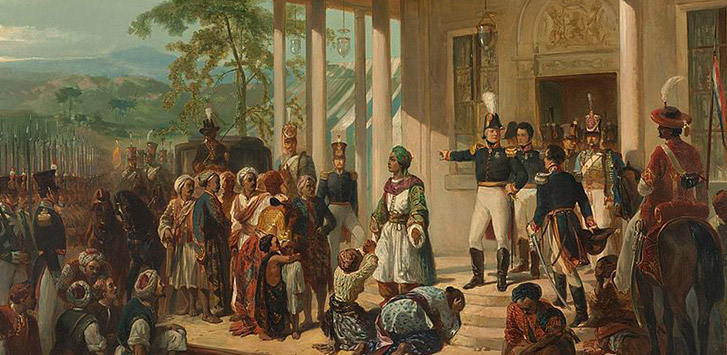
More plantations followed in East Java, Central Java and West Java, and in parts of Sumatra and Sulawesi. Indonesia was the first place outside Arabia and Ethiopia to grow coffee widely, and the VOC held a monopoly on the trade between 1725 and 1780.
By the mid-18th century the VOC had expanded Arabica cultivation into Sumatra, Bali, Sulawesi and Timor. Coffee was first planted on Sulawesi in 1750. In the North Sumatra highlands it was first planted near Lake Toba in 1888, and in the Gayo Highlands of Aceh, near Lake Laut Tawar, in 1924. In the late 18th century Dutch colonists established large plantations on the Ijen Plateau in eastern Java.

In the 1920s smallholders across Indonesia began growing coffee as a cash crop. Disaster arrived in 1876, when coffee leaf rust swept through the archipelago and eliminated most of the Typica variety. Robusta (C. canephora var. robusta) was introduced as a replacement in East Java in 1900, especially in the low-altitude areas where the rust struck hardest.
Java's plantations were nationalised at independence and revitalised with new Arabica varieties in the 1950s. Those varieties also reached smallholders through government and development programmes. Today more than 90% of Indonesia's coffee is grown by smallholders, on farms averaging one hectare or less.

Mandheling Coffee Growing Environment and Varieties
Indonesia is the world's largest archipelagic country, known as the "country of a thousand islands." The islands are widely scattered, each one rugged with mountains and hills, and only narrow coastal plains with shallow seas and coral reefs around them. The climate is a typical tropical rainforest one: average annual temperatures of 25-27°C and no distinct seasons. The north is affected by the Northern Hemisphere monsoon, with abundant rain from July to September, while the south is affected by the Southern Hemisphere monsoon, with abundant rain in December, January and February. Annual precipitation runs 1600-2200 mm. High altitudes, volcanic ash soils and this climate together make excellent conditions for Arabica.
At the end of the 17th century the Dutch East India Company transplanted Arabica trees from India to Jakarta on Java. The climate and soil suited them, and Arabica quickly spread to Sumatra and to Sulawesi, the large island to the north-east. Then in 1880 a serious leaf rust outbreak in Java killed almost every Arabica tree. The Dutch switched to the more disease-resistant Robusta to stabilise the industry. Robusta remains the backbone of Indonesian coffee today, accounting for roughly 85% of national production in the lowlands of Java and Bali, while Arabica accounts for 15% and is grown at higher elevations in northern Sumatra, Sulawesi and Java.
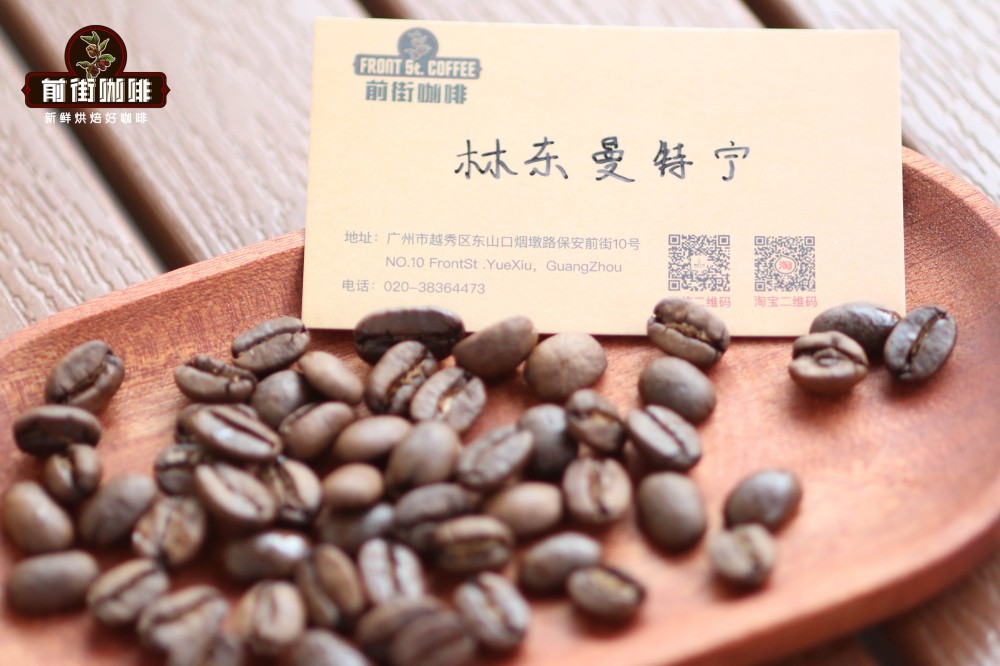
FrontStreet Coffee's Lintong Mandheling is the TimTim Ateng variety, while FrontStreet Coffee's Golden Mandheling is listed simply as Ateng. TimTim is in fact Timor, an Arabica variety with Robusta blood, and Ateng is Catimor, a Caturra and Timor hybrid. These variety names are local terminology.
Indonesian Coffee Growing Regions
Sumatra
Sumatra is the large island of western Indonesia, sitting on the equator and covering 473,000 square kilometres, the sixth largest island in the world. It is separated from the Malay Peninsula by the Strait of Malacca to the north-east, bordered by the Indian Ocean to the west, and divided by the equator. The climate is tropical rainforest, placing it squarely on the coffee belt, and the broadly defined "Mandheling" coffees all come from this island. Sumatra is not only Indonesia's largest island but also the largest in the country, in the north-western part of the archipelago, and its geography gives it the country's earliest harvest season, from November to March.

FrontStreet Coffee's Lintong Mandheling comes from the Lintong highlands of north-central Sumatra, near Lake Toba, and is the regular version of Sumatran Mandheling.
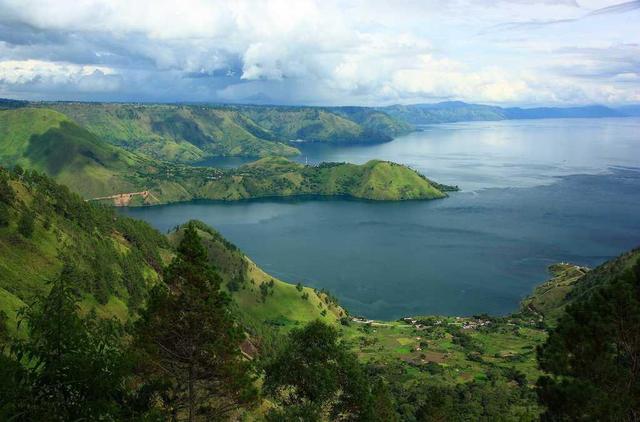
Lake Toba lies in the centre of North Sumatra Province. Dutch colonists moved "Java Mandheling" north to the Lake Toba region in 1888, creating the modern Mandheling legend.
Lake Tawar lies in the centre of the Aceh Special Autonomous Region, at the northern end of Sumatra and covering less than one-tenth of Lake Toba's area.
The highest-quality beans in all of Sumatra currently come from the Gayo mountains, mostly planted with old varieties. The Gayo range sits in the Aceh producing area of North Sumatra Province at altitudes of 1500-2500 metres, and most coffee farmers there are Gayo people, the local indigenous community. The region has ideal growing conditions: high altitude, fertile soil and abundant rain. Lake Tawar supplies rich water, and organic methods are widely used without chemical fertiliser, so the area is regarded as a world green coffee production region. Gayo coffee is therefore often called green coffee or Gayo organic coffee.
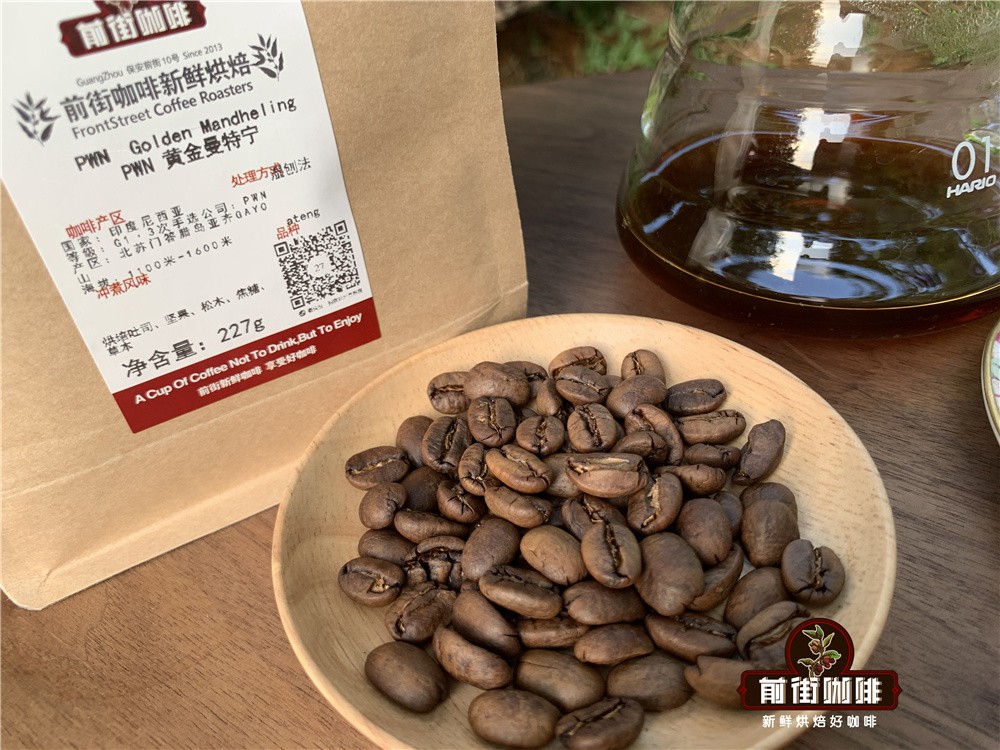
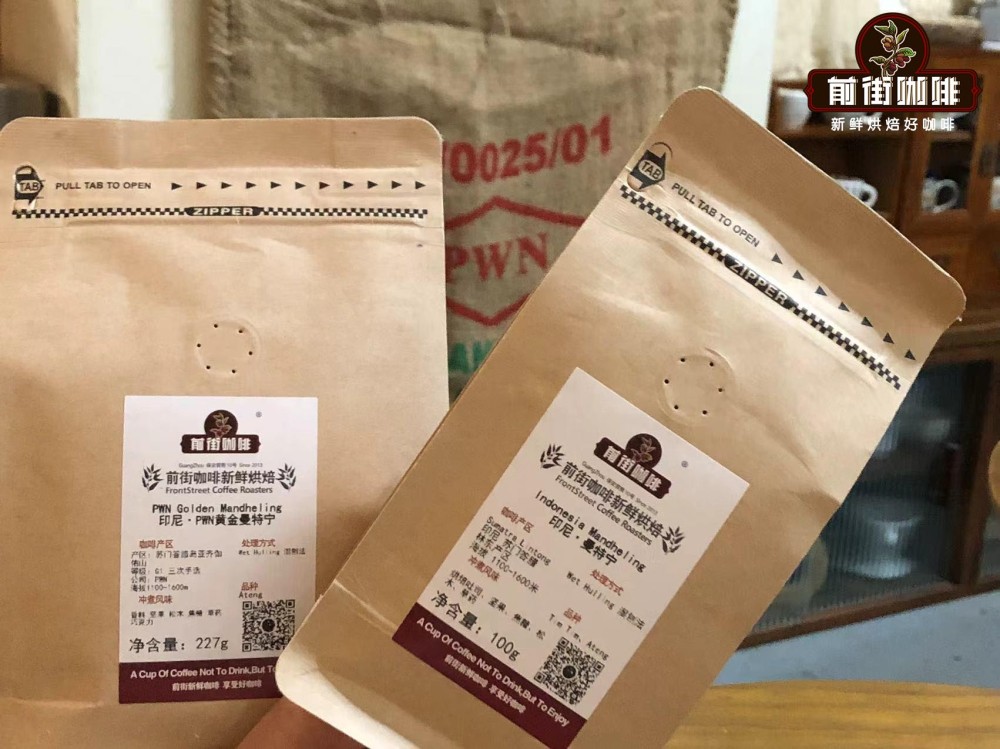
FrontStreet Coffee currently offers two Indonesian coffees, both from the home of specialty Mandheling. The FrontStreet Coffee Staple Series Lintong Mandheling shows toasted bread, nuts, caramel, pine and herbs. The FrontStreet Coffee PWN Golden Mandheling shows spices, nuts, pine, caramel, herbs and dark chocolate.
Bali
Bali is famous for beautiful beaches, coral reefs and yoga and meditation retreats, and this tropical paradise also produces some of the best coffee in Indonesia and in the world. Most of it grows in the Kintamani highlands between the Batukaru and Agung volcanoes.
Mandheling Coffee Bean Grading System
Indonesia sits near the equator with a tropical rainforest climate, and mass-produced beans mostly go through rough wet hulling. Wet hulling greatly speeds up processing, but removing the parchment while the beans are still semi-dry demands heavy friction, so the green beans are easily crushed and squeezed, especially at both ends, opening small cracks. The defect rate of wet-hulled Indonesian beans is therefore generally high, and green bean merchants arrange hand-picking before export to remove damaged beans.
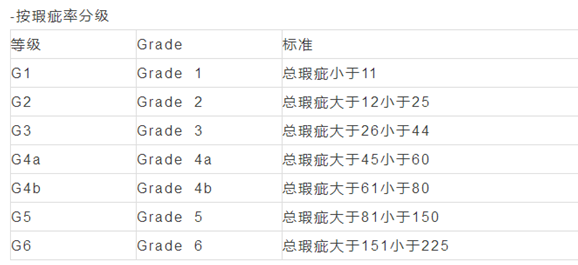
Indonesian grading is based mainly on the number of defective beans, with size grading as a supplement. General quality requirements are no live insects, no mouldy or rotten beans, a maximum moisture content of 12.5% and an impurity rate below 0.5%. Grading runs on defect count per 300 g and is divided into six levels, G1 to G6.
The coarse gunny sacks of Indonesian green beans are usually labelled with country, grade name and green bean merchant. Both FrontStreet Coffee's Lintong Mandheling and FrontStreet Coffee's PWN Golden Mandheling are G1 grade. The sack for FrontStreet Coffee's PWN Golden Mandheling is printed with "PWN GOLDEN MANDHELING TRIPLE PICKED Grade 1 PROD OF INDONESIA 30KGS NET".
Golden Mandheling
Indonesia's PWN company takes G1 grade and adds one machine selection plus three hand selections, producing Mandheling green beans of uniform colour and regular, even size that rank among the finest Indonesian coffees. PWN is a well-known Indonesian green bean buyer, and its one machine plus three manual selections for wet-hulled Mandheling ensure that each batch reaches Indonesia's highest G1 grade. The machine selection first screens for beans above 18 mesh with fewer than 3 defects in a 300 g green bean sample, the top G1 standard, with a darker green colour and a neat, flat shape. The following hand selections remove irregular defective beans. The lower defect rate greatly improves quality, and to distinguish the coffee from regional Mandheling, PWN registered the name Golden Mandheling as a trademark.
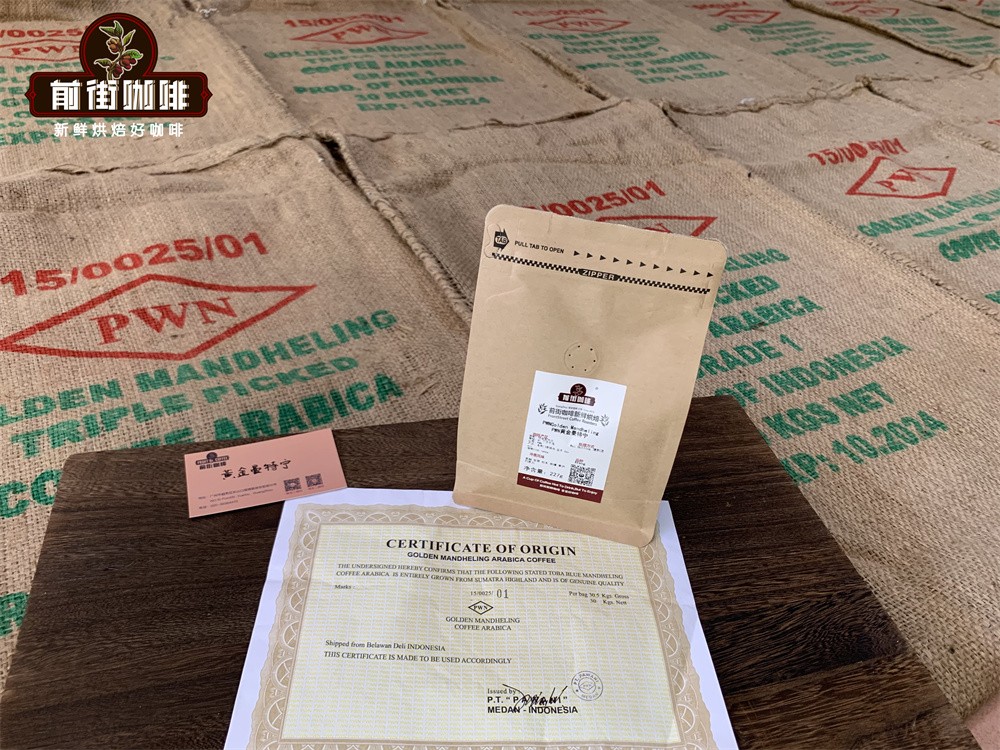
FrontStreet Coffee's Golden Mandheling beans all come from PWN. In FrontStreet Coffee's offline stores you can see PWN's Golden Mandheling certificates and the coffee sacks printed with the company logo. Golden Mandheling is in fact produced from Mandheling that Pawani Coffee Company buys locally in Indonesia and then markets under its registered name, so the Mandheling from this company is the authentic Golden Mandheling. FrontStreet Coffee has found that it not only lacks the earthy impurities of regular Mandheling but drinks cleaner and clearer, with stronger sweetness.
Mandheling Coffee Bean Processing Method - Wet Hulling
Mandheling's distinctive wet hulling method, called Giling Basah in the local language, is a traditional Indonesian technique. To judge by the name alone, wet hulling sounds close to wet, or washed, processing, yet the two produce completely different cups. Wet-hulled coffee is typically thick and strong, with a very distinct personality.
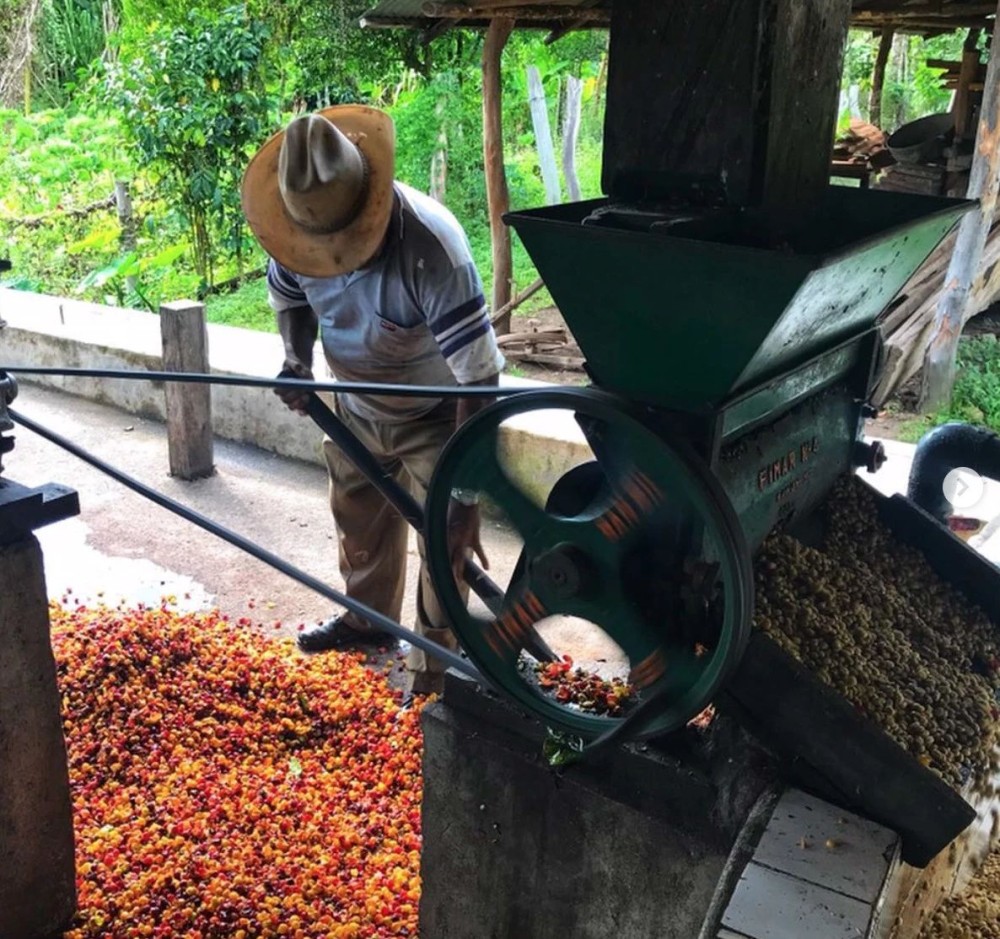
Local weather is often rainy with typhoons, long spells of sunlight are rare, and humidity runs as high as 70-90% all year round at high temperatures, so sun-drying alone is impossible. The local economy was also limited and could not afford the more expensive washed method. The result was the distinctive local wet hulling technique. After the opening washed steps, the parchment coffee is placed in strong sunlight for 1-2 days until the beans reach a moisture content of 30-50%; the parchment is then removed and drying continues, which speeds the whole process and greatly shortens drying time.
Wet hulling is defined by staged, rapid drying and the removal of parchment mid-process. The teacher Han Huaizong described it this way: "This is also a rare processing method in the world, which accidentally created Mandheling's special low acidity, thickness and mellow aroma."

Mandheling Coffee Bean's Goat Hoof Shape
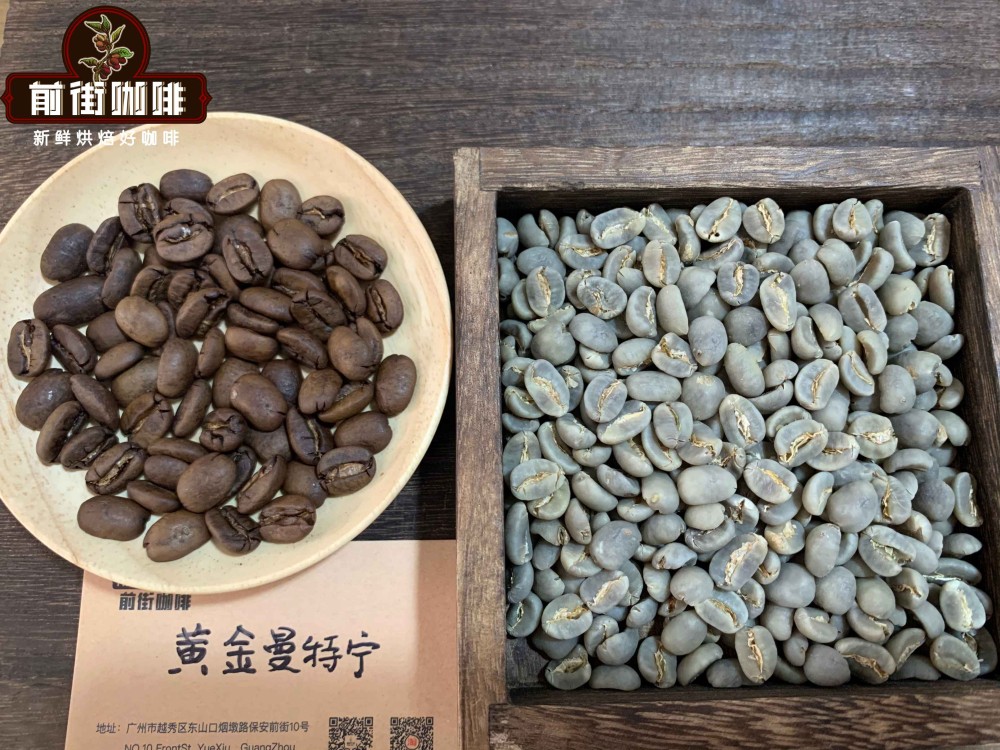
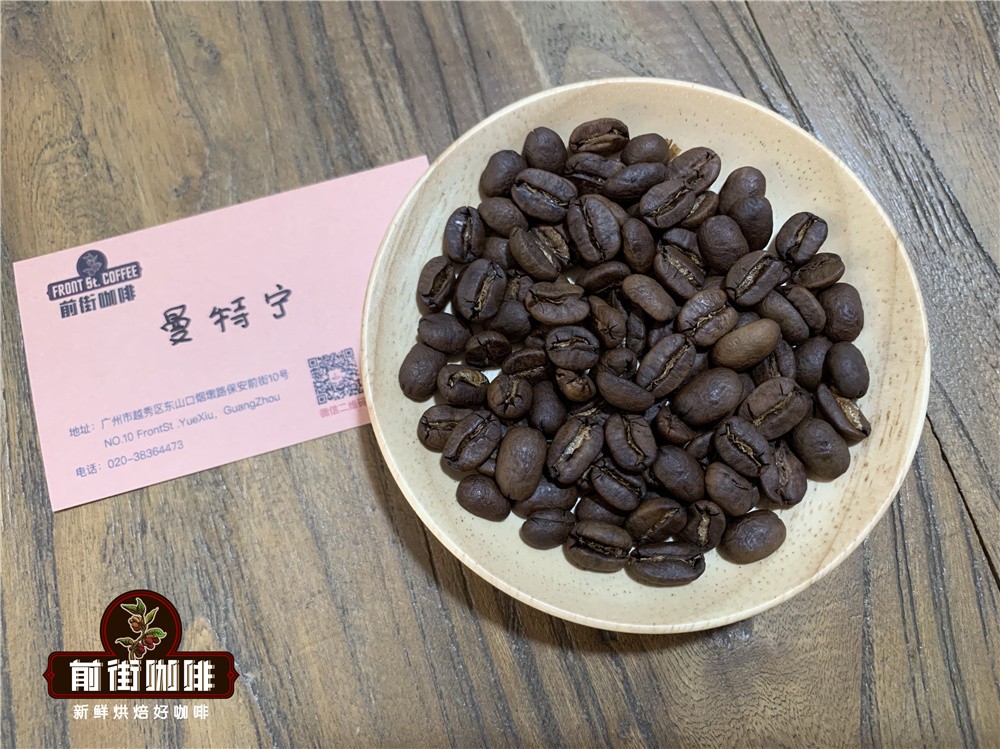
Observant drinkers will notice the characteristic goat hoof shape of FrontStreet Coffee's Mandheling beans. It comes from the process itself: when semi-hard, semi-soft moist green beans have their mucilage and parchment removed by machine, they crush easily, and the injured beans split open like a goat's hoof, which is why they are commonly called goat hoof beans. The shape is a very significant marker of Mandheling coffee, not a defect.
FrontStreet Coffee's Brewing Parameters for Mandheling Coffee
FrontStreet Coffee's baristas choose a KONO dripper for this kind of full-bodied coffee. Compared with a V60, the KONO has a smooth curved surface and weaker exhaust effect: its straight ribs cover only one-quarter of the dripper, letting the coffee bed form an immersion extraction with the hot water for a rounder, fuller cup. The KONO also suits richly flavoured beans such as FrontStreet Coffee's Brazil Queen Estate and FrontStreet Coffee's Jamaica Blue Mountain No. 1.
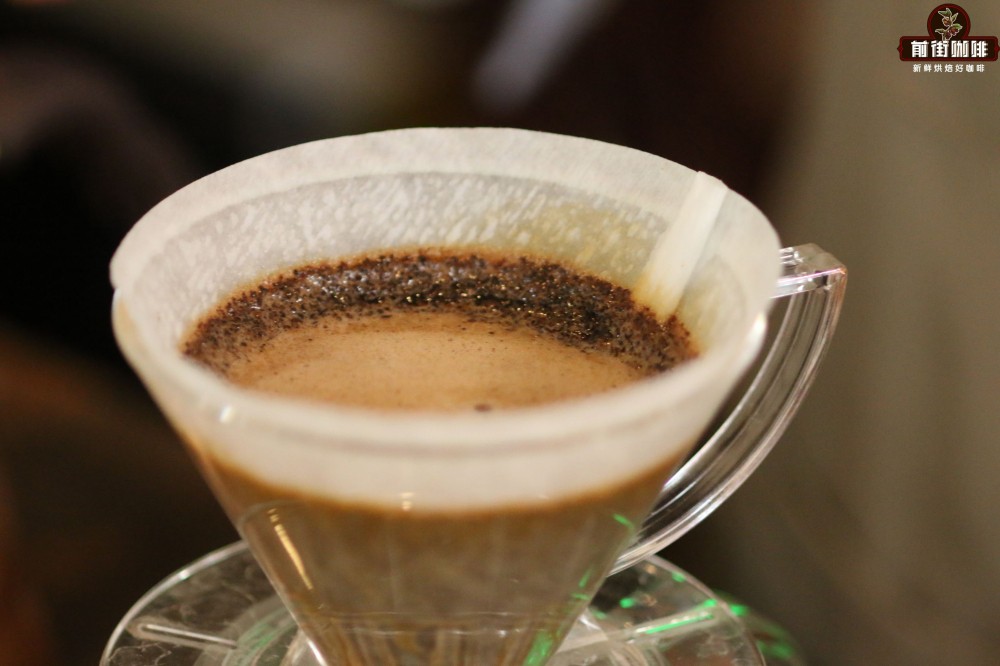
Dark roasting loosens the internal structure of the beans, so they crush easily under a gentle squeeze, which signals strong water absorption once ground. To keep the grounds from releasing too many bitter compounds after they absorb water, FrontStreet Coffee grinds coarser and brews with cooler water. FrontStreet Coffee uses the common 1:15 ratio, or 1:13 for a richer cup, adjusted to taste.
KONO dripper, 88°C water, 1:15 ratio, 15 g of coffee, grind size at 75% pass-through on a No. 20 standard sieve, three-stage extraction.
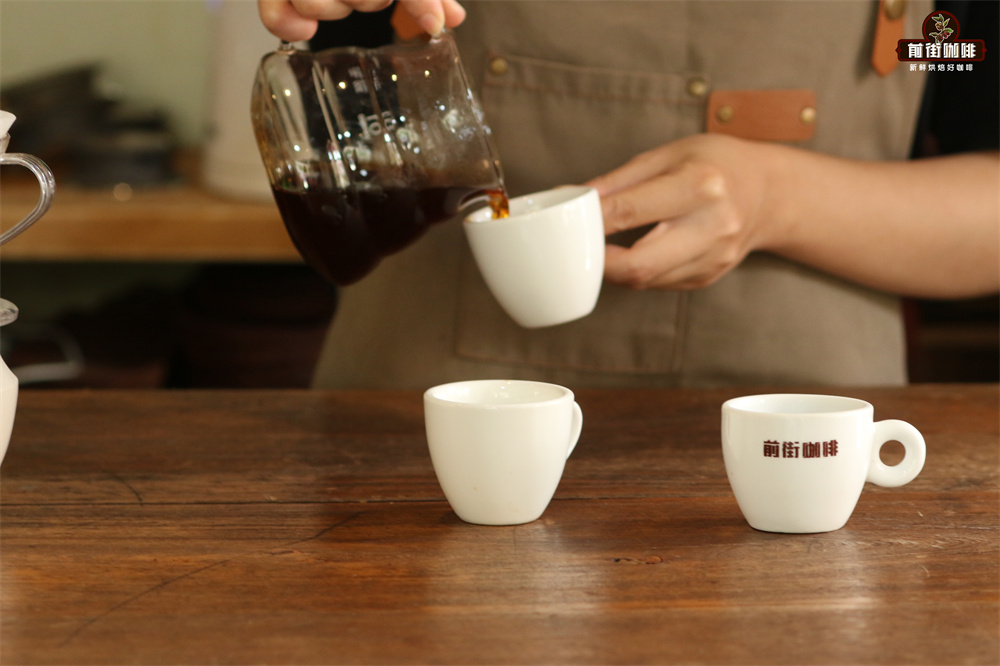
For segmented extraction, bloom with twice the coffee's weight in water, that is 30 g of water for 30 seconds. The bloom lets the grounds release trapped carbon dioxide so the later stages extract more steadily. With a small flow, pour in circles to 125 g, then keep pouring to 225 g and stop. Wait until all the water has dripped through, then remove the dripper. Time from the first pour, with an extraction of 2:00. Finally, pick up the whole cup, swirl it well, and pour into cups for tasting.
[FrontStreet Coffee's Lintong Mandheling Coffee] Herbs, chocolate and caramel, quite balanced overall.
[FrontStreet Coffee's Golden Mandheling Coffee] Nuts, spices, herbs, liquorice, chocolate and caramel.
FrontStreet Coffee Recommendation
FrontStreet Coffee's Lintong Mandheling is the everyday entry into the wet-hulled style. It comes from the Lintong highlands of north-central Sumatra near Lake Toba, and the wet hulling that defines the region gives it low acidity and high body, with caramel, dark chocolate and toasted-bread aroma and a long sweet finish. It suits anyone who likes a strong cup.
For the top of the range, FrontStreet Coffee's PWN Golden Mandheling is the benchmark. PWN buys only high-quality Mandheling green beans, then runs one machine selection and three hand selections to remove any defective beans, producing an even, plump and low-defect lot. After medium-dark roasting it carries rich roasted aroma, and the brewed black coffee is clean and full-bodied with sandalwood, herbal, spice, roasted hazelnut, caramel and dark chocolate notes.
FrontStreet Coffee suggests brewing Golden Mandheling as pour-over with water at 87-88°C, 15 g of coffee, a 1:15 ratio and a coarse-sugar grind, using a three-stage pour. The first stage wets the grounds with 30 ml and lets them degas, the second adds 100 ml to lift the bed and bring out the golden foam, and the final stage pours a gentle 95 ml down the centre. The result is fuller body and caramel sweetness layered with chocolate and nut flavours.
If you want a machine-friendly version of that profile, FrontStreet Coffee's Classic Blend builds on the creamy nut character of Brazilian coffee by adding medium-dark roasted Mandheling, which lifts the body and adds sandalwood, herbal and spice notes, plus a small amount of Robusta for richer crema, so it pours latte art and layered Dirty drinks with ease.
Important Notice :
FrontStreet Coffee is a long-established specialty coffee roaster in Guangzhou China, selling freshly roasted beans from its own farm in Yunnan as well as dozens of carefully selected single-origin beans from around the world for both pour-over and espresso. The products deliver consistently excellent quality and great value, with shipping within 24 hours. Guangzhou's FrontStreet Coffee shop is recommended by many coffee lovers, and the beans are now available online at the Tmall 。
FrontStreet Coffee has moved to a new address:
FrontStreet Coffee Address: 315,Donghua East Road,GuangZhou
Tel:020 38364473
 Scan and follow the En Gafei WeChat official account. Please indicate that the reprint comes from "En Gafei".