Introduction to El Salvador Coffee Regions: Flavor Profile and Pour-Over Characteristics
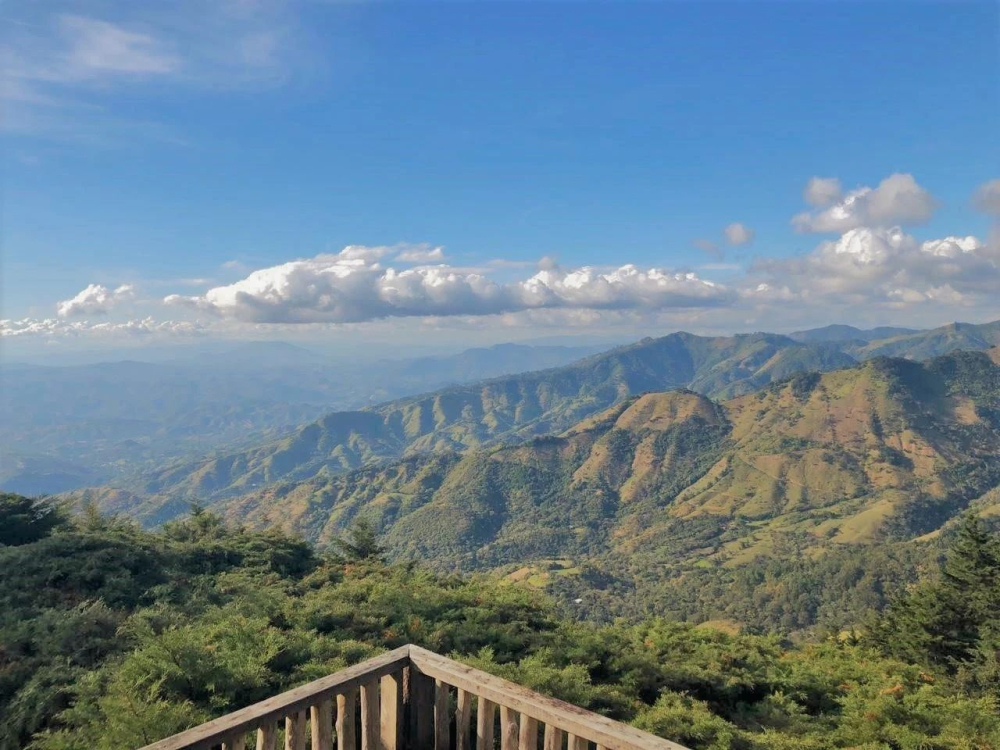
El Salvador may be Central America's smallest country, but it packs in an impressive number of coffee-producing regions, and recent years have brought high-quality Salvadoran specialty lots that leave a lasting impression. Join FrontStreet Coffee on a tour of Salvadoran coffee.
The Coffee Story of El Salvador
FrontStreet Coffee's research shows that coffee cultivation in El Salvador dates to the mid-18th century, and the industry has been intertwined with the country's development ever since.
During the colonial era, indigo — a natural dye processed from the leaves of a plant called "Jiquilite" — was El Salvador's first agricultural product, and its production dominated the country through most of the 18th century. But when Europe's Industrial Revolution powered the synthetic dye industry, the traditional indigo trade collapsed quickly.
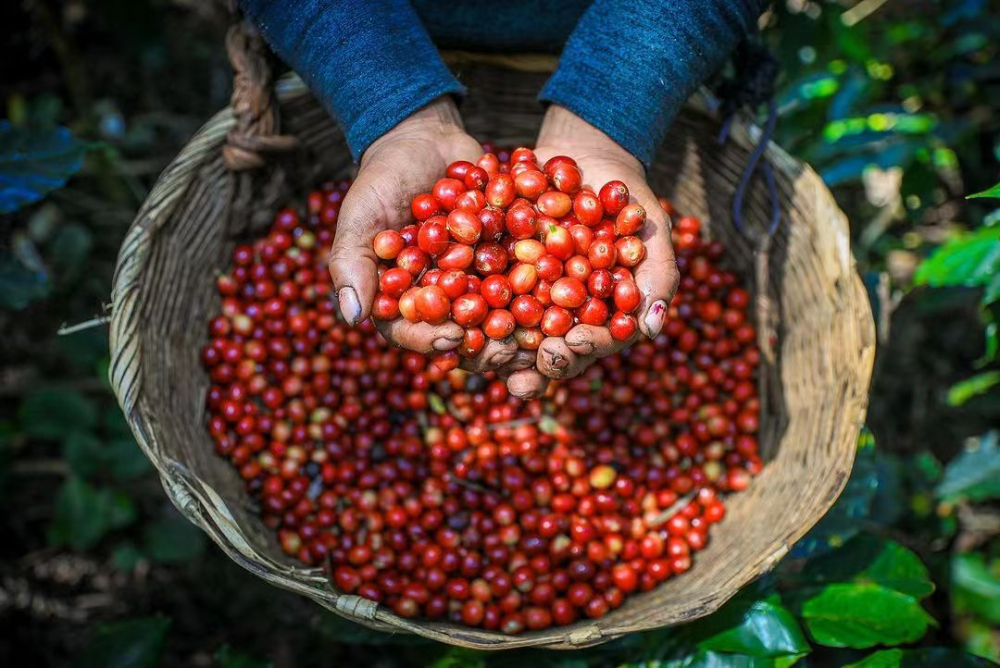
Records show coffee arrived in El Salvador between 1779 and 1796, with the first trees planted on the land of two farmers from Ahuachapán. Though coffee entered the country in the 18th century, the government didn't actively promote cultivation until the mid-19th century. Through the 1930s and 40s, credit policies favorable to growers drove the industry forward, and coffee came to account for over 90% of El Salvador's agricultural exports.
From 1857 onward, cultivation spread across the country — starting in Ahuachapán, then Santa Ana and Sonsonate, and on to western San Vicente, the Berlín mountain area, and the slopes near Volcán Chaparrastique in San Miguel. Today coffee grows across the whole country and remains the main crop for many farming families.
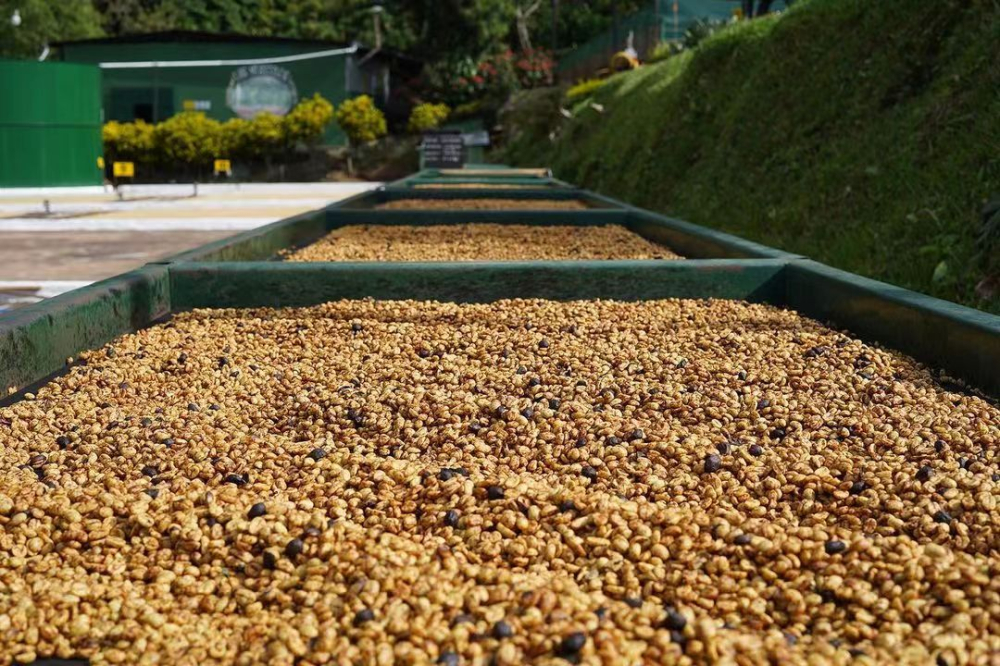
Modernization began with the high prices of the 1950s. Farmers adopted shade cultivation by interplanting coffee with other crops, and began using fertilizer and raising planting density to lift productivity. By the mid-1970s, El Salvador had become the world's fifth-largest coffee producer and fourth-largest exporter, with harvests reaching 5 million quintals.
Then came the civil war of the 1980s and 90s. Farmers were squeezed by guerrillas and the military alike, coffee sales and exports were nationalized, and growers stopped investing in their farms. Production and prices fell sharply between 1997 and 2001 — ICO data shows national output dropped by more than 34% in that period. In 2013, coffee leaf rust began spreading nationwide; since only 3% of El Salvador's trees were rust-resistant varieties, the 2014 harvest fell by nearly 60%.
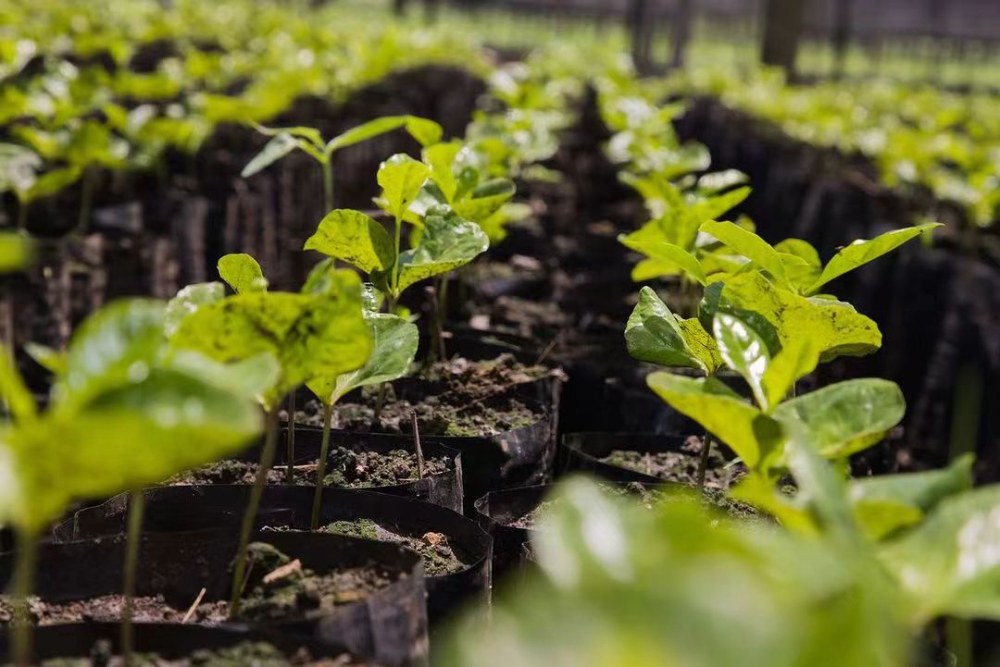
Recovery began in 2014, when the agricultural ministry under Minister of Agriculture and Livestock Lic. Orestes Ortéz planned to reactivate coffee cultivation and created a dedicated CENTA coffee department to strengthen technical support. A team of 80 technicians, led by Salvadoran cultivation expert Dr. Adán Hernández, now supplies fungicides to control rust and breeds new rust-resistant varieties, helping farmers renovate their plantations and improve both quality and yield.
Salvadoran Coffee Regions and Varieties
El Salvador currently farms over 130,000 hectares of coffee: roughly half at low altitude, 33% at medium-high altitude, and 16% at high altitude. About 85% of growers are smallholders farming less than 7 hectares.
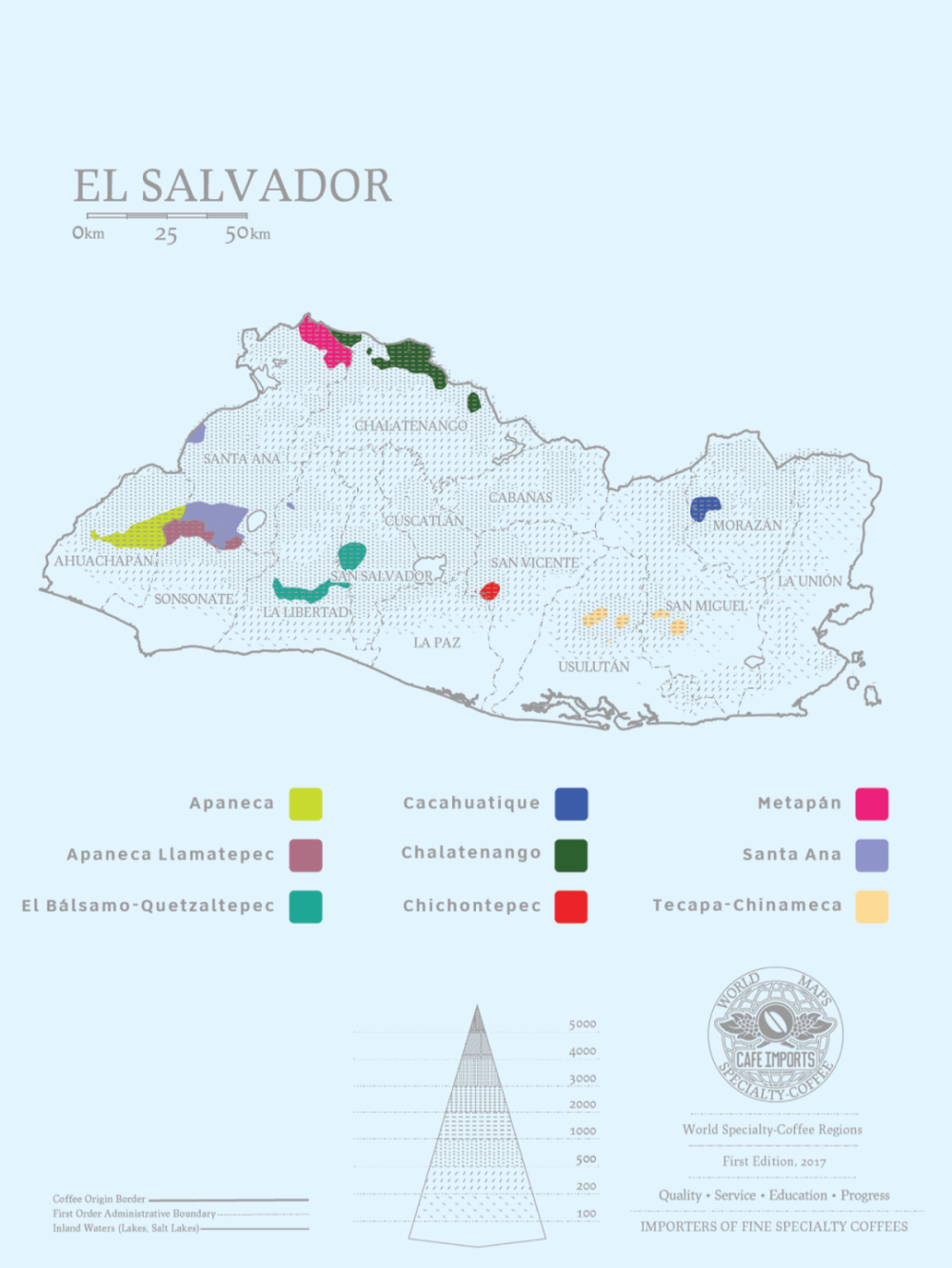
The country has nine major coffee regions: Apaneca, Apaneca Llamatepec, El Balsamo-Quetzaltepec, Cacahuatique, and Santa Ana in the southwest; Chalatenango, Chichontepec, and Metapan in the north-central highlands; and Tecapa-Chinameca along the river valleys.
Typica was the first Arabica variety widely planted in El Salvador, but leaf rust pushed most farms to switch to Bourbon during the 19th century. By the mid-20th century, Bourbon had mutated into Pacas, which the Salvadoran Coffee Research Institute (ISIC) tracked and promoted heavily. Today Bourbon and its offspring Pacas dominate the plantations — Bourbon accounts for over 60% of cultivation and Pacas for nearly a quarter of national production.
Above both of those workhorses stands Pacamara, the variety that increasingly represents El Salvador in Cup of Excellence competitions. A large-bean hybrid released by ISIC from Pacas and Maragogype (a Typica mutation from Brazil), it combines Pacas's excellent cup character with Maragogype's outsized bean. Its flavor shows lively, bright acidity — sometimes biscuit-like, sometimes juice-like — with excellent body and mouthfeel.
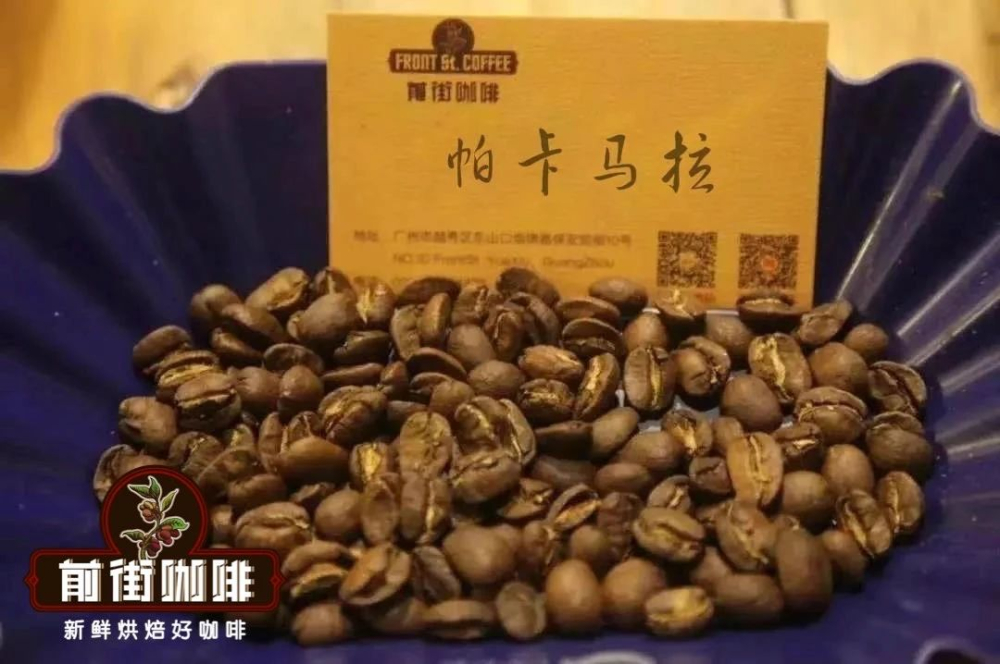
FrontStreet Coffee: El Salvador Pacamara Coffee Beans
Region: Sonsonate, Izalco
Estate: Finca Ataisi
Grade: SHG
Altitude: 1800 meters
Variety: Pacamara
Processing: Washed
Flavor: Nuts, chocolate, cream, strawberry jam, passion fruit
Salvadoran Coffee Flavor Characteristics
FrontStreet Coffee Brewing Recommendations
Dripper: V60
Water Temperature: 90°C
Coffee-to-Water Ratio: 1:15
Grind Size: Fine-sugar consistency (80% pass-through rate on a #20 standard sieve)
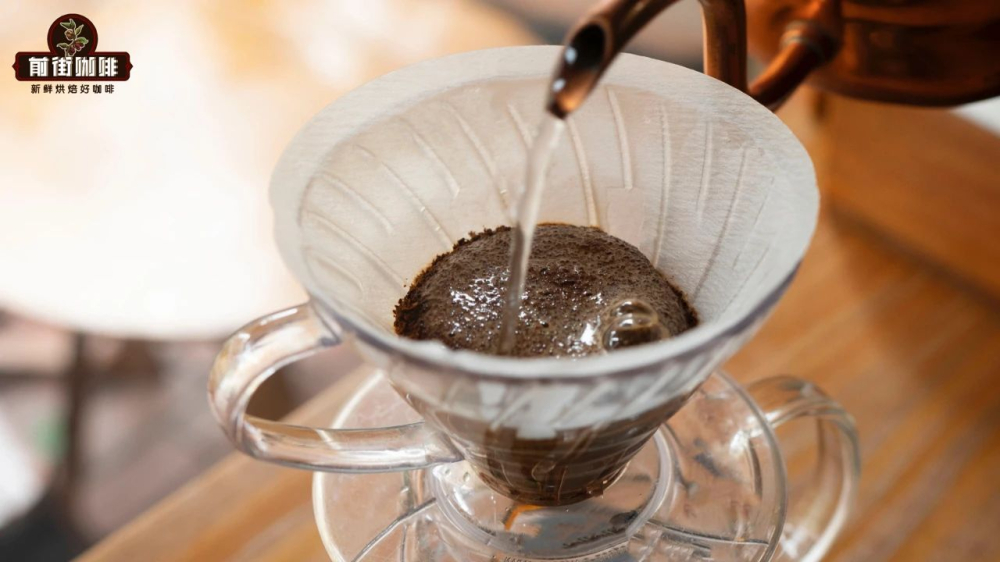
Add the grounds to the V60, wet the bed with twice the weight of the coffee to form a dome, and bloom for 30 seconds. Then pour in slow circles, working from the center outward, up to 125 g. When the bed drops to half the dripper's height, continue with the same fine stream for the final pour up to 225 g. Let the liquid drain fully, then remove the dripper — total brew time about 2 minutes.
FrontStreet Coffee's pour-over of this Pacamara opens delicate and smooth, with clear, gentle fruit acidity gliding across the tongue — quiet and composed, like all great Pacamaras. The mid-palate brings fresh wild-berry acidity and hazelnut aromatics, while the finish shows distinct caramel sweetness and a long, delicate sweetness that lingers pleasantly.
FrontStreet Coffee Recommendation
If bright, fruity pour-over is what you're after, the V60 remains the dripper of choice — and it has history behind it. Its maker, Hario, was founded in Tokyo in 1921 as a producer of scientific heatproof glassware; in 2004 the company redesigned the V60 into its modern form, named for the signature 60° cone angle and "V" shape, and released it the following year. The cone funnels water toward the center for extended contact between water and grounds, while the single large outlet hands full control of flow rate to the brewer — ideal for drawing out the floral top notes, lively acidity, and clean sweetness that lighter roasts like washed Ethiopian coffee deliver.
For that style, FrontStreet Coffee's washed Yirgacheffe is the classic starting point — jasmine florals, bright citrus and lemon acidity, and a tea-like finish at an accessible price — while single-region cooperative lots like the washed Chelbesa Co-op (citrus, lemon, elegant white florals) offer even sharper origin character, and natural-process lots such as the Red Cherry project add peach, cocoa, honey, and lemon over the classic Yirgacheffe backbone. Brew 15 g at a 1:15 ratio with 90–91°C water and a medium-fine grind, bloom 30 g of water for 30 seconds, then pour in segments to 225 g — a clean, transparent cup where florals and fruit carry the day.
Important Notice :
FrontStreet Coffee is a long-established specialty coffee roaster in Guangzhou China, selling freshly roasted beans from its own farm in Yunnan as well as dozens of carefully selected single-origin beans from around the world for both pour-over and espresso. The products deliver consistently excellent quality and great value, with shipping within 24 hours. Guangzhou's FrontStreet Coffee shop is recommended by many coffee lovers, and the beans are now available online at the Tmall 。
FrontStreet Coffee has moved to a new address:
FrontStreet Coffee Address: 315,Donghua East Road,GuangZhou
Tel:020 38364473
 Scan and follow the En Gafei WeChat official account. Please indicate that the reprint comes from "En Gafei".