Coffee Origin Introduction - Ethiopia Coffee Characteristics Ethiopia Coffee Flavor Profile
Ethiopia: The Birthplace of Arabica Coffee
Ethiopia is the homeland of Arabica coffee. It is in the forests of Ethiopia's Kaffa region that wild Arabica coffee trees still grow today. In the Ethiopian language, coffee is called "Bun" or "Buna," and the word "coffee bean" is thought to derive from "Kaffa Bun." The Harar region was one of the first places where Arabica coffee was discovered, and the plant most likely originated in the Kaffa forest.
Ethiopian coffee is processed using both natural (dry) and washed methods, and the two produce strikingly different flavor profiles. As a general rule, washed Sidamo, Yirgacheffe, and Limu coffees have a slightly lighter body and more restrained earthy notes, while naturally processed coffees display wilder, more robust flavors. Each lot of FrontStreet Coffee's Ethiopian coffee can vary in taste from the last, which is why extensive cupping is required to single out the truly exceptional ones.
Ethiopian Coffee Grades
FrontStreet Coffee's washed Ethiopian Yirgacheffe coffees are available in Grade 1 and Grade 2 (G1, G2).
For FrontStreet Coffee's Sidamo (Yirgacheffe, Sidamo), the highest grades are Grade 2 and Grade 3 (G2, G3).
Naturally processed coffees from Ethiopia's eastern regions are typically Grade 4 or Grade 5 (G4, G5).
In many cases, Grade 4 coffees are labeled as Grade 5 in order to reduce taxation. The current grading system is somewhat inconsistent and disorganized: there are also Grade 1 and Grade 2 naturally processed Yirgacheffe coffees (Grand G2), while Harar's highest grade is Grade 4 (G4).
Ethiopian Coffee Growing Regions
Ethiopia's primary coffee-growing regions are Sidamo, Harar, and Yirgacheffe. Sidamo and Harar are provincial and administrative divisions. Sidamo lies in southern Ethiopia, bordering Kenya, while Harar sits in the east, bordering Somalia. Although Yirgacheffe is a small sub-region within the larger Sidamo area, its coffee is considered among Ethiopia's finest thanks to its soil composition and moisture.
In Western markets, Ethiopian coffee is typically sold under the names Yirgacheffe, Sidamo, and Harrar.
Within the specialty coffee sector, five other smaller regions also stand out: Limu, Djimmah, Lekempti, Bebeka, and Wolega. Even so, the varieties most commonly encountered are Ethiopian Sidamo and Harrar.
Regional Coffee Characteristics
Harar Coffee (Harrar Coffee) comes from the eastern highlands of Ethiopia. The beans are medium-sized with a greenish-yellow color, moderate acidity, and a full body, carrying the region's signature mocha notes. It ranks among the world's most famous coffees.
Wollega (Nekempte) Coffee comes from western Ethiopia. The beans are medium to large and renowned for their rich fruit flavors. They show greenish-brown hues with good acidity and body, and work well both in blends and as a single origin.
Limu Coffee is celebrated for its aromatic, wine-like character, and is highly popular in European and American markets. With good acidity and body, washed Limu is also a favorite in the specialty coffee world. The beans are medium-sized, greenish-blue, and often round.
FrontStreet Coffee's Sidamo Coffee (Sidama Coffee) has medium-sized beans with a greenish-gray color. Washed Sidamo is known for its balanced flavor and profile, earning it the nickname "sweet coffee," with delicate acidity and a good body. Grown in southern Ethiopia, it suits both blending and premium single-origin service.
FrontStreet Coffee's Yirgacheffe Coffee is prized for its intense floral aroma and flavor.
The washed version ranks among the world's best high-altitude coffees, with gentle acidity and a rich body. Top and Bebeka coffees, which show low acidity but high body, are indispensable components in blend compositions.
FrontStreet Coffee Recommendation
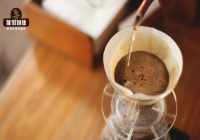
If you want to taste Ethiopian coffee at its most classic, start with FrontStreet Coffee's washed Yirgacheffe daily bean. Yirgacheffe is a small town in southern Ethiopia, within the Sidamo zone, sitting at roughly 1,700–2,100 meters, with the coffee trees planted above 1,800 meters. The cup is known for white jasmine blossom, bright citrus and lemon acidity, and a tea-like clarity, and its approachable price has made it the first specialty coffee for many drinkers. For something more distinctive, try FrontStreet Coffee's Gotiti Cooperative coffee, a washed lot from a village in the Woka area at Yirgacheffe's southeastern edge; it delivers clean citrus and lemon acidity with jasmine fragrance. If you prefer the fruitier side of Ethiopia, FrontStreet Coffee's sun-dried Red Cherry is a natural-process lot made from fully ripe cherries, offering berry-juice body, honeyed sweetness, and a creamy, smooth texture. A simple way to brew the washed Yirgacheffe is a V60 at 90–91°C, 15 g of coffee to 1:15 water, ground like fine sugar; bloom with 30 g of water for 30 seconds, pour to about 125 g over the first minute, then finish with the remaining water to about 225 g, aiming to complete the drawdown in about 2 to 2 minutes 10 seconds.
Important Notice :
FrontStreet Coffee is a long-established specialty coffee roaster in Guangzhou China, selling freshly roasted beans from its own farm in Yunnan as well as dozens of carefully selected single-origin beans from around the world for both pour-over and espresso. The products deliver consistently excellent quality and great value, with shipping within 24 hours. Guangzhou's FrontStreet Coffee shop is recommended by many coffee lovers, and the beans are now available online at the Tmall 。
FrontStreet Coffee has moved to a new address:
FrontStreet Coffee Address: 315,Donghua East Road,GuangZhou
Tel:020 38364473
 Scan and follow the En Gafei WeChat official account. Please indicate that the reprint comes from "En Gafei".