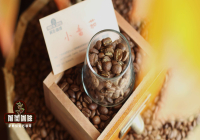
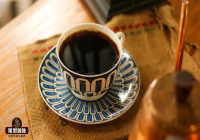
The History and Origin of Jamaica Blue Mountain Premium Coffee Beans How is Blue Mountain Coffee Produced?

The aroma of coffee always soothes the weary hearts of office workers. But while many people drink coffee every day, how many truly understand what Blue Mountain coffee is, or what Americano coffee is? Let FrontStreet Coffee walk you through the difference between the two.
The Origin of Blue Mountain Coffee
Jamaica's coffee comes from the Blue Mountains in the eastern part of the country. The name comes from a natural phenomenon: the Caribbean Sea wraps around the entire range, and on clear sunny days the blue glow of the sea reflects onto the mountainsides — hence the Blue Mountains.

The Blue Mountains happen to sit within the coffee belt. Beyond their elevation, they offer fertile volcanic soil — ideal conditions for growing coffee. The mountains' microclimate is another decisive factor: the region is humid year-round, with persistent fog and rain and average rainfall of up to 1980 millimeters.

Blue Mountain Coffee Cultivation History
Blue Mountain coffee comes from Jamaica, whose coffee-growing history reaches back to the 18th century. In 1717, French King Louis XV ordered coffee to be planted on the island. In the mid-1720s, Jamaican Governor Sir Nicholas Lawes imported Arabica seeds from Martinique and began promoting cultivation in the St. Andrew area — a region that remains one of the three major producing areas for Jamaican Blue Mountain coffee today, alongside Portland and St. Thomas. Within 8 years, Jamaica was exporting more than 375 tons of pure coffee.

In 1932, production peaked at over 15,000 tons of harvested coffee. In 1950, the Jamaican government established the Jamaica Coffee Industry Board, which set quality standards for Jamaican coffee and supervised their enforcement. The board issues special official seals for all exported raw and roasted Jamaican coffee, making it the most rigorous national coffee institution in the world.
Today, six official symbols can certify the origin of Blue Mountain coffee: Mavis Bank Central Factory (MBCE), Mavis Bank Coffee Factory (MHCCT), Portland Blue Mountain Coffee Cooperative (PXXSH), the Coffee Industry Association (Wallenford), the Coffee Industry Association (John's Peak), and JAS. By 1969, conditions had improved considerably thanks to Japanese loans used to raise production quality and guarantee the market. Today, this coffee enjoys an almost passionate devotion among its admirers.

By 1981, Jamaica had opened roughly another 1,500 hectares of land for coffee cultivation, followed by investment in a further 6,000 hectares. In fact, today's Blue Mountain growing region is small — just 6,000 hectares of planting area — so it is impossible for all coffee sold as "Blue Mountain" to have actually been grown there.
Jamaica is also the last country in the world to package and transport coffee in wooden barrels. Only coffee that passes the stringent standards set by the Jamaica Coffee Industry Board (C.I.B.) receives the government's certificate of authenticity and may officially bear the name "Blue Mountain."

Blue Mountain Coffee Flavor
So what makes the flavor of this famous coffee so special? The superb quality of Blue Mountain beans produces a remarkably clean cup. In the era of medium-dark roasting, Blue Mountain coffee shows a balance of sweet, sour, and bitter with subtle nutty and chocolate notes, and a very comfortable finish. It represented the highest coffee quality of its era — truly the king of coffee.
Blue Mountain coffee maintains its high quality thanks to decades of strict export standards. To this day, what we commonly call Blue Mountain coffee is a washed-processed Typica variety. Among traditional processing methods, washing is the most stable and efficient: cherries are floated immediately after harvest, the pulp is removed mechanically, and fermentation strips away the mucilage layer. Once the mucilage is gone, the beans' moisture drops sharply, requiring less sun-drying time and resulting in a lower defect rate.

Mature washed processing gives Blue Mountain coffee a cleaner taste and brighter acidity. But the other pillar of its consistency is the Typica variety itself — perhaps one of the oldest Arabica varieties. Typica offers more delicate flavors than most, though its weaknesses are equally clear: low disease and pest resistance and very low yields. In any other producing country chasing volume, Typica would long ago have been replaced by higher-yield varieties such as Caturra or Catuai.

Blue Mountain Coffee Grades
Coffee from Jamaica's Blue Mountain region comes in three tiers: Blue Mountain Coffee, Jamaica High Mountain Supreme Coffee Beans, and Jamaica Prime Coffee Beans. Blue Mountain and High Mountain are each further divided into two grades. From highest to lowest quality: Blue Mountain No. 1, Blue Mountain No. 2, High Mountain No. 1, High Mountain No. 2, and Jamaica Coffee.

Blue Mountain Grading
Within the grading system, the Blue Mountains rise to 2256 meters, and everything above 1700 meters is a protected ecological reserve where coffee may not be planted. Under the CIB's classification, only coffee grown between 910 and 1700 meters may be called "Jamaica Blue Mountain Coffee." Coffee grown between 460 and 910 meters can only be labeled "Jamaica High Mountain Coffee," while coffee below 460 meters is "Jamaica Prime Coffee."
Jamaican coffee, in other words, does not automatically mean Blue Mountain coffee. Even now, only coffee from the 6,000 hectares of Blue Mountain land above 910 meters qualifies as Blue Mountain coffee beans, while the remaining roughly two-thirds of the Blue Mountain growing region can only be graded as High Mountain or Prime Coffee.
FrontStreet Coffee's Jamaica Blue Mountain No. 1 Coffee Brewing Steps

FrontStreet Coffee's Jamaica Blue Mountain No. 1 Coffee Beans
Region: Jamaica Blue Mountain
Estate: Clifton Farm
Altitude: 1310 meters
Processing: Washed
Variety: Typica
Roast Level: Medium-dark
Flavor: Chocolate, nuts, cream, with a well-balanced sweet-sour-bitter profile.
Clifton Hill is the oldest coffee-producing area in Jamaica still in operation today, and Clifton Farm is the only Jamaican estate holding "Rainforest Alliance" certification. Clifton Farm is the largest estate in the region, yet by international standards it still counts as small-scale cultivation: many owners are smallholders whose families have worked this land for two centuries. The area is recognized worldwide as a source of exceptional Blue Mountain coffee.

FrontStreet Coffee Recommendation
For an authentic taste of the legend, FrontStreet Coffee's Jamaica Blue Mountain No. 1 is the top grade of Jamaican Blue Mountain, sourced from the historic Clifton Estate, where coffee has been grown since around 1750. The estate's growing and processing areas sit at an average of 4300 feet (about 1310 meters), where high elevation, gentle afternoon cloud cover over shaded slopes, ample sunshine, and mineral-rich soil give the trees excellent growing conditions and extend the ripening of the cherries. Because it is roasted to order, the beans arrive at peak flavor and are ready to brew immediately.
To brew it, FrontStreet recommends a Kono dripper to accentuate Blue Mountain's full, rich body. Dose 15g with a grind slightly coarser than for light roasts — about white sugar texture — and water at 87-88°C, since hotter water is the usual cause of a scorched, bitter cup. Use a 1:15 ratio and rest the beans 4-7 days from the roast date for the best flavor. Pour in three stages: 30g to bloom for 30 seconds, then to 120g with a slow vertical pour in small circles, pause, then finish at 225g with a slightly faster pour to avoid clogging and over-extraction. The cup should be clean, complex, and gentle, with chocolate sweetness, strong body, and a balanced sweetness-acidity-bitterness structure and a lingering fruity finish.
Important Notice :
FrontStreet Coffee is a long-established specialty coffee roaster in Guangzhou China, selling freshly roasted beans from its own farm in Yunnan as well as dozens of carefully selected single-origin beans from around the world for both pour-over and espresso. The products deliver consistently excellent quality and great value, with shipping within 24 hours. Guangzhou's FrontStreet Coffee shop is recommended by many coffee lovers, and the beans are now available online at the Tmall 。
FrontStreet Coffee has moved to a new address:
FrontStreet Coffee Address: 315,Donghua East Road,GuangZhou
Tel:020 38364473
 Scan and follow the En Gafei WeChat official account. Please indicate that the reprint comes from "En Gafei".