Why Does Cold Brew Iced Coffee Taste Better? What Coffee Beans Are Best for Cold Brew?
Why Does Cold Brew Iced Coffee Taste Better? What Coffee Beans Are Best for Cold Brew?

Coffee has gradually moved from the sidelines into everyday life and now ranks alongside tea as one of the world's three major beverages. Many people are puzzled by how a single drink can taste so many different ways, and FrontStreet Coffee has a simple explanation: brewing coffee is much like brewing tea. There are countless variables to consider, and even more small details to watch than with tea. The ingredients are always the same - coffee grounds and water - yet different brewing methods produce completely different cups.
Some people love hot coffee for its warmth and comfort; on a cold winter day a single cup can feel genuinely heartening. In summer, though, nothing is more refreshing than iced coffee. FrontStreet Coffee sees the difference this way: hot coffee is about aroma and temperature, warm coffee is about layering and flavor, and cold coffee is about technique and quality. Each serving temperature delivers a different sensation. So what actually shapes the taste of coffee?

Whether the cup is hot or cold, the raw materials are the same. Roasting and grinding have a major influence on the final taste, aroma, and texture, but in the end the brewing method has the greatest impact. Different tools and techniques produce completely different levels of sweetness and richness.
Everyone knows that hot coffee is brewed by pouring hot water over coffee grounds and letting it drip through. So is cold coffee simply brewed with cold water? Can every coffee be brewed with cold water? The answer is: certainly not.

Most coffee is best not brewed with cold water, because water that does not reach a certain temperature will not dissolve the grounds properly, leaving clumps and an overly bitter taste. A few products, such as instant iced coffee, are made to be mixed with cold water, but the flavor is usually not very good. As a rule, the ideal brewing temperature for coffee is between 88-94 degrees Celsius. Never use water straight off the boil; let it rest for 1-2 minutes before brewing.
What Is Cold Brew (Cold Extraction) Coffee?
Cold brew has also become one of the most popular cold drinks around, so how is so-called cold brew, or cold extraction, coffee actually made?

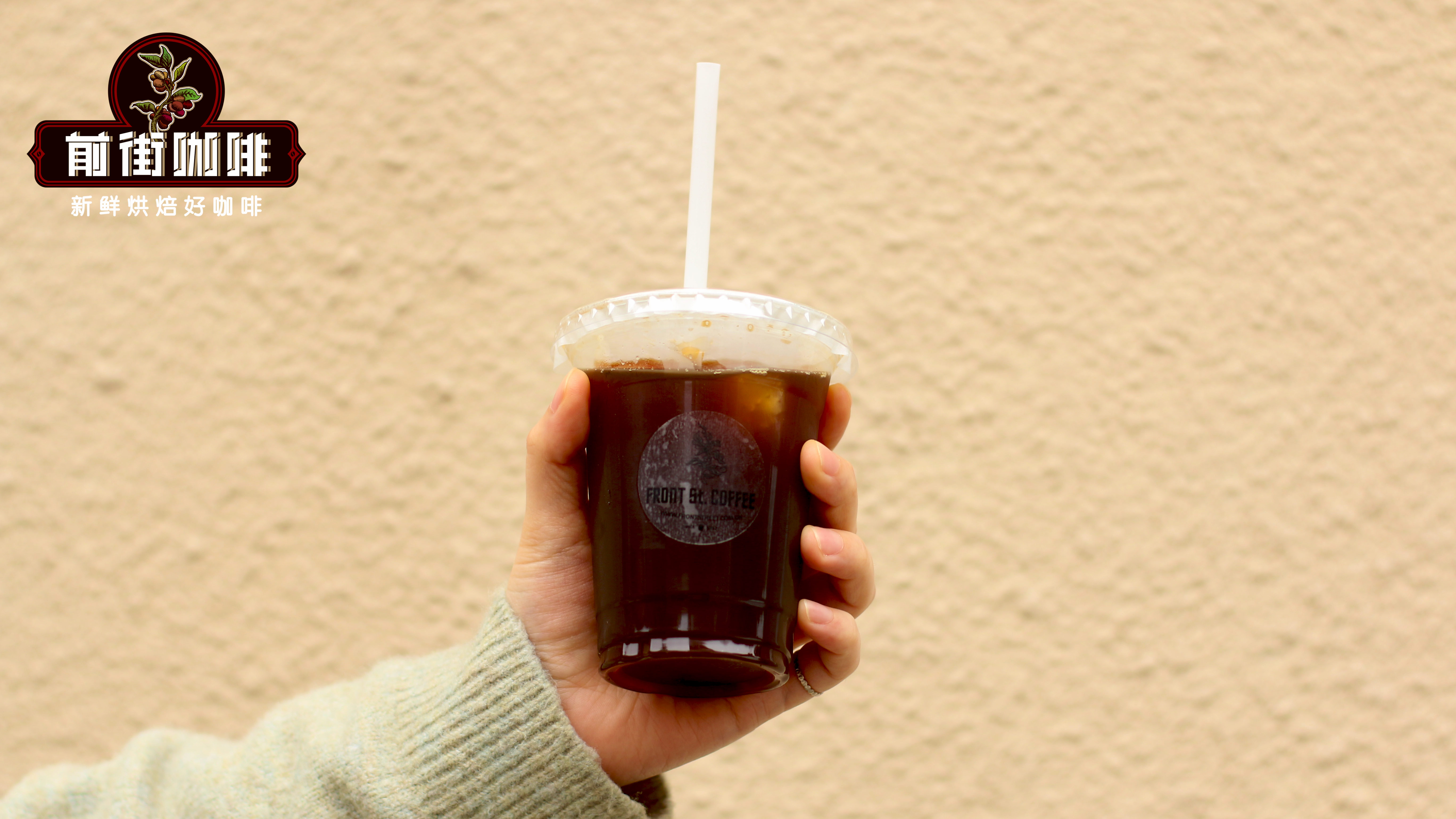
Cold brew coffee is a pure black coffee liquid made by soaking coffee grounds in room-temperature or iced water, either at ambient or refrigerated temperature. Because the extraction happens cold, flavor compounds release far more slowly than they do in hot water, so the soaking time depends on the ambient or refrigerator temperature and the total extraction usually takes 8-24 hours. It requires no special skill or complicated equipment, yet still yields an iced coffee with a pronounced aroma and considerable richness. Steeping it overnight and drinking it the next morning has made it a favorite among office workers.

Because coffee can be brewed hot or cold - that is, according to time and water temperature - brewing methods fall into two broad families: hot brewing and cold brewing. Let's look at the flavor differences these two approaches bring.
1. Hot Brew (Drip) Coffee
The first thing that comes to mind for hot coffee is pour-over filter coffee. It is very simple to make: just pour hot water over the grounds. At a FrontStreet Coffee bar, for example, you can regularly enjoy classic drip coffee; the classic Italian blend pulled by a FrontStreet Coffee barista produces an espresso with rich golden crema and a nutty aroma. On the palate you taste the roasted bitterness of coffee, but it is accompanied by a creamy, full-bodied texture, and once you swallow, the bitterness fades and leaves a fragrant aftertaste.

2. Cold Brew Coffee
Cold brewing takes much longer. The simplest approach is to soak the grounds in cold water at room temperature, wait several hours or even days, then filter the liquid repeatedly. The resulting coffee has a deeper flavor with very light bitterness and acidity, a richer body, and a higher concentration than conventional hot-brewed coffee. Drunk on a hot summer day, the icy refreshment is irresistible.
From a Chemical Perspective
When coffee meets water, its soluble compounds begin to react, producing the familiar aroma and taste of coffee.

The soluble compounds in coffee begin to dissolve at 195-205 degrees Fahrenheit, so in theory hot-brewed coffee should have a richer taste and flavor than cold brew. Hot water also accelerates the dissolution rate and increases volatility, so many compounds evaporate along with the water molecules, travel into your nasal cavity, and let you perceive the coffee's aroma.
But accelerating dissolution brings problems too. Water straight off the boil can degrade or oxidize certain compounds, much the way iron rusts when exposed to a large amount of oxygen, making the coffee sour and bitter. If you dislike those two tastes, cold brew is definitely your best choice.

Cold brew coffee also undergoes oxidation, but at an extremely slow rate, so its bitterness and acidity are milder than traditional hot brewed coffee. That slow oxidation also makes cold brew easier to keep - typically 2-4 weeks in the refrigerator, whereas hot-brewed coffee lasts at most one day.
Does Cold Brew Taste Better Than Hot Brew?
When the water temperature is higher, aromatic molecules are highly active, the aroma is at its strongest, and the nose can easily enjoy the fragrance of coffee. At that point you can use the act of smelling to appreciate the cup. But if you drink coffee at that temperature, the lips and tongue feel a burning sensation and our perception of flavor can barely distinguish the different tastes, bitterness in particular.

Many drinkers have had this experience: a coffee that is barely tolerable when hot turns unbearably bitter once it cools. It is like taking medicine - sip it after blowing on it, but if you do not drink it while it is hot, it becomes impossible to swallow when cold. In fact, neither the coffee nor the medicine has changed; it is simply that the lower the temperature, the more intensely the taste buds perceive bitterness.
Cold-water brewing does have real advantages: the taste is milder and, above all, it is convenient. When you want a coffee, you no longer need to boil water. How can cold brew taste so rich at such a low temperature? Because the water is far below the ideal temperature for dissolving and volatilizing aromatic oils and soluble compounds, making cold brew normally requires a longer time and roughly double the amount of coffee grounds to build flavor and concentration.

Although cold brew has a richer body, its aroma cannot match traditional drip coffee, because the aromatic compounds in coffee barely volatilize at room temperature. The larger amount of grounds and the longer production time also make cold brew more expensive than hot brew.
Hot coffee is about experiencing the flavor and texture created by changing temperature, with a different shift at each temperature, giving a more layered experience. Of course, hot and cold coffee each have their own character and their own fans, because everyone's taste preferences are different. FrontStreet Coffee carries more than 50 types of single-origin beans as well as basic blends, specialty blends, commercial blends, and Warm Sun blends. Whichever profile you prefer, you are welcome to explore and taste them together with FrontStreet Coffee.
FrontStreet Coffee Recommendation
If you want to put cold brew into practice, FrontStreet Coffee recommends beans that play to its strengths. The Strawberry Candy Geisha Blend combines a classic Panama Geisha with a Costa Rican honey-processed coffee, layering delicate rose and orange against the grape, dried blueberry, and strawberry-candy sweetness of the honey process, so it steeps into a lively, juicy cold brew that takes on a fruit-wine character if left to rest. For a floral, fruit-forward iced cup, the Sun-Dried Huakui from Ethiopia brings magnolia, cream strawberry, mango, and black tea once brewed cold. If you prefer a fuller, juice-like cold brew with low bitterness, try the Kenya Cherry Tomato, a Kenyan washed bean of the SL28 and SL34 varieties given the classic K72 double-wash fermentation, showing cherry tomato, snow pear, and black plum that shine at low temperatures. Because cold brew uses more grounds, these approachable FrontStreet daily beans are a practical and rewarding starting point.
Important Notice :
FrontStreet Coffee is a long-established specialty coffee roaster in Guangzhou China, selling freshly roasted beans from its own farm in Yunnan as well as dozens of carefully selected single-origin beans from around the world for both pour-over and espresso. The products deliver consistently excellent quality and great value, with shipping within 24 hours. Guangzhou's FrontStreet Coffee shop is recommended by many coffee lovers, and the beans are now available online at the Tmall 。
FrontStreet Coffee has moved to a new address:
FrontStreet Coffee Address: 315,Donghua East Road,GuangZhou
Tel:020 38364473
 Scan and follow the En Gafei WeChat official account. Please indicate that the reprint comes from "En Gafei".