African Kenya Premium Coffee Beans - Flavor Profile and Unique Characteristics of Kenyan Specialty Coffee
FrontStreet Coffee's Kenya Coffee
FrontStreet Coffee's Kenya coffee is mostly grown at altitudes of 1500-2100 meters, with two harvests a year. Its main characteristic is a distinct fruit aroma, commonly citrus. It has multi-layered flavors and juice-like acidity, with perfect grapefruit and wine notes and moderate body, making it a favorite single origin among many industry professionals. Kenya coffee gained further fame through the Hollywood film "Out of Africa."
Taste Profile
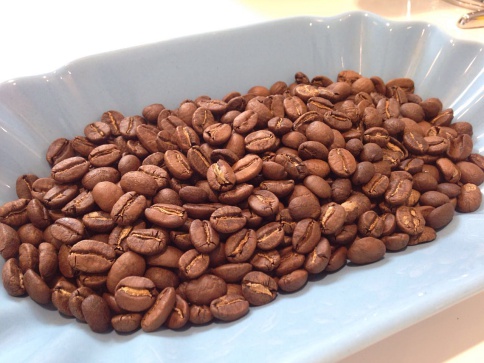
FrontStreet Coffee's Kenya AA features round beans with thick pulp, excellent heat conductivity, and high refinement. Roasted French-style, it delivers a rich, sweet flavor with body, good expansion, and superior aroma and sweetness.
Coffee professionals universally count Kenya coffee among their favorites, because it encompasses every sensation we seek from a good cup. FrontStreet Coffee's Kenya coffee has magnificent, satisfying aromatics, balanced and pleasant acidity, uniform particles, and excellent fruit flavors; the taste is quite unique, with few similar coffees. Its signature is a distinct fruit aroma — seek it out in the cup and notice how it feels in the mouth. The common fruit note is citrus. FrontStreet Coffee's Kenya coffee has multi-layered flavors and juice-like acidity, with perfect grapefruit and wine notes and moderate body.
Origin of Kenya Coffee
Coffee entered Kenya in the 19th century, when Ethiopian coffee beverages were imported via South Yemen. It was not until the early 20th century, however, that Bourbon coffee trees were introduced by the St. Austin Mission.
Kenya coffee is mostly grown at altitudes of 1500-2100 meters, with two harvests a year. To ensure only ripe berries are picked, workers must patrol the fields approximately 7 times. Kenya coffee is grown by smallholders who, after harvesting, first send fresh cherries to cooperative washing stations; these then send the washed and dried coffee in "parchment coffee" state (beans still covered by the inner pericarp) to the cooperatives. All the coffee is collected together, and growers demand average prices based on actual quality. This trading method generally works well and is fair to both growers and consumers.
Current Status of Kenya Coffee
The Kenyan government takes the coffee industry extremely seriously, and cutting down or destroying coffee trees is illegal. Kenya's coffee buyers are world-class premium buyers, and no country can continuously grow, produce, and sell coffee the way Kenya does. All beans are first purchased by the Coffee Board of Kenya (CBK), where they are inspected and graded, then sold at weekly auctions without further grading. The CBK acts only as an agent, collecting samples and distributing them to buyers to help them judge price and quality. The Nairobi auction is held for private exporters, with the CBK paying growers below-market prices. The best grade is Peaberry (PB), followed by AA++, AA+, AA, AB, and so on. Premium coffee is bright, delicious, and slightly wine-like. Auctions are also organized to meet blenders' demands, typically handling smaller quantities (3-6 tons per lot), with samples bearing grower marks for buyers to taste. After the auction, exporters package according to the different flavors, qualities, and quantities blenders require, giving blenders great flexibility. Quality-conscious German and Nordic buyers are long-term customers of Kenya coffee.
Globally, Kenya's coffee growth is evident: exports of 800,000 bags in 1969-1970 rose to 2 million bags by 1985-1986. Production generally stabilized at 1.6 million bags, with an average yield of about 650 kg per hectare. Before the coffee price surge, Kenya coffee's average price was already rising; 1993-1994 prices were 50% higher than 12 months earlier, mainly because of increased demand.
Some Kenya coffee buyers, particularly Japanese merchants, have expressed dissatisfaction with the country's coffee-industry system. Some have noted that quality has declined and suggested that buying directly from farmers might improve it. Regardless, Kenya's detailed regulations and comprehensive procedures remain a worthwhile model for all coffee-producing countries.
Kenya coffee gained further fame through the Hollywood film "Out of Africa."
In the film, the heroine Karen, played by Meryl Streep, is a writer and coffee plantation owner. Many still remember the touching scenery and magnificent sunsets, but more unforgettable still is Karen's dream of owning a coffee plantation in Africa.
FrontStreet Coffee Recommendation
If Kenya's vivid fruit acidity has you curious about Africa's other great origin, FrontStreet Coffee's Ethiopian lineup is the natural next step. Few coffees are as recognizable as the FrontStreet Huakui, from Hambella in the Guji zone of Sidamo — one of the most successful star products of the specialty market in recent years. Its defining trait is an extremely prominent tropical-fruit aroma, with strawberry, passion fruit, jackfruit, and even lychee, plus obvious sweetness and very low bitterness; it is smooth and full of juice on the palate, so many drinkers call it "the coffee that does not taste like coffee," and for those who dislike the traditional bitterness of coffee it can overturn their assumptions entirely.
To explore Ethiopia's floral side, look to the FrontStreet Hamasho natural from the Sidamo region. The Hamasho processing station has earned a permanent place on Ethiopia's green-bean competition winners' lists through its exceptional quality and distinctive flavor, drawing the attention of many enthusiasts. Its coffee is mainly built on the JARC (Jimma Agricultural Research Center) 74-series disease-resistant varieties; the 74158 has slightly small beans and a prominent floral-fruit character. FrontStreet's Hamasho 74158 has an enticing aroma, with notes reminiscent of perfume lemon, strawberry, and star fruit, and an entry of clear strawberry, star fruit, and green-grape sweetness, with a light floral note gradually emerging afterward.
For something wild and origin-traced, the FrontStreet Kaffa Forest stands apart. Unlike the garden plots where farmers plant coffee in their backyards, Kaffa Forest is best known for producing wild coffee, with trees growing in shaded conditions at 1400-2100 m. Its pristine ecology, microclimate, red soil, and abundant rainfall provide excellent conditions. Roasted medium-light, the FrontStreet Kaffa Forest shows clear white florals after grinding, bright lemon acidity on entry, sweet orange and bergamot, a faint melon and nutty sweetness in the finish, and a green-tea-like body.
Important Notice :
FrontStreet Coffee is a long-established specialty coffee roaster in Guangzhou China, selling freshly roasted beans from its own farm in Yunnan as well as dozens of carefully selected single-origin beans from around the world for both pour-over and espresso. The products deliver consistently excellent quality and great value, with shipping within 24 hours. Guangzhou's FrontStreet Coffee shop is recommended by many coffee lovers, and the beans are now available online at the Tmall 。
FrontStreet Coffee has moved to a new address:
FrontStreet Coffee Address: 315,Donghua East Road,GuangZhou
Tel:020 38364473
 Scan and follow the En Gafei WeChat official account. Please indicate that the reprint comes from "En Gafei".