How to Pour-Over Blue Mountain No.1 Coffee: Characteristics, Flavor Profile, and Brewing Methods - Blue Mountain Coffee Bean Brewing Guide with Grind Size and Water Temperature Parameters
There's a saying that expensive coffee beans deserve careful brewing so nothing goes to waste. At FrontStreet Coffee, we'd put it more broadly: any good coffee deserves careful brewing. Today there are countless ways to make coffee, and people's love for it extends far beyond the café — more and more of us are chasing the pleasure of brewing at home.
As one of the world's most celebrated and aromatic coffees, how should FrontStreet's Blue Mountain be brewed to show its full character? Here we'd like to share our experience with hand-brewing FrontStreet Blue Mountain Coffee.
For brewing, FrontStreet Coffee sorts beans into two broad camps — light-to-medium roast and medium-to-dark roast — because roast level dictates both equipment and water temperature. Our Blue Mountain beans are roasted medium-dark by our roasters. It also helps to understand the character and typical flavor profile of the origin itself.
Although we've written plenty about FrontStreet Blue Mountain Coffee, it's worth starting with what "Blue Mountain" actually means. Plenty of coffee on the market carries the label, but only coffee grown in Jamaica can truly be called Jamaican Blue Mountain Coffee.
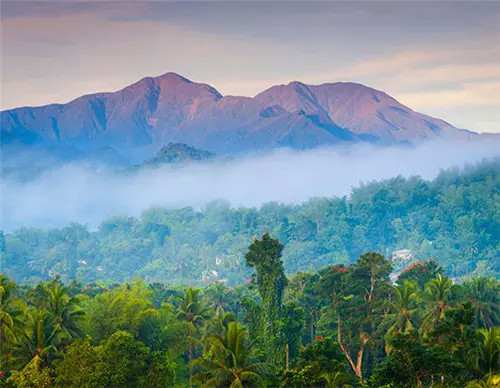
The Blue Mountains sit in eastern Jamaica, rising from a peninsula ringed by the Caribbean Sea. On clear days, when the sun strikes the azure water, the peaks take on a brilliant blue sheen — hence the name. The highest summit reaches 2,256 meters, the tallest point in the Caribbean and a famous tourist destination in its own right. The region lies squarely within the coffee belt, with fertile volcanic soil, clean unpolluted air, a humid climate, and year-round fog and rain (average precipitation of 1,980 mm, temperatures around 27°C). Those conditions created the world-renowned Jamaican Blue Mountain Coffee — and its famously high price.
This coffee has everything fine coffee should have: not only is it rich and aromatic, but thanks to a near-perfect balance of sweetness, acidity, and bitterness, it shows no harsh bitterness and only a moderate, polished acidity. It is best enjoyed as a single origin. Because production is tiny and prices are extraordinary, however, much of what's sold on the market is blended with coffees of similar character.
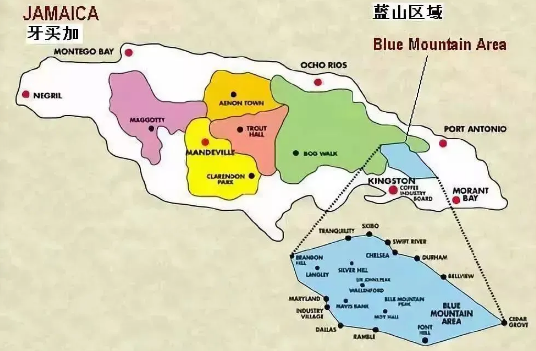
As you can see, FrontStreet Blue Mountain Coffee is grown at high altitude, and Blue Mountain grading is based on both altitude and bean size.
Blue Mountain Coffee Varieties
FrontStreet Blue Mountain Coffee belongs to Typica, one of the ancient heirloom varieties — genuinely old varieties are rare in today's coffee world. But even Typica-lineage coffee isn't automatically true Blue Mountain: only beans grown at the specific high altitudes of the Blue Mountains earn the name, and with it the right to be called the "king of coffee."

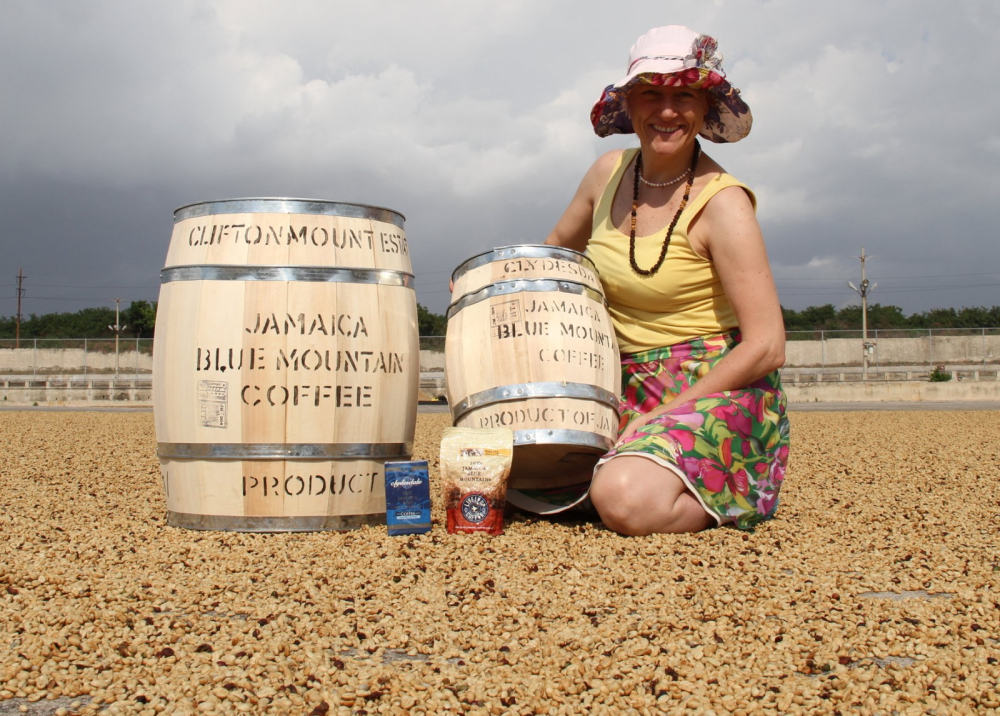
The FrontStreet Jamaica Blue Mountain No. 1 we carry comes from Clifton Farm, the largest estate in the region — though by international standards it's still small-scale cultivation, with many estate owners being smallholders whose families have worked this land for two centuries. After extensive comparison, we believe Clifton Farm's Blue Mountain No. 1 performs exceptionally well and stands among the finest representatives of Blue Mountain Coffee.
Blue Mountain Coffee Processing Methods
Blue Mountain Coffee was once washed-processed exclusively; natural processing was introduced later. FrontStreet Coffee offers both natural and washed FrontStreet Blue Mountain Coffee.
How to Hand-Brew FrontStreet Blue Mountain Coffee Beans
In our view, brewing a great cup comes down to four things: water temperature, grind size, coffee-to-water ratio, and pouring technique.
1. Water Temperature
For pour-over coffee, FrontStreet Coffee matches water temperature to roast level. As roasting progresses, aromatic compounds are progressively lost, so to avoid pulling excessive bitterness out of darker roasts, we drop the temperature. For light-to-medium roasts we recommend 90-91°C; for medium-dark roasts, 88°C.

This Blue Mountain is prized for its rich body and balanced flavors. To emphasize that richness, we roast it medium-dark.
2. Grind Size
Grind size matters too, and it interacts with roast level. Grind size is simply the size of the coffee particles, and it governs how long water and coffee stay in contact. The finer the grounds, the more the water extracts in a given time — but fine grinds risk over-extraction. The coarser the grind, the less is extracted, and coarse grinds risk under-extraction.
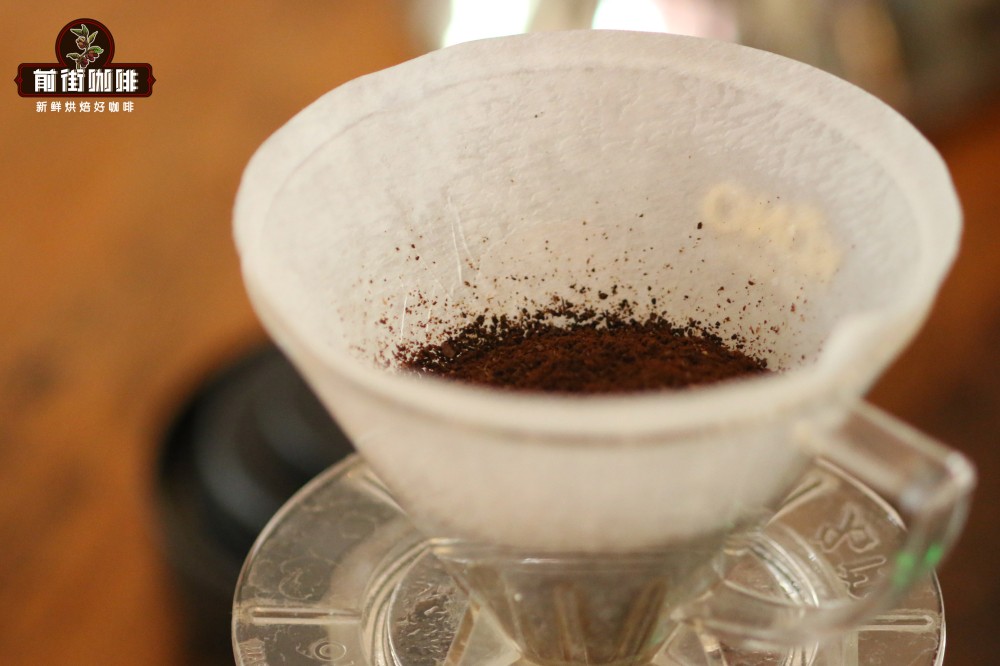
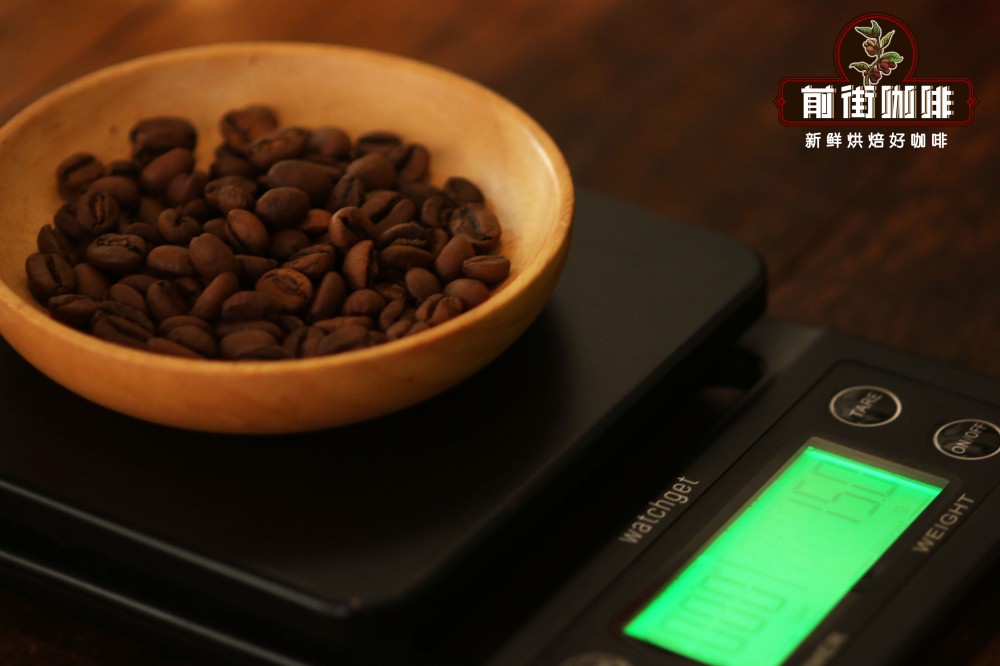
Since every grinder cuts differently, parameters vary from machine to machine. FrontStreet Coffee recommends buying a #20 cupping calibration sieve with a 0.85 mm aperture. Grind 10 g of beans at your approximate setting, pour the grounds into the sieve, and shake until nothing more passes through. Weigh what remains on top.
A pass rate of 70%-75% (7-7.5 g passing from 10 g) indicates the right grind for the baseline. For pour-over, target roughly 80% pass rate for light roasts and 75% for medium-dark roasts. If your pass rate exceeds the target, grind coarser; if it falls short, grind finer.
3. Coffee-to-Water Ratio
These pour-over parameters follow the extraction theory behind the SCAA Golden Cup standard:
[Bold] 1:10-1:11 (equivalent to Golden Cup 1:12.5-1:13.5)
[Medium] 1:12-1:13 (equivalent to Golden Cup 1:14.5-1:15.5)
[Light] 1:14-1:16 (equivalent to Golden Cup 1:16.5-1:18.5)
A bean-to-water ratio of 1:14.5-1:15.5 most easily lands within the Golden Cup extraction range of 18%-22% and concentration of 1.15%-1.35%.
So FrontStreet Coffee suggests the foolproof 1:15 ratio for brewing this Blue Mountain — adjusting to taste, of course.
4. Pouring Technique
Finally, technique matters. Common approaches include three-pour (three-stage) pouring, single continuous pour, and slow drip-by-drip pouring. For beginners we recommend the three-stage method: it works well for light, light-to-medium, and medium-dark roasts alike, and its segmented extraction clearly separates the coffee's front, middle, and back-end flavors.
Here's FrontStreet Coffee's three-stage method for brewing FrontStreet Blue Mountain Coffee.
The Three-Stage Method
The magic of this coffee lies in its balanced sweetness, acidity, and bitterness, its rich body, and its full aroma. We roast medium-dark to bring out the nutty and cocoa notes, and we use a KONO dripper to build extra body. The recipe: water at 88°C, a 1:15 ratio, 15 g of coffee, and a grind calibrated to a 75% pass rate on the #20 standard sieve.
First Pour: The Bloom (degassing)
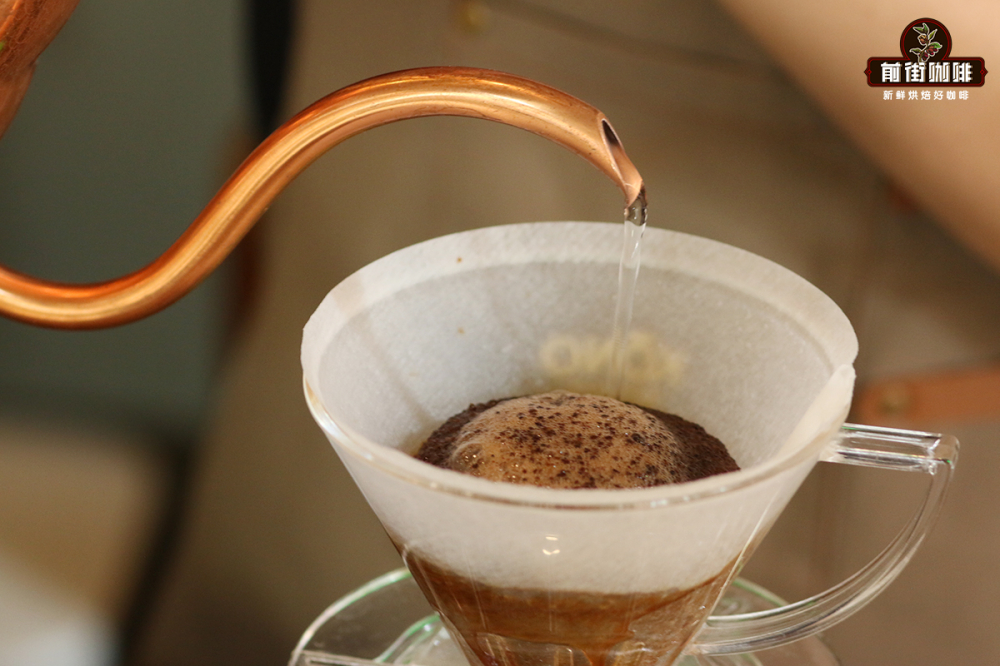
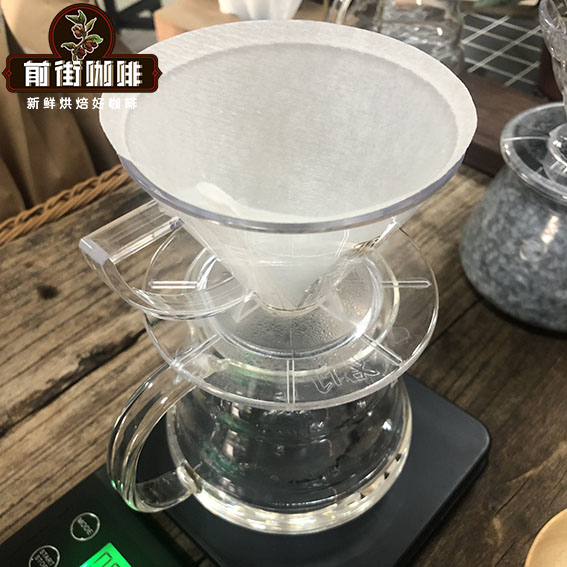
First, rinse the KONO dripper so the filter paper seats snugly, discard the rinse water, and add 15 g of coffee. Bloom with 30 g of water for 30 seconds. Many brewers wonder why pour-over needs a bloom at all. The answer: as green beans roast, they undergo chemical reactions and physical changes that trap large amounts of gas — mostly carbon dioxide — inside the bean.
Generally, the fresher the coffee and the closer to the roast date, the more it bubbles during the bloom; darker roasts degas more than lighter ones. Because FrontStreet Coffee's beans ship freshly roasted, we recommend resting them about three days first, letting the carbon dioxide escape beforehand — that avoids instability and under-extraction during brewing.
Once degassed, the grounds absorb water evenly, setting up uniform extraction in the later pours. A good bloom lets the bed release gas quickly and evenly while giving water full, fast contact with every particle. That is exactly what blooming is for.
Second Pour
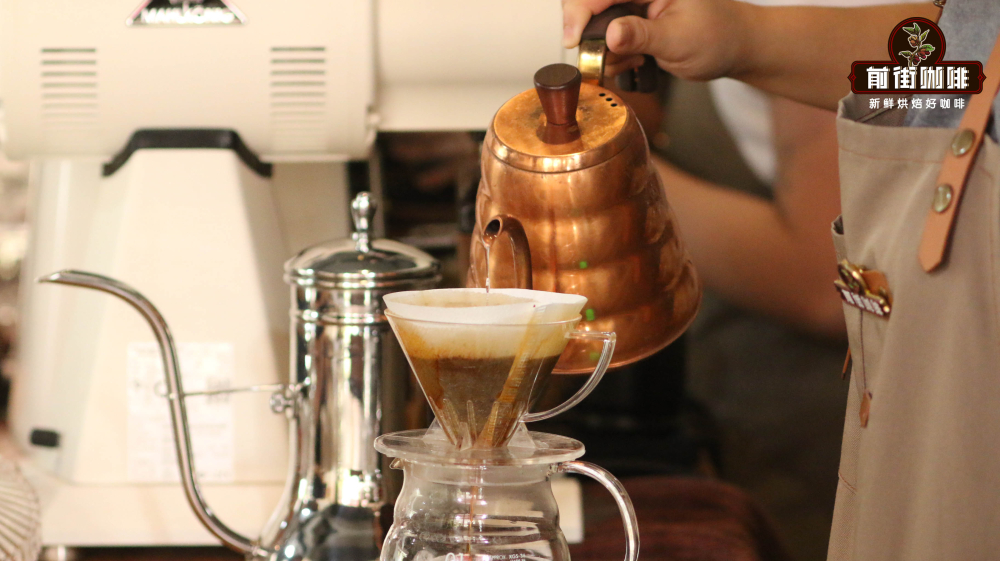
After the 30-second bloom, start the second pour. Begin with small circles in the center until the scale reads 125 g, then stop. To keep the water column's penetrating power, keep the circles tight — about the width of a one-yuan coin — then spiral outward. From this pour onward, watch the water level and try not to let it rise above the coffee bed; stop pouring as the water column nears the filter paper.
Third Pour
Wait until the coffee bed drops to half the dripper's height, then pour in the same pattern up to 225 g. Once dripping stops, remove the dripper. Timed from the first pour, total extraction is 2'00".
On this final pour, watch the falling water level. Pour in circles from the center again, keeping the water below the top of the bed. The crema-like foam will now cover the surface. Use this pour to agitate: get all the settled particles tumbling so their remaining solubles dissolve out.
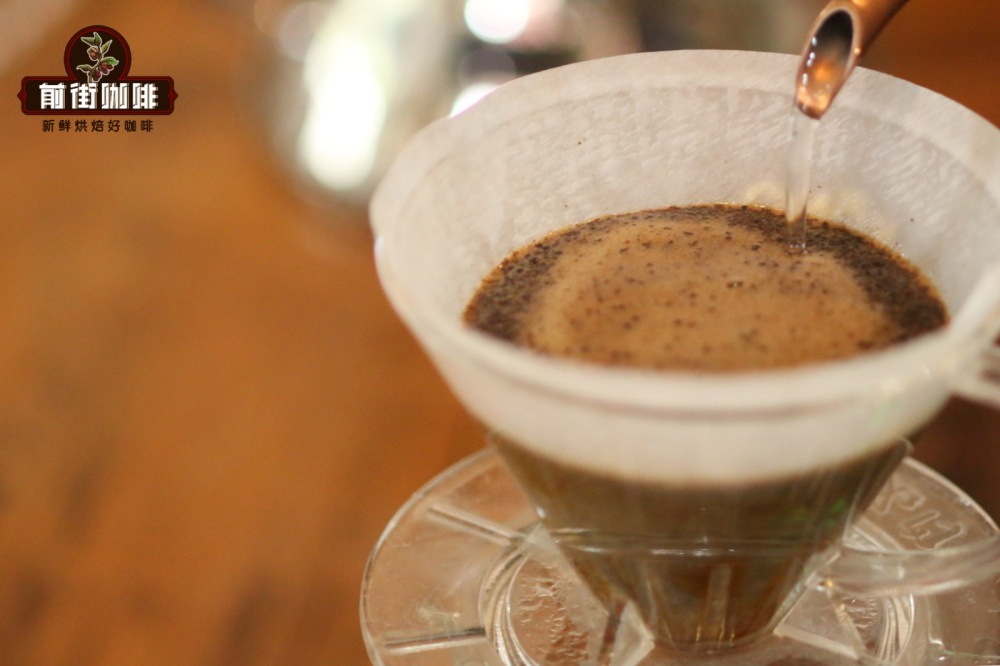
The particles settle once you stop pouring, and the receding water creates friction between them; when the water drains, the particles sink and can compact into the bed, slowing flow. So mind your pouring rhythm — too many interruptions effectively leave the grounds steeping, which pulls astringency and off-flavors into the tail end of extraction.
Finally, give the finished coffee a gentle swirl and pour it into cups to taste.
That is how FrontStreet Coffee brews FrontStreet Jamaica Blue Mountain Coffee beans.
FrontStreet Coffee Brewing Notes
Freshness, we always say, is decisive. Fresh beans show their full flavor at its peak. FrontStreet Coffee ships beans roasted within 5 days, because we know how much freshness affects the cup. Our beans are best rested 4-7 days, so they arrive right at peak flavor.
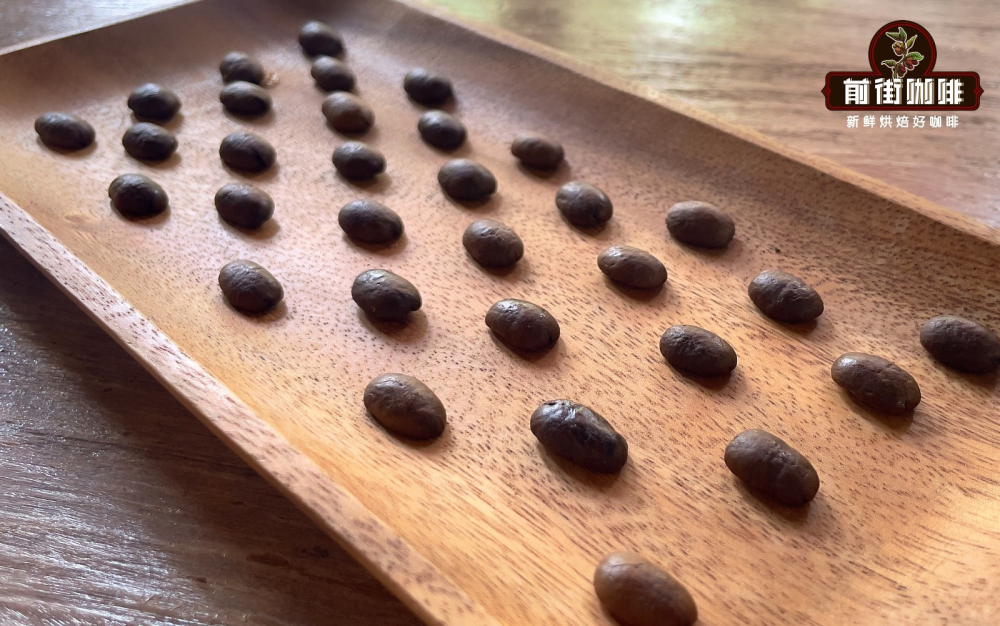
If you'd rather have your beans ground before shipping, that's fine too — just skip the resting, since the pressurized carbon dioxide in the sealed package mellows the coffee in transit, and you can brew the moment it arrives. But pre-ground coffee must be brewed promptly: once ground, coffee oxidizes quickly in air, the flavor fades fast, and the cup suffers. That's why we recommend whole beans, ground fresh just before brewing.
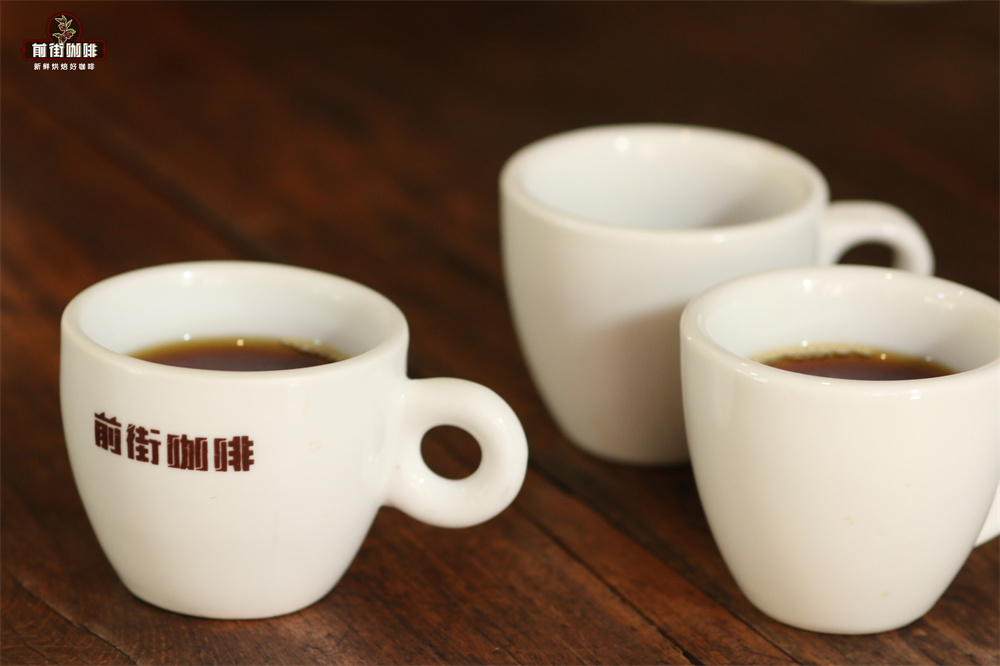
[FrontStreet Natural Blue Mountain flavor] A light berry acidity reminiscent of dark plum and mulberry, excellent overall balance, rich dark chocolate and nut flavors, with a faint fermented note.
[FrontStreet Washed Blue Mountain flavor] Rich dark chocolate and nuts, a creamy-smooth mouthfeel, and perfectly balanced sweetness, acidity, and bitterness.
Pour-over coffee, when you break it down, is simple — the key is practice. Practice makes perfect, and a great cup follows.
FrontStreet Coffee Recommendation
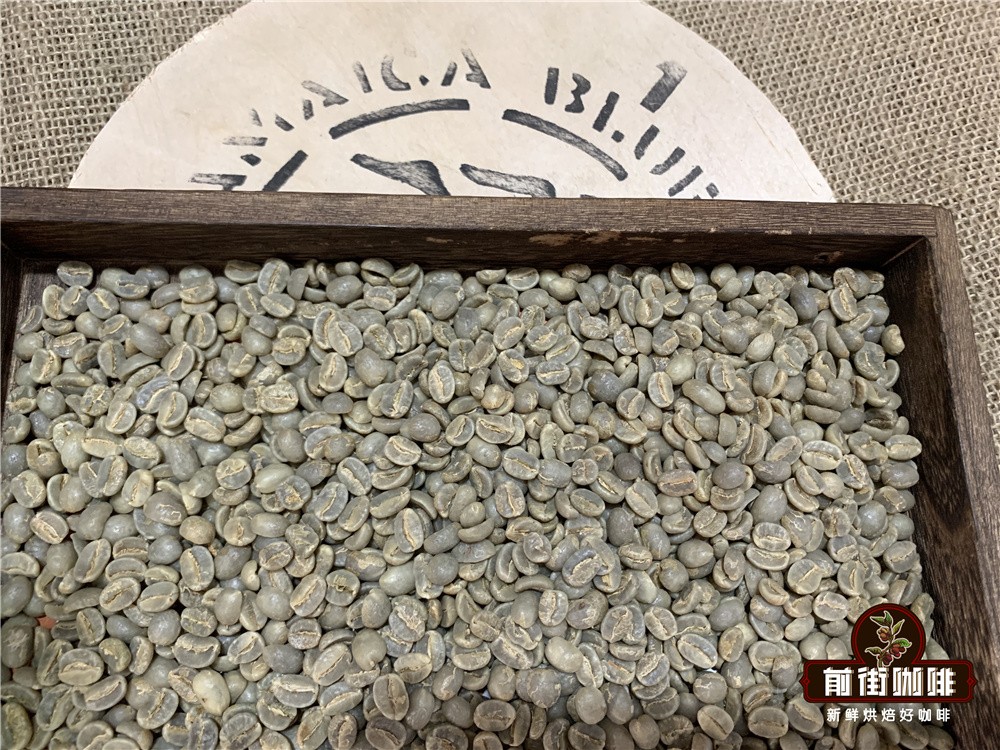
Blue Mountain needs no introduction, but it's worth knowing what you're buying: strictly speaking, only coffee grown in a defined zone of Jamaica's Blue Mountains and certified by the Jamaican authorities may be called Jamaica Blue Mountain Coffee. Genuine lots ship in wooden barrels of 15, 45, or 70 kg marked with batch details, so a seller who can show export certificates, proof of origin, and the barrels themselves — as FrontStreet Coffee does with its Clifton Estate lots — is far more trustworthy than one who cannot. Authentic green beans are plump and even, slightly upturned at both ends, with a greenish tint; the cup is dense yet clean, with none of the flatness of the many impostors.
For the benchmark experience, choose Blue Mountain No. 1 — the highest grade, with strict standards for bean size and defect count. Clifton Farm has grown coffee since roughly 1750, at an average elevation of 4,300 feet (about 1,310 meters), where afternoon cloud, forest shade, ample sunshine, and mineral-rich soil lengthen the cherry-ripening period. FrontStreet roasts its Blue Mountain No. 1 medium-dark to bring out the classic profile: nut, dark chocolate, cream and caramel, a soft sweetness, and acids, sweetness, and bitterness in perfect accord.
To brew it, FrontStreet Coffee recommends a KONO dripper for extra body: 15 g of coffee rested 4-7 days from roast date, ground a touch coarser than you would for light roasts — about the texture of white sugar — with water at 87-88°C and a 1:15 ratio. Pour in three stages: bloom with 30 g of water for 30 seconds, pour to 120 g, then finish at 225 g. The reward is a cup of cream, caramel, and nut sweetness that explains why Blue Mountain has reigned for decades.
Important Notice :
FrontStreet Coffee is a long-established specialty coffee roaster in Guangzhou China, selling freshly roasted beans from its own farm in Yunnan as well as dozens of carefully selected single-origin beans from around the world for both pour-over and espresso. The products deliver consistently excellent quality and great value, with shipping within 24 hours. Guangzhou's FrontStreet Coffee shop is recommended by many coffee lovers, and the beans are now available online at the Tmall 。
FrontStreet Coffee has moved to a new address:
FrontStreet Coffee Address: 315,Donghua East Road,GuangZhou
Tel:020 38364473
 Scan and follow the En Gafei WeChat official account. Please indicate that the reprint comes from "En Gafei".