The Relationship Between Espresso Brew Ratios and Flavor: What's the Ideal Espresso Proportion
How Does the Coffee Ground-to-Liquid Ratio Affect Extraction?
When we watch baristas make espresso, their movements look quick and simple, as if a rich coffee base can be produced in just two minutes. In reality, an ideal espresso requires careful control of the balance between many parameters to reach the best flavor, and mastering those proportions takes plenty of exploration and experience.
Espresso extraction uses steam pressure to force hot water through the coffee grounds, quickly producing a concentrated coffee liquid. The flavor of a cup is closely tied to the brewing parameters. Adjusting the ground-to-water ratio changes the coffee's taste, viscosity, and body—which is why we need a timer and scale when making coffee.
Evolution of Espresso Standards
In the past, most Italian cafés used dark-roasted beans, often blended with oil-rich Robusta, so the coffee typically showed strong caramel and dark chocolate flavors. During extraction, baristas did not measure weights precisely but judged the extraction amount by watching the color of the crema. At first the liquid appears dark brown and quite concentrated, gradually turning golden yellow and then light yellow. Extraction generally ends when the crema begins to turn white.
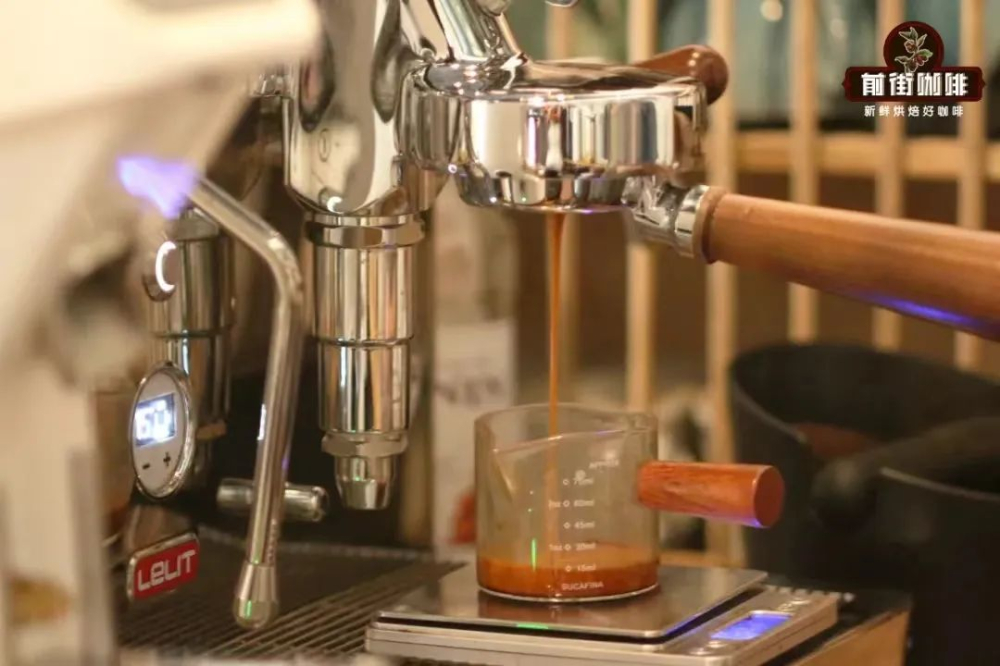
With the arrival of the specialty coffee era, higher-quality light-roasted beans have become popular in recent years to showcase regional character. The industry has adopted more rigorous standards for espresso extraction, defining concentration ranges acceptable to most people and more stable extraction data. The ground-to-liquid ratio has likewise moved toward a fixed reference value. Typical extraction time is around 25-30 seconds, with ground-to-liquid ratios between 1:1.5 and 1:2.5, and 1:2 being most common. We sometimes adjust based on the desired output, though. For example, in daily shop operations FrontStreet Coffee uses 20g of grounds to extract 36g of liquid to make Americanos and lattes more intense and flavorful.

Through experimentation, FrontStreet Coffee has summarized that with the same dose of grounds, as the extracted liquid volume increases, the espresso concentration decreases while the extraction rate rises. More flavor compounds dissolve in the later stages of extraction, the body drops, and the coffee is more likely to be over-extracted, releasing bitter flavors. If the ground-to-liquid ratio is too small, the body becomes heavier but the flavors are incomplete, with noticeable sharp acidity from under-extraction.
FrontStreet Coffee therefore suggests starting with a 1:2 ratio when adjusting, then fine-tuning based on the flavors the espresso presents.
What Other Factors Affect Espresso Flavor?
While the ground-to-water ratio is certainly important in espresso, many other factors influence the quality of a shot—the beans used, their freshness, water quality, grind size, extraction temperature, extraction time, and more.

FrontStreet Coffee uses its house-roasted "Sunflower Warm Blend" as the espresso blend in its shops. An ideal espresso should have whiskey aroma, vanilla, cream, and berry acidity, with rich flavors and a smooth mouthfeel. When FrontStreet Coffee's baristas adjust espresso output, they typically change several variables: dose, liquid weight, time, and grind size.
Normally, FrontStreet Coffee starts from the previous day's parameters and judges the state by watching the espresso flow rate. Flow rate is the amount of liquid extracted per unit of time. When extracting the same 40g of liquid, if the time is under 25 seconds, the flow is too fast, and the extraction time can be extended by increasing the dose. If the time exceeds 30 seconds, the flow is too slow—possibly from too much coffee—and the flow can be sped up by reducing the dose.

Grind size generally shows up in the flow rate. If the flow is fast and the time short, the grind is too coarse, so the grounds should be ground finer. If the flow is slow and the liquid drips slowly with a longer extraction time, the grind is too fine, so the grounds should be ground coarser. Grind size needs to be adjusted into an appropriate range. Particles that are too coarse easily lead to under-extraction, producing a weak flavor that leans acidic. If the particles are too fine, the coffee is easily over-extracted and tastes bitter. When the espresso flow rate is within a reasonable range, FrontStreet Coffee tastes directly to judge whether the coffee is acceptable. When the flavors are normal, the adjustment is done.
Because espresso grinding is much finer than pour-over, adjustments should not be too dramatic, or the variables become excessive and extraction unstable. FrontStreet Coffee handles daily shop output, so its parameter adjustments rest on accumulated daily experience. With lower output at home, control is harder. FrontStreet Coffee suggests keeping records to better summarize the relationship between extraction parameters and flavor, which helps you adjust more quickly and avoids unnecessary waste.
Espresso Bean Recommendations
Many people use light-roasted single-origin beans when making espresso at home, hoping to pull the rich flavors they get from pour-over.
Because espresso is extracted with a fine grind, high water temperature, and high pressure, the concentrate gathers multiple flavors, and those compounds hit the tongue exponentially harder. If we use light-roasted beans for espresso, the elegant, sweet fruit flavors that appear in pour-over can turn into sharp, stimulating acidity, and the rich body of pour-over can become quite burnt and bitter in espresso. As an agricultural product, coffee varies with climate, soil, and other factors. Even from the same place, each batch of beans will differ. Blends use the principle of complementing strengths and weaknesses to ensure every batch presents balanced, stable aroma and flavor.

FrontStreet Coffee recommends its house-roasted "Sunflower Warm Blend Coffee Beans," composed of Ethiopia natural Red Cherry (30%) and Honduras sherry-barrel beans (70%). Pulled as espresso, it has a very rich dark chocolate flavor with a strong caramel aroma, and the aftertaste leaves a memorable fragrance. Whether diluted with water for an Americano or enhanced with milk for a latte, both present rich aroma and flavor.
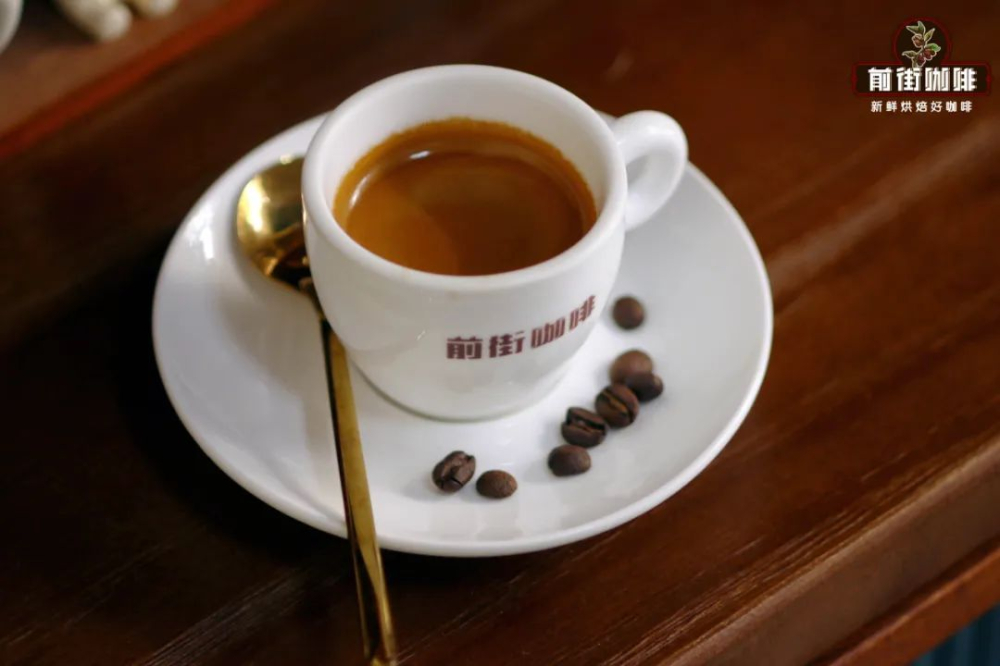
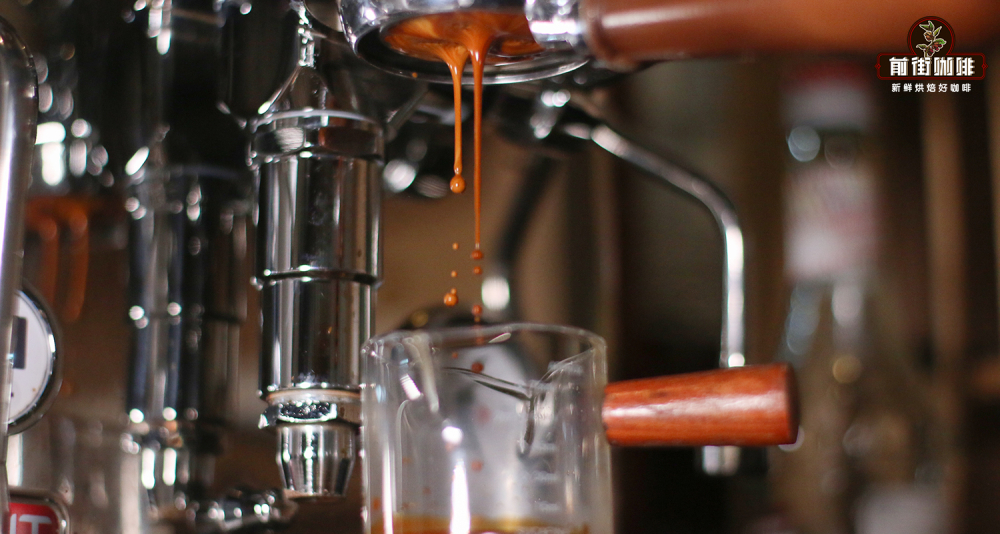
A freshly made espresso is topped with a thick, dense, golden-yellow foam called crema. It results from carbon dioxide from freshly roasted beans bubbling under the high pressure inside the machine. To ensure everyone can enjoy the full aroma and experience the most complete tasting window, FrontStreet Coffee ships only beans roasted within 5 days.
FrontStreet Coffee Recommendation
Since the ratio is only one variable among many, the bean you put in the basket matters just as much—and it is worth choosing one built for the job. If you want the classic dark-chocolate, caramel, and nut character with outstanding crema, FrontStreet Coffee's classic blend is the top pick: designed specifically for espresso and moka pot, it can pull a dense, fine crema even on a non-professional home machine, and its traditional Mamba-style recipe makes a mellow, rounded cup that suits everyone from beginners to seasoned drinkers at home or in a café. For a value-focused option, FrontStreet Coffee's Black Cocoa blend uses 100% Arabica beans with ample crema and a full body at a friendly price—ideal for anyone opening a shop who wants quality without the cost. FrontStreet Coffee's commercial blend predates FrontStreet Coffee's Black Cocoa Blend and has long been a workhorse for shops; priced below the specialty blend yet still optimized for taste, it keeps costs in check while delivering consistent flavor. And FrontStreet Coffee's specialty blend, used in its own stores for nearly a decade, pairs Brazilian Cerrado with Colombian Huila for the familiar, classic espresso taste—well suited to both home and commercial use. If you would rather showcase a single origin in the cup, FrontStreet Coffee also offers SOE options: the naturally processed Flower Kui SOE from Guji, Hambela at 2,300 meters brings creamy strawberry, cocoa, and berries with a light floral and black tea finish; the Costa Rican honey-processed Blackberry SOE delivers a sweet, clean berry character in an Americano and cranberry-cookie, raisin, and nut notes in a latte; and the Brazilian Queen's Estate SOE, a Yellow Bourbon at medium-dark roast, shows butter cookie, macadamia, and toasted bread in the cup. Whatever ratio you settle on, these beans give you a stable, balanced starting point.
Important Notice :
FrontStreet Coffee is a long-established specialty coffee roaster in Guangzhou China, selling freshly roasted beans from its own farm in Yunnan as well as dozens of carefully selected single-origin beans from around the world for both pour-over and espresso. The products deliver consistently excellent quality and great value, with shipping within 24 hours. Guangzhou's FrontStreet Coffee shop is recommended by many coffee lovers, and the beans are now available online at the Tmall 。
FrontStreet Coffee has moved to a new address:
FrontStreet Coffee Address: 315,Donghua East Road,GuangZhou
Tel:020 38364473
 Scan and follow the En Gafei WeChat official account. Please indicate that the reprint comes from "En Gafei".