How to Use a Siphon Brewer? What Type of Coffee and Beans Are Suitable for Siphon Brewing?

For more specialty coffee knowledge, please follow our official WeChat account: FrontStreet Coffee
Looking at siphon brewers today, they are coffee brewing equipment with a strong sense of nostalgia. Currently, many coffee shops no longer make siphon coffee, or it exists as a specialty product rather than a main offering. Of course, as a siphon coffee fan, if it's not available outside, I'll just make it myself. FrontStreet Coffee will share siphon coffee in this article using the simplest language possible.
Siphon Brewer Structure
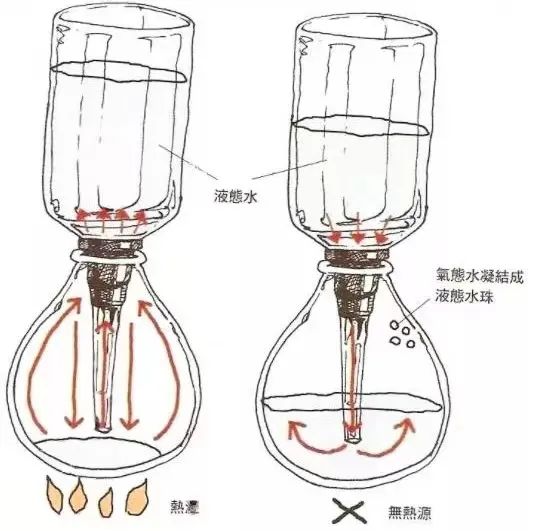
The general structure of a siphon brewer can be divided into an upper chamber, lower chamber, and a stand. The stand connects to the lower chamber, serving to fix and support it. The lower chamber is roughly spherical, ensuring even heating when heated. The upper chamber is cylindrical with a contracted bottom that extends into a slender tube. The contracted area has a rubber seal.
When the upper chamber is placed on the lower chamber, the rubber seal provides a tight closure. When heating the lower chamber, water heating produces steam, creating pressure that draws water into the upper chamber. The upper chamber is where coffee grounds and water meet. When the heat source is removed, the coffee liquid returns to the lower chamber, completing the siphon coffee process.
Filter Cloth vs. Filter Paper
We don't want to drink coffee full of grounds, so we need filtering equipment to separate the coffee grounds. The most commonly used are flannel filter cloths and circular filter papers. Flannel is a more traditional siphon filtering material. Its characteristic is that it can retain coffee oils, but the disadvantage is that it's more troublesome to use and clean.
Filter paper is a modern filtering material characterized by cleaner filtration, blocking fine particles (including but not limited to oils). If it's just for personal drinking and the frequency of making coffee isn't too high, FrontStreet Coffee recommends choosing flannel, as this allows for a more complete experience of siphon coffee's flavor.

Heat Sources
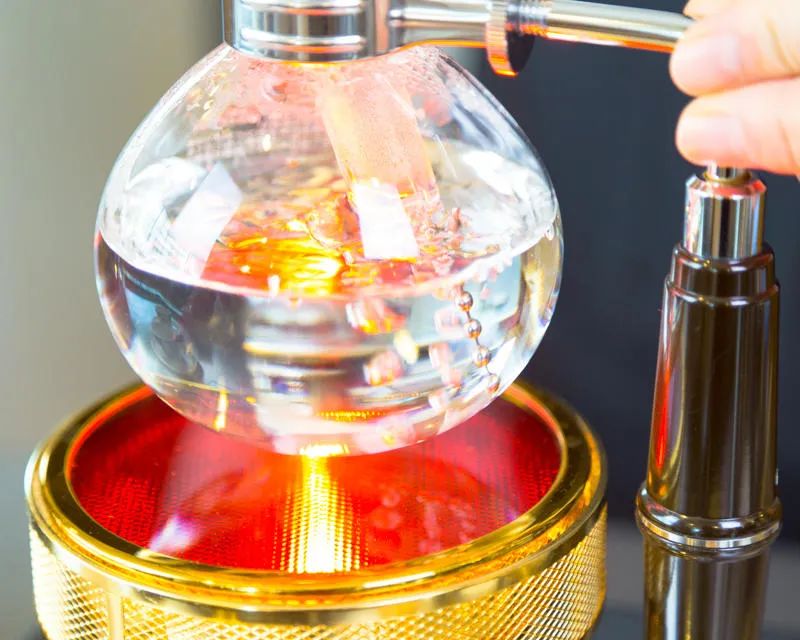
Currently, common heat sources are gas stoves, induction cookers, and alcohol lamps. Gas stoves and induction cookters can adjust the heat source size, with relatively fast and stable temperature rise, but the only drawback is slightly higher cost. Alcohol lamps have low cost, but the heat source is unstable and heating time is longer.
FrontStreet Coffee believes all these heat sources can make excellent coffee; the key is to make appropriate adjustments according to the heating characteristics. However, if conditions permit, it's still better to use a gas stove or induction cooker.
What Coffee Beans Are Suitable for Siphon Brewers?
If you ask what coffee beans are suitable for siphon brewers, FrontStreet Coffee would answer that all coffee beans are actually suitable. However, if you want siphon-brewed coffee to have stronger flavor expression, we recommend prioritizing medium-roasted coffee beans. FrontStreet Coffee recommends beans like FrontStreet Coffee's Bird of Paradise, FrontStreet Coffee's Huilan, FrontStreet Coffee's Queen's Manor, and FrontStreet Coffee's Blue Mountain No. 1, because these beans not only have rich caramelized aromas but can also better express rounded texture and rich body through siphon extraction.

Adding Coffee Before vs. After Water Rises
There are two schools of thought regarding the coffee addition step in siphon brewing. The traditional school chooses to add coffee first. The latter group believes that adding coffee first causes partial contact with water during its rise, leading to some coffee "sneaking out" and potentially causing uneven extraction, so they insist on adding coffee only after all water has risen to the upper chamber. This is similar to the debate in pour-over coffee about whether to start timing before or during the first pour.
FrontStreet Coffee believes that beginners should choose the method of adding coffee after water rises, as this approach has fewer unstable factors compared to adding coffee first.

Coffee Grind Size
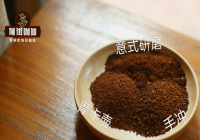
The grind size for siphon coffee is finer than for pour-over. According to FrontStreet Coffee's measurements, the grind size should have approximately 90% pass-through rate through a #20 sieve. When using the EK43s grinder from our café, the corresponding setting is 9 marks, while for the Comandante C40 hand grinder, it's 20 marks.

Coffee-to-Water Ratio
The general coffee-to-water ratio for making siphon coffee ranges from 1:10 to 1:12. More people use the 1:12 ratio. If you're brewing a single serving at home, you might use FrontStreet Coffee's standard parameters: 18g of coffee grounds to 200ml of water.

Stirring Methods
There are many stirring methods: rotary stirring, cross stirring, Z-shape stirring, infinity-shape stirring, tapping method, and more...
FrontStreet Coffee recommends starting with the tapping method, tapping the coffee grounds layer along the trajectory shown in the image below. The stirring rod pivots around the center, with both ends moving back and forth in a staggered manner.
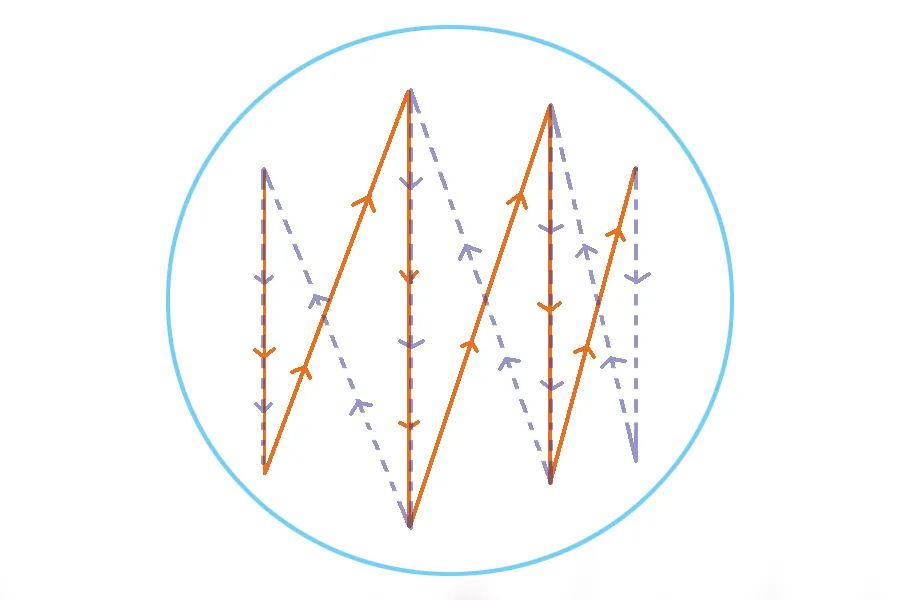
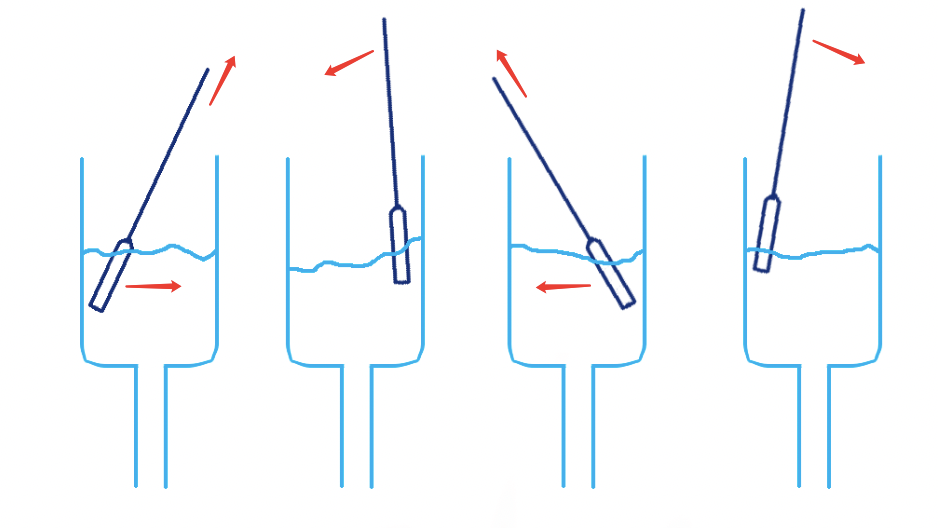
The method isn't unique, but FrontStreet Coffee considers this approach relatively easy to control and beginner-friendly.
Determining the End Time
When to turn off the heat for siphon coffee? Some people like to judge by smelling the coffee's aroma, which requires considerable basic skills and is difficult to describe in words. Therefore, FrontStreet Coffee recommends beginners use timing. If using the post-addition method, start timing when you add the coffee; if using the pre-addition method, start timing when you're ready to begin stirring. The time to turn off the heat source is approximately within 50-70 seconds.

Specific Brewing Method
Using FrontStreet Coffee's standard brewing method as an example:

1. Pour 200ml of hot water, wipe the lower chamber dry, and turn on the heat source.

2. Insert the upper chamber at an angle into the lower chamber, with the explosion-proof ball touching the bottom of the lower chamber.

3. When continuous small water droplets appear in the lower chamber, straighten and press down the upper chamber firmly. Wait for the water from the lower chamber to be drawn into the upper chamber.

4. Add coffee grounds and start timing. For the first stage, use the stirring rod tapping method to press all coffee grounds into the water for even absorption.

5. For the second stage, at 25 seconds, begin using FrontStreet Coffee's recommended stirring method to stir, causing the coffee to clearly separate into three layers: coffee liquid, coffee grounds, and coffee foam.

6. For the final stage, at 50 seconds, begin stirring in the same direction. At 60 seconds, remove the heat source and wait for the coffee liquid to fall back down.


Siphon coffee made this way is very aromatic and rich. Although it's not as clear and clean as pour-over coffee, the oils floating on its surface add considerable richness.

In FrontStreet Coffee's view, compared to pour-over coffee, using a siphon brewer is obviously more troublesome. First, you need to prepare a heat source before brewing, and you can't be distracted during the entire extraction process. After finishing the coffee, you also need to clean it promptly, washing the flannel used for filtering grounds. If placed in a shop with high output volume, siphon brewer service would only be more troublesome.
Important Notice :
FrontStreet Coffee is a long-established specialty coffee roaster in Guangzhou China, selling freshly roasted beans from its own farm in Yunnan as well as dozens of carefully selected single-origin beans from around the world for both pour-over and espresso. The products deliver consistently excellent quality and great value, with shipping within 24 hours. Guangzhou's FrontStreet Coffee shop is recommended by many coffee lovers, and the beans are now available online at the Tmall 。
前街咖啡 FrontStreet Coffee has moved to new addredd:
FrontStreet Coffee Address: 315,Donghua East Road,GuangZhou
Tel:020 38364473
 Scan and follow the En Gafei WeChat official account. Please indicate that the reprint comes from "En Gafei".